Origins: Before and After the First Coins
Before 500 BC
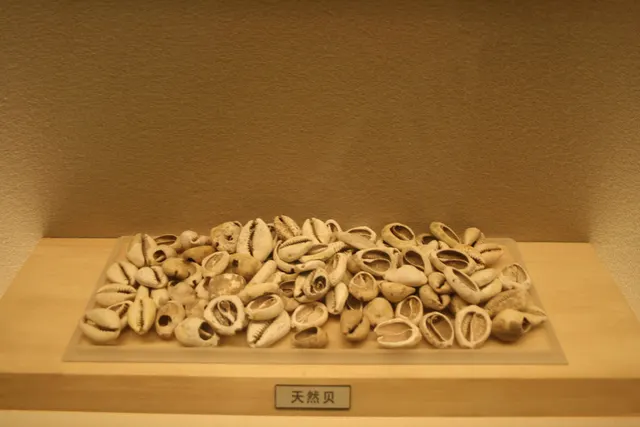
Long before anyone made a coin, people already had money. In Mesopotamia they paid in weighed silver and in barley. In Shang China they used cowrie shells, and later bronze tools cast in the shape of spades and knives. Across the Near East, traders carried hacksilver, chopped-up bits of silver jewellery and ingots that changed hands by weight.
All of these worked, but they were slow. Every payment needed a scale, and every lump of silver could be cut with something cheaper.
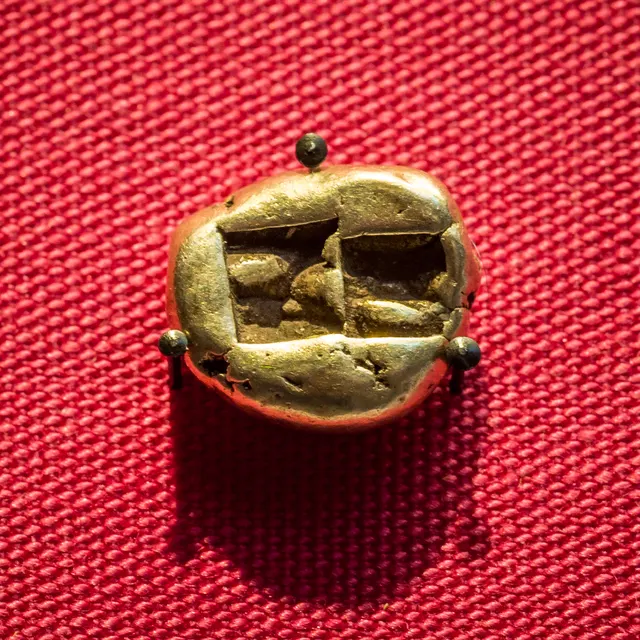
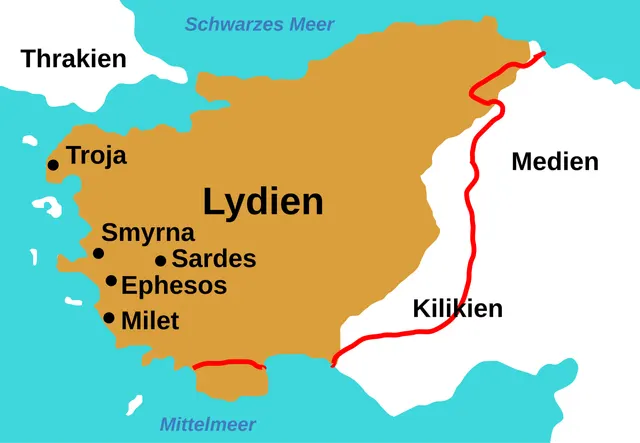
The fix came from Lydia, a kingdom in what is now western Turkey, in the late 7th century BC. Lydia's rivers carried electrum, a natural blend of gold and silver whose gold content could vary a lot. Lydian mints cut it into pieces of a fixed weight and hammered a lion's head onto each one. The stamp told you the king stood behind the value. That was the first coin.
Making one took fire, a die and a hammer. A hot blank went onto an engraved anvil die, a punch went on top, and one hard blow did the rest.
The articles below cover what came before coins, how the first ones were made, and what happened when people started shaving them.
Articles in this era
Part 1: The First Coins Ever Made: Lydia's Electrum Lion
Part 2: Before Coins: Barter, Cowries and Hacksilver
Part 3: How the First Coins Were Made: Dies, Hammers and Fire
Part 4: From Hammer to Machine: How Minting Changed
Part 5: Coin Clipping, Debasement and Gresham's Law
Coins in this story
Coin pages on the way Lydian stater
Questions people ask
What is electrum?
A natural alloy of gold and silver. The gold content of Lydian electrum varied, so the royal stamp was what made each piece trustworthy.
Why a lion?
The lion was the emblem of Lydia's ruling Mermnad dynasty, so it worked as a royal seal.
Were coins invented anywhere else?
Yes. China and India developed metal money on their own at about the same time, though the Chinese pieces were cast, not struck.
Image credits
- Electrum trite from Lydia, 600–530 BC. The two square punch marks are on the back; the lion is on the other side.. ArchaiOptix, British Museum object 1890,0804.8, via Wikimedia Commons, CC BY-SA 4.0. Source
- Electrum trite of Alyattes, Lydia, c. 620–563 BC. Classical Numismatic Group, Inc., via Wikimedia Commons, CC BY-SA 3.0. Source
- The kingdom of Lydia in western Anatolia (German labels: Lydien = Lydia, Sardes = Sardis).. Roke, Nekto and others, via Wikimedia Commons, CC BY-SA 3.0. Source
- Cowrie shells used as money in ancient China. Gary Todd, CC0. Source
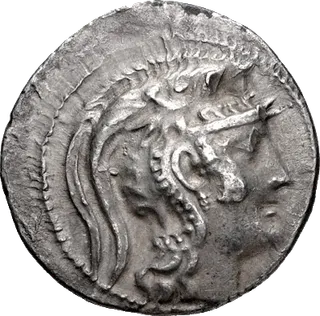
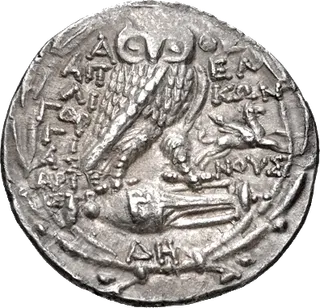
- Silver tetradrachm of Athens, 5th century BC. Athena on the front, her owl on the back.. Classical Numismatic Group, Inc., via Wikimedia Commons, CC BY-SA 2.5. Source