Medieval Coins: Gold, Silver and Cash, 500–1500
500 – 1500
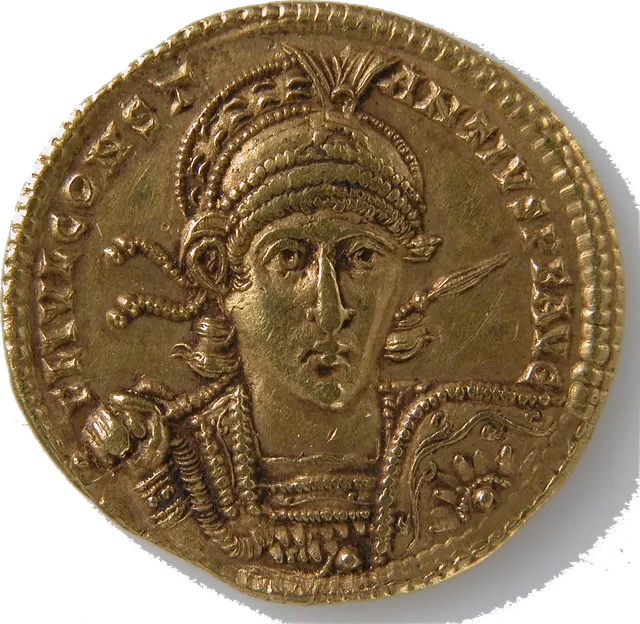
When the Western Roman Empire fell apart, the gold coin it left behind kept going in the east. Constantine's solidus, about 4.5 g of nearly pure gold, held that standard in Byzantium until the 11th century. Merchants from Ireland to India knew it.
In the late 7th century the Umayyad caliph Abd al-Malik reformed Islamic coinage. His gold dinars and silver dirhams carried only inscriptions, with no portraits, and that style lasted for centuries across the Islamic world.
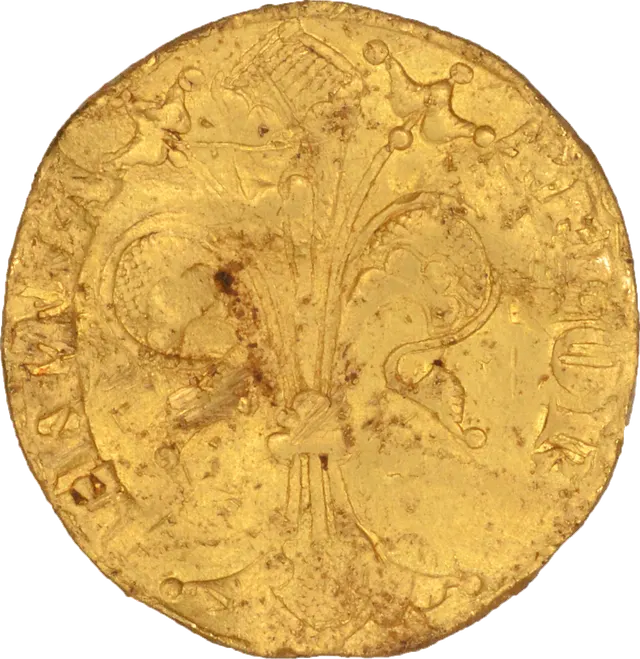
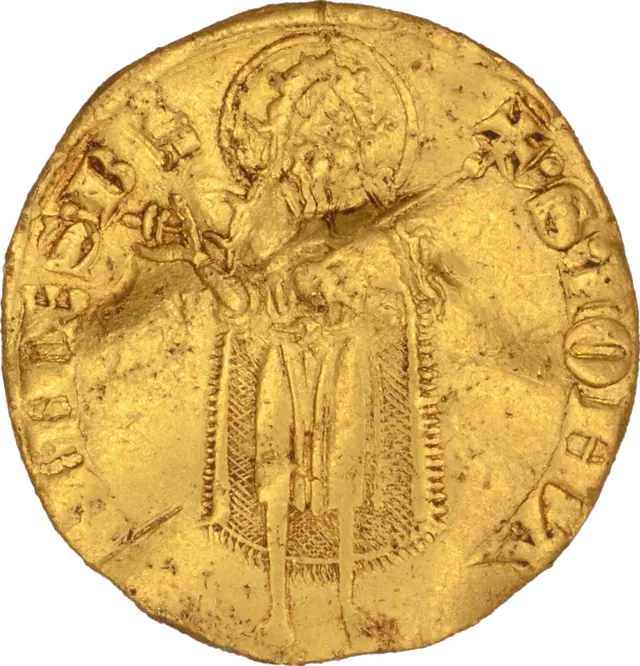
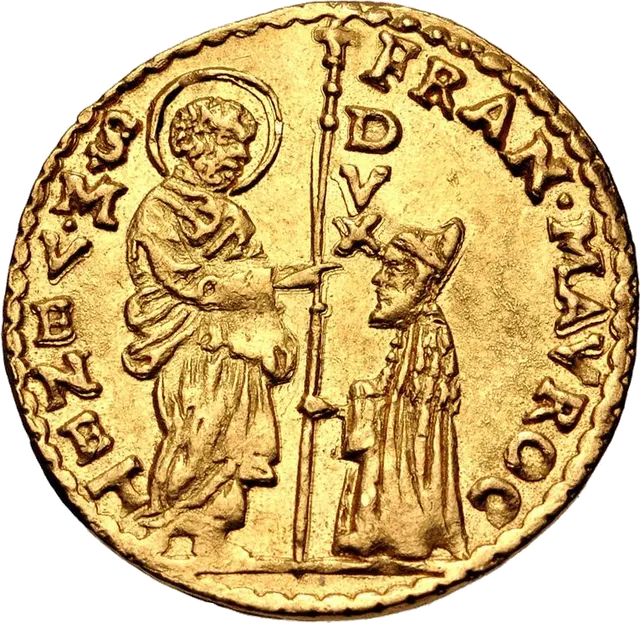
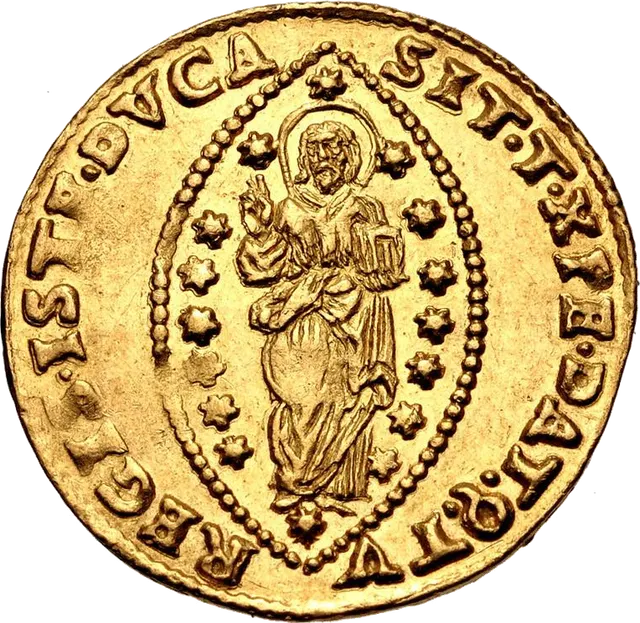
Western Europe mostly ran on silver. For hundreds of years its everyday coin was the silver penny, the denier or pfennig. For anything bigger, people counted out a lot of pennies. That changed in 1252, when Florence struck the florin, about 3.5 g of gold that barely changed for nearly 300 years. Venice followed with the ducat, and much of Europe copied both.
In the east, the Tang dynasty introduced the Kaiyuan Tongbao in 621. It became the model for Chinese cash coins for over a thousand years. Japan imported Chinese coins in such quantity that they became its everyday money.
The articles below follow each of these coin families.
Articles in this era
Part 16: Byzantine Coins: The Solidus That Lasted 700 Years
Part 17: The Islamic Dinar and Dirham
Part 18: Medieval Coins of Europe: Pennies, Groats and Bracteates
Part 19: The Florin and the Ducat: Gold of Renaissance Italy
Part 20: Coins of Medieval Japan: Mon, Koban and Oban
Part 21: Sycee and Chinese Silver
Questions people ask
What were medieval coins made of?
Mostly silver in Europe, gold and silver in Byzantium and the Islamic world, and bronze in China.
How much was a medieval penny worth?
It varied by time and place. In 13th-century England a penny was roughly a day's pay for an unskilled labourer.
Why did Islamic coins have no pictures?
After Abd al-Malik's reform in the 690s, Umayyad coins carried religious inscriptions in place of images, following Islamic norms that discouraged figures.
Image credits
- Silver penny of Edward I, 1280–81. Joe deSousa, CC0. Source
- Tang dynasty Kaiyuan Tongbao. Gary Lee Todd, CC0. Source
- Gold solidus of Constantius II. The Metropolitan Museum of Art, Open Access, CC0. Source
- Gold florin of the Republic of Florence. Suffolk County Council / Portable Antiquities Scheme, CC BY 2.0. Source
- Gold ducat (zecchino) of Doge Francesco Morosini, Venice, 1688–1694. CNG, CC BY-SA 2.5. Source