Ancient Coins: Greece, Rome, Persia, China and India
500 BC – AD 500
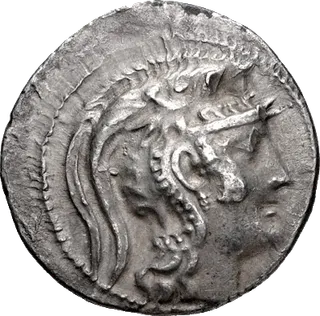
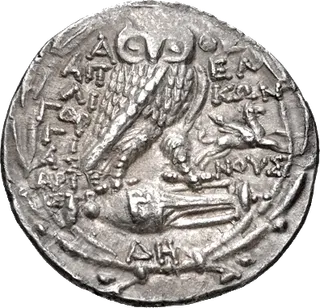
Within a century of Lydia's first coins, the idea had spread across the Greek world. Each city struck its own silver and put its own badge on it: a turtle for Aegina, a winged horse for Corinth and, most famous of all, the owl of Athens. Athens had the Laurion silver mines, and its owl tetradrachms were trusted far beyond Greece.
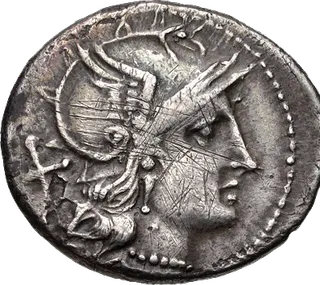
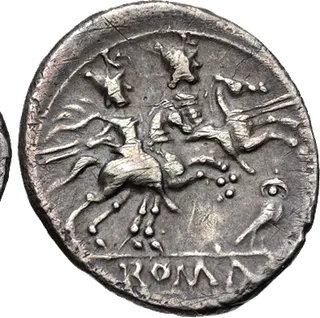
Persia answered with the gold daric. Then Rome built the longest-running coin system of the ancient world. Its silver denarius, first struck around 211 BC, paid soldiers from Britain to Syria for close to five centuries. It also slowly lost its silver as emperors stretched it to cover their bills.
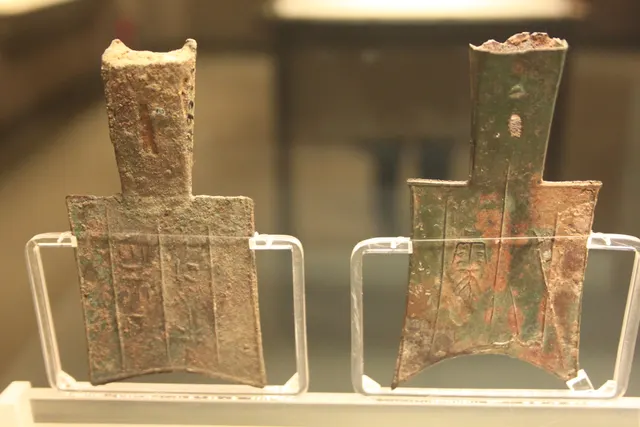
China took a different path. Its first metal money was cast bronze in the shape of spades and knives. After the Qin unified the country, the round coin with a square hole became the standard, and it stayed that way for more than 2,000 years. In India, small silver bars punched with symbols circulated from about the 6th century BC.
Ancient coins are also surprisingly easy to own. Many common Roman bronzes cost less than a good dinner, and every one was spent by someone 2,000 years ago.
The articles below go region by region.
Articles in this era
Part 6: Ancient Greek Coins: Owls, Turtles and Tetradrachms
Part 7: The Coins of Alexander the Great
Part 8: The Drachma: 2,500 Years of Greek Money
Part 9: Persian Darics and Sigloi
Part 10: Roman Coins: A Guide to Every Denomination
Part 11: The Denarius: How Rome's Silver Coin Lost Its Shine
Part 12: Roman Gold: The Aureus and the Solidus
Part 13: Celtic Coins
Part 14: Ancient Chinese Coins: Spades, Knives and Cash
Part 15: Punch-Marked Coins of Ancient India
Coins in this story
More coin pagesAureus
Coin pages on the way Athenian tetradrachm · Sestertius · Daric · Chinese cash coin
Questions people ask
Are ancient coins rare?
Not always. Rome and China struck coins in huge numbers, and hoards still turn up, so many common types are affordable. Rarity depends on the ruler, the mint and the condition.
What is the oldest Roman coin?
Rome cast heavy bronze bars and lumps before it struck coins. Its regular silver denarius began around 211 BC.
Why do Chinese coins have a square hole?
So they could be threaded on a cord. Strings of cash, often 1,000 coins, were a standard way to count large sums.
Image credits
- Silver tetradrachm of Athens, 5th century BC. Athena on the front, her owl on the back.. Classical Numismatic Group, Inc., via Wikimedia Commons, CC BY-SA 2.5. Source
- Western Han wu zhu, reign of Emperor Wu. Gary Lee Todd, CC0. Source
- Bronze spade money, Eastern Zhou China. Gary Todd, CC0. Source
- Roman Republican denarius, 194–190 BC. Classical Numismatic Group, Inc., via Wikimedia Commons, CC BY-SA 2.5. Source
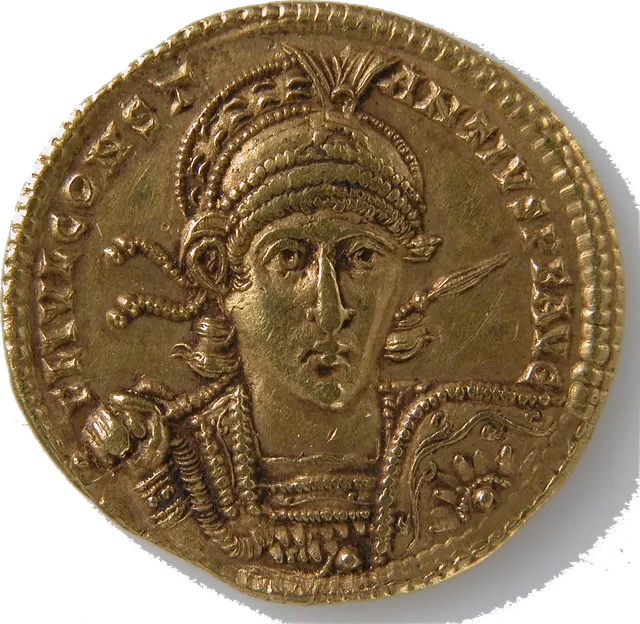
- Gold solidus of Constantius II. The Metropolitan Museum of Art, Open Access, CC0. Source