The History of the Penny
Part 30 of the Americas series4 min read
How the US penny went from a big copper coin in 1793 to a zinc cent nobody wanted, including the 1943 steel cent and the last circulating strike in 2025.
The United States made pennies for 232 years. The first ones were big copper coins about the size of a modern half dollar. The last circulating ones came off a press in Philadelphia on November 12, 2025, and cost more than three times their face value to make.
In between, the penny changed size, metal and face more often than any other American coin. Here's how that happened.
The big copper cent (1793–1857)
The Coinage Act of 1792 set up the US Mint and fixed the cent at one hundredth of a dollar. It also called for a lot of copper: eleven pennyweights per coin, about 17 grams.
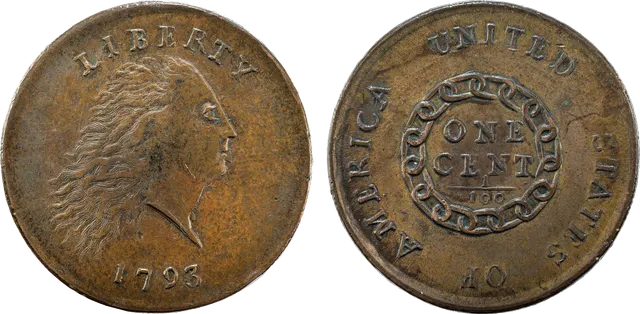
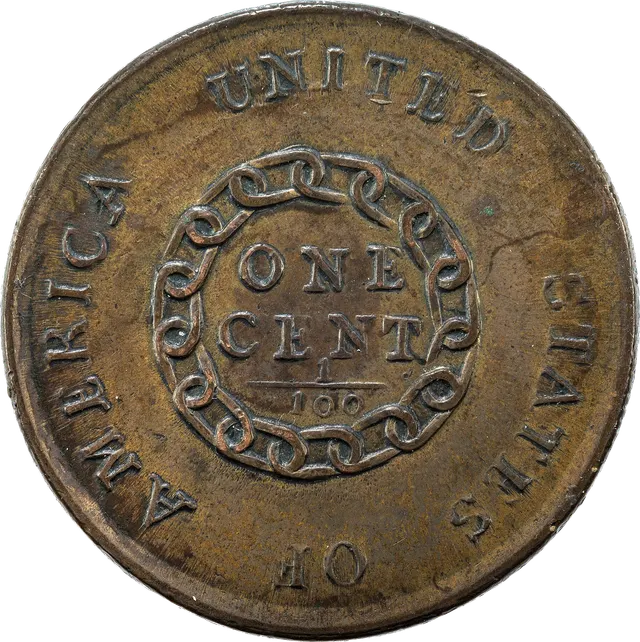
The Mint's first circulating coins were cents. In March 1793 it delivered 11,178 of them. Their reverse showed a ring of linked chains, meant to stand for the unity of the states. People didn't like it. Some read the chain as a symbol of slavery, and the wild-haired Liberty on the front got mocked too. Within weeks the Mint swapped the chain for a wreath.
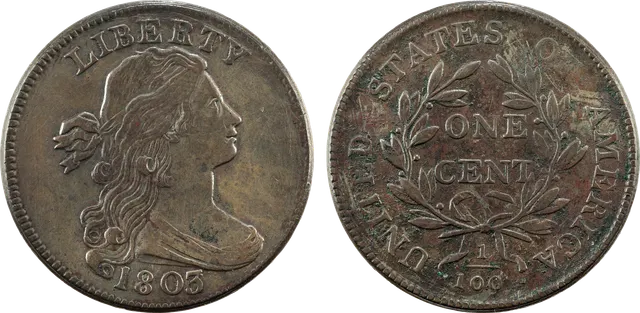
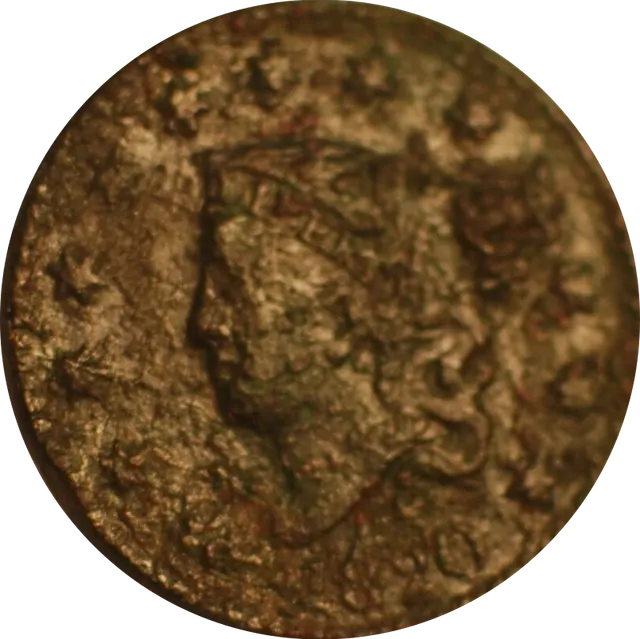
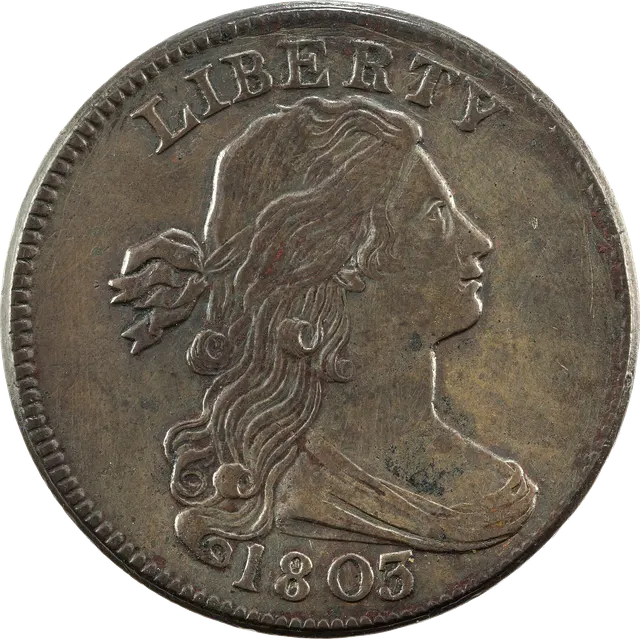
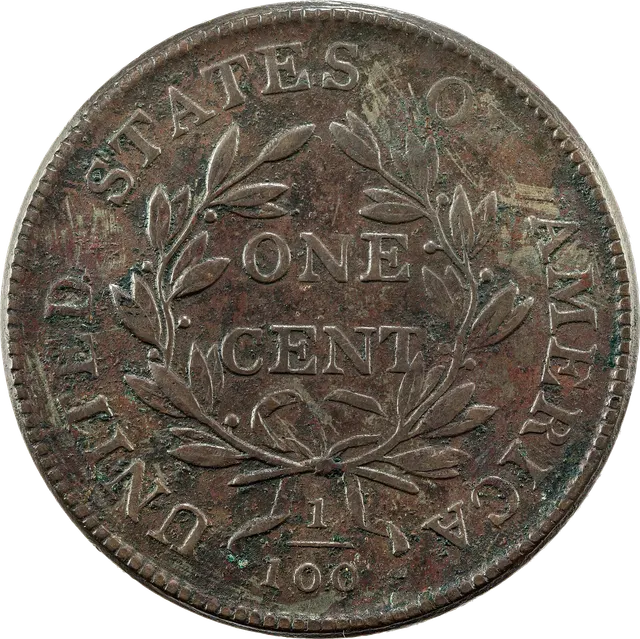
Over the next 64 years the "large cent" went through six designs:
- Chain and Wreath (1793)
- Liberty Cap (1793–1796)
- Draped Bust (1796–1807)
- Classic Head (1808–1814)
- Coronet, also called Matron Head (1816–1839)
- Braided Hair (1839–1857)
There are no cents dated 1815. The War of 1812 cut off the Mint's supply of copper blanks, which came from Britain.
Large cents were heavy, awkward and expensive. By the 1850s copper prices had climbed so far that the Mint was losing money on every one it struck.
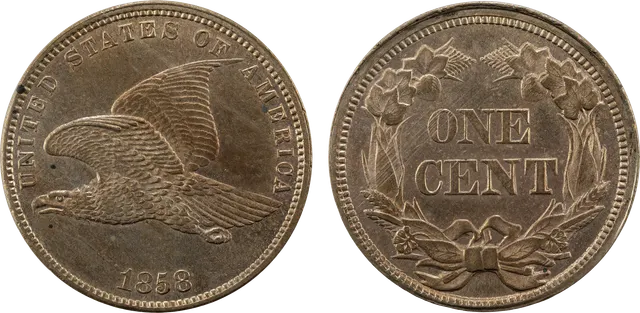
The Flying Eagle cent (1856–1858)
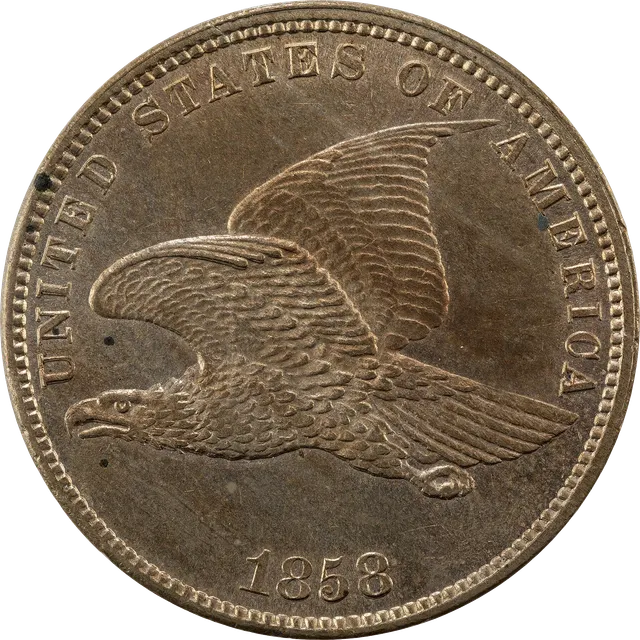
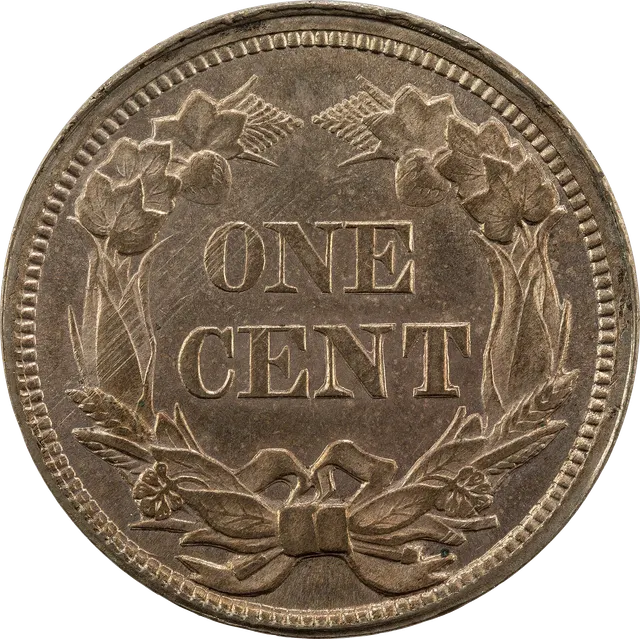
The fix was a smaller coin. In 1856 the Mint struck pattern cents showing an eagle in flight, designed by chief engraver James B. Longacre, and handed them to members of Congress. The Act of February 21, 1857 approved the new cent.
The Flying Eagle cent was 19 mm across and weighed 4.67 grams. It was made of 88% copper and 12% nickel, which gave it a pale colour, and people called them "white cents." The public could swap old large cents and Spanish silver for them at the Mint starting in May 1857, and the crowds were huge.
The design had a problem. The eagle was struck opposite the wreath on the reverse, and the metal didn't flow well into either side. After two years of production it was replaced.
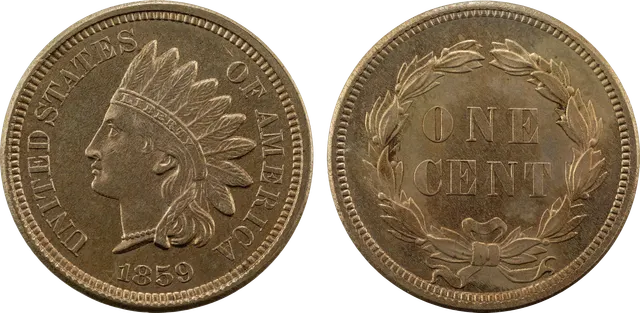
The Indian Head cent (1859–1909)
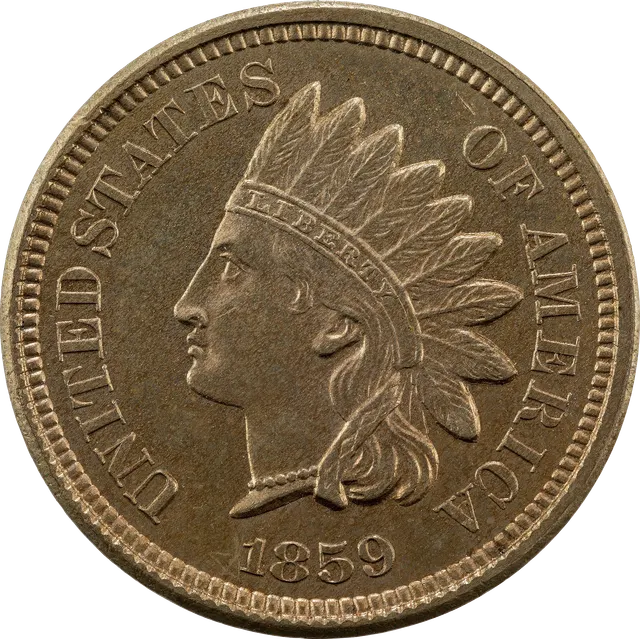
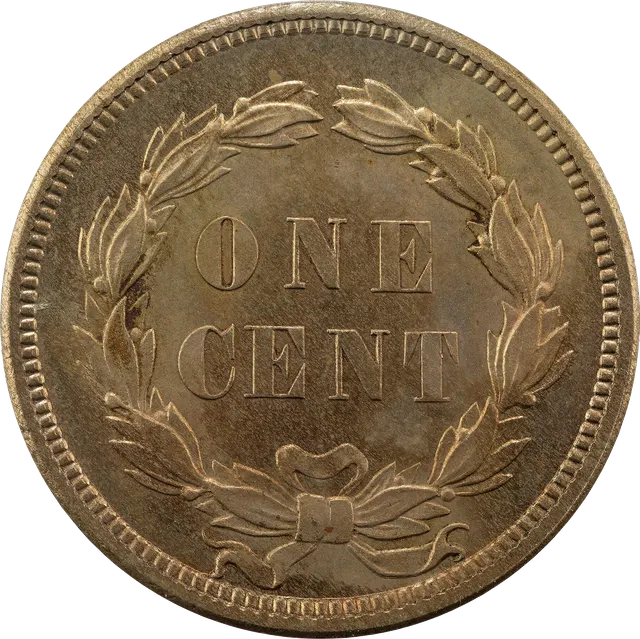
Longacre's next design put Liberty in a Native American feathered headdress. It ran for 50 years.
The Civil War changed it. In 1862 people started hoarding coins of every kind, and the copper-nickel cents disappeared from circulation. In 1864 Congress switched the cent to bronze: 95% copper with tin and zinc making up the rest. The new coins were thinner and lighter, at 3.11 grams. That weight held until 1982.
Lincoln arrives (1909)
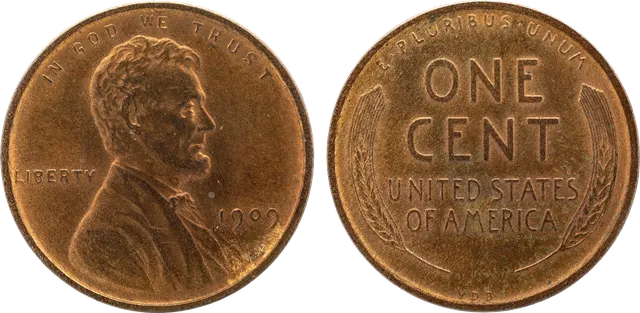
In 1909, the 100th anniversary of Abraham Lincoln's birth, the Indian Head cent was retired. Its replacement, by sculptor Victor David Brenner, was the first regular-issue US circulating coin to show a real person.
The reverse had two wheat ears. Brenner put his initials, V.D.B., near the bottom. That caused a fuss, and the Mint removed them within days. Only 484,000 cents with the initials were struck in San Francisco, and the 1909-S VDB is now the key date collectors hunt for. The initials came back in 1918, small, on Lincoln's shoulder.
The 1943 steel cent
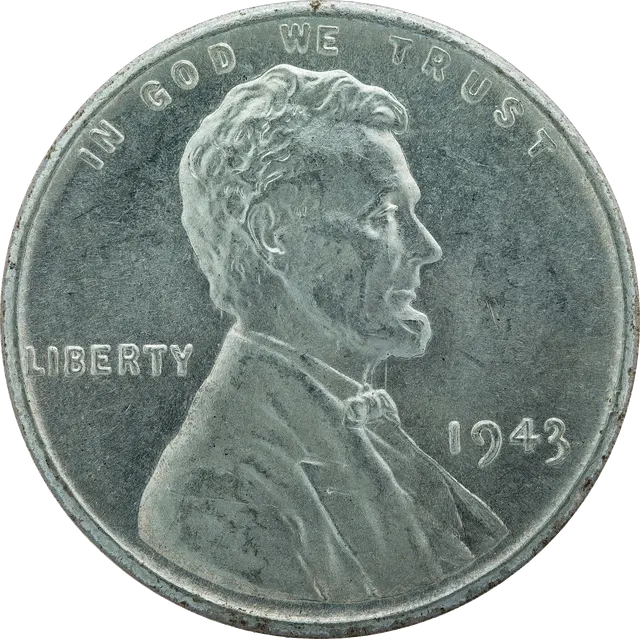
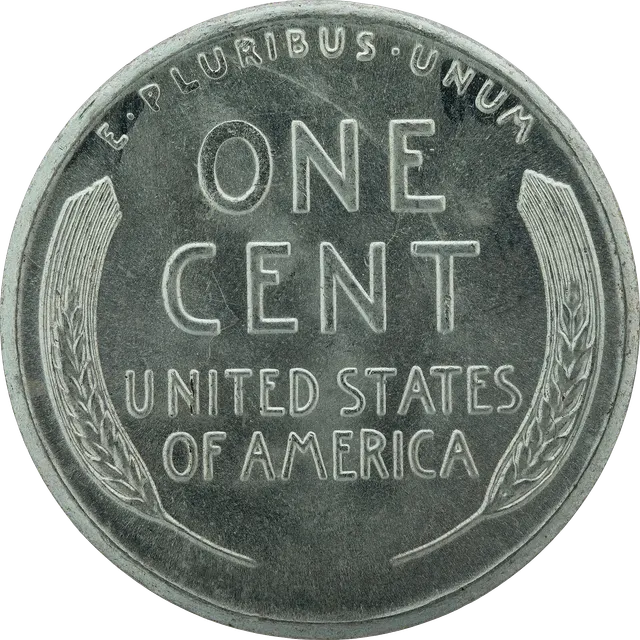
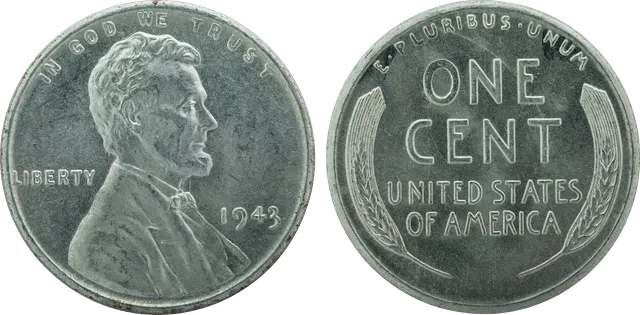
World War II needed copper for shell casings and wiring. So in 1943 the Mint made cents out of steel with a thin zinc coating. It struck about 1.1 billion of them at Philadelphia, Denver and San Francisco.
They were not a success. People mistook them for dimes, and once the zinc wore off, the steel underneath rusted.
A few bronze blanks left over from 1942 got struck by mistake in 1943. These 1943 copper cents are among the most famous error coins in the country, and real ones have sold for six figures. Most "1943 copper pennies" people find are fakes or plated steel. A magnet test is the first check.
From 1944 to 1946 the Mint used a brass alloy that included metal from recycled ammunition cases.
Memorials, shields and zinc (1959–2024)
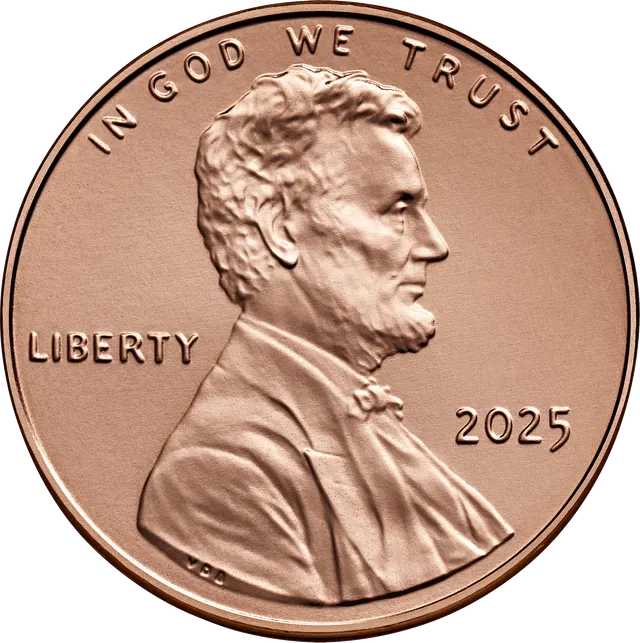
In 1959, for Lincoln's 150th birthday, Frank Gasparro's Lincoln Memorial replaced the wheat ears. In 2009 four one-year reverses marked the bicentennial of his birth. Since 2010 the reverse has shown a union shield.
The bigger change was invisible. Copper got expensive again, and partway through 1982 the Mint switched to a zinc core with a thin copper plating. A modern cent is 97.5% zinc and weighs 2.5 grams. That's why there are both bronze and zinc 1982 cents.
Even zinc didn't save it. In fiscal 2024 each cent cost 3.69 cents to make and ship.
The last penny (2025)
In February 2025 President Trump told the Treasury to stop making pennies. In May the Treasury said it had placed its last order for penny blanks and would stop once they ran out.
On November 12, 2025, US Treasurer Brandon Beach struck the last circulating cent at the Philadelphia Mint. The Mint said the move would save about $56 million a year. It estimates around 300 billion cents are still out there.
The final coins carry a small omega mark (Ω), and they never went into circulation. In December 2025, Stack's Bowers Galleries auctioned 232 three-coin sets on the Mint's behalf for a total of $16.76 million. Set #232 sold for $800,000.
In September 2026 Congress passed the Common Cents Act, which writes the end of the circulating penny into law and lets businesses round cash payments to the nearest five cents.
Is the penny still money?
Yes. The cent is still legal tender, and banks still take it. The Mint has stopped making pennies for circulation, but it still makes small numbers for collector sets. Only cash payments get rounded. Card payments stay exact to the cent.
So if you've got a jar of them, they're still worth exactly what they say. Some may be worth more. Check for wheat reverses, 1943 steel cents and anything dated before 1982.
Want to see how it lands? Flip a Lincoln cent or try the coin flipper.
Questions people ask
When did the US stop making pennies?
The US Mint struck its last circulating cent on November 12, 2025, in Philadelphia. It still makes small numbers of collector cents for sets.
Are pennies still legal tender?
Yes. Pennies are still legal tender and banks still accept them. Some shops round cash totals to the nearest five cents because pennies are getting hard to find.
Why was the 1943 penny made of steel?
Copper was needed for World War II. The Mint used zinc-coated steel for one year and struck about 1.1 billion steel cents.
What was the first US penny?
The 1793 Chain cent, a large copper coin. The Mint delivered its first 11,178 cents in March 1793.
How much did a penny cost to make?
In fiscal 2024, each penny cost 3.69 cents to make and distribute, up from about 1.42 cents ten years earlier.
Sources
- US Mint press release, "United States Mint Hosts Historic Ceremonial Strike for Final Production of the Circulating One-Cent Coin" (Nov 2025)
- Smithsonian National Numismatic Collection, object records for the 1793, 1803, 1858, 1859, 1909 and 1943 cents (via the Commons files above)
- Stack's Bowers Galleries, Flying Eagle Cent reference (1856–1858)
- Newman Numismatic Portal, Flying Eagle cent series encyclopedia
- Stack's Bowers press release, "Last 'Omega' Pennies Sell for Over $16.76 Million"
- CoinNews, "Last US Circulating Pennies Shine in Landmark Auction" (Dec 11, 2025)
- ABA Banking Journal, "House passes revised version of Common Cents Act" (Sept 2026)
- Congress.gov, S.1525 Common Cents Act
- Wikipedia, "Penny (United States coin)" and "1943 steel cent" (cross-check only)
Coins in this story
- Large cent
- Flying Eagle cent
- Indian Head cent
- Penny
- 1943 steel cent