Tap the coin to flip it
The US Penny (Lincoln Cent)
United States1¢1793–2025 for circulation; Lincoln design since 1909; collector issues only from 2026
Current lowest-value American coin
Specs (current Lincoln cent)
- Issuer
- United States Mint
- Denomination
- 1 cent
- Years minted
- 1793–2025 for circulation; Lincoln design since 1909; collector issues only from 2026
- Metal
- Copper-plated zinc: 97.5% zinc, 2.5% copper (since 1982). Before that, mostly bronze, 95% copper
- Weight
- 2.5 g (3.11 g for 1864–1982 copper cents)
- Diameter
- 19.05 mm
- Thickness
- 1.52 mm
- Edge
- Plain
- Designers
- Victor David Brenner (portrait, 1909); Lyndall Bass (union shield reverse, 2010)
- Mints
- Philadelphia (no mark, P in 2017), Denver (D), San Francisco (S)
In the hand
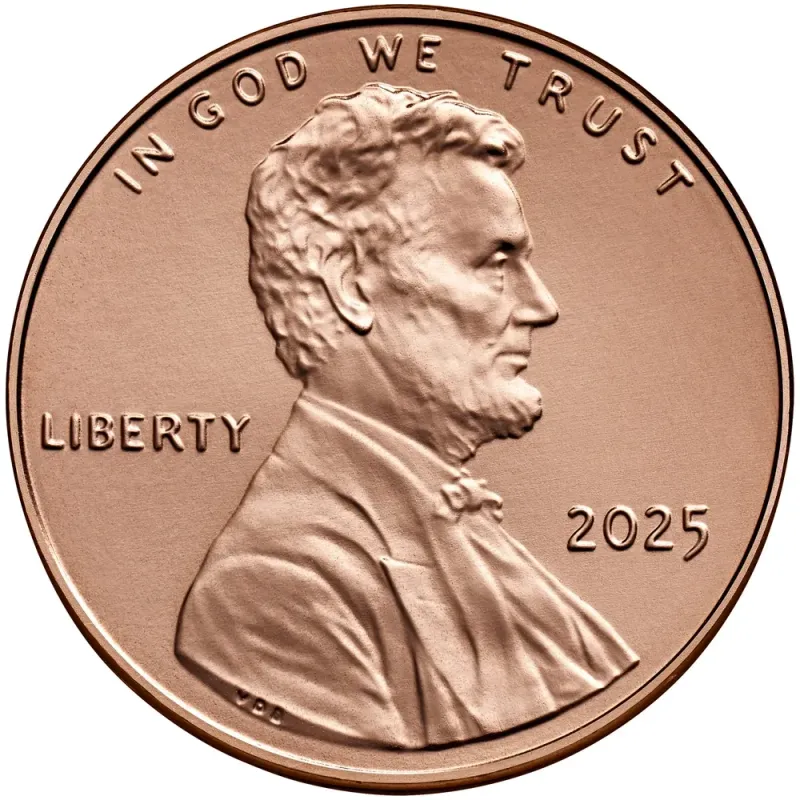
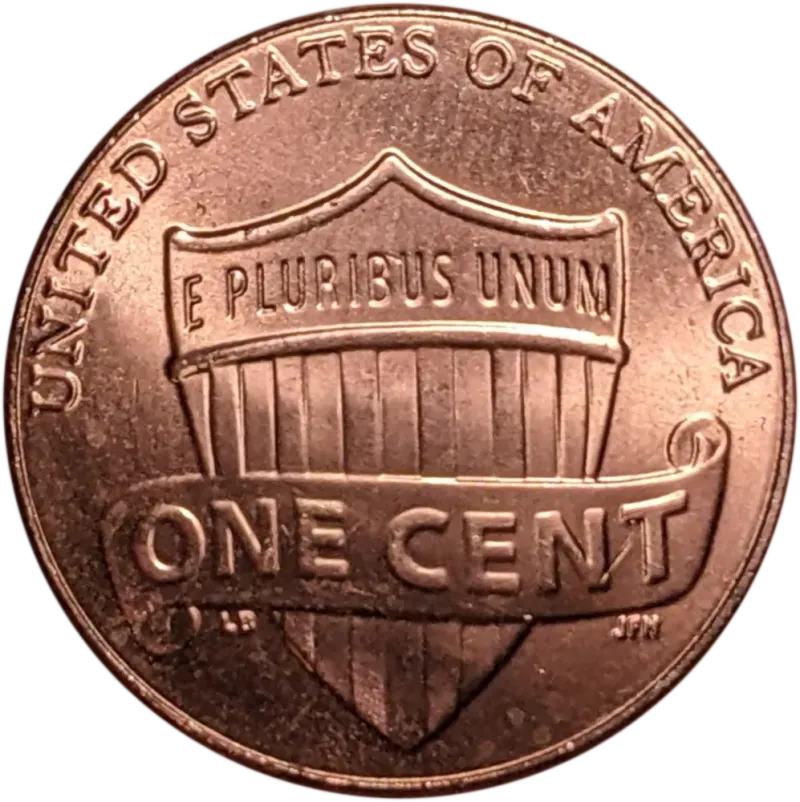
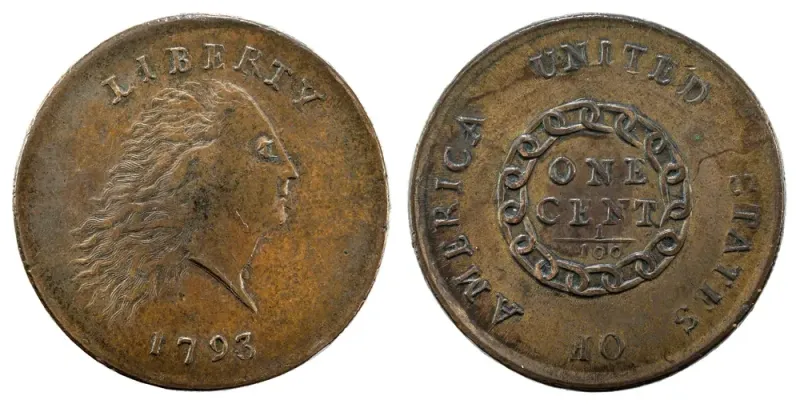
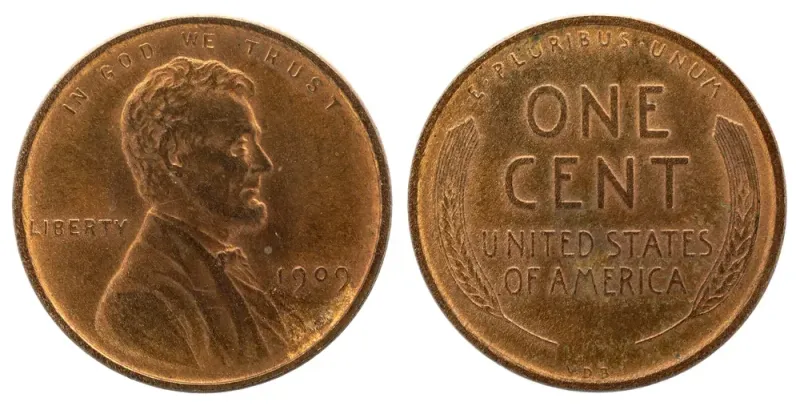
The story of the Penny
The penny is the US one-cent coin. Its official name is the cent, and it's worth 1/100 of a dollar. The version in nearly every jar today is the Lincoln cent, which has carried Abraham Lincoln's portrait since 1909.
The cent was among the very first coins the US Mint struck, in 1793. Those early "large cents" were pure copper and nearly the size of a half dollar. In 1857 the Mint switched to a small cent, first the Flying Eagle and then the Indian Head. The size it settled on, 19 mm, hasn't changed since.
Victor David Brenner designed the Lincoln cent for the 100th anniversary of Lincoln's birth. It was the first regular US coin to show a real person. The reverse has changed four times:
- Wheat ears: 1909–1958
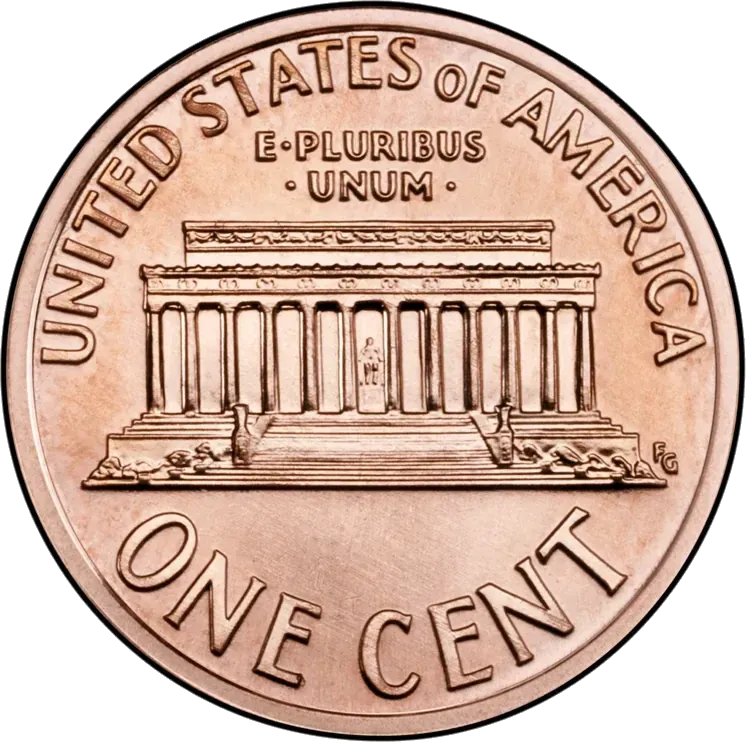
- Lincoln Memorial: 1959–2008
- Four bicentennial designs: 2009, one for each stage of Lincoln's life
- Union shield: 2010 onward
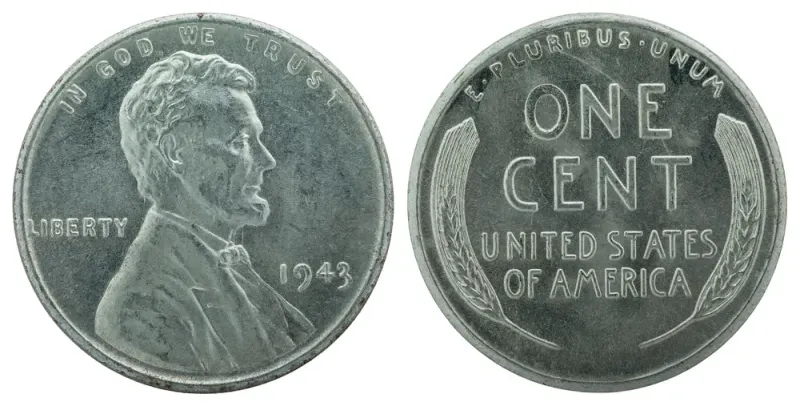
The metal has changed more often than the design. Lincoln cents were bronze, about 95% copper, until partway through 1982. Then the Mint switched to a zinc core with a thin copper coating to save money. You can tell the two apart by weight. A copper cent weighs 3.11 g, and a zinc one weighs 2.5 g. Both kinds exist for 1982. In 1943 the cent was made of zinc-coated steel, because copper was needed for the war. A magnet will pick one up.
Look for the mint mark under the date. D is Denver and S is San Francisco. Philadelphia cents have no mark, except in 2017, when they carried a P for the Mint's 225th anniversary.
Collectors hunt for a handful of Lincoln cents:
- 1909-S VDB, with the designer's initials and only 484,000 struck
- 1914-D, a low-mintage Denver date, and the semi-key 1931-S
- 1955 doubled die, with the date and lettering clearly doubled
- 1943 bronze, struck by mistake on leftover copper blanks
The US Mint struck its last pennies for circulation on 12 November 2025. The cent is still legal tender, and the Mint still makes small numbers for collector sets, including 2026 cents with the double date 1776–2026. The history article linked below tells the whole story, from the 1793 chain cent to the last strike.
From the encyclopedia
The penny, officially "one cent", is a United States coin worth one cent, equal to 1⁄100 of a dollar ($0.01). It has been the lowest face-value coin or banknote of U.S. currency since the abolition of the half-cent coin in 1857. Introduced in 1793, it has only been produced for collectors since 2026.
From Penny (United States coin) on Wikipedia, text under CC BY-SA 4.0. Fetched November 3, 2026.
Questions people ask
How can I tell if a penny is copper or zinc?
Weigh it. Copper cents weigh 3.11 g and zinc cents 2.5 g. Anything dated 1981 or earlier is copper, and 1983 or later is zinc. 1982 comes in both.
Is the penny still legal tender?
Yes. The Mint stopped striking pennies for circulation in November 2025, but existing cents are still legal money.
Where is the mint mark on a penny?
Under the date on the front. D means Denver and S means San Francisco. Most Philadelphia cents have no mark.