Tap the coin to flip it
Chinese Cash Coin (221 BC – AD 1912)
ChinaCashChina 221 BC – AD 1912 (Vietnam until 1945)
- Issuer
- Qin, Han, Tang and later Chinese dynasties (also Japan, Korea and Vietnam)
- Denomination
- Cash (one coin); large sums were counted in strings of nominally 1,000
- Years minted
- China 221 BC – AD 1912 (Vietnam until 1945)
- Metal
- Cast bronze
- Weight
- Qin ban liang nominally 12 zhu (about 8 g); Kaiyuan Tongbao standard 10 coins = 1 liang
- Diameter
- Qin ban liang often about 30 mm
- Designs
- Round with a square hole; inscription on the front, back usually plain
In the hand
The story of the Chinese cash coin
The Chinese cash coin is the round bronze coin with a square hole in the middle. China made it the single legal coin of the empire in 221 BC and kept casting it, in one form or another, for more than 2,000 years.
Cash coins were cast, not struck. Workers poured molten bronze into moulds that made many coins at once, then broke the coins off once the metal had cooled. The hole let people string them on a cord, which was the easiest way to carry, store and count them. Chinese tradition also reads the shape as heaven (the round coin) and earth (the square hole).
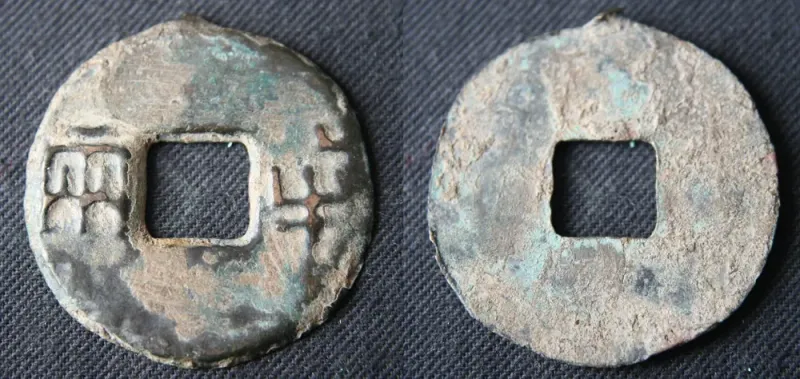
The ban liang, 221 BC
The state of Qin had been casting round coins with a square hole for decades before it conquered its rivals. When its king became the first emperor in 221 BC, he abolished the spade, knife and ant-nose money of the defeated states and made the ban liang ("half a liang") the only legal coin. It was nominally 12 zhu, about 8 grams, and often about 30 mm across, though real coins varied a lot.
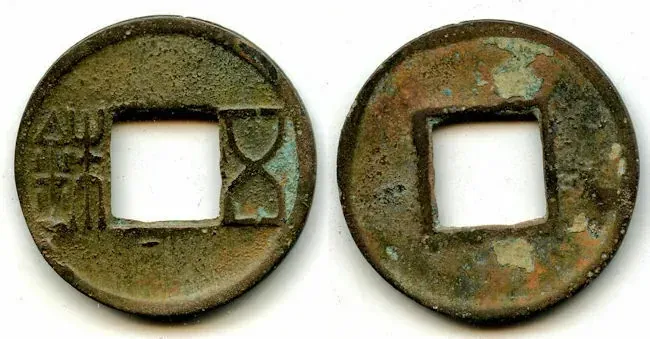
The wu zhu, 118 BC
In 118 BC Emperor Wu of Han replaced the drifting ban liang with the wu zhu ("five zhu"). The wu zhu inscription stayed in use for more than 700 years, apart from Wang Mang's short-lived reforms of AD 9 to 23.
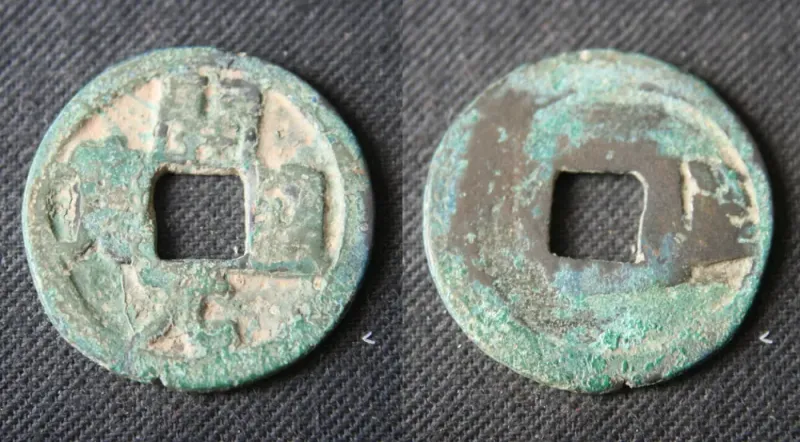
The Kaiyuan Tongbao, 621
In 621 the Tang dynasty retired the wu zhu for the Kaiyuan Tongbao, "circulating treasure". Ten coins had to weigh exactly one liang. Its four characters around the hole set the pattern for almost every Chinese coin that followed. Japan, Korea and Vietnam cast their own cash coins too, often copying Chinese inscriptions and standards.
The last cash coins
China cast its last cash coins in 1912, at Dongchuan in Yunnan. Vietnam kept going a little longer: the Bảo Đại Thông Bảo, cast under its last emperor until 1945, is usually counted as the last cash coin made anywhere.
The full story, from spade and knife money to the Song dynasty's billions of coins, is in the history article linked on this page.