The Most Circulated Coins in Every Era of History
A roundup across every era6 min read
From Athenian owls to Chinese cash, Spanish dollars and the Lincoln cent: the coins that filled pockets and purses in every era of history, and how we know.
Ask a historian which coin was "the most common" and you'll usually get a question back: common where, and when? Nobody counted the world's coins in 450 BC. What we have instead are mint records, ancient writers, and the coins themselves, dug up by the thousand in hoards from Spain to China.
That evidence is enough to name a winner for most eras. Here are the coins that ordinary people were most likely to hold, era by era, from the first silver owls to the copper cent.
How we picked them
We looked at three things:
- Output. How many were made, where records survive.
- Reach. How far from home the coin travelled and was still accepted.
- Staying power. How long it stayed in use.
A coin had to do well on at least two of the three. That's why the Athenian owl makes the list and the gold Persian daric doesn't.
Ancient Greece: the Athenian owl (c. 510–300 BC)
Era: Ancient world
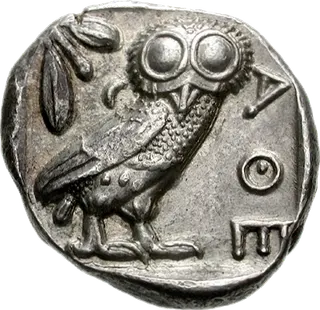
From about 510 BC, the silver tetradrachm of Athens showed Athena on one side and her owl on the other. Greeks just called the coins "owls".
Athens had something its rivals didn't: the silver mines at Laurion in southern Attica. In 483 BC miners hit a rich new vein. On Themistocles' advice the city spent the windfall on warships instead of sharing it out among the citizens, and the coins kept coming.
An owl weighed about 17.2 grams of nearly pure silver. Merchants trusted it so much that people far outside Greece copied it. Copies were made in Egypt, where archaeologists found a die for striking fake owls, and in the kingdom of Saba' in southern Arabia.
Read more: Ancient Greek Coins: Owls, Turtles and Tetradrachms
Rome: the denarius (211 BC – c. AD 240)
Era: Ancient world · Coin page: Denarius
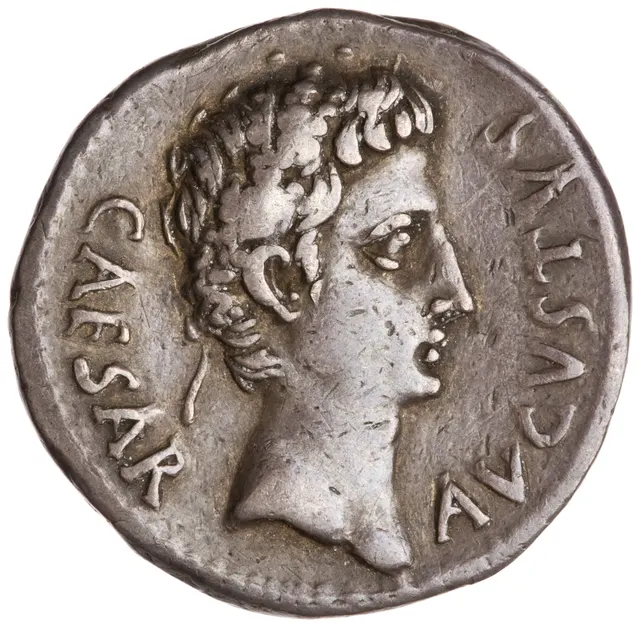
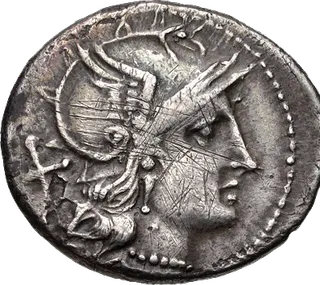
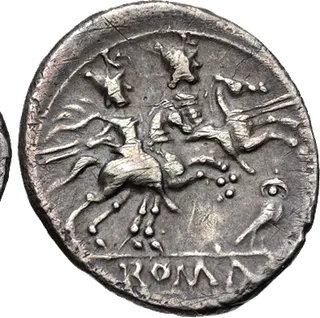
Rome's silver denarius first appeared around 211 BC, during the war with Hannibal. It weighed about 4.5 grams of almost pure silver. For more than 400 years it was the coin Roman soldiers were paid in, and it went wherever the legions went, from Britain to Syria.
You can still hear it today. The "d" in Britain's old £sd money stood for denarius, and the word lives on in dinar and the Spanish dinero.
The trouble was that emperors kept needing more coins than they had silver, so they made each denarius a little lighter and a little less pure. In AD 215 Caracalla added a bigger coin, the antoninianus, and by the 240s it had pushed the denarius aside. It didn't last either. By the 260s an antoninianus held only a few percent silver.
Read more: Roman Coins: A Guide to Every Denomination · Coin Clipping, Debasement and Gresham's Law
China: the cash coin (221 BC – 1912)
Era: Ancient world
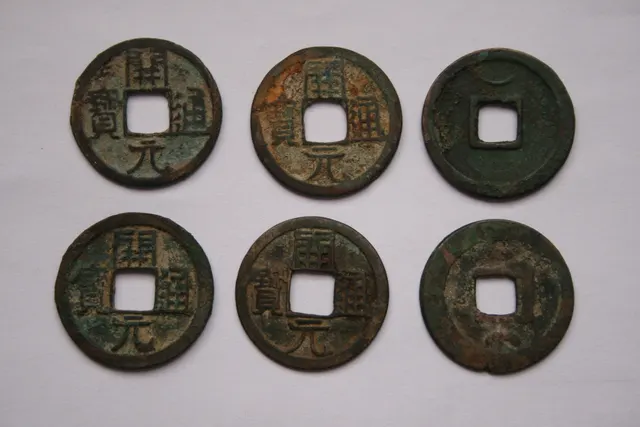
If you only count numbers, the contest ends here. China's round bronze coin with a square hole was cast for over 2,000 years, and some years the output ran into the billions.
The Qin dynasty standardised the round, square-holed shape after unifying China in 221 BC. In 118 BC the Han emperor Wu introduced the wu zhu. The British Museum puts Western Han output at around 28 billion wu zhu, and the coin stayed in use for about seven centuries.
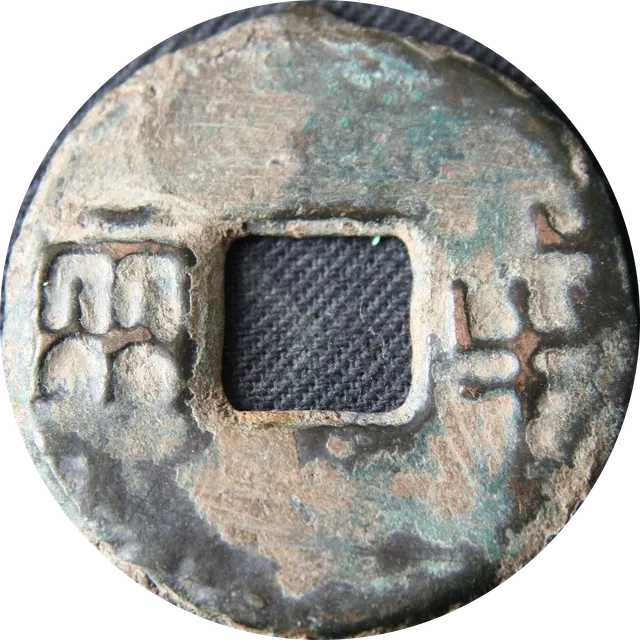
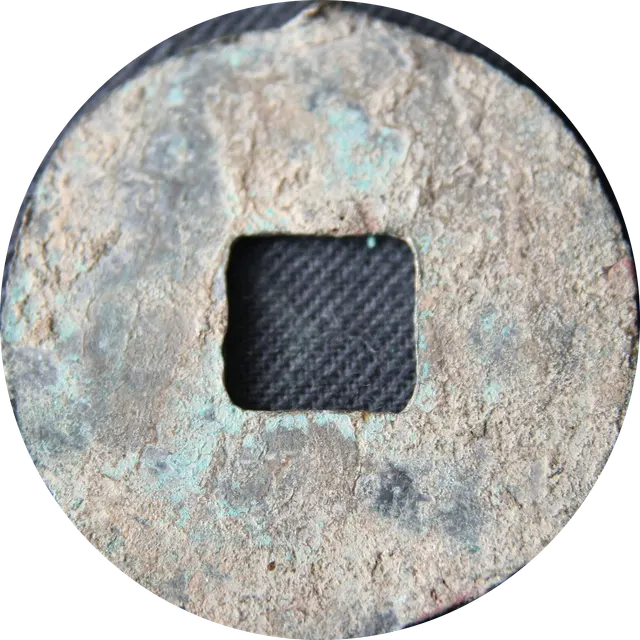
In 621 the Tang dynasty replaced it with the Kaiyuan Tongbao, the coin in the photo above. Under the Song dynasty production peaked. Between about 1073 and 1085 the state mints cast 5 to 6 million strings of coins a year. At a thousand coins to a string, that's 5 to 6 billion coins a year.
Cash coins were threaded on strings through the square hole, so people could carry and count them in bundles of a thousand. The last ones were cast in the final years of the Qing dynasty, which fell in 1912.
Read more: Ancient Chinese Coins: Spades, Knives and Cash
The early Middle Ages: the gold solidus (AD 309 – 11th century)
Era: Medieval · Coin page: Solidus
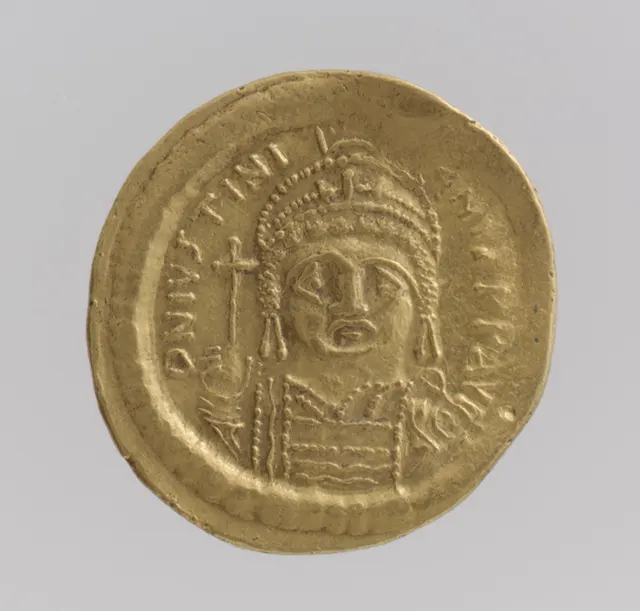
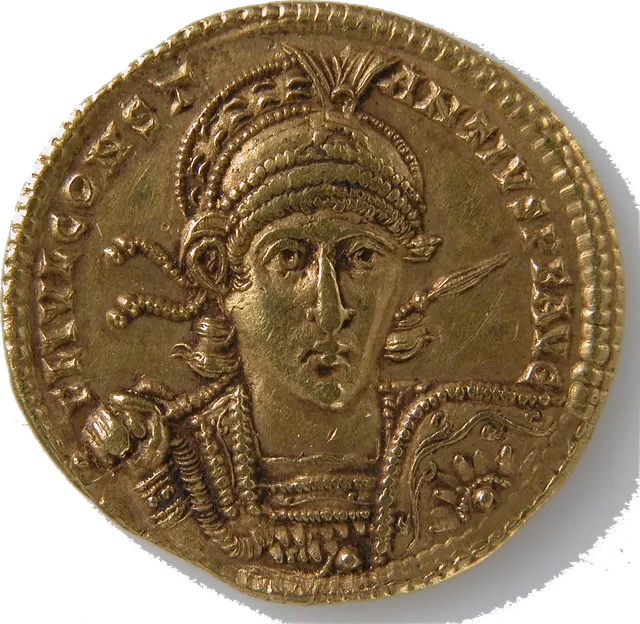
Constantine the Great introduced the gold solidus around AD 309, at 72 coins to the Roman pound (about 4.5 grams of pure gold each). Then it barely changed. The Byzantine emperors kept its weight and purity almost the same for about seven centuries.
Merchants trusted a coin that didn't change. In 1951 the historian Robert Lopez called the solidus "the dollar of the Middle Ages".
Few ordinary people ever held one, though. Everyday shopping used small bronze coins. The solidus makes this list because everyone else measured their money against it. Debasement finally began in the 1030s, and in 1092 Alexios I replaced the solidus with a new gold coin, the hyperpyron.
Read more: Byzantine Coins: The Solidus That Lasted 700 Years
Medieval Europe: the silver penny (c. 760s–1279)
Era: Medieval
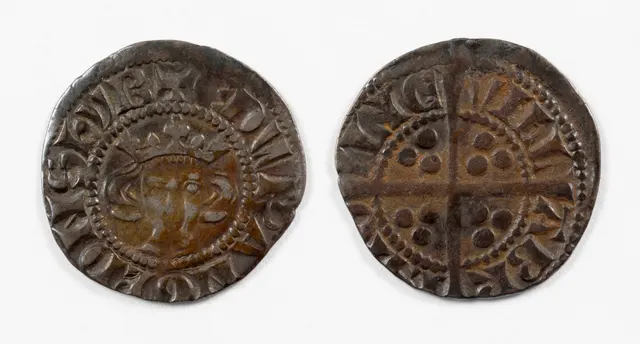
In medieval Europe, the coin in a peasant's purse was a small, thin silver penny. In England it was nearly the only coin for about 500 years. Kings in Kent and East Anglia struck the first broad silver pennies in the 760s, and Offa of Mercia soon made them in large numbers. Apart from a few halfpennies and a short-lived gold penny, it stayed that way until Edward I's recoinage of 1279–80 added the groat, the farthing and a round halfpenny.
English pennies were good silver, and the word sterling probably comes from them.
Islamic silver was travelling too. Dirhams flowed north along Viking trade routes, and more than 70,000 have been found on the Swedish island of Gotland alone. One hoard there, at Spillings, held about 14,000.
Read more: Medieval Coins of Europe: Pennies, Groats and Bracteates
The age of trade: the Spanish dollar (1497–1857)
Era: Trade empires · Coin page: Spanish dollar
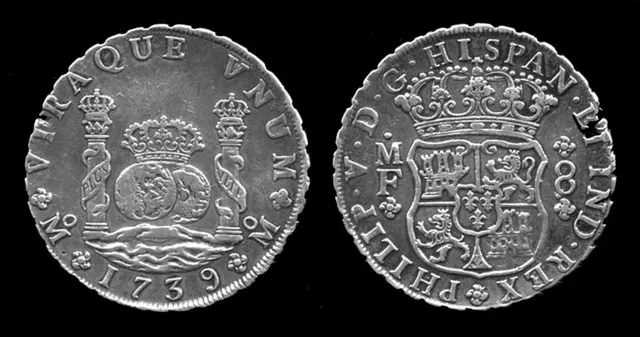
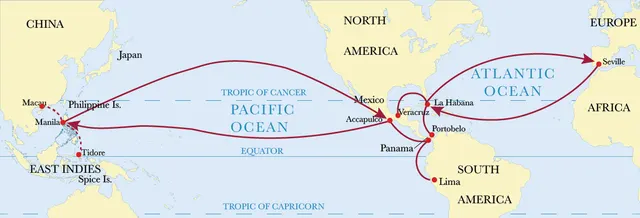
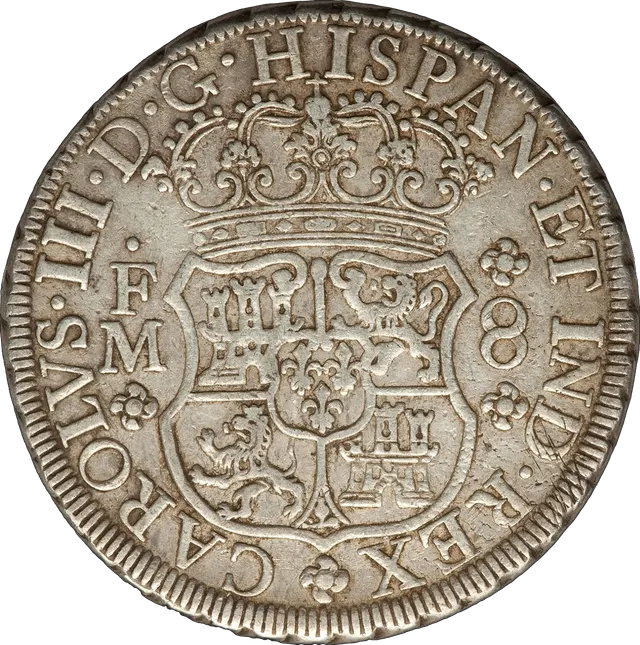
The Spanish 8-reales coin, the "piece of eight," is the best candidate for the world's first global currency.
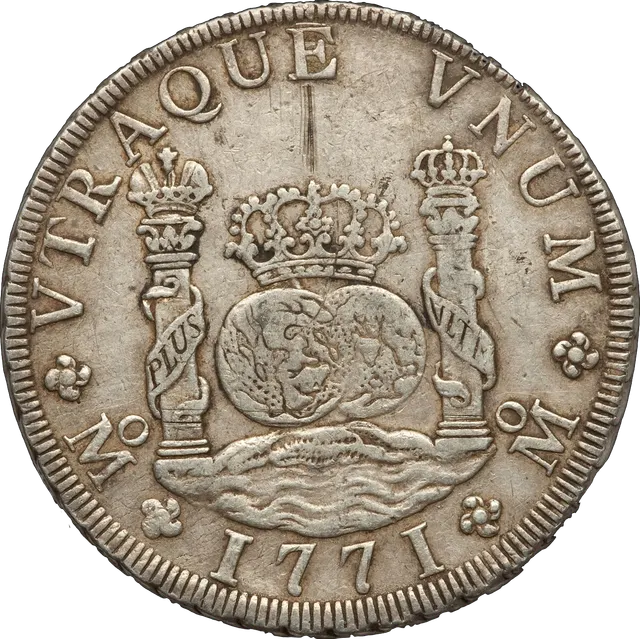
Spain's 1497 coinage reform created the 8 reales. The mint at Mexico City opened in the 1530s and the one at Potosí, in today's Bolivia, around 1574. Between them they turned American silver into coins by the shipload. From 1565 to 1815 the Manila galleons carried the coins across the Pacific to pay for Chinese silk and porcelain. Chinese merchants punched them with small "chop marks" to show they had tested the silver.
They were just as common around the Atlantic. The American colonies used them widely, and the new US dollar was modelled on them. Foreign coins like the Spanish dollar stayed legal tender in the United States until the Coinage Act of 1857.
Read more: Pieces of Eight: The Spanish Dollar, First Global Currency · The Thaler: The Coin That Named the Dollar
The 18th to 20th centuries: the Maria Theresa thaler (1741 – today)
Era: Trade empires · Coin page: Thaler
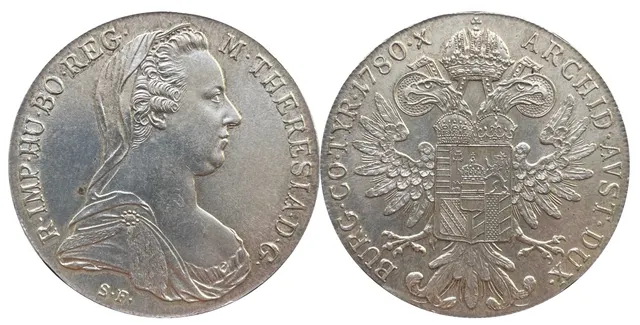
Empress Maria Theresa died in 1780, and almost every one of her thalers made since then carries that date.
The big silver coin became trusted money in places Austria never ruled: Ethiopia, Yemen, Oman and much of East Africa. Traders there knew the empress's portrait and preferred it to unfamiliar coins, so Austria kept striking the 1780 design long after her death. Mints in London, Birmingham, Paris, Rome, Brussels and Bombay struck it too. One estimate puts the total at about 389 million coins between 1751 and 2000. During the Second World War, Britain struck thalers to pay for operations in Ethiopia.
It was still everyday money in parts of Ethiopia and Arabia well into the 20th century, and the Austrian Mint still sells new ones.
Modern times: the Lincoln cent (1909–2025)
Era: Modern and The Americas · Coin page: US penny
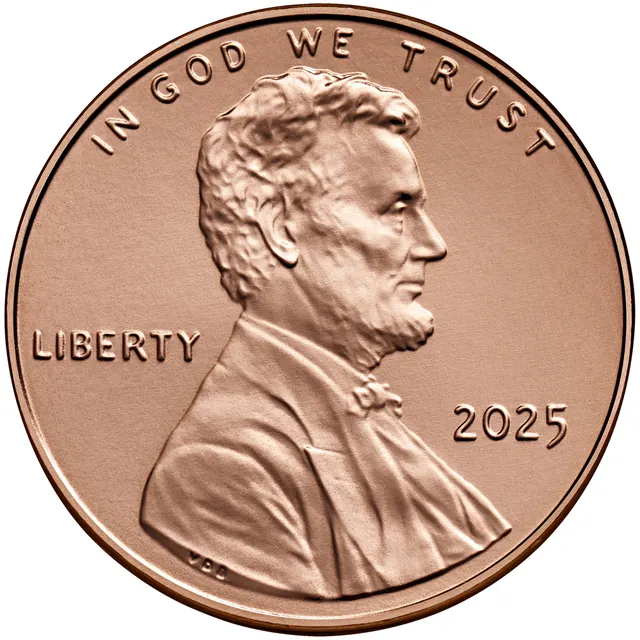
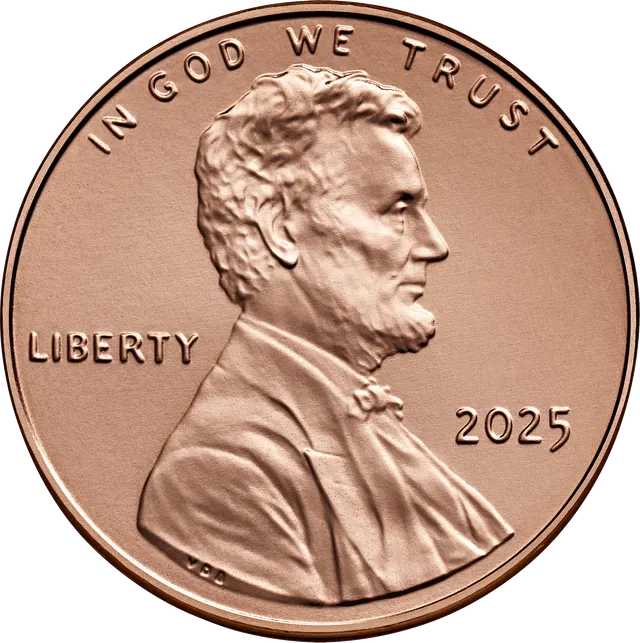
The modern winner is small and copper-coloured. The Lincoln cent arrived in 1909 for the centenary of Abraham Lincoln's birth. It was the first regular US coin to show a real person. Some years the Mint struck more than ten billion, and the total passed 500 billion. That makes it the most-produced coin design with recorded mintages.
Then it stopped. A cent cost more than a cent to make, and on 12 November 2025 the Philadelphia Mint struck the last circulating pennies. Billions are still out there, in jars, drawers and car cup holders.
If you count a whole currency rather than one design, the euro is today's giant, with more than 150 billion euro coins in circulation.
Read more: The History of the Penny
So which coin was the most common of all?
Nobody can give an exact count, but by sheer numbers the best answer is the Chinese cash coin. Counted as one family, it was cast for over two thousand years, and the Song mints alone made billions a year. For a single design with recorded numbers, the Lincoln cent holds the record. And the coin that travelled furthest was the Spanish dollar.
Every coin page on this site has a flipper, so you can at least hold these coins on screen. Try flipping a Roman denarius, or go back to the main coin flip.
Questions people ask
What is the most common coin in history?
Counted as a family, the Chinese cash coin, the round bronze coin with a square hole. It was cast for over 2,000 years, and in the late 11th century the Song mints made 5 to 6 billion a year. For a single design with recorded mintages, the US Lincoln cent holds the record, at more than 500 billion.
What was the first coin used around the world?
The Spanish 8-reales coin, or "piece of eight." From 1565 Manila galleons carried it across the Pacific to China, and it was used in the Americas, Europe and Asia. It was legal tender in the US until 1857.
Which ancient coin was the most widely used?
In the Greek world, the Athenian silver owl. Later came the Roman denarius, used across the Roman Empire for over 400 years. In China the bronze wu zhu was cast in the billions and used for about 700 years.
Why does the Maria Theresa thaler always say 1780?
Empress Maria Theresa died in 1780. Traders in the Middle East and East Africa trusted that exact design, so Austria kept striking coins dated 1780 long after her death, and it still does.
Are pennies still made in the US?
No circulating ones. The US Mint struck its last circulating cents on 12 November 2025, because each one cost more than a cent to make. Existing pennies are still legal tender.
Sources
- ANU Classics Museum, "Athenian Owl Tetradrachmon" (2014.02)
- Aristotle, Athenian Constitution 22.7, Perseus Digital Library (Tufts)
- American Numismatic Society, "An Owl-ccentricity: Athenian Imitation Owls in Saba'"
- British Museum, Roman Republican Coins, "Guide to types 2: the denarius coinage from 211 BC"
- American Numismatic Society Digital Library, "Gold and silver coin standards in the Roman empire"
- British Museum (via Google Arts & Culture), Wuzhu coin
- MoneyMuseum Zurich, "The History of Coins in China"
- Richard von Glahn, Fountain of Fortune: Money and Monetary Policy in China, 1000–1700 (University of California Press, 1996) (Song mint output)
- Dumbarton Oaks, Glossary of Numismatic Terms (solidus, hyperpyron)
- Robert S. Lopez, "The Dollar of the Middle Ages," Journal of Economic History 11 (1951)
- American Numismatic Society, "The Changing Iconography of Byzantine Gold Coinage"
- M. Allen, "The Groats of Edward I," British Numismatic Journal 74 (2004)
- Fitzwilliam Museum, silver penny of Offa
- Swedish History Museum, "The World's Largest Viking Treasure" (Spillings)
- The Metropolitan Museum of Art, "The Manila Galleon Trade (1565–1815)"
- PCGS, The History of United States Coinage (Garrett Collection), ch. 7 (Coinage Act of 1857)
- Austrian Mint, Maria Theresa Taler
- Imperial War Museums, Maria Theresa Thaler
- Adrian E. Tschoegl, "Maria Theresa's Thaler: A Case of International Money," Eastern Economic Journal 27 (2001) (mintage estimate)
- United States Mint, final circulating one-cent strike (press release)
- CoinNews, "US Mint marks end of circulating penny" (12 Nov 2025)
- NGC, "Pennies Worth Money" (Lincoln cent mintage total)
- European Central Bank, Banknotes and coins circulation