Tap the coin to flip it
The Gold Florin of Florence
Florence
Gold coin and currency of the Republic of Florence
- Issuer
- Republic of Florence
- Denomination
- 1 florin (fiorino d'oro)
- Years
- 1252–1533
- Metal
- Gold, nearly pure (24 carat at first, later about 23½)
- Weight
- About 3.5 g
- Diameter
- About 20 mm
- Design
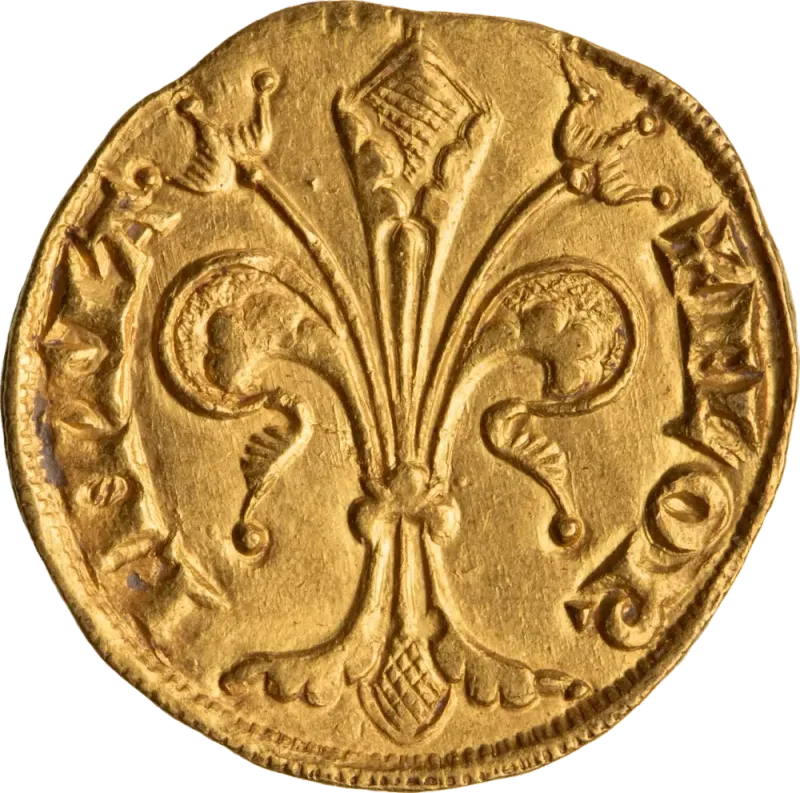
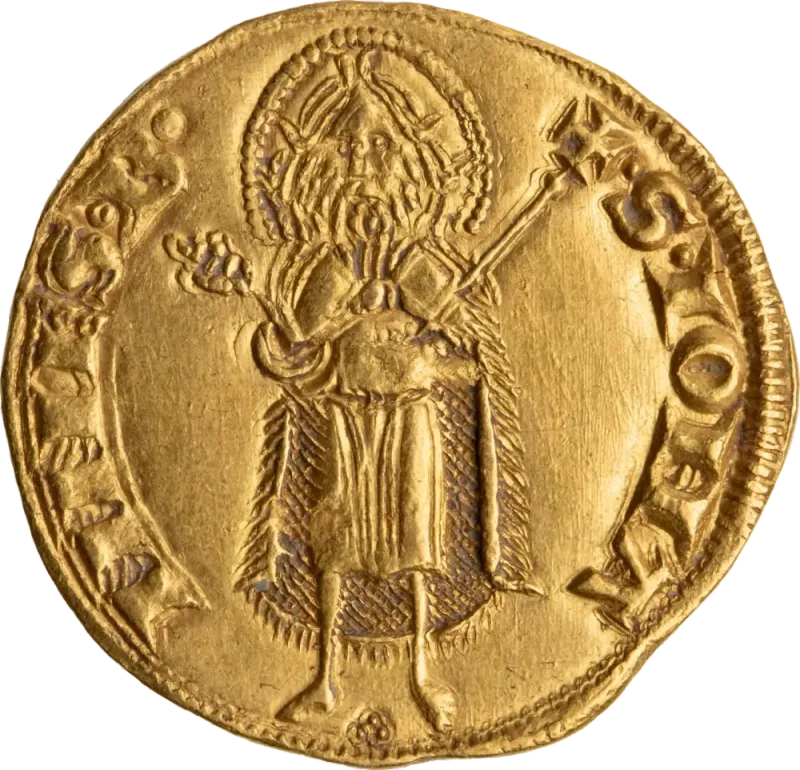
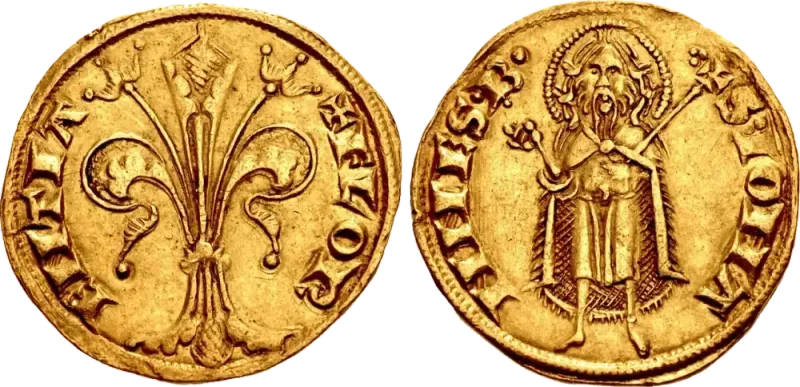
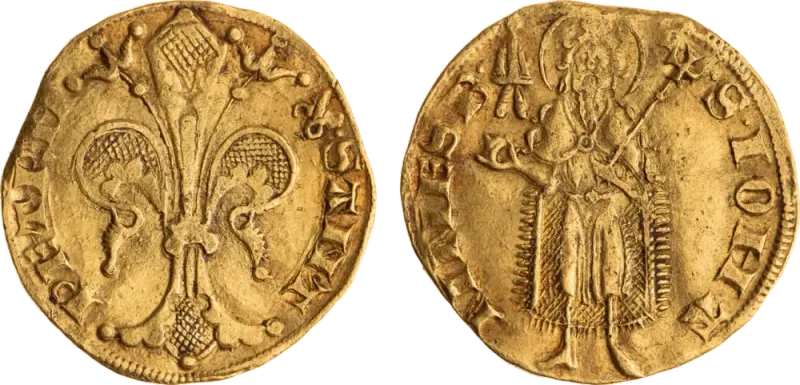
- Lily and FLORENTIA / St. John the Baptist standing, S IOHANNES B
- Dating
- No date; a mint official's symbol changes about every six months
In the hand
The story of the Florin
The florin, or fiorino d'oro, is the gold coin the Republic of Florence struck from 1252 to 1533. For most of that time it was the best-known gold coin in Europe, and it's the reason many later coins carry the name "florin".
The design stayed almost the same for 281 years. One side shows a lily, the badge of Florence, with the word FLORENTIA. The other shows St. John the Baptist, the city's patron saint, standing and raising his hand in blessing. The name comes from the flower: fiore in Italian.
A florin weighed about 3.5 grams and was about 20 mm across, between a US dime and a nickel. It was struck in gold as pure as medieval refiners could make it. Florence held that weight and purity for the whole life of the coin. That steadiness made the florin the money merchants and bankers trusted.
When it was new, one florin equalled one lira of account, or 240 small silver pennies. Florence's silver kept losing value while the florin didn't, so by the early 1330s a florin was worth about three times as much in silver. At that point it was close to two weeks' wages for an unskilled worker in Florence. The mint struck hundreds of thousands a year in the 1300s.
How to date a florin. Florins carry no date. Instead, each mint official served a term of about six months and added a small personal symbol to the coin, usually beside St. John's head. Specialist catalogues match those symbols to named officials, so many florins can be dated to within half a year.
Copies. More than a hundred rulers and cities copied the florin, in Germany, the Low Countries, France, Aragon and elsewhere. Most kept the lily and St. John and swapped FLORENTIA for their own names, so read the legend before assuming a coin is Florentine. The popes at Avignon struck one. So did Hungary from 1325, which is why Hungary's currency is still called the forint. In Germany the copies grew into the Goldgulden.
Not every florin is this coin. Britain's florin of 1849 was a silver two-shilling piece. Aruba's currency today is also the florin. This page is about the original gold coin of Florence.
The florin's rival was the Venetian ducat, almost the same size and weight. For the full story of both, read the history articles below.
From the encyclopedia
The Florentine florin was a gold coin struck from 1252 to 1533 with no significant change in its design or metal content standard during that time.
From Florin on Wikipedia, text under CC BY-SA 4.0. Fetched November 3, 2026.
Questions people ask
How much gold is in a gold florin?
About 3.5 grams of nearly pure gold, roughly an eighth of a troy ounce. The Venetian ducat holds almost exactly the same.
How can I tell a Florentine florin from a copy?
Read the legend around the lily. A coin from Florence says FLORENTIA. Copies from other rulers kept the design but usually put their own names there, and some are lighter or less pure.
Does a florin have a date on it?
No. Florentine florins are dated by the small symbol of the mint official in charge, which changed about every six months.