Tap the coin to flip it
Solidus: The Gold Coin of Rome and Byzantium
Byzantine Empire
Late Roman Empire gold coin
- Issuer
- Roman Empire, then the Byzantine (Eastern Roman) Empire
- Denomination
- 1 solidus (nomisma); fractions: semissis (½), tremissis (⅓)
- Years
- c. AD 309 to 1092
- Metal
- Gold, about 95–98% fine (dipped c. 346–368; debased after 1034)
- Weight
- About 4.5 g (1/72 Roman pound)
- Diameter
- About 19–21 mm (later coins thinner and broader)
- Mint marks
- CONOB (Constantinople); also TROB (Trier), COMOB and others
In the hand
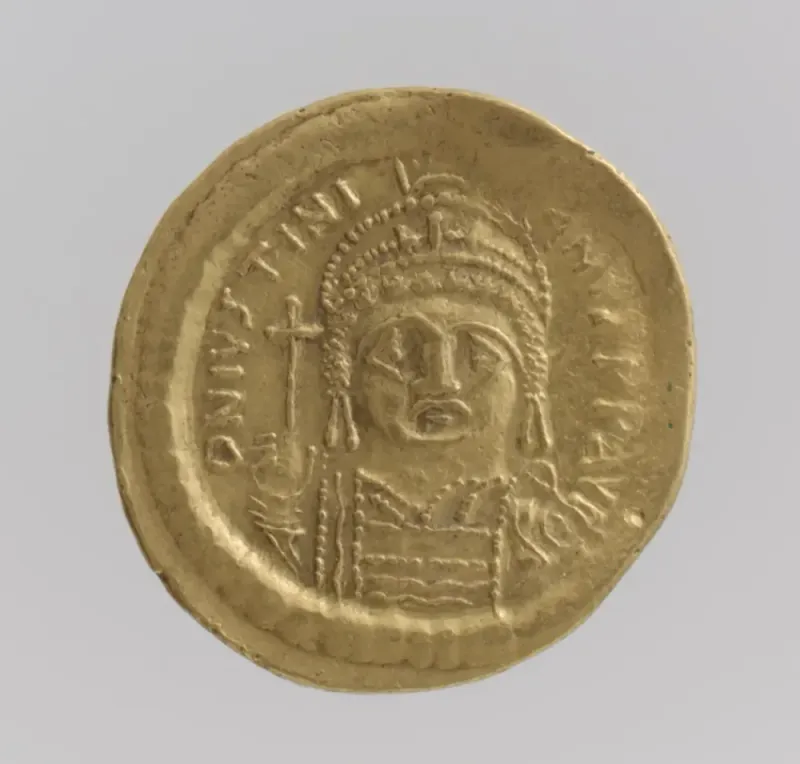
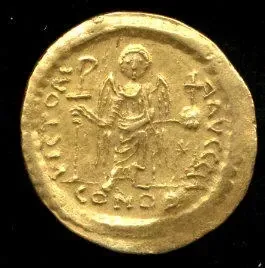
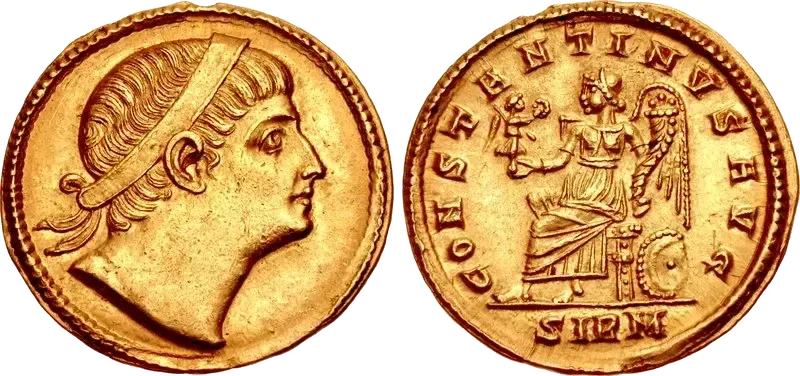
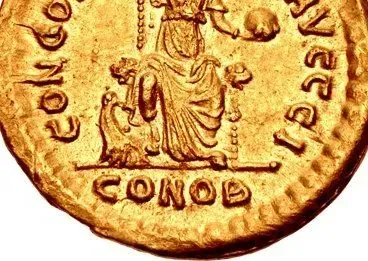
The story of the Solidus
The solidus is the gold coin Constantine the Great introduced around AD 309. It replaced the aureus, and it stayed the standard gold coin of the Roman and then Byzantine world for about 700 years. Few coins have kept the same weight for that long.
Constantine set it at 72 to the Roman pound, about 4.5 grams. That was lighter than the old aureus, but he could strike it in quantity and hold the weight steady. The name means "solid" or "whole", a promise that the coin was full weight. The first solidi came from Trier, with London and Lyon also striking them. After Constantine took the whole empire in 324, the solidus became the gold coin everywhere.
Its purity slipped once, between about 346 and 368, to a little under 95%. In 368 the emperors restored it, and mints began adding the letters OB, for obryzum, refined gold. Coins from Constantinople end their reverse legend with CONOB: CON for the city, OB for the gold. Those five letters are the easiest way to spot a late Roman or Byzantine solidus.
The coin had two fractions. The semissis was a half solidus. The tremissis, a third of a solidus at about 1.5 grams, became common from around 383.
After the western empire fell, the solidus carried on in the east, where it's often called the nomisma. Its look changed over the centuries, which helps with dating:
- Fourth and fifth centuries: an emperor in profile or a three-quarter helmeted bust, with Victory or a personified city on the back.
- Justinian I (527–565) onward: the emperor faces you, often in a helmet, holding a globe topped by a cross. An angel with a long cross often appears on the reverse.
- From 692: Justinian II put Christ on the front, and the emperor moved to the back.
- 11th century: coins grow thin and broad, then cup-shaped, and the gold drops.
That last change was the end. Gold content fell from about 1034, faster after the defeat at Manzikert in 1071, and in 1092 Alexios I replaced the solidus with a new coin, the hyperpyron.
The name outlived the coin. It gave Italian the soldo and French the sou, and the slash in old British money (2/6) is still called a solidus. In Britain the Hoxne hoard, found in Suffolk in 1992, held 569 gold solidi buried as Roman rule there ended.
From the encyclopedia
The solidus or nomisma was a highly pure gold coin issued in the Later Roman Empire and Byzantine Empire. It was introduced in the early 4th century, replacing the aureus, and its weight of about 4.45 grams remained relatively constant for seven centuries.
From Solidus on Wikipedia, text under CC BY-SA 4.0. Fetched November 3, 2026.
Questions people ask
What does CONOB mean on a gold coin?
CON stands for Constantinople and OB for obryzum, refined gold. It sits at the bottom of the reverse on most late Roman and Byzantine solidi, as a guarantee of the gold.
How much gold is in a solidus?
About 4.5 grams of nearly pure gold, a little under a sixth of a troy ounce. The standard held from Constantine until the debasement of the 11th century.
How do I tell a Roman solidus from a Byzantine one?
Look at the portrait. Fourth- and fifth-century solidi show the emperor in profile or a three-quarter view. From Justinian I the emperor faces forward, and from 692 many coins show Christ on the front.