Tap the coin to flip it
The Ducat: Venice's Gold Coin
Venice
Gold or silver coin used as a trade coin in Europe
- Issuer
- Republic of Venice (the Zecca)
- Denomination
- 1 gold ducat (ducato d'oro, later zecchino)
- Years
- 1284–1797 (continued under Austria to about 1823)
- Metal
- Gold, about .997 fine
- Weight
- About 3.5 g (3.545–3.56 g)
- Diameter
- About 20 mm
- Design
- St. Mark hands a banner to the kneeling doge / Christ standing in an oval of stars
- Dating
- No date; identified by the doge's name
In the hand
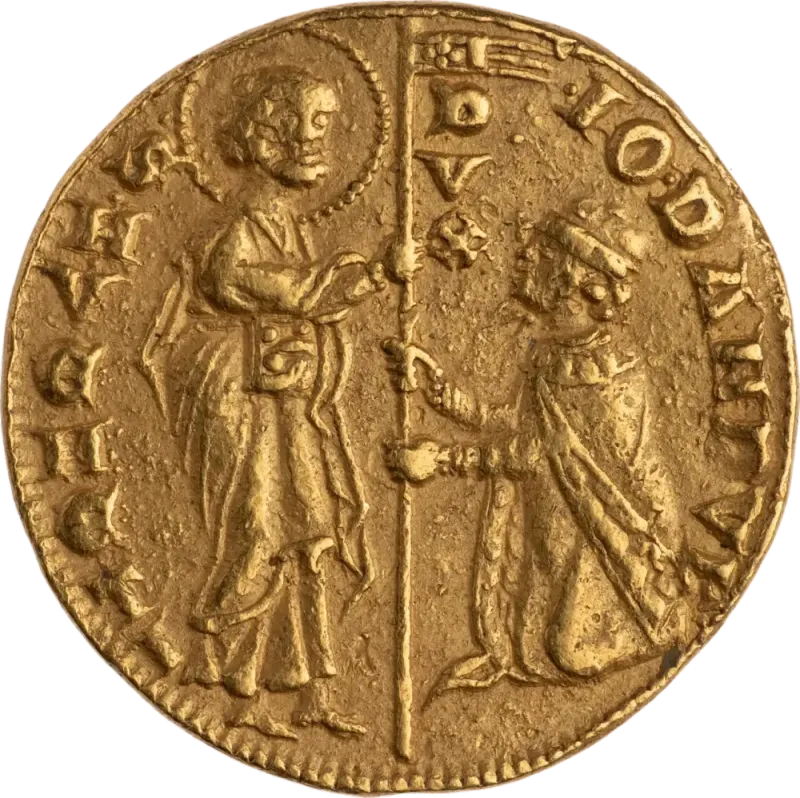
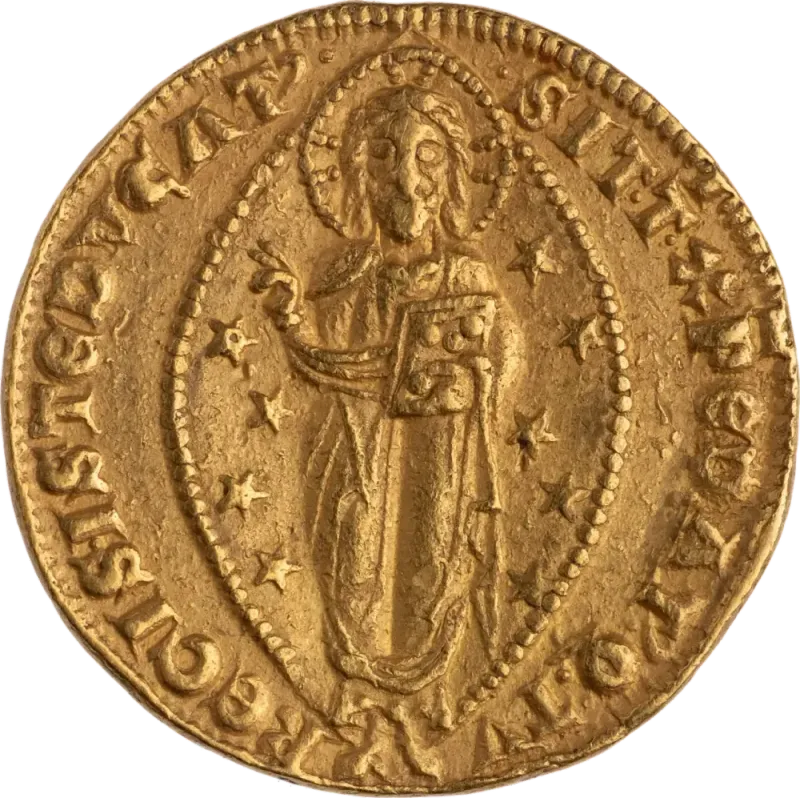
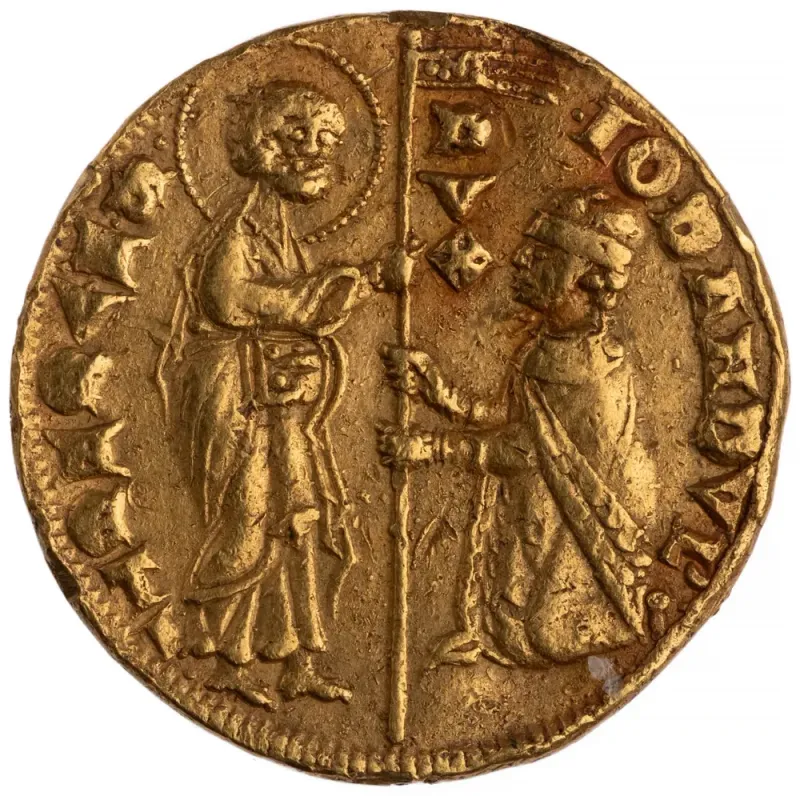
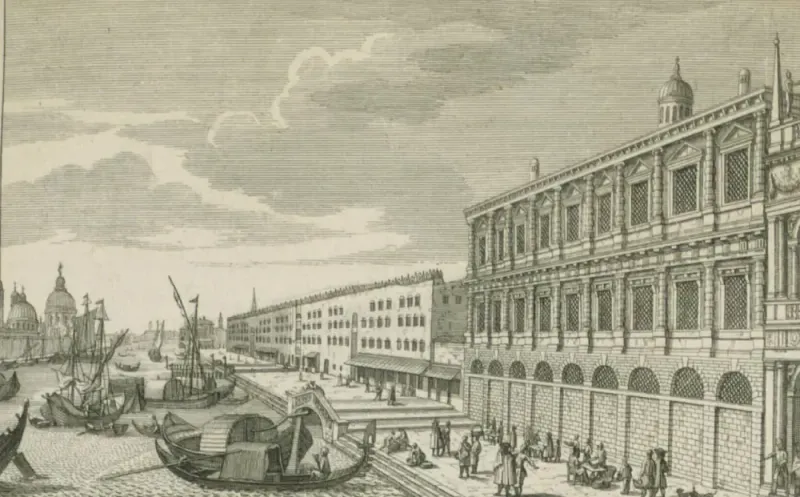
The story of the Ducat
The ducat is the gold coin of the Republic of Venice, first struck in 1284 under Doge Giovanni Dandolo. Venice made it for more than 500 years, until the republic fell in 1797. By then "ducat" had become a general name for a trade gold coin of the same size, and several countries still strike one.
Venice built the ducat to match Florence's florin: about 3.5 grams of nearly pure gold, about 20 mm across. The design is busier than the florin's. On the front, St. Mark, the city's patron saint, hands a banner to the doge, who kneels beside him. On the back, Christ stands inside an oval of stars. The Latin legend around him, Sit tibi Christe datus quem tu regis iste ducatus, means "Let this duchy, which you rule, be given to you, O Christ."
The name is often said to come from ducatus, the last word of that legend. The American Numismatic Society's study of the coin says otherwise. "Ducat" was already a nickname for silver coins struck in southern Italy around 1140 and then for Venice's silver grosso. The new gold coin was the "gold ducat", and in time it kept the name for itself. Venetians also called it the zecchino, after the zecca, the mint. That word reached English as "sequin".
How to date a ducat. Venetian ducats have no date. The doge's name runs down beside his kneeling figure, so you date a ducat by his reign. Venice changed the design very little over five centuries, apart from small details such as the doge's cap and the number of stars around Christ.
The ducat travelled east with Venice's trade. It paid for spices, silk and cotton in the Levant, a traveller found it in common use in Cairo in 1384, and it was copied around the eastern Mediterranean and as far as India. It also became the standard for other gold coins: Portugal's cruzado of 1457, Spain's reform of 1497 and the first Ottoman gold coin all followed it.
The coin outlived its government. After 1797 the Austrians, who took over Venice, kept striking ducats, and coins in the name of the last doge are thought to have been made until about 1823 for traders in the Levant.
Other ducats are a separate family. Hungary, Austria, the Netherlands and others struck gold ducats on a similar standard for centuries. Austria still restrikes a ducat dated 1915, and the Dutch mint still issues a ducat with a standing knight, a design from 1586. If your ducat shows a knight or an emperor rather than St. Mark, it belongs to that family.
From the encyclopedia
The ducat coin was used as a trade coin in Europe from the later Middle Ages to the 19th century. Its most familiar version, the gold ducat or sequin containing around 3.5 grams of 98.6% fine gold, originated in Venice in 1284 and gained wide international acceptance over the centuries. Similarly named silver ducatons also existed. The gold ducat circulated along with the Florentine florin and preceded the modern British pound sterling.
From Ducat on Wikipedia, text under CC BY-SA 4.0. Fetched November 3, 2026.
Questions people ask
How much gold is in a ducat?
A Venetian ducat holds about 3.5 grams of almost pure gold, around an eighth of a troy ounce. Later Dutch and Austrian ducats are close to the same weight.
Why don't Venetian ducats have a date?
Venice never put dates on them. Each coin names the doge in office, so you can date it to his reign.
What is the difference between a ducat and a zecchino?
They're the same Venetian gold coin. Zecchino comes from zecca, the Venetian word for the mint, and later became the usual name for it. It's also where the English word "sequin" comes from.