Tap the coin to flip it
Lydian Stater (c. 630–546 BC)
LydiaStaterc. 630–546 BC
- Issuer
- Kingdom of Lydia
- Denomination
- Stater, with fractions down to 1/96 (the common Lydian Lion is the trite, 1/3)
- Years minted
- c. 630–546 BC
- Metal
- Electrum, about 54% gold, 44% silver, 2% copper (Croeseids: gold and silver)
- Weight
- Stater about 14.1 g; trite about 4.7 g
- Diameter
- Trite about 13 mm
- Mints
- Sardis
In the hand
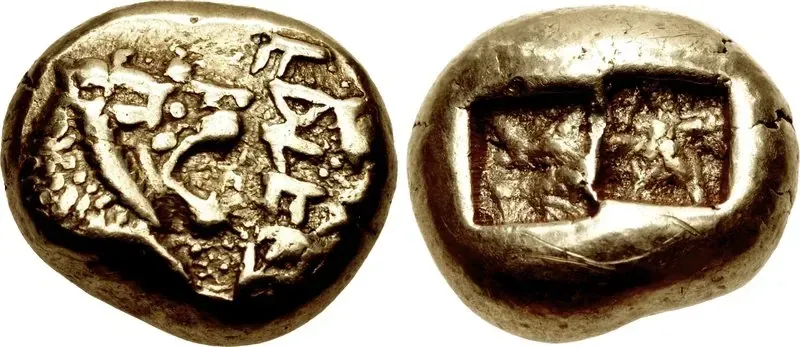
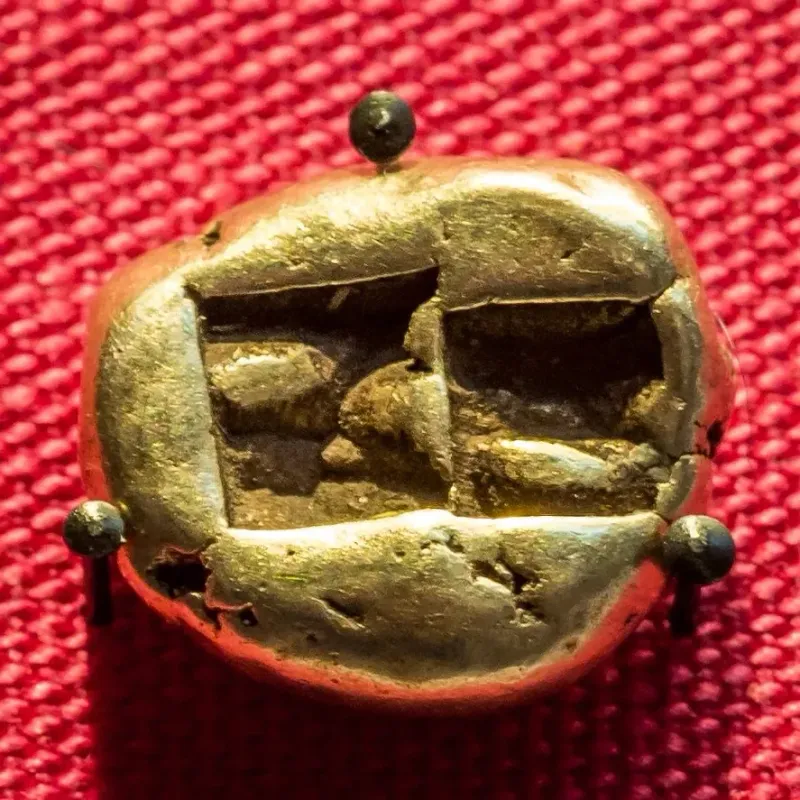
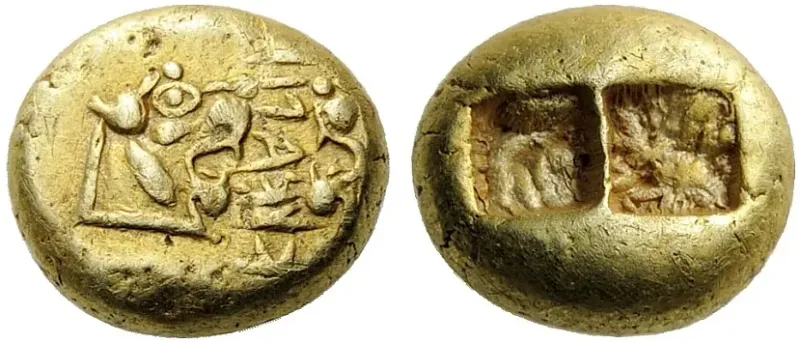
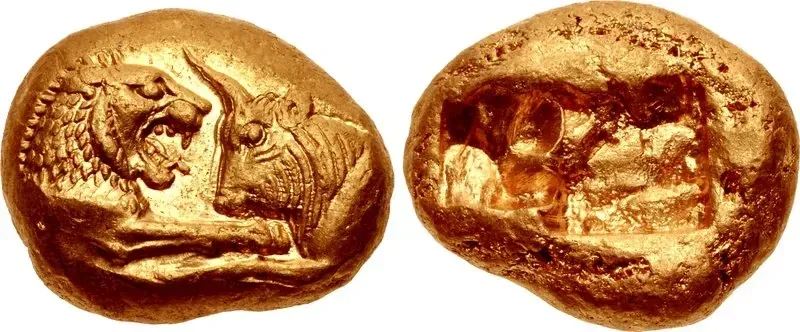
The story of the Lydian stater
The Lydian stater is usually named as the oldest coin in the world. It was struck in the kingdom of Lydia, in what is now western Turkey, from electrum: a natural mix of gold and silver that the Pactolus river carried down from the mountains past the capital, Sardis.
A full stater weighed about 14.1 grams. Most surviving coins are smaller. The trite, a third of a stater, weighs about 4.7 grams, and the fractions run all the way down to a 1/96 stater of about 0.15 grams. The best-known type, the Lydian Lion, shows a roaring lion's head on the front and two square punch marks on the back. Some carry writing in the Lydian script: walwet, generally read as the name of King Alyattes (about 610 to 560 BC), or kukalim.
The mint added silver to the natural metal, so the coins average about 54% gold. The royal stamp guaranteed the value whatever was inside, and that guarantee is what turned a lump of metal into a coin.
The earliest coins found in a datable context come from the foundations of the Temple of Artemis at Ephesus and date to about 640 to 625 BC. Finds at Sardis point the same way, so coinage most likely began around 630 BC.
The Croeseid
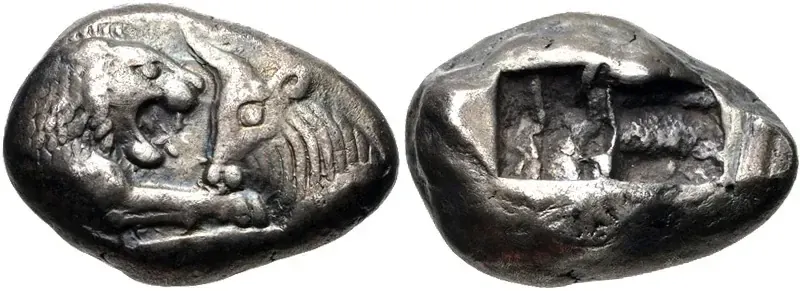
Alyattes' son Croesus (about 560 to 546 BC) stopped using electrum. His mint struck separate coins of fairly pure gold and pure silver, showing the front half of a lion facing the front half of a bull. These Croeseids were the world's first two-metal coinage. The gold came in a heavy series of about 10.7 grams and a lighter one of about 8.1 grams, and the silver stater also weighed about 10.7 grams.
Silver Croeseids found on the destruction floor from the Persian capture of Sardis, around 547 BC, show that at least some were struck under Croesus himself. The Persians kept making the same lion-and-bull coins for another 25 years or so.
The full story, from the temple finds at Ephesus to the question of who invented coins, is in the history article linked on this page.