Tap the coin to flip it
Morgan Silver Dollar (1878–1921)
United States$11878–1904, 1921 (collector issues from 2021)
U.S. dollar coin (1878–1904, 1921, 2021–present)
- Issuer
- United States Mint
- Denomination
- 1 dollar
- Years minted
- 1878–1904, 1921 (collector issues from 2021)
- Metal
- 90% silver, 10% copper
- Weight
- 26.73 g (0.7734 troy oz of pure silver)
- Diameter
- 38.1 mm
- Edge
- Reeded
- Designer
- George T. Morgan
- Mints
- Philadelphia (none), New Orleans (O), San Francisco (S), Carson City (CC), Denver (D, 1921 only)
In the hand
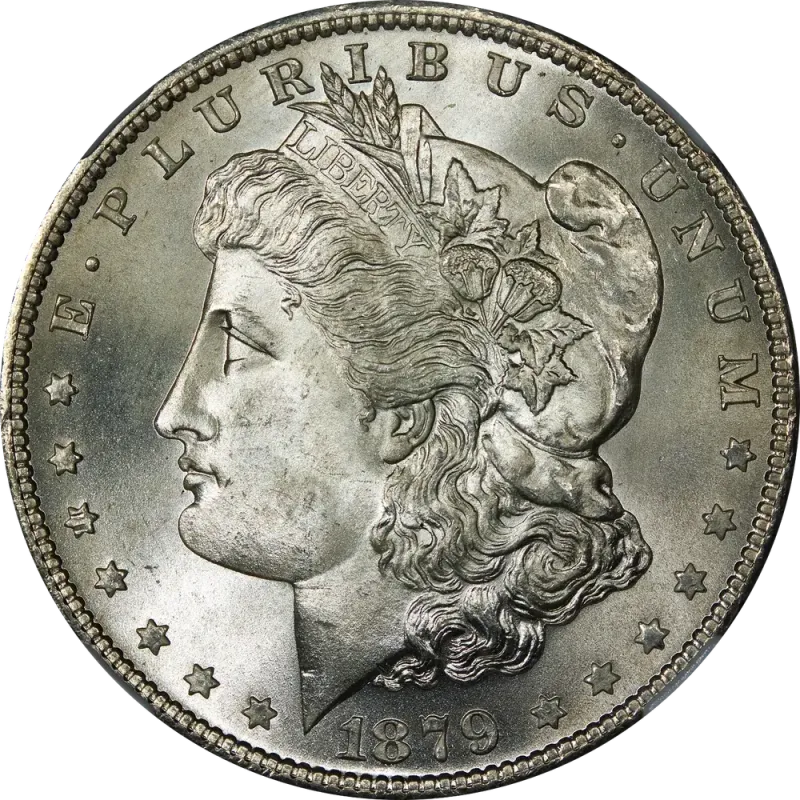
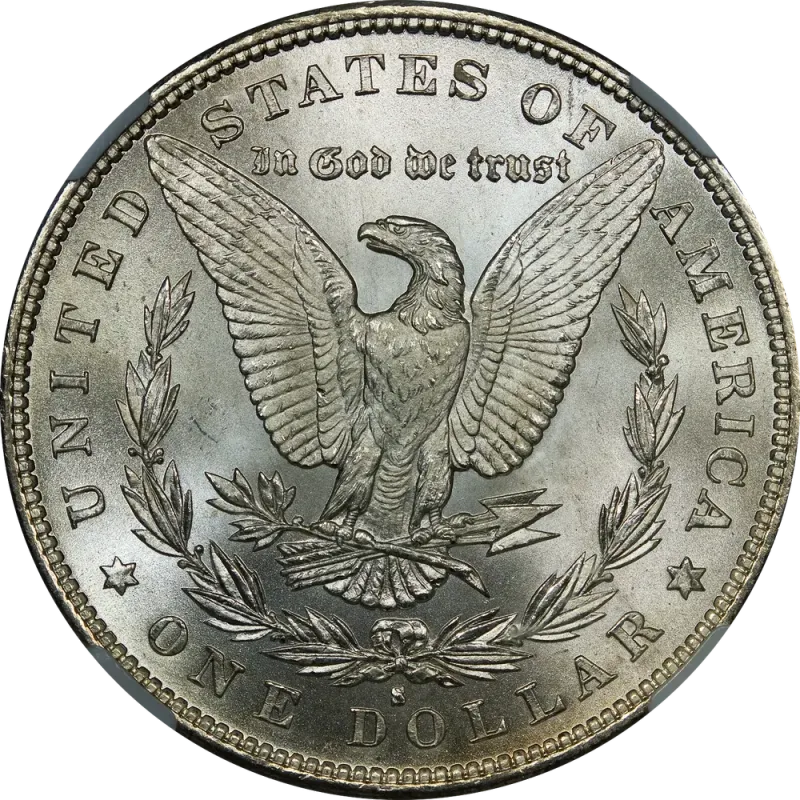
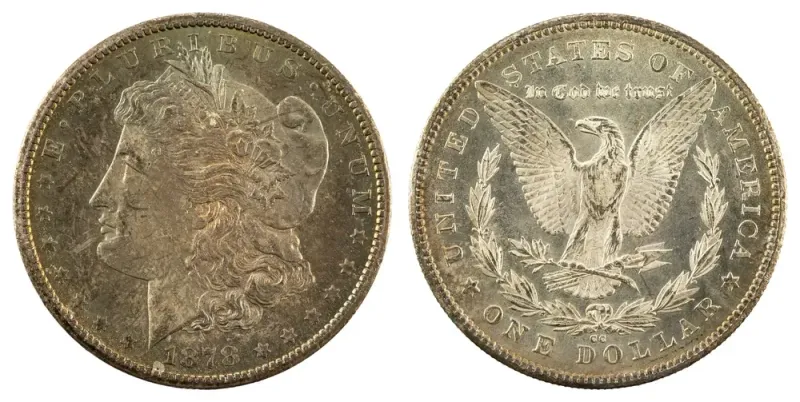
The story of the Morgan dollar
The Morgan dollar is the large silver dollar the US Mint struck from 1878 to 1904, and again in 1921. It's named after its designer, George T. Morgan, an English engraver who joined the Mint in 1876. Liberty's profile is on the front and an eagle with spread wings is on the back.
The coin was born out of politics. In the 1870s, silver miners in the West and indebted farmers wanted more silver money in circulation. The Bland–Allison Act of 1878 required the Treasury to buy millions of dollars' worth of silver every month and turn it into dollars. Morgan's design was picked for the job, and production started that same year.
Morgan modelled Liberty on Anna Willess Williams, a Philadelphia schoolteacher. She sat for him on the condition that her name be kept quiet. It came out anyway, and she spent years turning down offers that came with being "the silver dollar girl."
Here's the odd part: most people didn't want the coins. A silver dollar weighs almost an ounce and was awkward to carry, so many went straight from the mint into government vaults and stayed there. The Sherman Silver Purchase Act of 1890 added millions more. Production stopped in 1904, when the bullion purchased under those laws ran out.
The coin came back for one year in 1921. The Pittman Act of 1918 had melted about 270 million silver dollars, mostly to sell the silver to Britain during the First World War. The same law required the Treasury to replace them, so Morgan dollars were struck again before the new Peace dollar took over.
The vault hoards shaped the coin's later life. Treasury releases in the 1960s sent huge numbers of uncirculated Morgans to the public. The General Services Administration then sold close to three million Carson City Morgans in special holders in the 1970s and early 1980s. That's why a coin more than a century old can still be found in mint condition.
Five mints struck Morgan dollars, and the mint mark sits on the reverse, below the wreath and above the "DO" in DOLLAR:
- Philadelphia (no mark)
- New Orleans (O)
- San Francisco (S)
- Carson City (CC), the most collected mark
- Denver (D), in 1921 only
A few dates stand out to collectors, including the 1893-S, the 1889-CC and the 1895 from Philadelphia, which is known mainly from proof strikes.
The full story of America's silver dollars, from the Morgan to the Peace and Trade dollars, is in the history article linked below.
From the encyclopedia
The Morgan dollar is a United States dollar coin minted from 1878 to 1904, as well as 1921. It was minted again beginning in 2021 as a collectible. It was the first standard silver dollar minted since the passage of the Coinage Act of 1873, which ended the free coining of silver and the production of the previous design, the Seated Liberty dollar. It contained 412.5 Troy grains of 90% pure silver. The coin is named after its designer, United States Mint Assistant Engraver George T. Morgan. The obverse depicts a profile portrait representing Liberty, modeled by Anna Willess Williams, while the reverse depicts an eagle with wings outstretched. The mint mark, if present, appears on the reverse above between D and O in "Dollar".
From Morgan dollar on Wikipedia, text under CC BY-SA 4.0. Fetched November 3, 2026.
Questions people ask
How much silver is in a Morgan dollar?
About 0.7734 troy ounces. The coin weighs 26.73 g and is 90% silver.
Where is the mint mark on a Morgan dollar?
On the reverse, just below the wreath and above the letters "DO" in DOLLAR.
Why are so many Morgan dollars still uncirculated?
Millions sat in Treasury vaults for decades. They were released in bags in the 1960s, and the GSA sold Carson City coins in the 1970s and early 1980s.