America's Classic Silver Dollars: Morgan, Peace and Trade
Part 32 of the Americas series5 min read
Why the US struck three big silver dollars in 60 years: the trade dollar made for China, the Morgan born of a silver lobby, and the Peace dollar that marked the end of WWI.
Between 1873 and 1935 the United States struck three different big silver dollars. One was made to be spent in China. One existed mostly because silver miners had friends in Congress. And one was meant to say the First World War was over.
All three were 38.1 mm across and held about three-quarters of an ounce of silver. Their stories are mostly about politics.
The dollar that went to China (1873–1885)
In the 1870s the money of trade in East Asia was the Mexican silver peso, the heir of the Spanish pieces of eight. Chinese merchants trusted it, and American traders on the West Coast had to buy pesos to do business there.
The Coinage Act of 1873 tried to change that. It created a new coin, the trade dollar, a little heavier than a regular dollar: 420 grains of 90% silver, about 27.2 grams. The idea was simple. Give China a bigger American coin and it would take it over the peso.
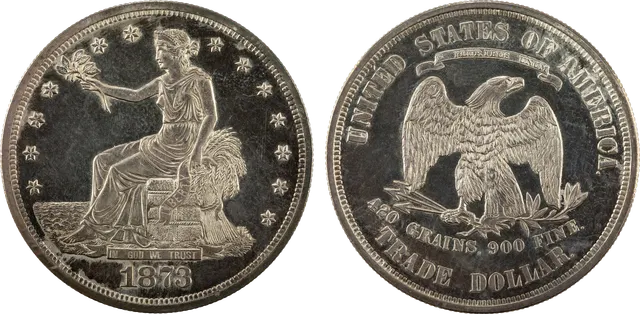
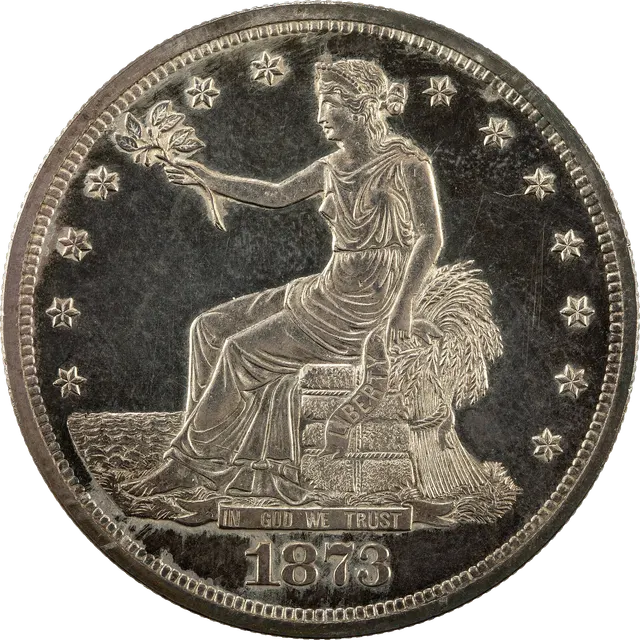
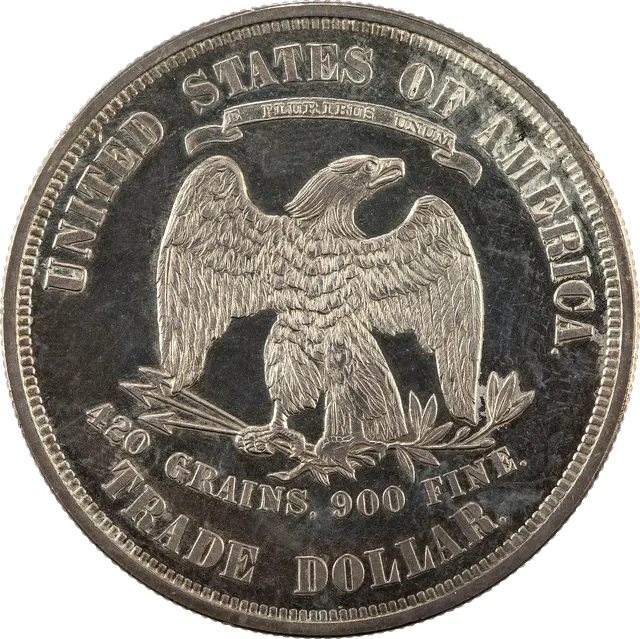
Chief Engraver William Barber designed it. Liberty sits on a bale of goods facing the sea and holds out an olive branch. The reverse spells out its credentials: "420 GRAINS, 900 FINE."
Most of the early ones were shipped across the Pacific from San Francisco. Chinese merchants tested them and often stamped them with small characters called chop marks, to show a coin was good. A "chopmarked" trade dollar is a favourite with collectors today because you can see the trip it took.
At home it went badly. The coin was legal tender for debts up to $5, and as silver prices fell, plenty of trade dollars ended up circulating in the US, often at a discount. On July 22, 1876, Congress took away its legal tender status. Circulation strikes stopped in 1878. The Mint kept making proofs for collectors until 1883.
Then there are the coins nobody was supposed to know about. Ten trade dollars dated 1884 and five dated 1885 were struck in secret at the Mint and only came to light in 1908. They are among the rarest US coins.
In 1887 Congress let people redeem trade dollars at face value for six months. In all, 7,689,036 came back to be melted. Chopmarked coins didn't qualify.
The Crime of '73 and the Morgan dollar (1878)
The same 1873 Act had quietly dropped the ordinary silver dollar, and that turned out to matter a lot. Big silver strikes in Nevada, the Comstock Lode above all, were flooding the market. Without a silver dollar, miners could no longer bring their silver to the Mint and have it coined. Miners and indebted farmers called the 1873 Act the "Crime of '73" and pushed to bring silver back.
They won in 1878. On February 28, Congress passed the Bland-Allison Act over President Rutherford B. Hayes's veto, the same day he vetoed it. It made the Treasury buy between $2 million and $4 million worth of silver every month and coin it into dollars.
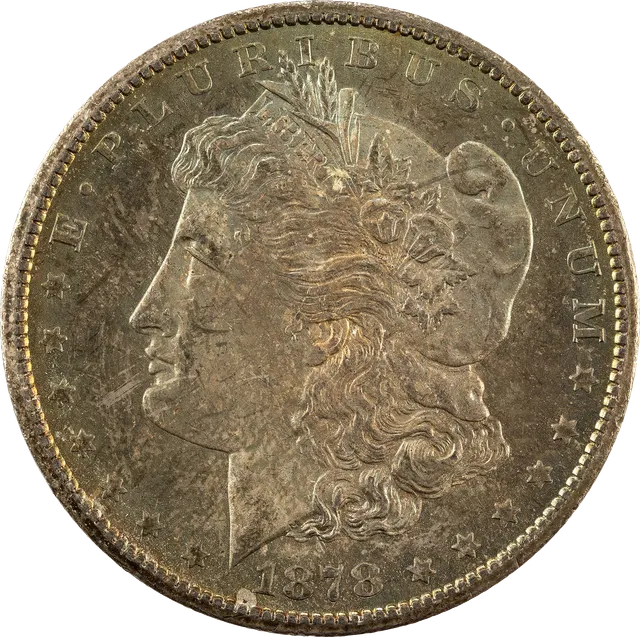
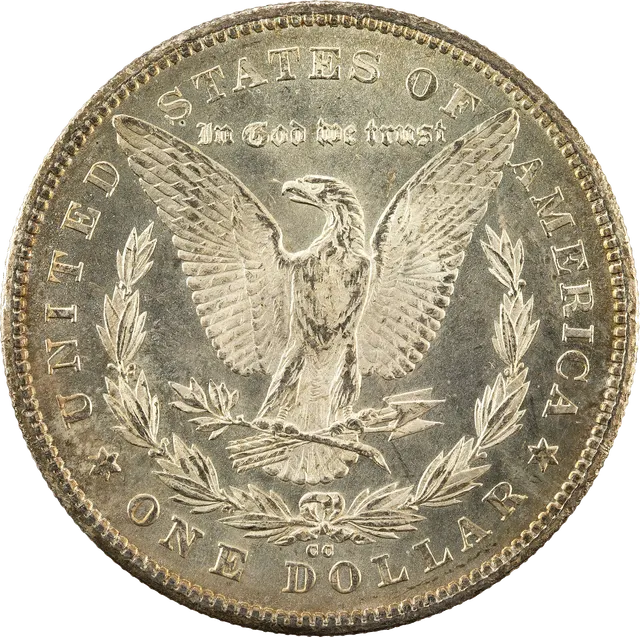
The new coin came from George T. Morgan, an English-born engraver working under Barber at the Philadelphia Mint. For Liberty's face he used a Philadelphia schoolteacher, Anna Willess Williams. The reverse shows an eagle with spread wings, with "In God We Trust" above it. The first Morgan dollars were struck on March 11, 1878.
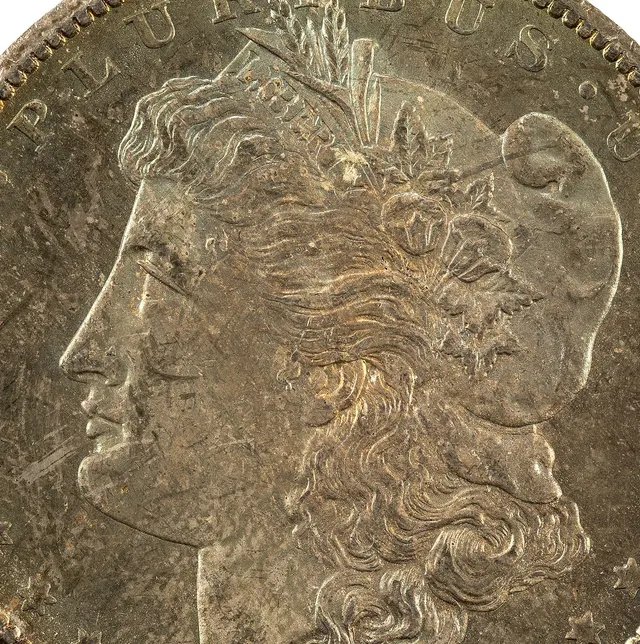
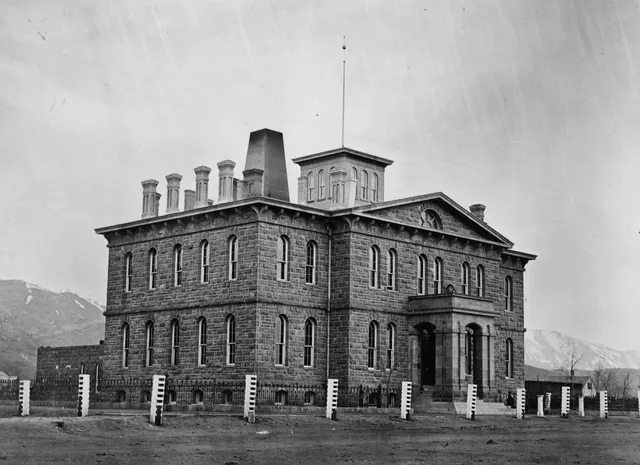
Morgan dollars were struck from 1878 to 1904 at Philadelphia, New Orleans, San Francisco and Carson City, Nevada, a mint built close to the Comstock mines. Carson City Morgans, marked "CC", are still collector favourites.
The government made far more of them than anyone needed. Most went straight into bags in Treasury vaults. The Sherman Silver Purchase Act of 1890 raised the silver buying even further until it was repealed in 1893.
Melted for the war, then struck again (1918–1921)
The vaults finally came in useful during the First World War. Britain needed silver to keep India's rupee economy running. The Pittman Act of 1918 let the US melt its stored silver dollars and sell the silver to Britain at $1 an ounce. The Mint melted 270,232,722 of them, nearly half of all the Morgans struck since 1878.
The same law said the melted dollars had to be replaced with new ones made from American silver. So in 1921 the Mint brought back the Morgan dollar for one more year, this time at Denver too. Then it changed the design.
The Peace dollar (1921–1935)
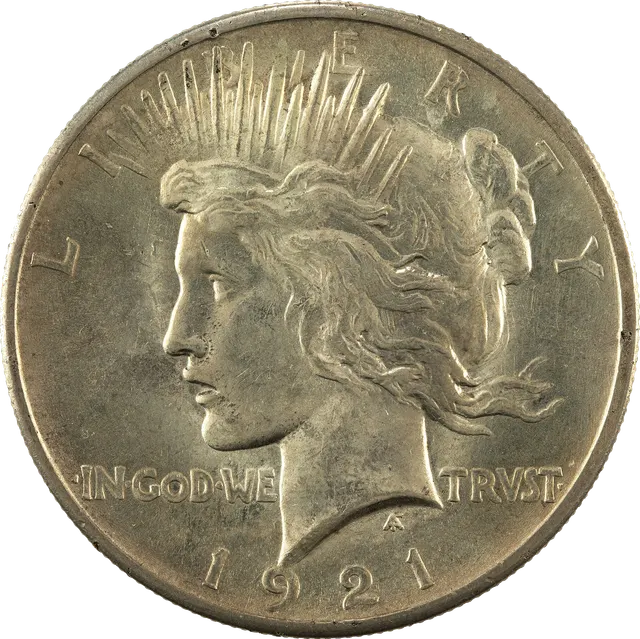
Collectors, led by the American Numismatic Association, had been pushing for a coin to mark the peace. In December 1921 a small competition picked a design by Anthony de Francisci, a 34-year-old sculptor. His wife Teresa sat for Liberty, who wears a crown of rays. The motto on the front reads IN GOD WE TRVST, with a classical V.
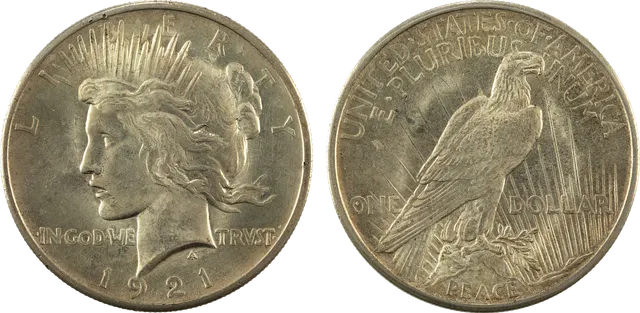
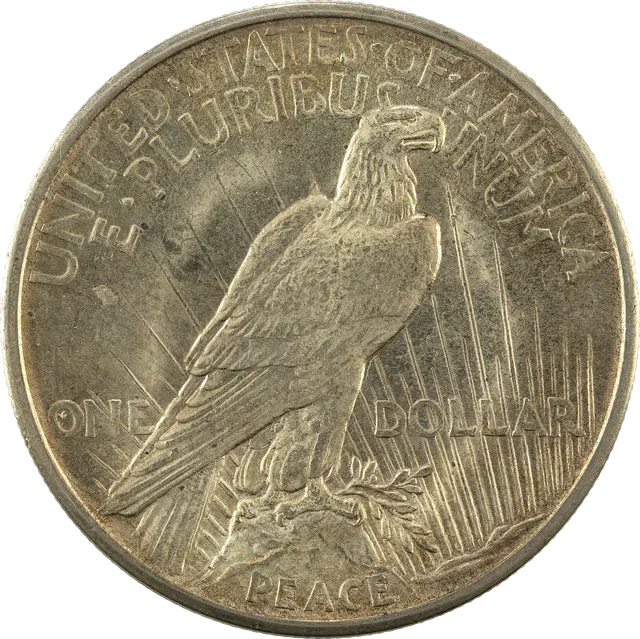
The Mint struck just over a million Peace dollars between December 28 and 31, 1921, and released them on January 3, 1922. The design had already caused trouble. The reverse originally showed an eagle holding a broken sword, meant to signal disarmament. Newspapers read it as defeat. The sword came off before production started. What's left is an eagle at rest on a rock, holding an olive branch, above the word PEACE.
There was a technical problem as well. The 1921 coins were struck in high relief, which made them hard to strike well. For 1922 the relief was lowered, and test pieces struck in high relief that year were melted.
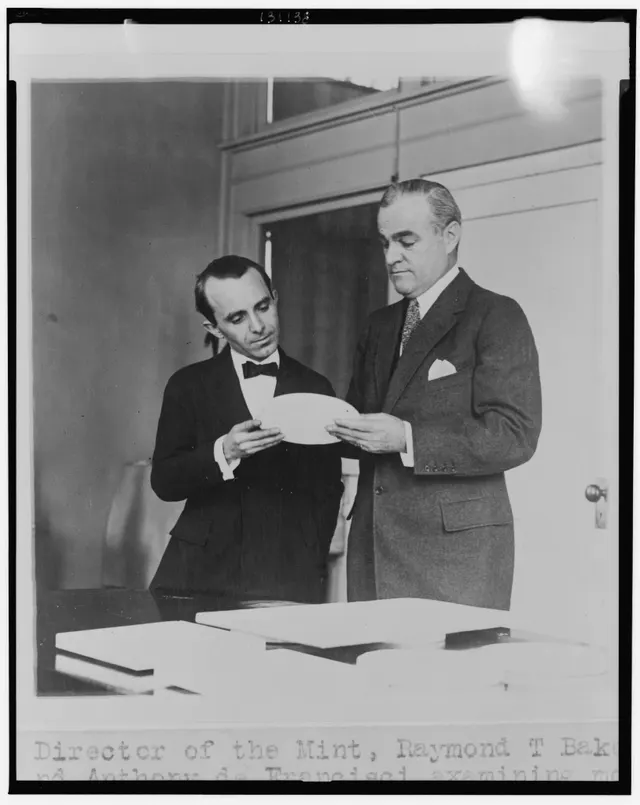
Peace dollars were struck from 1921 to 1928 and again in 1934 and 1935. That was the end of the classic silver dollar. In May 1965 the Denver Mint struck 316,076 Peace dollars dated 1964. All of them were reportedly melted. None has ever been authenticated, and owning one would be illegal.
What happened to all those dollars
Even after the Pittman melt, millions of silver dollars sat in Treasury vaults for decades. In the early 1960s, as silver rose in price, people lined up to swap paper money for them. Coins collectors had thought were rare turned up by the bag. Before 1962, fewer than ten uncirculated 1903-O Morgans were known. Then a sealed vault in Philadelphia was opened and hundreds of thousands came out.
Between 1972 and 1980 the government sold nearly 2.9 million of its last silver dollars, most of them Carson City Morgans, to the public in mail-bid sales.
That history is why Morgan and Peace dollars are so easy to collect now. In 2021 the US Mint struck new Morgan and Peace dollars for the centennial of the 1921 coins. A shortage of silver blanks cancelled the 2022 issue, and they have come out every year since 2023.
Silver dollars scratch easily, so keep any you collect in a capsule or 2x2 flip, and avoid PVC holders.
Want to see one land? Flip a Morgan dollar, flip a Peace dollar, or try the coin flipper.
Read more: The Coinage Act of 1792 and the Birth of the US Mint · The Double Eagle and the Gold Recall of 1933 · The Rarest and Most Valuable Coins in the World · The Thaler: The Coin That Named the Dollar · All Americas articles
Questions people ask
What is a trade dollar?
A US silver coin made for trade with China and East Asia. It was struck for circulation from 1873 to 1878, with proofs and a few secret pieces until 1885. It held a little more silver than a regular dollar so it could compete with the Mexican peso.
What was the Crime of '73?
The name silver supporters gave the Coinage Act of 1873, which ended the standard silver dollar. They blamed it for lower silver prices and tighter money.
Who was the model for the Morgan dollar?
Anna Willess Williams, a Philadelphia schoolteacher, posed for George T. Morgan's Liberty head.
Why is it called the Peace dollar?
It was made to celebrate the peace after the First World War. The word PEACE is on the reverse, below the eagle.
How much silver is in a Morgan or Peace dollar?
Both are 90% silver and weigh 26.73 grams, so each holds 0.7734 troy ounces of pure silver.
Sources
- CoinWeek, "The History of the Trade Dollar"
- Numismatic News, "The strange life of the United States trade dollar"
- PCGS CoinFacts, Trade dollars 1873–1885
- PCGS CoinFacts, 1878-CC trade dollar (redemption figure)
- PCGS, "Proof trade dollars: why they were made so long after circulation strikes ended"
- Rutherford B. Hayes Presidential Library, "Morgan Silver Dollar" (Bland-Allison veto)
- PCGS CoinFacts, 1878-CC Morgan dollar (first strike date, Anna Willess Williams)
- Stack's Bowers, Morgan dollar reference (dates, mints, specs)
- CoinWeek, "Morgan silver dollars: a short history of the Pittman Act"
- CoinWeek, "1921 Peace Dollar: A Collector's Guide" (competition, broken sword, high relief, release date)
- PCGS, "Peace dollars, part 1: art vs commerce"
- American Numismatic Association, "1964-D Peace dollar" (YN newsletter, Dec 2023)
- CoinWeek, "The 1964-D Peace dollar"
- PCGS, "GSA hoard Morgan dollar Carson City sets"
- Coin World, Red Book 70th anniversary (1962–64 Treasury release, 1903-O)
- Coin World, "Mint officials cancel 2022 Morgan and Peace dollar production"
- Smithsonian National Numismatic Collection object records for the 1873 trade, 1878-CC Morgan and 1921 Peace dollars (via the Commons files above); Library of Congress, National Photo Company Collection, LCCN 2002712369
- Wikipedia, "Trade dollar (United States coin)", "Morgan dollar", "Peace dollar" (cross-check only)
Coins in this story
- Trade dollar
- Morgan dollar
- Peace dollar