Tap the coin to flip it
The Sestertius: Rome's Big Brass Coin
Ancient Romec. 211 to c. 44 BC (silver); the 20s BC to the 260s AD (brass)
- Issuer
- Roman Republic (silver), then the Roman Empire (brass)
- Denomination
- 4 asses, or 1/4 denarius, under Augustus (the Republican silver coin was worth 2½ asses)
- Years minted
- c. 211 to c. 44 BC (silver); the 20s BC to the 260s AD (brass)
- Metal
- Orichalcum (brass), a copper and zinc alloy; the Republican coin was silver
- Weight
- About 25 g
- Diameter
- About 33 mm
- Mints
- Rome and other mints
In the hand
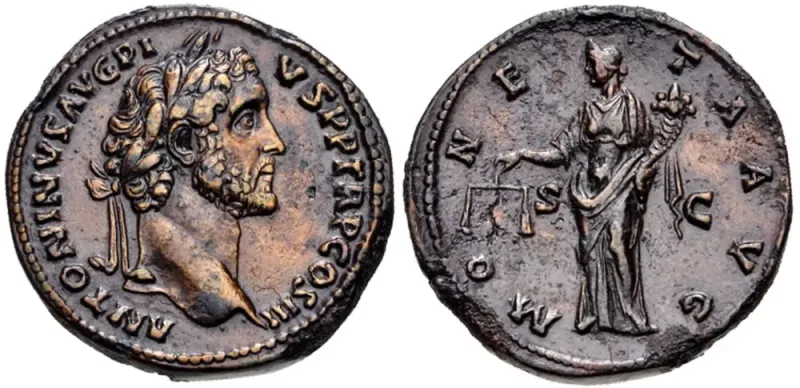
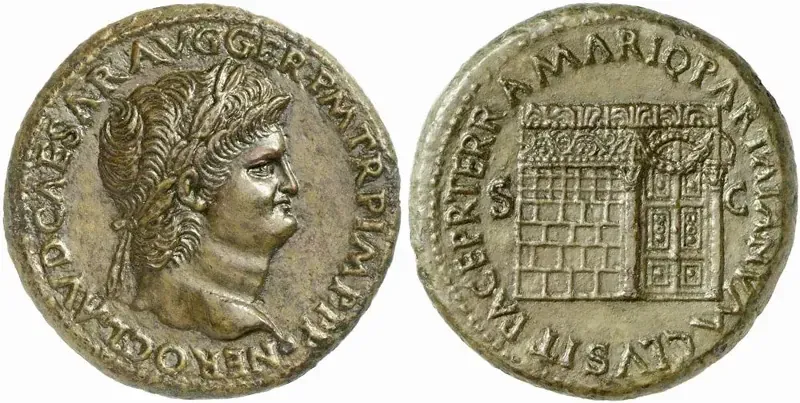
The story of the Sestertius
The sestertius had two lives. It began as a small silver coin of the Roman Republic, created in the reform of about 211 BC that also introduced the denarius. It was worth two and a half asses and marked "IIS", meaning two asses and a half (semis). That mark became the HS symbol Romans used for sums of money. The little silver sestertius was struck only now and then and stopped around 44 BC.
Augustus brought it back in the 20s and teens BC as a large coin of orichalcum, a copper and zinc brass that looked golden when new. It weighed around 25 grams and was worth four asses, or a quarter of a denarius, so one gold aureus equalled 100 sestertii. Like the other brass and copper coins of the new system, it carried the letters SC, for senatus consulto ("by decree of the Senate").
At that size the sestertius gave die engravers a lot of room. Emperors used it for detailed portraits and for reverse scenes of harbours, temples, battles and building projects, which is why collectors love it today. It is also why worn examples are so common: these coins passed through many hands.
The sestertius faded during the third-century crisis. As silver coins were debased, a big brass coin stopped making sense, and by the 260s it was barely being made.
The full story of the Roman coin system, from the aes grave to Constantine's solidus, is in the history article linked on this page.