Tap the coin to flip it
Aureus: The Gold Coin of Ancient Rome
Ancient Rome
Gold coin of ancient Rome
- Issuer
- Roman Republic (generals' issues), then the Roman Empire
- Denomination
- 1 aureus = 25 denarii
- Years
- Regular issue from 46 BC (Caesar); occasional earlier gold; replaced by the solidus from c. AD 309, gone after 324
- Metal
- Gold, nearly pure
- Weight
- About 8 g under Caesar (1/40 Roman pound) and 7.7–8 g under Augustus; about 7.3 g after AD 64; about 5.4 g under Diocletian
- Diameter
- About 19 mm (typically 18–20 mm)
- Main mints
- Lugdunum (Lyon), the main gold mint from about 15 BC under Augustus and Tiberius; Rome from Nero onward; many more mints from the third century
In the hand
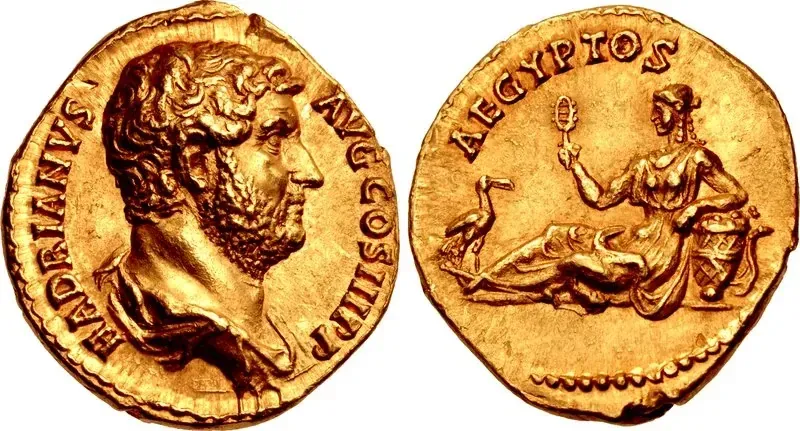
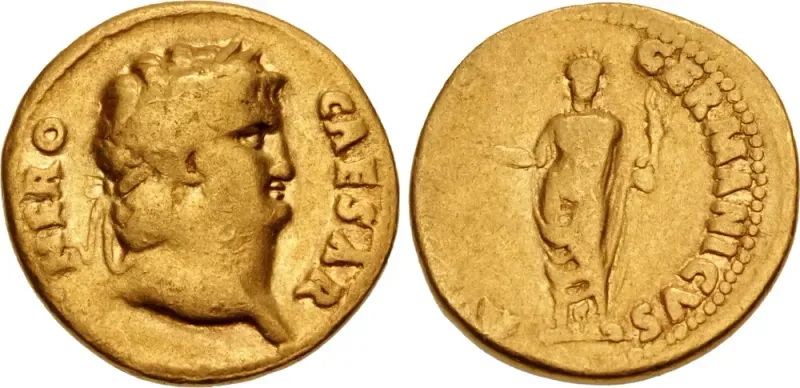
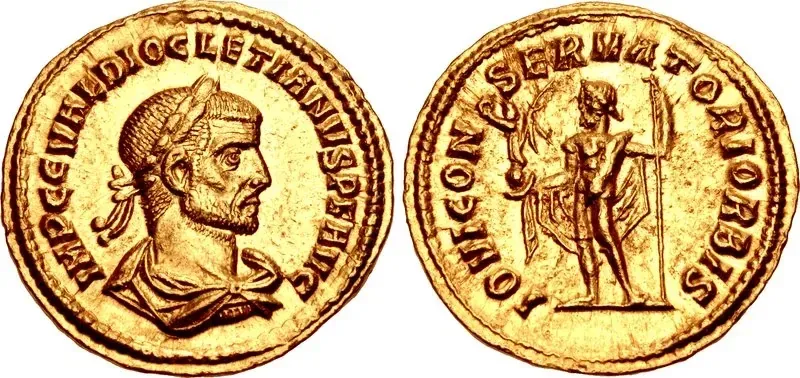
The story of the Aureus
The aureus was the main gold coin of ancient Rome. It was struck from the late Republic until the early 300s AD, when Constantine's solidus replaced it. One aureus was worth 25 silver denarii, which was more than a month's pay for a legionary. Most Romans rarely held one. Aurei went into army pay, large purchases, savings and imperial gifts.
Rome had struck gold before, during the war with Hannibal, but only as an emergency measure. The aureus as a regular coin starts with the generals of the first century BC. Sulla struck aurei in the 80s BC at about 30 to the Roman pound. Julius Caesar struck the first really large issue in 46 BC to pay his troops, and he set the coin at 40 to the pound, about 8 grams. Augustus kept that standard and made the aureus a fixed part of the money system.
Over the next three centuries the aureus kept its purity but lost weight:
- Caesar and Augustus: 40 to the pound, about 8 g
- Nero, AD 64: 45 to the pound, about 7.3 g
- Caracalla, around AD 215: 50 to the pound, about 6.5 g
- Diocletian, around 290: 60 to the pound, about 5.4 g
In the crisis of the third century, mints struck gold at whatever weight they could manage, and some "light aurei" of the 250s weigh little more than 2 grams. Diocletian's coins at 60 to the pound often carry the Greek numeral for 60 to say so. Constantine then introduced the lighter solidus around 309. The two coins circulated side by side for a while, and the aureus faded out after 324.
How to recognise an aureus. It's a small, thick gold coin of about 19 mm, a little smaller than a US nickel. The front almost always shows the emperor or a family member, with a Latin legend of names and titles such as IMP CAESAR, AVGVSTVS or P M TR P. The back shows a god, a personification such as Victory or Concordia, a building or an event. Because the gold is nearly pure, aurei don't corrode, and many survive in sharp condition.
That makes them a favourite target for forgers. Ancient gold is heavily faked, so buy only certified coins or from dealers who guarantee authenticity for life. Coins that were once mounted as jewellery, with a hole or solder marks, sell for much less.
The most famous aureus is Brutus's EID MAR coin, with a cap of liberty between two daggers for the Ides of March. Only three gold examples are known. One sold in London in 2020 for £3.24 million and was later returned to Greece as looted property.
For the full story of Roman gold, including how Constantine fixed it, read the history articles below.
From the encyclopedia
The aureus was the main gold coin of ancient Rome from the 1st century BC to the early 4th century AD, when it was replaced by the solidus. This type of coin was sporadically issued during the Republic and standardized during the Empire, originally valued at 25 silver denarii and 100 sestertii. It was about the same size as the denarius, but heavier than the denarius since gold is denser than silver.
From Aureus on Wikipedia, text under CC BY-SA 4.0. Fetched November 3, 2026.
Questions people ask
How much gold is in a Roman aureus?
An early aureus of Caesar or Augustus holds about 8 grams of almost pure gold, roughly a quarter of a troy ounce. Later aurei hold less, because the coin got lighter over time.
How much was an aureus worth in Rome?
Under Augustus one aureus equalled 25 silver denarii, or 100 sestertii. That was more than a month's pay for a legionary soldier.
How can I tell if an aureus is genuine?
Weight, size and style all have to match the emperor and type, and good fakes match all three. Buy coins certified by a grading service or from a dealer who gives a lifetime guarantee of authenticity.