Roman Coins: A Guide to Every Denomination
Part 10 of the ancient world series6 min read
Every Roman coin denomination explained: the as, dupondius, sestertius, denarius and aureus, how their values worked, how they changed, and what they're worth now.
A Roman soldier under Augustus earned 225 denarii a year. A drink of ordinary wine in a Pompeii bar cost one as. To make sense of either number, you need the ladder of coins that sat between them.
Rome's money system lasted for centuries and changed constantly. This guide walks through each denomination, what it was made of, what it was worth, and how the whole system shifted from the Republic to Constantine.
The short version: Rome's coin ladder
Under Augustus, the system settled into a neat set of exchange rates. Every coin was a fixed fraction of the one above it.
| Coin | Metal | Worth | Typical weight |
|---|---|---|---|
| Aureus | Gold | 25 denarii | about 8 g |
| Denarius | Silver | 4 sestertii | about 3.9 g |
| Sestertius | Brass (orichalcum) | 2 dupondii, or 4 asses | about 25 g |
| Dupondius | Brass (orichalcum) | 2 asses | about 12 g |
| As | Copper | 2 semisses, or 4 quadrantes | about 11 g |
| Semis | Brass | half an as | small |
| Quadrans | Copper | a quarter of an as | small |
So one gold aureus equalled 100 sestertii, or 400 asses. Weights drifted over time, so treat these as rough guides to early imperial coins.
Before the denarius: bronze lumps and cast bars
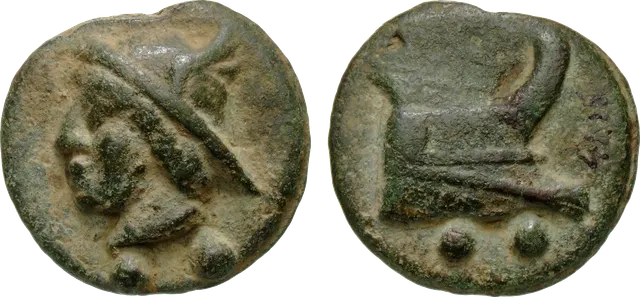
Rome came late to coinage. The Greek cities of southern Italy had been striking silver for centuries before Rome cast its first heavy bronze coins, called aes grave ("heavy bronze"), in the early third century BC.
These were big, cast discs, and the as was the basic unit. That word stayed in use for more than 500 years, long after the coin itself had shrunk to a fraction of its first weight.
The denarius arrives (about 211 BC)
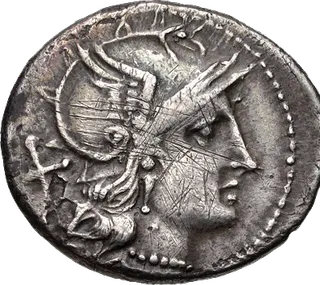
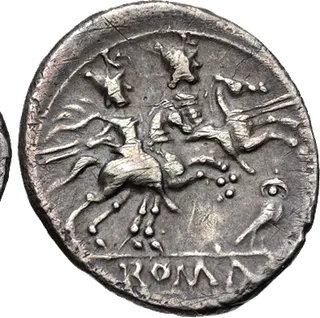
The Second Punic War against Hannibal strained Rome's finances badly. Around 211 BC the Republic reorganised its money and introduced a new silver coin, the denarius.
Its name means "containing ten", because it was first worth ten asses. The bronze as kept getting lighter, though, and around 141 BC the denarius was revalued at 16 asses. It held that rate into the time of Augustus.
The same reform created a tiny silver sestertius, worth two and a half asses. It was marked "IIS", meaning two asses and a half (semis). Over time that mark became the HS symbol Romans used for sums of money. The little silver sestertius was struck only now and then and stopped around 44 BC.
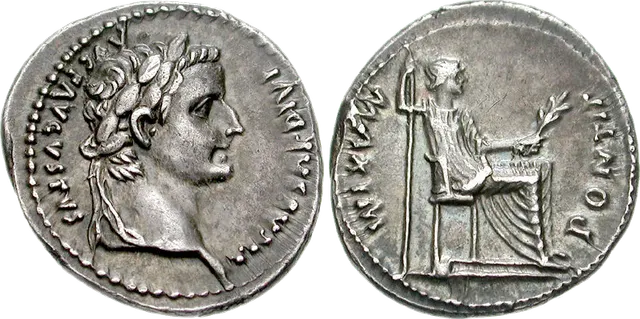
You can flip a denarius on our coin pages, or read its full story in The Denarius: How Rome's Silver Coin Lost Its Shine.
Augustus rebuilds the system
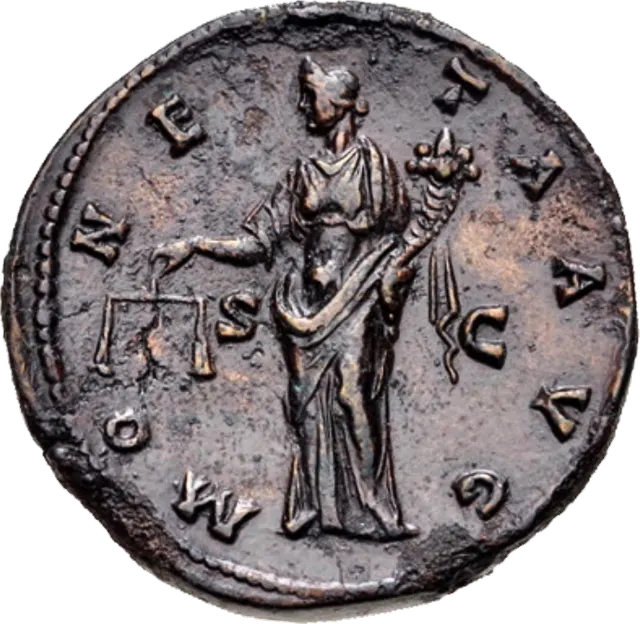
Augustus reorganised Roman coinage in the 20s and teens BC. He kept gold and silver under his own control. Bronze and brass coins carried the letters SC, for senatus consulto ("by decree of the Senate"), which is why you see SC on so many of them.
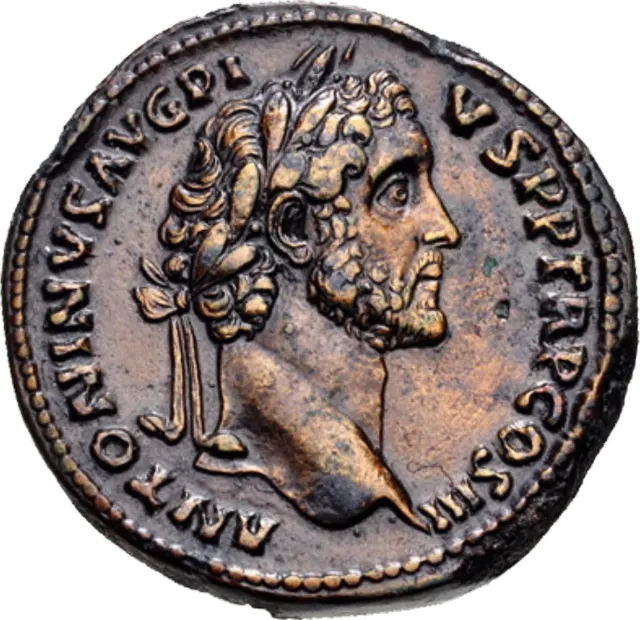
The gold aureus became a regular coin, worth 25 denarii. The sestertius came back as a big, heavy brass coin, worth a quarter of a denarius. Its brass, called orichalcum, was a copper and zinc alloy that looked golden when new.
The dupondius was made of the same brass and was worth half a sestertius. The as was now pure copper and worth a quarter of a sestertius. Small change came as the semis and the quadrans.
The sestertius, Rome's showpiece coin
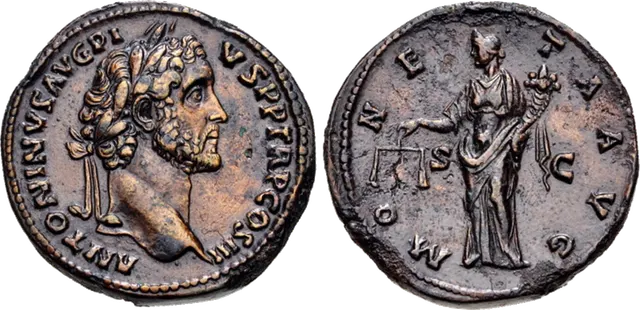
If you want one coin that captures imperial Rome, pick the sestertius. At around 25 grams, it gave die engravers a lot of room. Emperors used it for detailed portraits and for reverse scenes of harbours, temples, battles and building projects.
That size is why collectors love it today. It is also why worn examples are so common: these coins passed through many hands.
The sestertius faded during the third-century crisis. As silver coins were debased, a big brass coin stopped making sense, and by the 260s it was barely being made.
Dupondius or as? Look at the crown
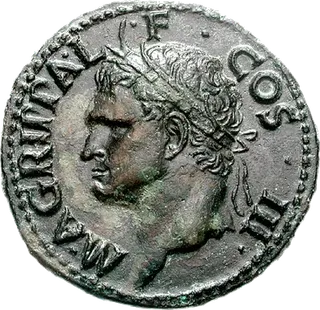
The dupondius and the as are about the same size, which confuses many beginners. Romans told them apart by colour: golden brass for the dupondius, reddish copper for the as.
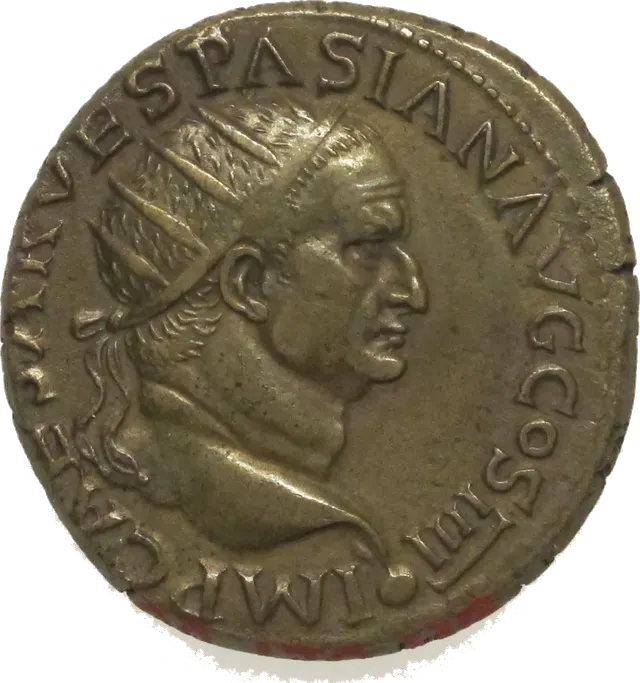
Once the coins have toned, colour doesn't help much. From Nero's reign onward, look at the emperor's head. On a dupondius he usually wears a radiate crown, a crown of spikes like sun rays. On the as he usually wears a laurel wreath or nothing.
Gold: the aureus
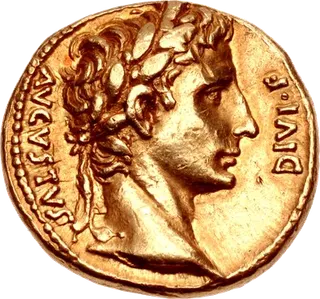
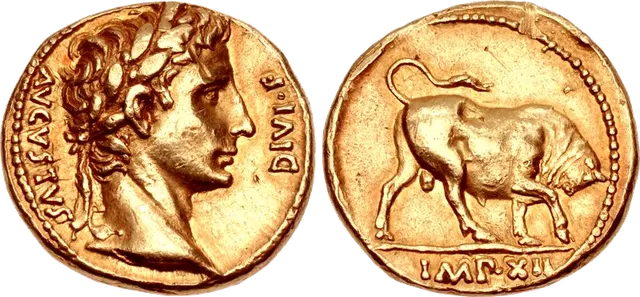
The aureus was the top of the ladder. Under Augustus it was struck at about 40 to the Roman pound of gold, close to 8 grams. A single coin equalled 25 denarii, more than a month's pay for a legionary.
Ordinary people rarely handled aurei. They were for large payments, savings and gifts to the army. That's partly why they survive in such good condition and why they cost so much today.
Nero starts the slide (AD 64)
In AD 64 Nero cut the weight of both precious-metal coins. The aureus went to 45 to the pound and the denarius to 96 to the pound. He also lowered the denarius's silver content.
None of this was dramatic yet. It did set a pattern later emperors kept repeating: when the treasury ran short, put less metal in each coin.
The third century: the antoninianus and the collapse of silver
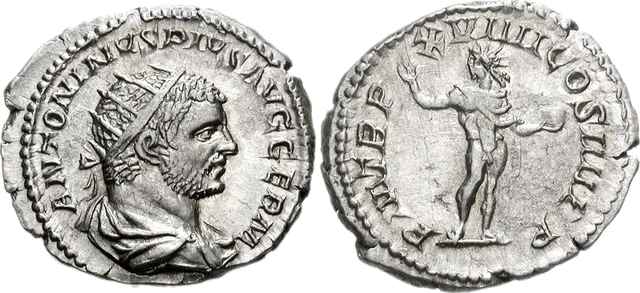
Around AD 215 the emperor Caracalla introduced a new silver coin, now called the antoninianus. It seems to have been tariffed as a double denarius but weighed only about one and a half times as much. It's easy to recognise because the emperor wears a radiate crown.
Over the next fifty years, silver content collapsed. By the reign of Gallienus (253 to 268) the antoninianus had a few percent silver at best. It was a bronze coin with a silver wash that soon wore off. The old denarius had stopped being struck in quantity by about 241.
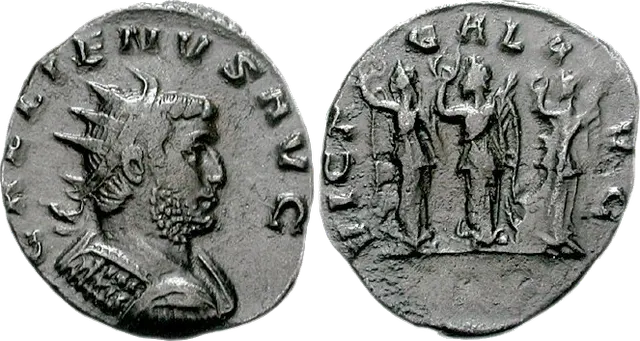
Prices rose as the coins got worse. Our article on coin clipping, debasement and Gresham's law explains why bad money drives out good.
Diocletian's reset (AD 294)
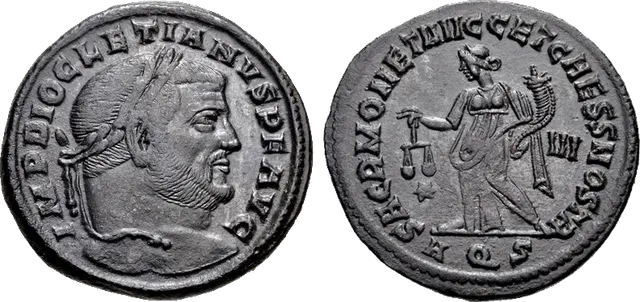
Diocletian tried to rebuild the system from scratch in 294. He issued a gold aureus at 60 to the pound, a fine silver coin called the argenteus, and a large bronze coin with a little silver, known today as the follis or nummus.
In 301 he issued his Edict on Maximum Prices, which set price caps on more than a thousand goods and services. It didn't stop inflation.
Constantine's solidus
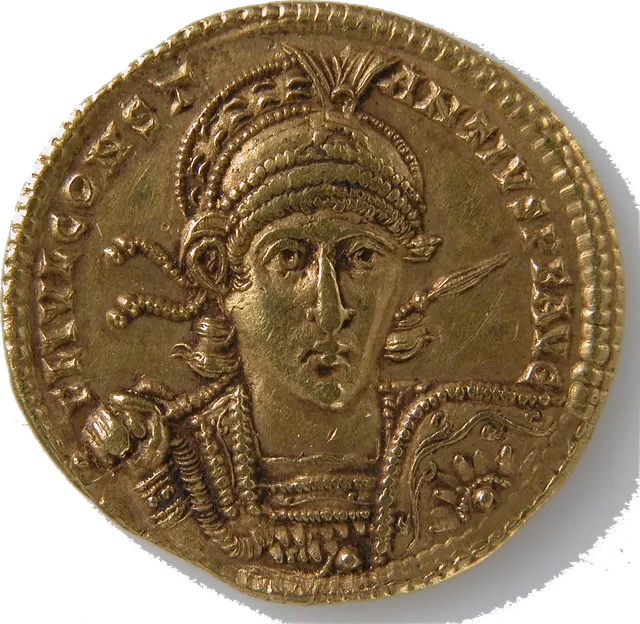
Constantine made the change that lasted. Around 309 to 310 he began striking a lighter gold coin, the solidus, at 72 to the pound, about 4.5 grams.
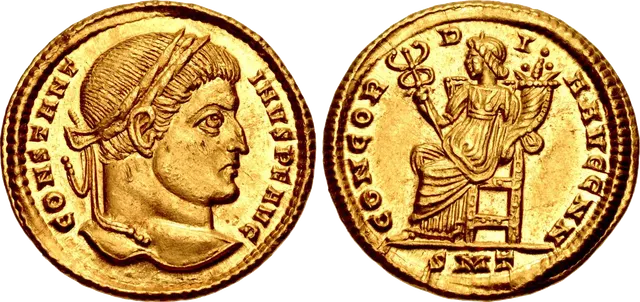
The solidus stayed stable for centuries and carried on as the main gold coin of the Byzantine Empire. You can follow that story in Roman Gold: The Aureus and the Solidus and Byzantine Coins: The Solidus That Lasted 700 Years.
Alongside it came a silver siliqua and a series of small bronze coins. Those little late Roman bronzes are the coins you're most likely to find in an uncleaned lot today.
What could a Roman buy with these coins?
Prices varied by place and period, but a few fixed points help.
A legionary under Augustus earned 225 denarii a year, paid in three instalments. Domitian raised it to 300 denarii around AD 83.
A notice on a Pompeii bar wall offers wine for one as, better wine for two, and the famous Falernian for four.
So the as bought everyday things, the sestertius and denarius covered a day's wages or a decent purchase, and the aureus was serious money.
Roman coin values today
Most Roman coins are not rare. The empire struck them in enormous numbers, and hoards keep turning up.
Small late Roman bronzes from the fourth century are the cheapest way in. Many sell for a few dollars to a few tens of dollars each. Common denarii and third-century antoniniani often sell for under $100 in decent condition.
Sestertii vary much more. Worn common examples are affordable, while sharp portraits of popular emperors can sell for thousands. Gold aurei and solidi usually start in the thousands.
Four things drive the price:
- The emperor or issuer. Augustus, Nero and Hadrian draw more buyers than obscure third-century rulers.
- Condition. A clear portrait and readable legend matter more than anything else.
- The reverse type. Rare designs or historically famous scenes add a premium.
- Authenticity. Buy from established dealers who guarantee their coins, because fakes of popular Roman types are everywhere.
If you're starting out, the Collector's Shelf guide to coin collecting books lists references that help you identify and price what you have.
Where to go next
Rome borrowed heavily from Greece before it ever struck a denarius. Start with Ancient Greek Coins: Owls, Turtles and Tetradrachms, or see how Rome fits into the bigger picture in The Most Circulated Coins in Every Era of History.
Or go back to the Ancient World era page, or flip a coin with a Roman face on it.
Questions people ask
What are the main Roman coin denominations?
Under Augustus the main coins were the gold aureus, the silver denarius, the brass sestertius and dupondius, and the copper as. Smaller change came as the semis and quadrans. One aureus equalled 25 denarii, 100 sestertii or 400 asses.
What is a sestertius?
A sestertius was a large brass Roman coin worth four asses or a quarter of a denarius. It began as a tiny silver coin in the Republic. Augustus relaunched it as a heavy brass coin of around 25 grams, which made it ideal for detailed portraits and scenes.
How much is a Roman coin worth today?
It depends on the coin. Common late Roman bronzes often sell for a few dollars to a few tens of dollars. Common silver denarii are often under $100. Fine sestertii and any gold coin can cost thousands. The emperor, the condition and the reverse design drive the price.
How can you tell a dupondius from an as?
They are about the same size. From Nero's reign onward, the emperor on a dupondius usually wears a radiate crown of spikes, while on an as he wears a laurel wreath or is bareheaded. When new, the dupondius was golden brass and the as reddish copper.
What replaced the denarius?
The antoninianus, introduced around AD 215, gradually took over, and by about 241 the denarius was no longer struck in quantity. Later, Diocletian's reform of 294 and Constantine's gold solidus rebuilt the system on new coins.
Sources
- NGC Ancients, "Coin Denominations of the Roman Empire", NGC
- David Benner / CoinWeek, "Ancient Roman Coinage From Republic to Empire"
- NumisWiki (Forum Ancient Coins), "denarius"
- NGC Ancients, "Nero's Economic Woes"
- CoinWeek, "The Great Reformer: The Coins of Diocletian"
- Art Institute of Chicago, Roman Art at the Art Institute of Chicago, cat. 24, "Solidus Portraying Emperor Constantine I"
- NGC Ancients, "Collecting Ancient Roman Coins on a Budget" (2019)
- Wikipedia, "Coinage reform of Augustus", "Pay (Roman army)" and "Falernian wine"
- PMC, "Microstructure and chemical composition of Roman orichalcum coins emitted after the monetary reform of Augustus (23 B.C.)"