Tap the coin to flip it
Athenian Owl Tetradrachm (c. 515 BC–42 BC)
AthensTetradrachmClassical owls c. 515–404 BC; New Style c. 165–42 BC
- Issuer
- City of Athens
- Denomination
- Tetradrachm (4 drachmas)
- Years minted
- Classical owls c. 515–404 BC; New Style c. 165–42 BC
- Metal
- Silver
- Weight
- About 17.2 g (Attic standard)
- Diameter
- About 22–25 mm
- Mints
- Athens
In the hand
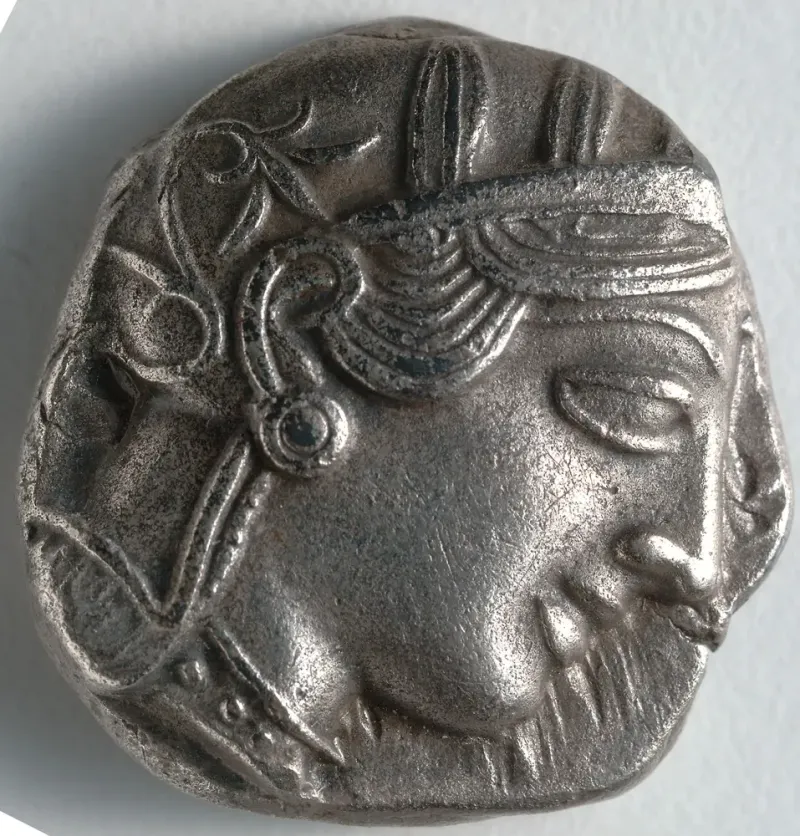
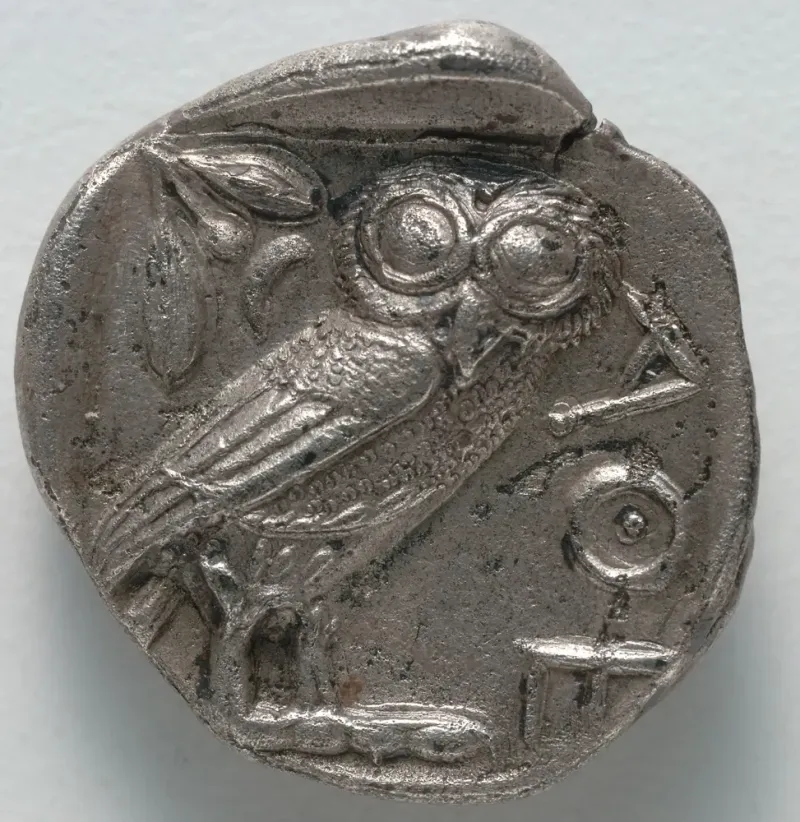
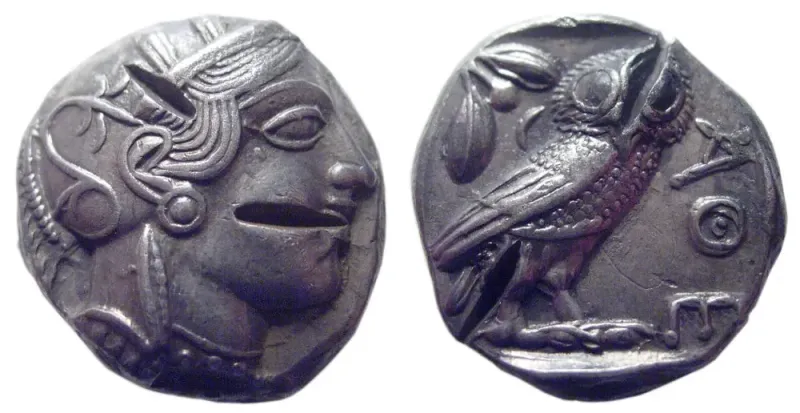
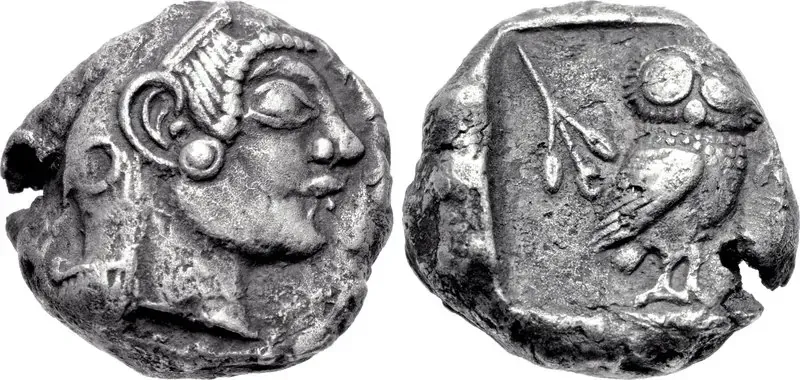
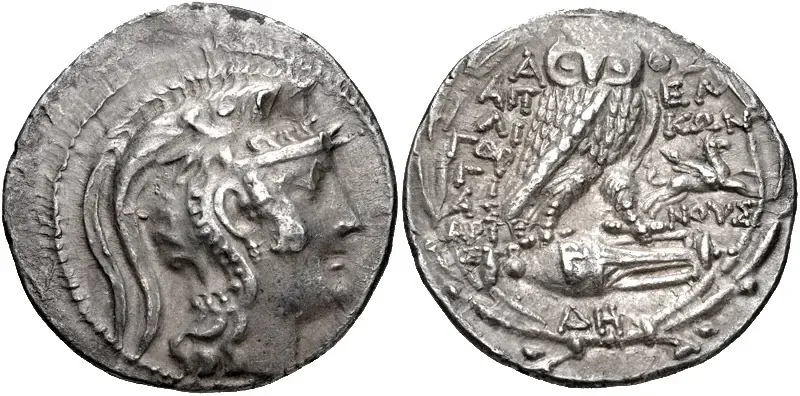
The story of the Athenian tetradrachm
Athens struck its first owl tetradrachms around 515 to 510 BC, and the design barely changed for the next two centuries. Each coin was worth four drachmas and weighed about 17.2 grams of almost pure silver, a weight that became known as the Attic standard.
The front shows Athena, the city's patron goddess, in a crested helmet decorated with olive leaves. Early dies give her the faint "archaic smile" of Greek sculpture of the time. The back shows her owl, facing the viewer with wide round eyes, with an olive sprig, a small crescent moon and the letters ΑΘΕ, short for "of the Athenians". Nobody knows exactly which year the first owl was struck. Hoard evidence puts it close to the end of the tyranny in 510 BC and the democratic reforms of 508/7 BC, but nothing ties it firmly to either.
Silver from Laurion
The metal came from the silver mines at Laurion in southern Attica. Athens began exploiting them seriously under the tyrant Peisistratos, and minting the silver into coins made it worth more than the raw metal. In 483/2 BC miners hit a rich new vein at Maroneia. Instead of sharing the windfall out among the citizens, the Athenians took Themistocles' advice and spent it on warships. Herodotus says it paid for 200 ships, and three years later that fleet defeated the Persians at Salamis.
Owls everywhere
While Athens led the Delian League in the 5th century BC, owls were minted in vast numbers and travelled across the eastern Mediterranean. Hoards containing them turn up in Egypt, the Levant and Mesopotamia. One early owl from about 500 to 485 BC was found in 2007 at Pushkalavati, near Peshawar in Pakistan.
Far from home, merchants didn't take a coin on trust. Many owls carry chisel "test cuts" where someone checked that the silver went all the way through. Mints in Egypt, the Levant and Arabia struck their own imitations, because traders there already recognised the design. Athens itself had so many that "bringing owls to Athens" became a stock joke, used by Aristophanes in Birds (414 BC).
Athens kept the old-fashioned look even after other cities modernised their coins, because a familiar owl was a trusted owl. After the city lost the Peloponnesian War in 404 BC the classical series came to an end. From about 165 BC Athens struck a "New Style" tetradrachm on a broader, thinner blank, with the owl standing on a fallen amphora inside an olive wreath. Those coins ran until about 42 BC.
The full story, from Aegina's turtles to the Syracusan decadrachms, is in the history article linked on this page.