Tap the coin to flip it
The Spanish Doubloon (Gold Escudos)
Spain
Two-escudo or 32-real gold coin
- Issuer
- Spanish Crown, at mints in Spain and Spanish America; later the Latin American republics
- Denomination
- 2 escudos (doblón); the name later also used for 8 escudos (onza)
- Years
- 1537 to the 1830s in Spain; to the later 1800s in Latin America
- Metal
- Gold: 22 carat (.917) until 1772, about .901 from 1772, .875 from 1786
- Weight
- 2 escudos about 6.77 g; 8 escudos about 27.07 g
- Diameter
- 2 escudos about 23 mm; 8 escudos about 36–37 mm
- Main mints
- Bogotá, Mexico City, Lima, Popayán, Santiago, Guatemala, Seville, Madrid
- Value
- 8 escudos = 16 silver pesos (pieces of eight)
In the hand
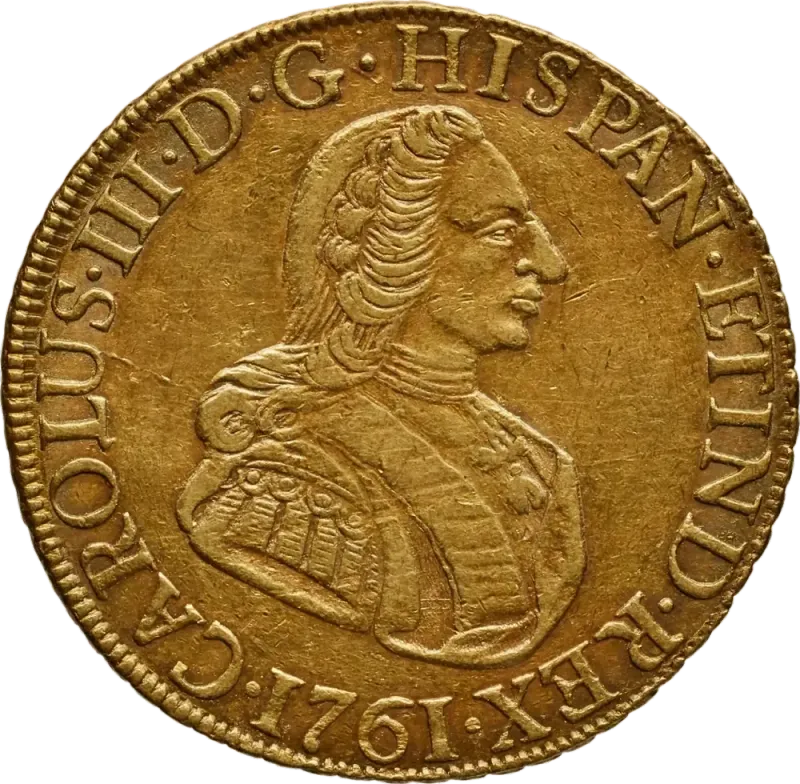
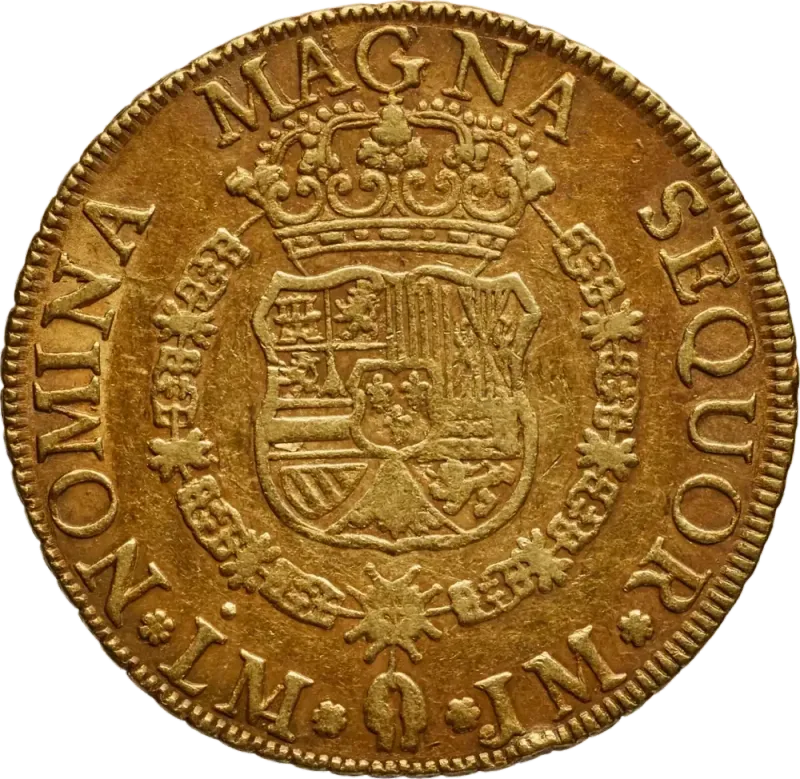
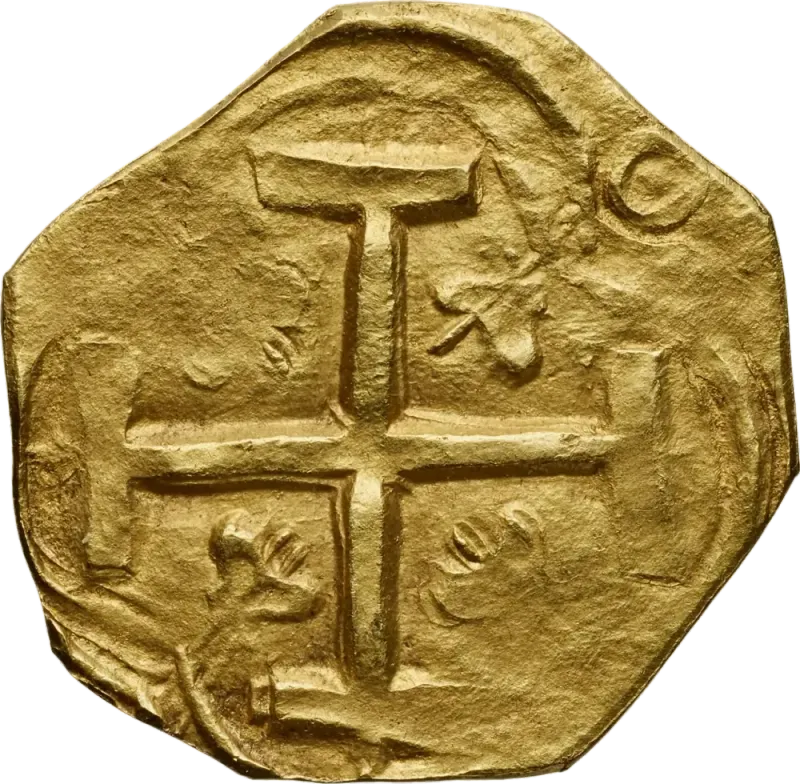
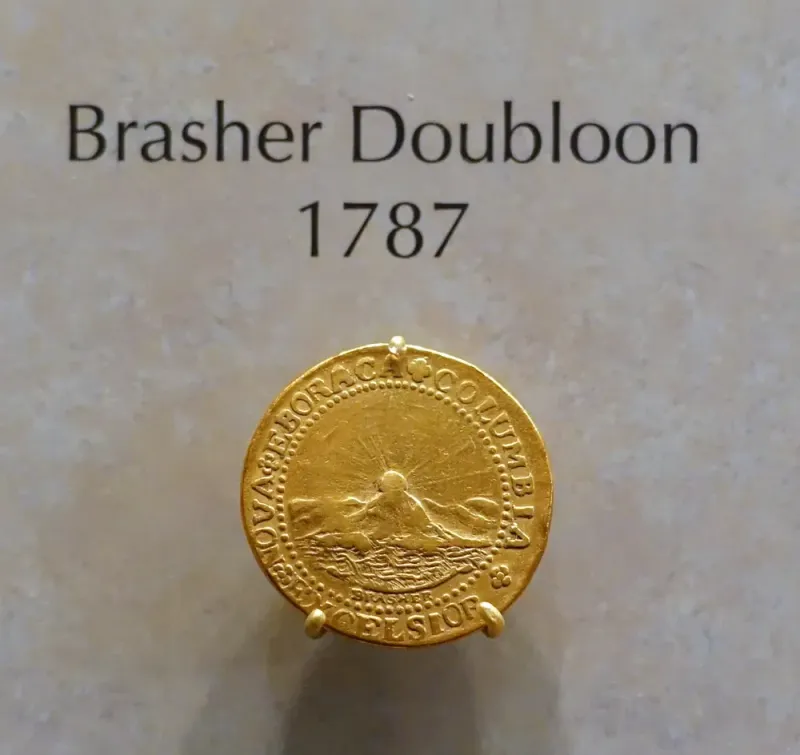
The story of the Doubloon
A doubloon is a Spanish gold coin. The name comes from doblón, "double", because it first meant the 2 escudos piece, double the basic gold escudo. English speakers later used "doubloon" for the big 8 escudos coin too, which Spaniards called an onza, an ounce. Both are correct, so it helps to know which coin someone means.
Spain introduced the gold escudo in 1537 under Charles I, and struck it in five sizes: ½, 1, 2, 4 and 8 escudos. Each step doubles the weight. The 2 escudos weighs about 6.8 grams and the 8 escudos about 27 grams, the same weight as a silver piece of eight. All were struck in 22-carat gold until 1772, when Spain began lowering the gold content a little.
One gold 8 escudos was worth 16 silver pesos, so a single coin carried a lot of value. That's why doubloons turn up in shipwrecks and pirate stories. The 1715 treasure fleet that sank off Florida is the biggest single source of gold cobs found today.
Where they were struck. Most doubloons came from Spanish America. Bogotá was allowed to strike gold from 1620, Mexico City from 1679, and Lima, Popayán, Santiago and Guatemala followed. Seville and Madrid struck them in Spain. The mint mark and the assayer's initial usually sit beside the shield.
Two types to know:
- Cobs (to the mid-1700s). Hand-struck, thick and irregular, often with only part of the design. One side has the crowned Spanish shield, and the other a cross, often a Jerusalem cross. Bogotá cobs are the most common.
- Milled coins (from 1732 at Mexico City). Round, machine-struck, with the king's bust on the front and the crowned arms on the back. Most 8 escudos you'll see in collections are milled coins of the late 1700s and early 1800s.
After the colonies won independence, Mexico, Colombia, Peru and others kept striking 8 escudos to the same standard for decades. In Spain the old escudo coinage ended in the 1830s.
Not every doubloon is Spanish. The 1787 Brasher doubloon is an American gold piece made by a New York goldsmith. People called it a doubloon because it was about the size and value of the Spanish coin. Mardi Gras "doubloons" are aluminium tokens thrown from parade floats in New Orleans since 1960.
For the full story, from the treasure fleets to the pirates, read the history articles below.
From the encyclopedia
The doubloon was a two-escudo gold coin worth approximately four Spanish dollars or 32 reales, and weighing 6.766 grams of 22-karat gold. Doubloons were minted in Spain and the viceroyalties of New Spain, Peru, and New Granada. As the Spanish escudo succeeded the heavier gold excelente as the standard Spanish gold coin, the doubloon therefore succeeded the doble excelente or double-ducat denomination.
From Doubloon on Wikipedia, text under CC BY-SA 4.0. Fetched November 3, 2026.
Questions people ask
How much gold is in a doubloon?
A 2 escudos doubloon holds about 6.2 grams of pure gold, about a fifth of a troy ounce. A full 8 escudos holds about three-quarters of an ounce, a little more in coins made before 1772.
Is a doubloon 2 escudos or 8 escudos?
Strictly, the doubloon (doblón) is the 2 escudos. English writers later used the word for the 8 escudos too. If you see "doubloon" in a pirate story, it usually means the big coin.
How do I tell a cob doubloon from a milled one?
A cob is hand-struck, thick and lumpy, with a cross on one side. A milled doubloon is round and even, with the king's portrait on the front. Mexico City began striking milled gold in 1732.