The Doubloon: Spanish Gold and Pirate Legend
Part 24 of the Trade empires series6 min read
What was a doubloon? The real story of Spain's gold escudos, from Bogotá's mint and the 1715 treasure fleet to pirates, the Brasher doubloon and Mardi Gras.
Say "doubloon" and most people picture a pirate. There's a chest on a beach, a map with an X, and a parrot somewhere nearby.
The real coin is more interesting than the cartoon. The doubloon was Spain's gold coin, mostly struck in the Americas, and for more than two centuries it was one of the most valuable coins anyone could hold. Pirates did steal it. They just didn't do it the way the films suggest.
This is the story of the real coin, and of which parts of the legend hold up.
What a doubloon actually was
Spain's gold unit was the escudo, Spanish for "shield", after the royal coat of arms stamped on it. Charles I introduced it in 1535. A coin worth two escudos was a doblón, a "double", and English speakers turned that into doubloon.
A 2 escudos piece weighed about 6.8 grams of 22-carat gold. Spain also struck ½, 1, 4 and 8 escudos. The 8 escudos was the big one: about 27 grams of gold, the same weight as a silver piece of eight. Spaniards called it the onza, the ounce.
English speakers didn't stay precise about the name for long. By the 1700s "doubloon" often meant the 8 escudos coin, and that's usually what people mean by a "Spanish doubloon" today. One 8 escudos was worth 16 silver pesos, so a single gold coin equalled sixteen pieces of eight. That was a lot of money to carry in one pocket.
Gold from the New World
Like Spain's silver, most of its gold came from the Americas. The richest source was the New Kingdom of Granada, roughly today's Colombia.
In 1620 Philip III gave permission for a mint in Santa Fe de Bogotá, and it was allowed to strike gold as well as silver. For decades it was the only mint in Spanish America making gold coins. Mexico City and Lima had to wait until the late 1600s. Mexico City finally struck its first gold coins at the end of 1679.
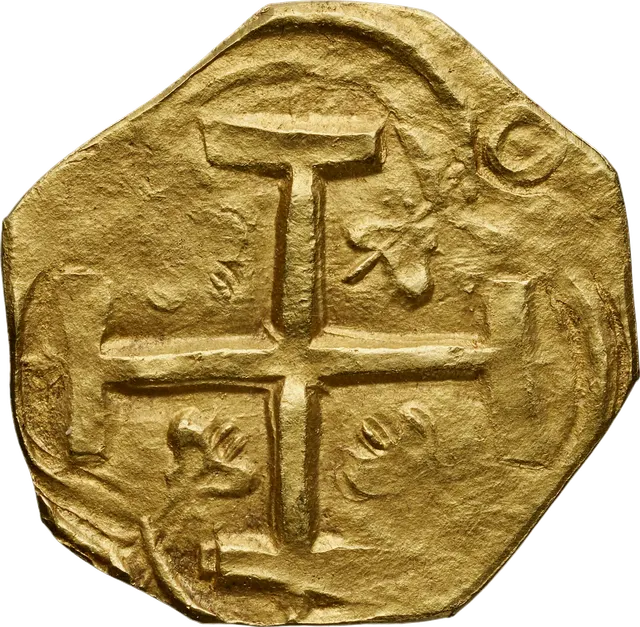
The early coins were cobs. Workers cut lumps of gold to the right weight and hammered each one between two dies. The results were irregular and often off-centre, with the royal shield on one side and a cross on the other. Nobody minded much. Traders cared about weight and purity, and the gold was good.
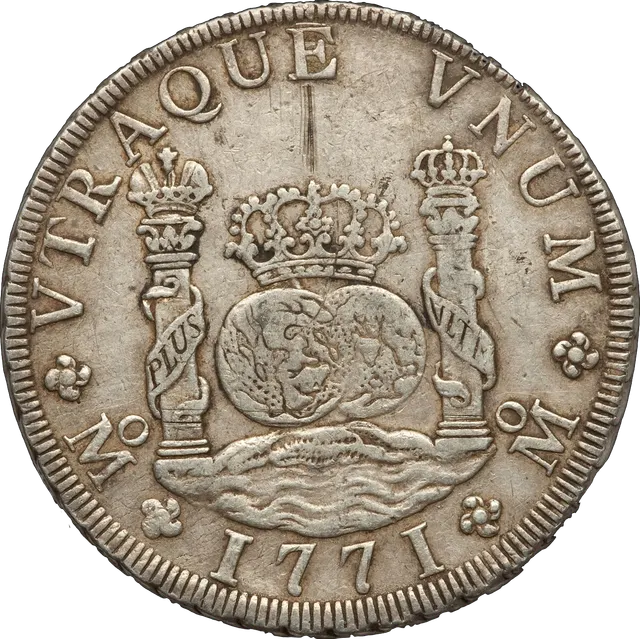
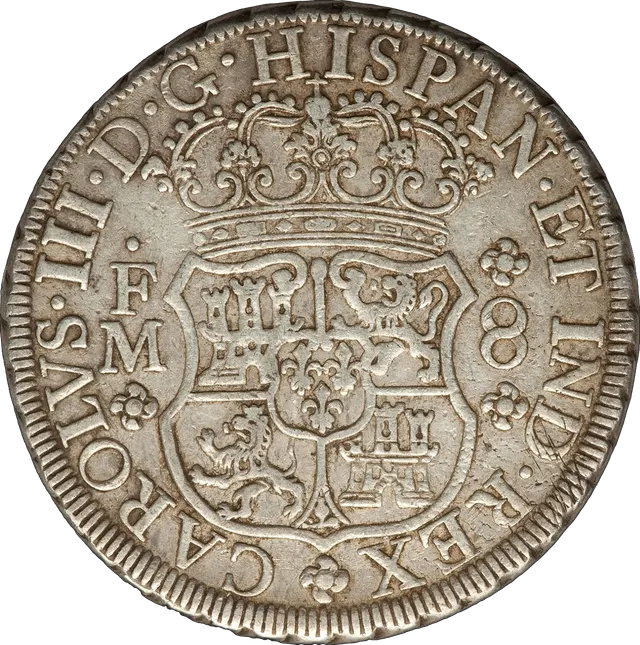
That changed in 1732. The Mexico City mint switched to machine-made round coins, and its new 8 escudos showed a portrait of Philip V. These were the first milled coins struck in the Americas. Other colonial mints followed, and the bust doubloon, a king's head on the front and the crowned shield on the back, became the standard look for the rest of the century. Spain did quietly lower the gold content a little in the 1770s and 1780s, which collectors can still measure today.
For more on how the change from hammer to press worked, see From Hammer to Machine.
The treasure fleets
Every year the gold and silver had to get to Spain. Ships gathered in Havana and sailed home together in convoys, the treasure fleets, through the Florida Straits and across the Atlantic.
Storms were a much bigger threat than pirates. Around 2 a.m. on 31 July 1715, a hurricane caught the combined fleet a week out of Havana. All eleven ships were lost off Florida's east coast. Three sank in deep water and eight were driven onto the reefs between today's Fort Pierce and Vero Beach. Roughly a thousand people died, including the fleet's commander, Juan Esteban de Ubilla.
The wrecks are why that stretch of Florida is called the Treasure Coast. A local builder named Kip Wagner started picking silver coins off the beach in the late 1940s, and in January 1961 his team found the first big haul offshore. Gold cobs from the 1715 Fleet are still the single largest source of these coins for collectors, and beachcombers still find the odd one after a big storm.
Pirates and doubloons: what's true
The films get this about half right.
True: pirates went after Spanish gold. The 1715 wreck is a good example. The Spanish set up a salvage camp on the beach and started pulling coins out of the water. In early 1716 a British privateer, Henry Jennings, sailed in with around 300 men, overran the camp and carried off the recovered treasure. He took it to Nassau in the Bahamas. Word spread, and the raid helped turn Nassau into a pirate base for the next couple of years. Colin Woodard tells that story in detail in The Republic of Pirates.
Mostly myth: buried treasure. Pirates generally spent their money, fast, in ports that didn't ask questions. The famous exception is William Kidd. In 1699 he buried a cache on Gardiners Island, off Long Island, before going to Boston to plead his case. The authorities dug it up and used it as evidence against him. It held gold, silver, gemstones and bags of sugar. That's about the only well-documented case of a pirate burying treasure, and there was no map.
Myth: pirate loot was mostly gold coins. Much of what pirates captured was ordinary cargo: cloth, sugar, tobacco, rum, tools, weapons and sometimes the ship itself. Coins were the prize everyone hoped for, which is exactly why they show up in the stories.
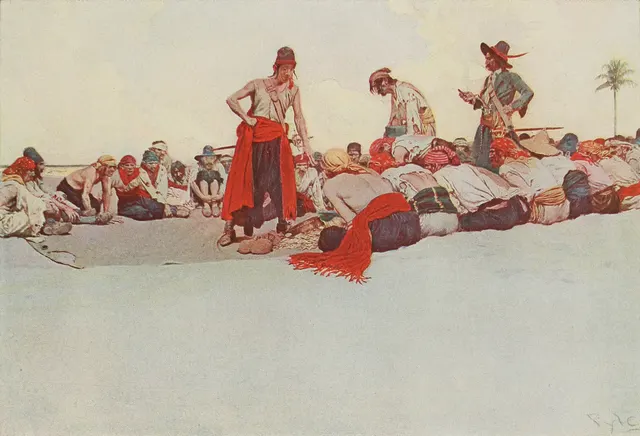
So where did the chest of doubloons come from? Mostly from fiction. In Treasure Island (1883), Jim Hawkins sorts Flint's hoard and lists "doubloons and double guineas and moidores and sequins". Stevenson's book shaped almost every pirate story that followed, and the doubloon came along for the ride.
Doubloons in early America
Gold was scarce in the British colonies, and Spanish gold filled the gap, just as Spanish silver did. Merchants weighed doubloons and took them as payment. After independence the young United States kept accepting them. A law of 1834 set the value of gold coins from Spain, Mexico and Colombia at 89.9 cents per pennyweight, and foreign coins stayed legal tender until the Coinage Act of 1857. The coin's place in early American money is part of the story in The Coinage Act of 1792 and the Birth of the US Mint.
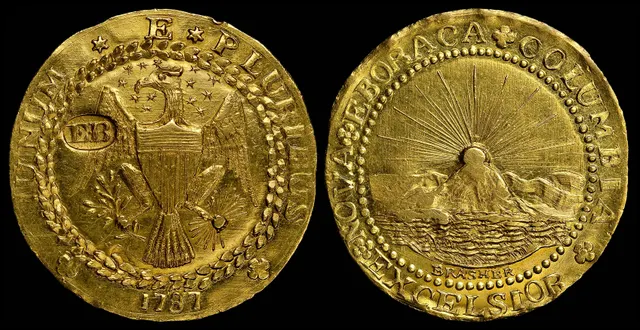
One American coin even borrowed the name. In 1787 Ephraim Brasher, a New York goldsmith, struck his own gold pieces on the Spanish standard. They weighed about 408 grains and were valued at $15 in New York money, close to a Spanish doubloon. Collectors call them Brasher doubloons. Only a handful survive, and in January 2021 one sold at Heritage Auctions for $9.36 million, a record for a US gold coin.
The doubloon you can catch
The name lives on somewhere unexpected: Mardi Gras.
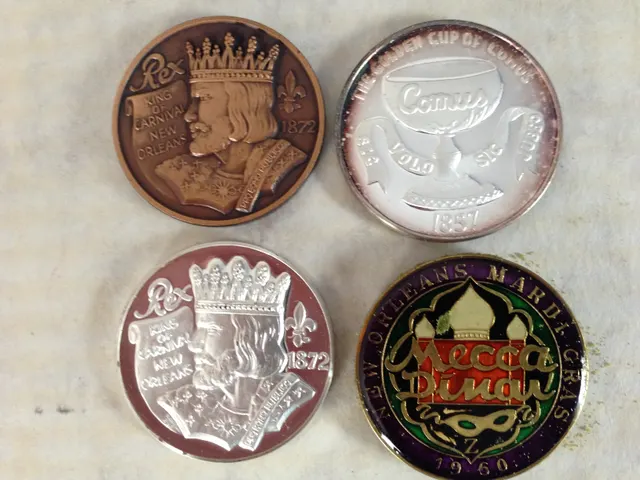
In 1960 the New Orleans artist H. Alvin Sharpe designed aluminium coins for the Krewe of Rex to throw from its floats. Rex ordered 80,000, and they were a hit. Other krewes soon wanted their own. Mardi Gras doubloons are worth almost nothing as metal, but people still dive for them.
What is a doubloon worth today?
A genuine Spanish 8 escudos holds about three-quarters of a troy ounce of gold, so even a worn one is worth a good sum for its metal alone. Collectors pay well above that for clear dates, scarce mints and shipwreck coins with good provenance. Rare pieces, like the first Mexico City milled coins of 1732, are auction-house territory.
Be careful with anything sold as a "pirate doubloon". Most are modern souvenirs or outright fakes. Buy real coins from established dealers, and look for certification or a solid provenance.
Flip the coin you just read about
Our doubloon coin page has the specs and photos. You can also flip one in our coin flipper and see whether the king or the shield comes up. Before this: Pieces of Eight. Next in the series: The Maria Theresa Thaler. Britain's answer to Spanish gold is in The Guinea and the Sovereign.
Questions people ask
What is a doubloon?
A doubloon was a Spanish gold coin. Strictly, the name (from Spanish doblón, "double") meant a 2 escudos piece of about 6.8 grams. In English it later came to mean the large 8 escudos coin too, which weighed about 27 grams. Most doubloons were struck in Spain's American mints in Bogotá, Mexico City and Lima.
How much is a gold doubloon worth?
It depends on the coin. A genuine 8 escudos holds about three-quarters of an ounce of gold, and collectors usually pay well above that gold value, even for common examples. Rare dates, scarce mints and documented shipwreck coins can sell for much more. Check recent auction records and buy from established dealers.
Did pirates really use doubloons?
Pirates certainly stole them. In 1716 Henry Jennings raided the Spanish salvage camp at the 1715 Fleet wrecks in Florida and took the recovered treasure to Nassau. Chests of buried doubloons are mostly fiction, though. Pirates usually spent their loot quickly, and much of what they captured wasn't coin at all.
What is a Brasher doubloon?
It's a gold coin struck in 1787 by Ephraim Brasher, a New York goldsmith, to roughly the weight of a Spanish doubloon. Only a few survive. One sold for $9.36 million in January 2021, a record for a US gold coin at auction.
Why are Mardi Gras coins called doubloons?
The name nods to pirate gold. New Orleans artist H. Alvin Sharpe designed aluminium "doubloons" for the Krewe of Rex in 1960, and parades have thrown them ever since.
Sources
- Daniel Frank Sedwick, LLC, "Gold cobs" and Frank Sedwick, "In Search of Colombian Cobs" (The Numismatist, July 1985).
- NOAA Atlantic Oceanographic and Meteorological Laboratory, "300th Anniversary of Spanish Silver Fleet's fatal encounter with a hurricane."
- 1715 Fleet Society, "History."
- American Numismatic Association Money Museum, "A closer look at the 1787 Brasher doubloon."
- Coin World, "Brasher doubloon sets record at auction: $9.36 million."
- United States Mint, "Regulation of Foreign Gold Coins."
- The Historic New Orleans Collection, "The Renaissance Man Who Changed Mardi Gras: H. Alvin Sharpe."
- Colin Woodard, The Republic of Pirates (Mariner, 2008).
- Robert Louis Stevenson, Treasure Island (1883), chapter 34.
Coins in this story
More coin pagesDoubloon