Tap the coin to flip it
The Guinea: Britain's Gold Coin, 1663–1813
Great Britain21 shillings
British gold coin minted between 1663 and 1814
- Issuer
- Kingdom of England, then Great Britain (Royal Mint, Tower of London)
- Denomination
- 1 guinea (20 shillings at first; fixed at 21 shillings from 1717); also ¼, ⅓, ½, 2 and 5 guineas
- Years
- 1663–1813
- Metal
- Gold, 22 carat (.917)
- Weight
- About 8.4 g (8.385 g standard)
- Diameter
- About 25 mm
- Edge
- Milled (machine-struck)
- Marks
- Elephant, or elephant and castle, on some coins: gold supplied by the Royal African Company
In the hand
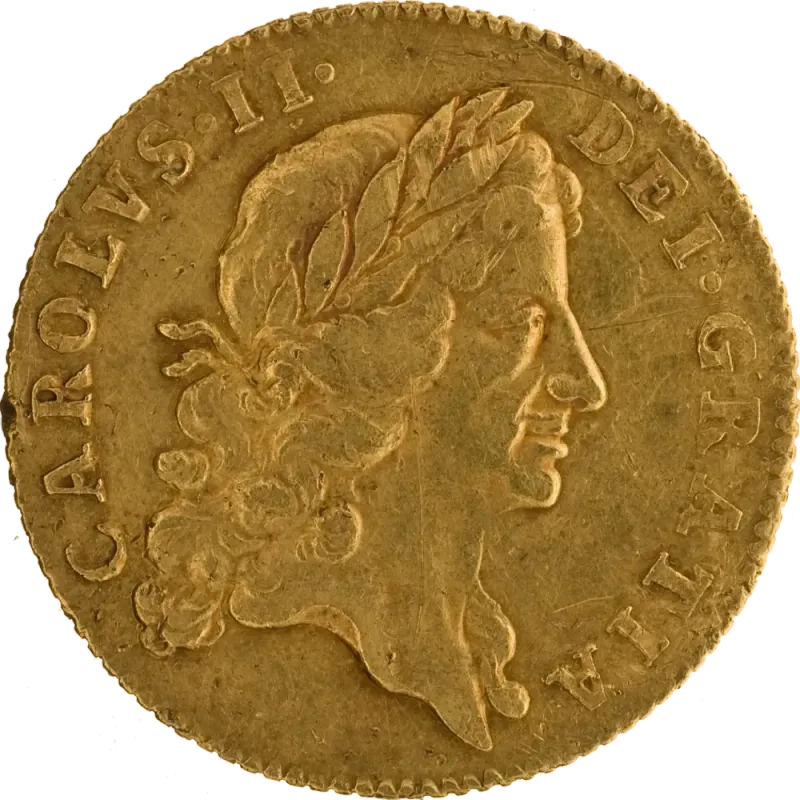
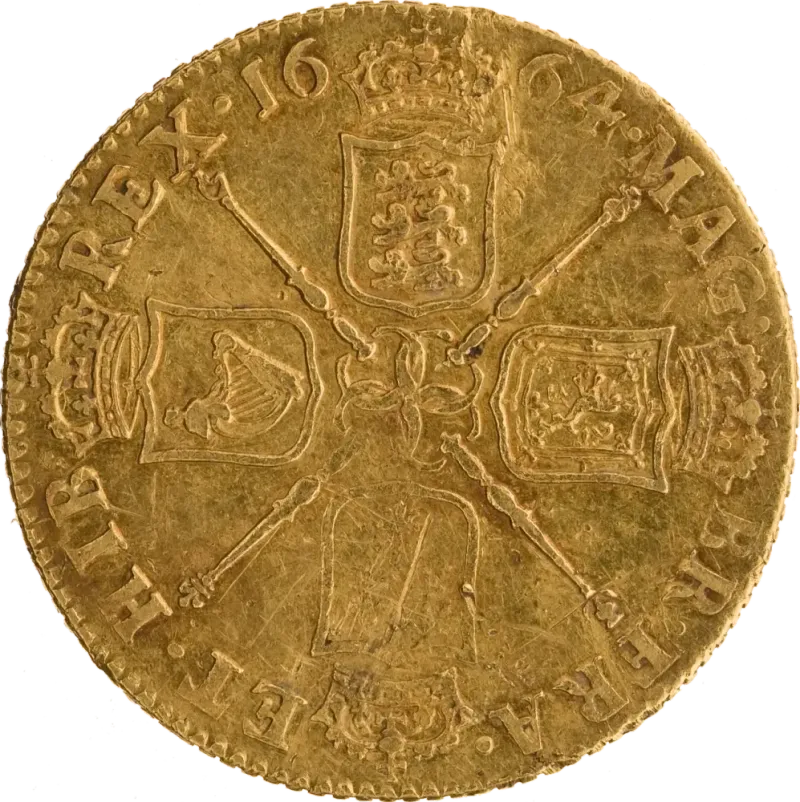
The story of the Guinea
The guinea is the gold coin of England, and later Great Britain, struck from 1663 to 1813. It was the country's main gold coin for 150 years, until the sovereign replaced it. The word outlived the coin: "guinea" meant £1 1s for more than a century after the last one was struck.
It was one of the first English coins made by machine. The Royal Mint switched to machine-struck gold in 1662, and the guinea followed in 1663. It was meant to be worth 20 shillings, and it held about a quarter of an ounce of 22-carat gold. Its name came from the Guinea coast of West Africa, the source of much of the gold.
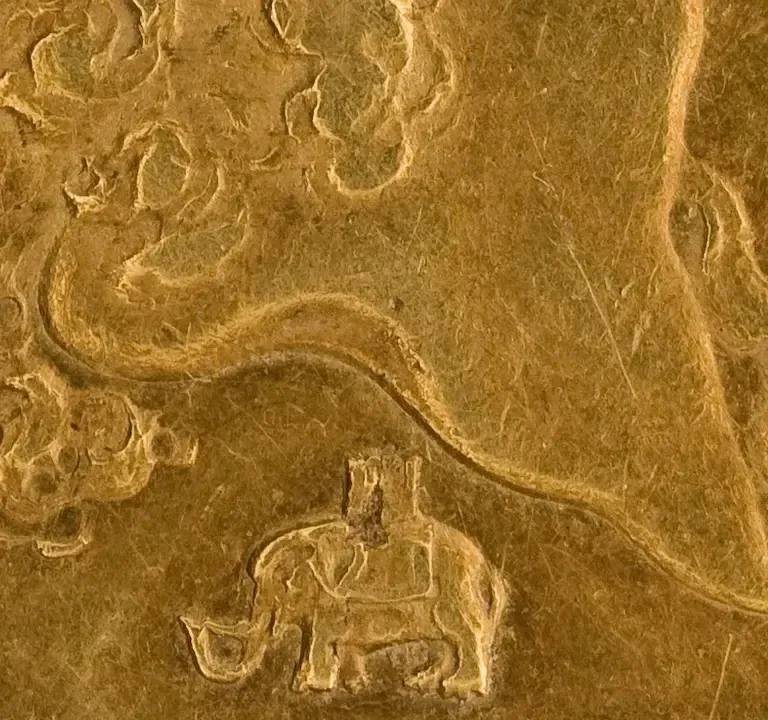
Some guineas carry a small elephant, or an elephant with a castle on its back, below the king's bust. That's the badge of the Royal African Company, which supplied the gold. The company's trade also included enslaved Africans, and that history is part of what the mark records.
The guinea's value in shillings moved with the price of gold and the state of the silver coinage. It rose to about 30 shillings in 1695, when clipped silver was in a bad way, then fell back after the silver was recoined. In 1717 Isaac Newton, as Master of the Mint, recommended a lower rate, and the guinea was fixed at 21 shillings. It stayed there until the end.
Sizes. The Mint struck the guinea in several sizes: five guineas, two guineas, one guinea and half guinea, plus a quarter guinea under George I and George III, and a third guinea under George III.
Designs to know:
- Charles II to George II (1663–1760): the monarch's bust on the front, and four crowned shields arranged in a cross on the back.
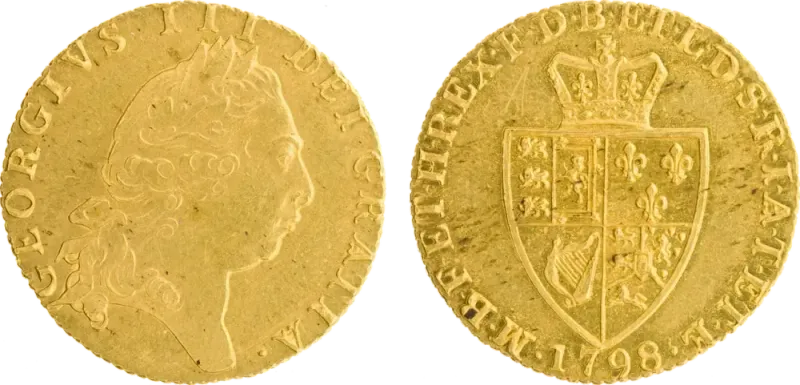
- George III "spade" guinea (1787–1799): a crowned shield shaped like the spade on a playing card. It's the most familiar guinea today.
- George III "military" guinea (1813): the last guinea, struck to pay Wellington's army in the Peninsular War, with the shield inside the Garter.
The guinea's end came with the Coinage Act of 1816. In 1817 the sovereign replaced it at exactly 20 shillings, a round £1. The guinea survived as a unit of account for fees, art and horses. The 2,000 Guineas, a horse race first run in 1809, still uses the name.
For the full story of British gold, from the guinea to the sovereign, read the history articles below.
From the encyclopedia
The guinea was a coin, minted in Great Britain between 1663 and 1814, that contained approximately one-quarter troy ounce (7.8 g) of gold. The name came from the Guinea region in West Africa, from where much of the gold used to make the coins was sourced. It was the first English machine-struck gold coin, originally representing a value of 20 shillings in sterling specie, equal to one pound, but rises in the price of gold relative to silver caused the value of the guinea to increase, at times to as high as thirty shillings. From 1717 to 1816, its value was officially fixed at twenty-one shillings,.
From Guinea (coin) on Wikipedia, text under CC BY-SA 4.0. Fetched November 3, 2026.
Questions people ask
How much gold is in a guinea?
A guinea weighs about 8.4 grams and holds about 7.7 grams of pure gold, close to a quarter of a troy ounce.
What does the elephant on a guinea mean?
It's the badge of the Royal African Company, which supplied the gold for those coins. An elephant with a castle on its back is the same company's badge.
What is a spade guinea?
It's George III's guinea of 1787 to 1799. The shield on the back is shaped like the spade on a playing card, which gave the coin its nickname.