Tap the coin to flip it
The US Trade Dollar (1873–1885)
United StatesTrade dollar1873–1878 for circulation; proofs to 1883; secret 1884 (10) and 1885 (5)
- Issuer
- United States Mint
- Denomination
- 1 trade dollar (legal tender to $5 until July 22, 1876)
- Years minted
- 1873–1878 for circulation; proofs to 1883; secret 1884 (10) and 1885 (5)
- Metal
- 90% silver, 10% copper
- Weight
- 420 grains (27.22 g)
- Silver content
- 0.7874 troy oz
- Diameter
- 38.1 mm
- Edge
- Reeded
- Designer
- William Barber
- Mints and marks
- Philadelphia (none), Carson City (CC), San Francisco (S); mark on the back above the D of DOLLAR
In the hand
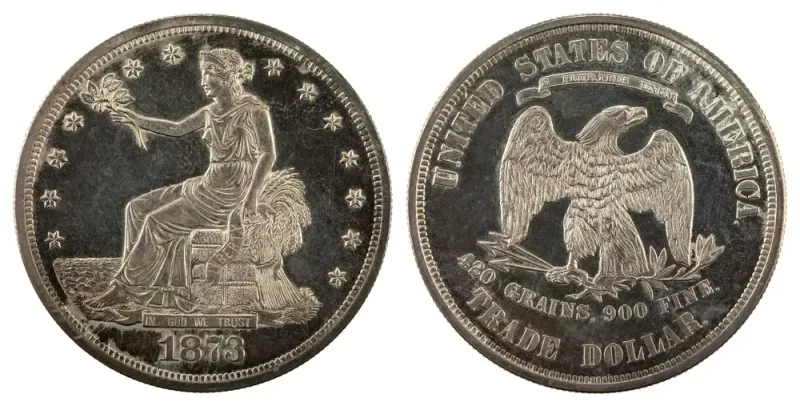
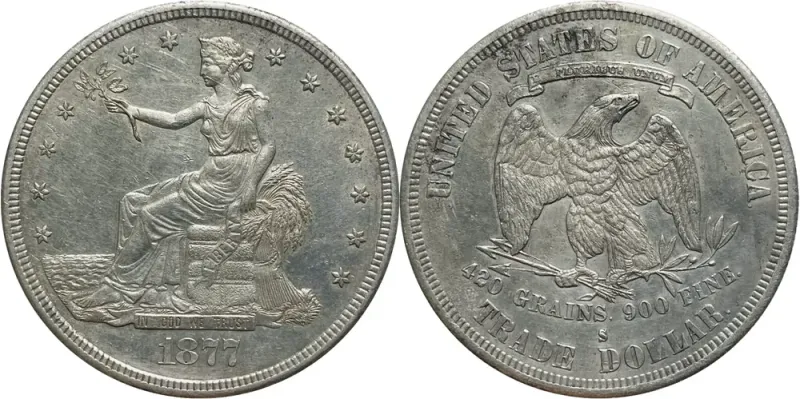
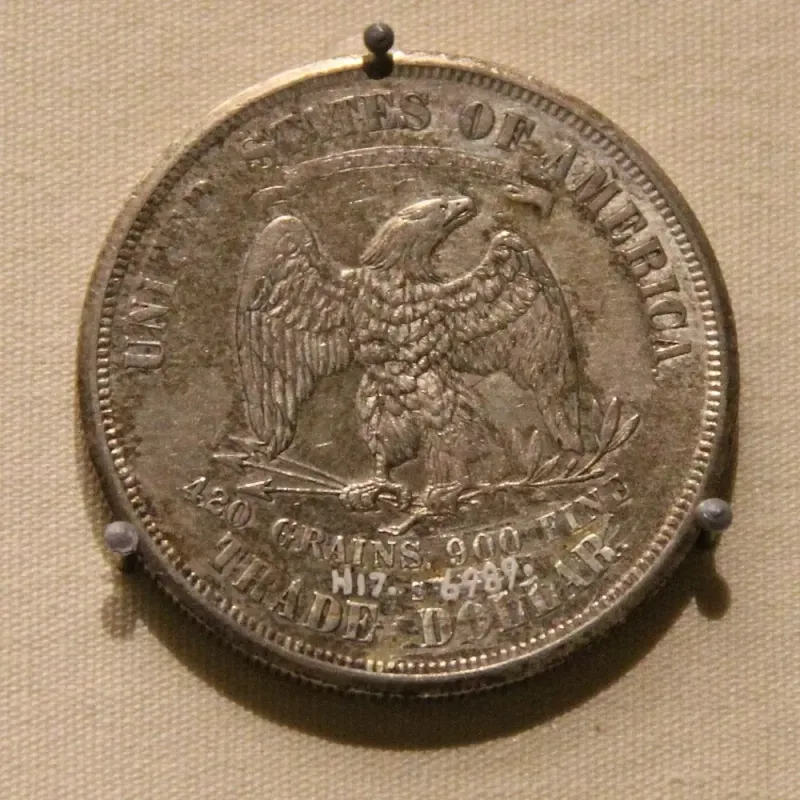
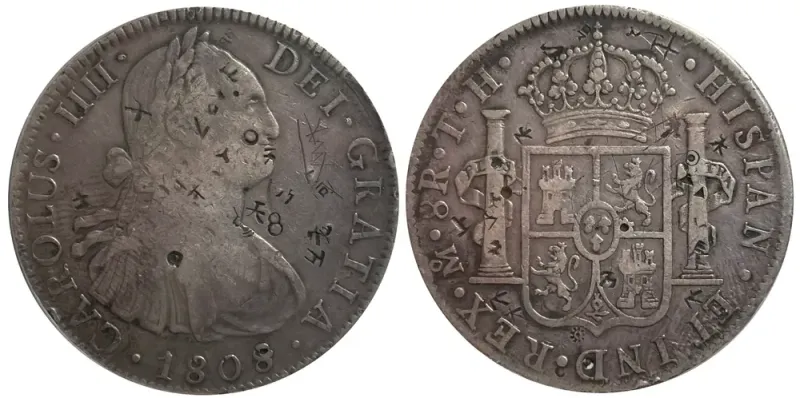
The story of the US trade dollar
The trade dollar was a US silver coin made for one job: competing with the Mexican peso in China. It was struck for circulation from 1873 to 1878, and as proofs only until 1883.
Merchants in China trusted Spanish and Mexican silver dollars and weighed everything else with suspicion. So the Coinage Act of 1873 created a slightly heavier American dollar: 420 grains of 90% silver, about 27.2 grams. The weight and fineness are written right on the back, "420 GRAINS, 900 FINE", so a merchant could see what he was getting.
William Barber designed it. On the front, Liberty sits on a bale of goods facing the sea, holding out an olive branch, with a sheaf of wheat behind her. On the back is an eagle holding arrows and an olive branch, with TRADE DOLLAR below.
Most of the early coins went across the Pacific from San Francisco. Chinese merchants who tested a coin often stamped it with a small character called a chop. A chopmarked trade dollar has travelled, and collectors like that.
At home it was a problem. The coin was legal tender for up to $5, and when silver prices fell, trade dollars ended up circulating in the US below face value. Congress took away its legal tender status on July 22, 1876, and circulation strikes stopped in 1878. Proofs continued for collectors until 1883. Ten coins dated 1884 and five dated 1885 were struck in secret and only surfaced in 1908. They're among the great US rarities.
In 1887 Congress let people redeem trade dollars at face value, and 7,689,036 came back to be melted. Chopmarked coins weren't accepted.
Three mints struck trade dollars: Philadelphia (no mark), Carson City (CC) and San Francisco (S). The mint mark is on the back, above the "D" of DOLLAR. Small changes to the design in 1875–1876 created two obverse and two reverse types, which specialists use to spot varieties.
One warning: the trade dollar is one of the most faked US coins. Huge numbers of cast and struck copies come out of China, many in plain base metal. Check the weight (27.2 g), the diameter (38.1 mm) and a magnet before trusting one.
The full story of the trade dollar and the Morgan and Peace dollars that followed is in the history article linked below.
Questions people ask
What is a US trade dollar?
A silver dollar struck from 1873 to 1885 for trade in China. It's heavier than a regular dollar, with 420 grains of 90% silver.
What is a chopmark on a trade dollar?
A small character punched into the coin by a Chinese merchant or banker after testing it. Chopmarked coins show the coin really did trade in Asia.
How can I tell if a trade dollar is fake?
Weigh it and measure it. A real one weighs about 27.2 g and is 38.1 mm across, and it isn't magnetic. Copies from China are very common, so buy certified coins if you're paying more than silver value.
Why was the trade dollar discontinued?
It started circulating in the US below face value, so Congress removed its legal tender status in 1876. Circulation strikes ended in 1878.