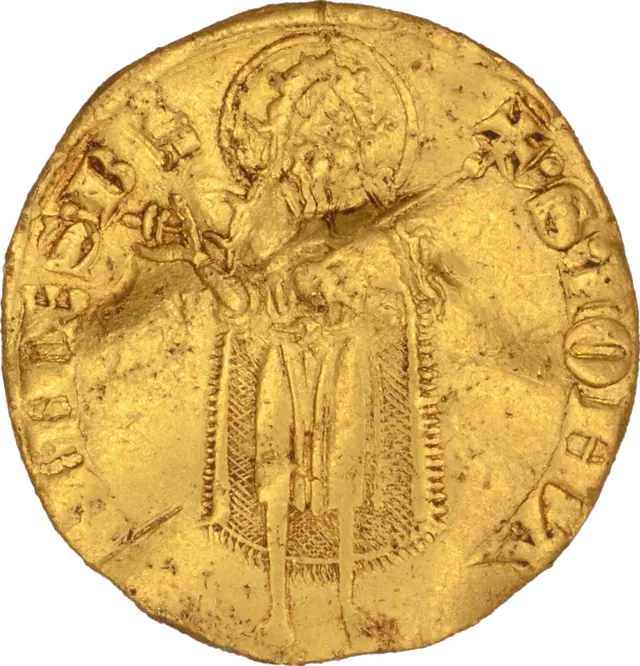
The Thaler: The Coin That Named the Dollar
Part 22 of the Trade empires series4 min read
Around 1520 a Bohemian silver-mining valley began striking big coins called Joachimsthalers. Here is how the thaler became the daler, and then the dollar.
Every time someone says "dollar," they're saying the name of a small valley in the mountains of Bohemia. The word passed through German, Dutch and English on its way to America, and a big silver coin carried it there.
That coin was the thaler.
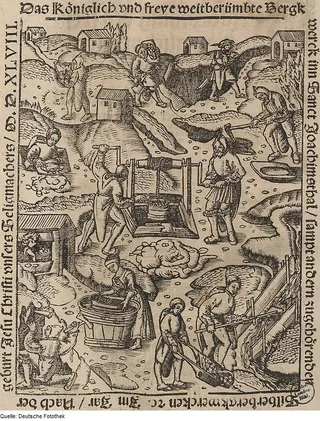
A silver rush in St. Joachim's valley
In 1516, miners found rich silver ore in a valley on the Bohemian side of the Ore Mountains, close to today's border between the Czech Republic and Germany. The land belonged to the Schlick family, a line of Bohemian counts, and they moved fast. They founded a mining town that same year and named it Sankt Joachimsthal: the valley ("Thal") of St. Joachim, the father of the Virgin Mary and a patron saint of miners.
The town grew quickly. It had about 5,000 people by 1520, when it became a free mining town, and at its peak more than 10,000 miners worked hundreds of shafts in the district. For a few decades it was one of the richest silver sources in Europe. Today the town is called Jáchymov, and it's part of the Erzgebirge/Krušnohoří Mining Region, a UNESCO World Heritage Site.
The first Joachimsthalers
Having a silver mine is one thing. Turning the silver into money is where the profit is. The Schlicks began striking coins from their own silver around 1519, and the Bohemian king confirmed their right to mint in January 1520.
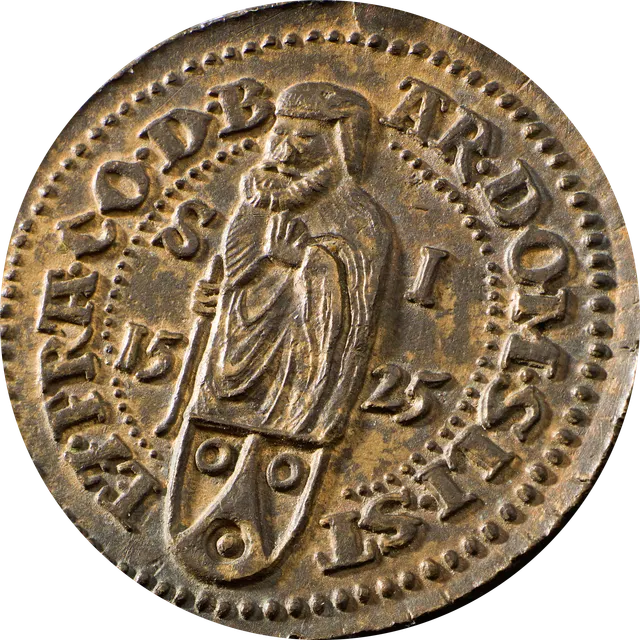
Their big coin weighed about 29 grams and measured around 41 mm across. One side shows St. Joachim standing beside the Schlick coat of arms. The other shows the rampant, two-tailed lion of Bohemia and the name of King Louis II, who was also king of Hungary.
People called it a Joachimsthaler, meaning "one from Joachimsthal." That's a mouthful, so it soon got cut down to thaler.
The idea came from Tyrol
The Schlicks didn't invent the large silver coin. That honor goes to Archduke Sigismund of Tyrol, whose mint at Hall struck a silver Guldengroschen (also called a guldiner) in 1486.
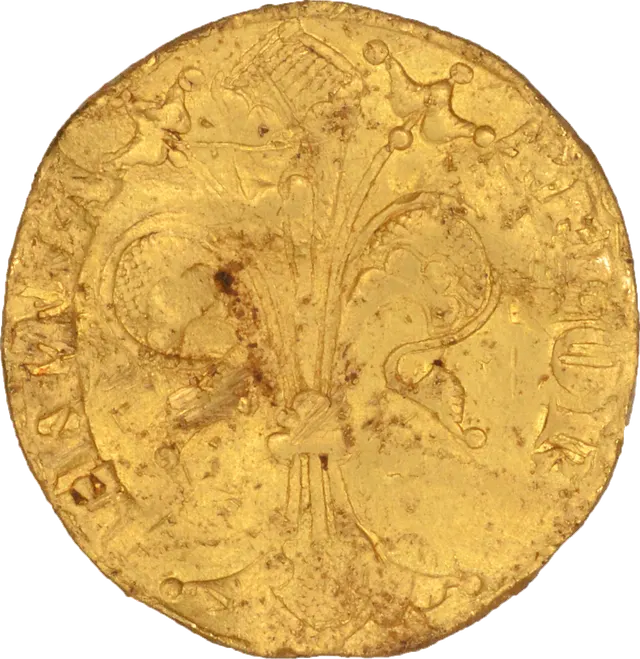
Until then, Europe's big transactions ran on gold. A gold gulden, or florin, was worth a lot of small silver pennies and groschen, so paying a large bill in silver meant counting out a heap of little coins. Sigismund's guldiner held roughly a gold gulden's worth of silver in a single piece of about 32 grams. The reverse shows Sigismund as a tournament knight galloping on horseback.
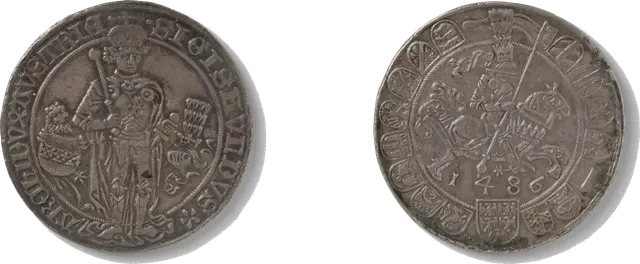
The guldiner proved the concept. Joachimsthal had the silver to turn it into a mass-produced coin, and its name stuck to every large silver coin that came after.
How a German coin became a Dutch daler
Thalers were useful, so almost everyone copied them. By the mid-1500s, most European states were striking large silver coins on the thaler pattern. In 1566 the Holy Roman Empire set a common standard: the Reichsthaler, struck nine to a Cologne mark of fine silver, which comes to about 26 grams of pure silver per coin.
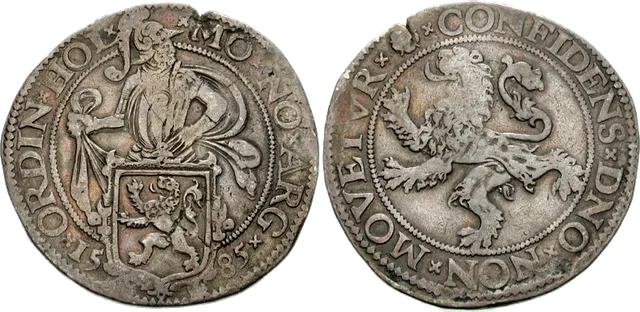
The name changed as it crossed borders. Low German and Dutch speakers said daler. Italians said tallero. Swedes and Danes had the riksdaler and rigsdaler. The Dutch Republic struck its own leeuwendaalder, or "lion daalder," from the 1570s, with a standing lion on the reverse.
English picked up the word as "daler" by about 1550, and it had settled into "dollar" by around 1600. Shakespeare's Macbeth (around 1606) has the defeated king of Norway paying "ten thousand dollars to our general use."
Across the Atlantic
Dutch traders carried lion daalders to New Netherland, the colony that became New York, and the coins circulated all through the Thirteen Colonies in the 1600s and early 1700s. Colonists called them lion dollars. Worn examples, where the lion had faded into something less noble, got the nickname "dog dollars."
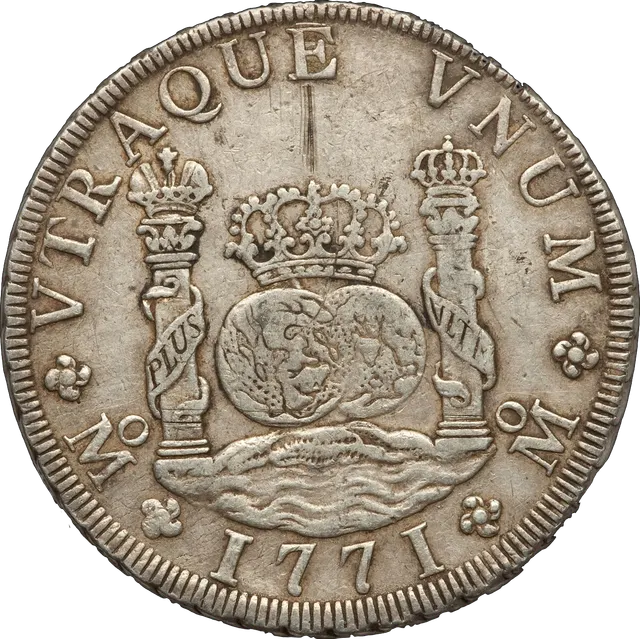
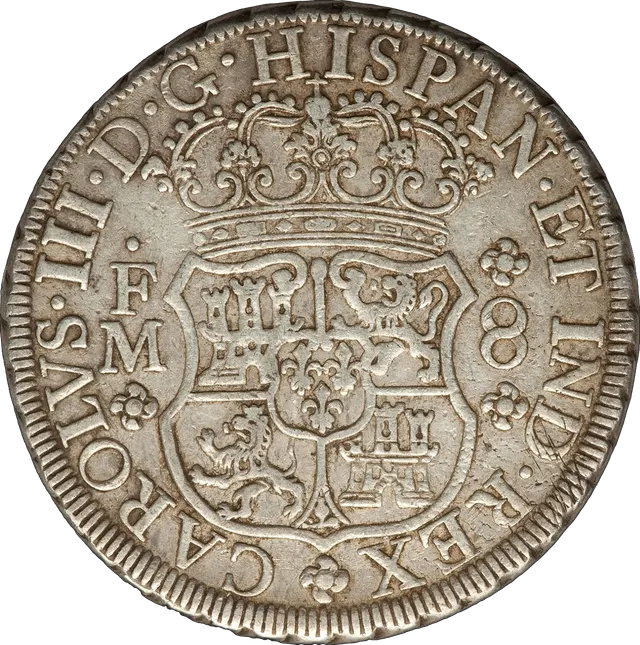
The coin English-speaking colonists used most, though, was Spanish: the silver 8 reales, or piece of eight. It was about the size and weight of a thaler, so English speakers called it a Spanish dollar. By the 1700s it was the most common silver coin in the Americas.
When the new United States picked a money unit, it went with the name everyone already used. In 1785 the Continental Congress resolved that "the money unit of the United States of America" would be one dollar. The Coinage Act of 1792 defined that dollar as having "the value of a Spanish milled dollar," containing 371¼ grains of pure silver.
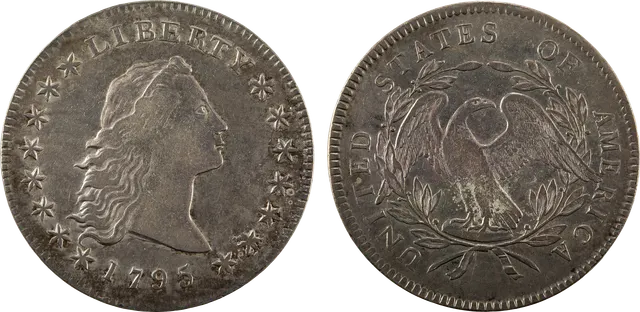
So the US dollar took its name from a Spanish coin, which got the name from a Dutch word, which came from a German coin named after a Bohemian valley.
The thaler's long goodbye
Thalers stayed in German pockets for a long time. In 1857 the German states agreed on the Vereinsthaler, a common "union thaler." After German unification, the new mark arrived in 1873 at three marks to one thaler, and old Vereinsthalers stayed legal tender until 1907.
One thaler never really stopped. Austria's Maria Theresa thaler has been restruck with the same 1780 date for more than two centuries and was used as trade money across the Middle East and East Africa well into the 20th century.
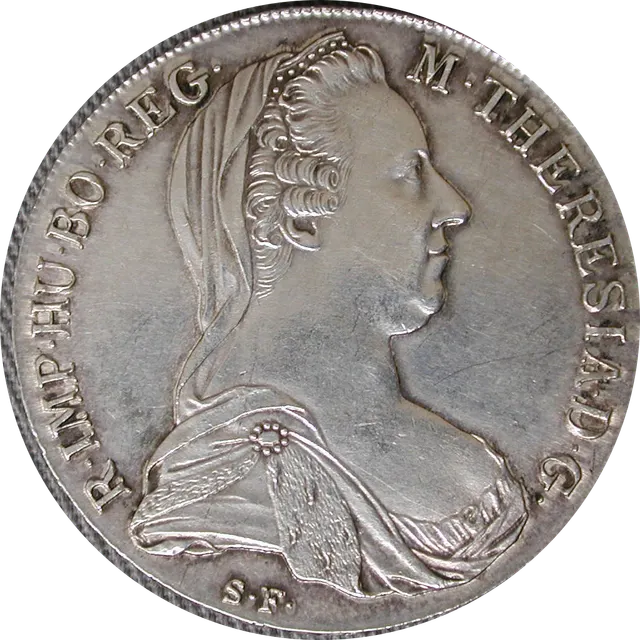
The name lives on too. Slovenia's currency from 1991 until it adopted the euro in 2007 was the tolar, and Samoa's currency is the tālā. Dozens of countries call their money a dollar.
What happened to Joachimsthal
The silver ran low before the end of the 1500s, and the town shrank. Its mines kept giving, though. The physician Georgius Agricola worked in Joachimsthal and gathered material there for his great mining treatise, De re metallica (1556). Three and a half centuries later, Marie Curie isolated radium and polonium from Jáchymov ore in 1898.
The old Royal Mint building in Jáchymov is now a museum, a short walk from the shafts that supplied the first thalers' silver.
Flip the coins in this story
You can flip a thaler or a Spanish dollar right now, and compare them with the gold florin the guldiner was designed to match. Or head back to the coin flipper and toss one of today's dollars.
Keep reading in the Trade Empires series: Pieces of Eight: The Spanish Dollar, First Global Currency · All Trade Empires articles
Questions people ask
Why is the dollar called the dollar?
"Dollar" comes from thaler, short for Joachimsthaler, a large silver coin first struck around 1520 in Joachimsthal, Bohemia (today Jáchymov, Czech Republic). Dutch and Low German speakers said daler, English made it "dollar," and the US adopted the name in 1785.
How do you pronounce thaler?
"TAH-ler." The German spelling today is Taler; the "h" was dropped in a 1901 spelling reform but stayed in English.
What was the first thaler?
The Joachimsthaler, first struck around 1520, gave the coin its name. Its model was older: the silver guldiner that Archduke Sigismund of Tyrol struck at Hall in 1486, which held about a gold gulden's worth of silver.
How much silver was in a thaler?
Early Joachimsthalers weighed about 29 grams. The imperial Reichsthaler standard of 1566 set about 26 grams of pure silver per coin. Later thalers got lighter: the 1857 Vereinsthaler held about 16.7 grams.
Are thalers still made today?
Yes. The Austrian Mint still strikes the Maria Theresa thaler, always dated 1780, as a bullion and collector coin.
Sources
- American Numismatic Society, Silver thaler of Stefan von Schlick and Louis II of Hungary, Jáchymov, 1516–1520, object 1960.111.454
- American Numismatic Society, "New Sources: The 15th and 16th Centuries" (silver thaler section)
- Münzkabinett der Staatlichen Museen zu Berlin, Tirol: Sigismund der Münzreiche, Guldiner 1486, object 18204700
- Montanregion Erzgebirge/Krušnohoří (UNESCO World Heritage site), Jáchymov Mining Cultural Landscape
- Coinage Act of 1792, section 9 (1 Stat. 246)
- Journals of the Continental Congress, resolution of 6 July 1785 on the money unit
- William Shakespeare, Macbeth, Act 1, Scene 2 (Folger Shakespeare Library edition)
- Jack Weatherford, The History of Money (Three Rivers Press, 1998)