Tap the coin to flip it
The Thaler: Europe's Big Silver Coin
Holy Roman Empire
Large silver coin used in 16th- to 19th-century Europe
- Issuer
- First: the Counts of Schlick at Joachimsthal, Bohemia. Later: hundreds of German and European states and cities
- Denomination
- 1 thaler (taler); many states also struck ½ and 2 thalers
- Years
- c. 1519 to 1871 (Vereinsthaler legal tender until 1907); Maria Theresa thaler restruck to this day
- Metal
- Silver: Joachimsthaler about .9375 fine; Reichsthaler about .889; Vereinsthaler .900
- Weight
- Joachimsthaler about 29 g; Reichsthaler (1566) about 29 g, holding about 26 g of pure silver; Vereinsthaler 18.5 g
- Diameter
- About 40–41 mm for early and imperial thalers; 33 mm for the Vereinsthaler
- Design
- Varies by issuer; usually arms and a ruler's titles
In the hand
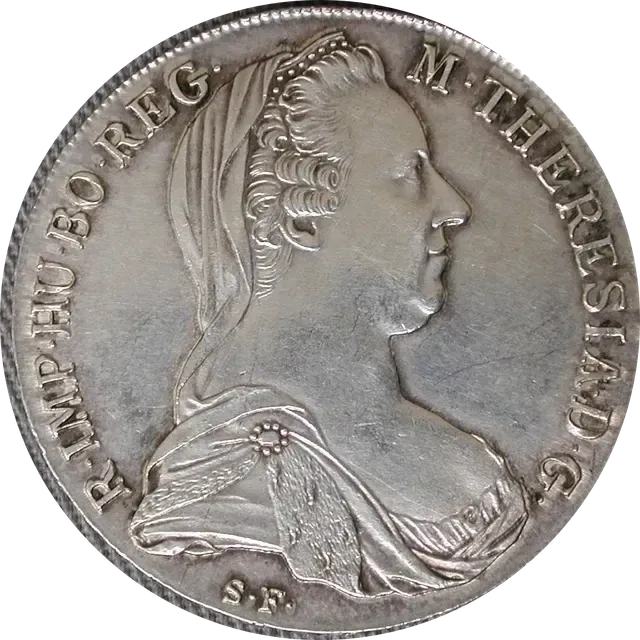
The story of the Thaler
The thaler is a large silver coin, about 40 mm across, that German and central European states struck from the early 1500s to the late 1800s. Hundreds of rulers and cities issued one, so "thaler" names a size and type of coin rather than a single design. It's also where the word "dollar" comes from.
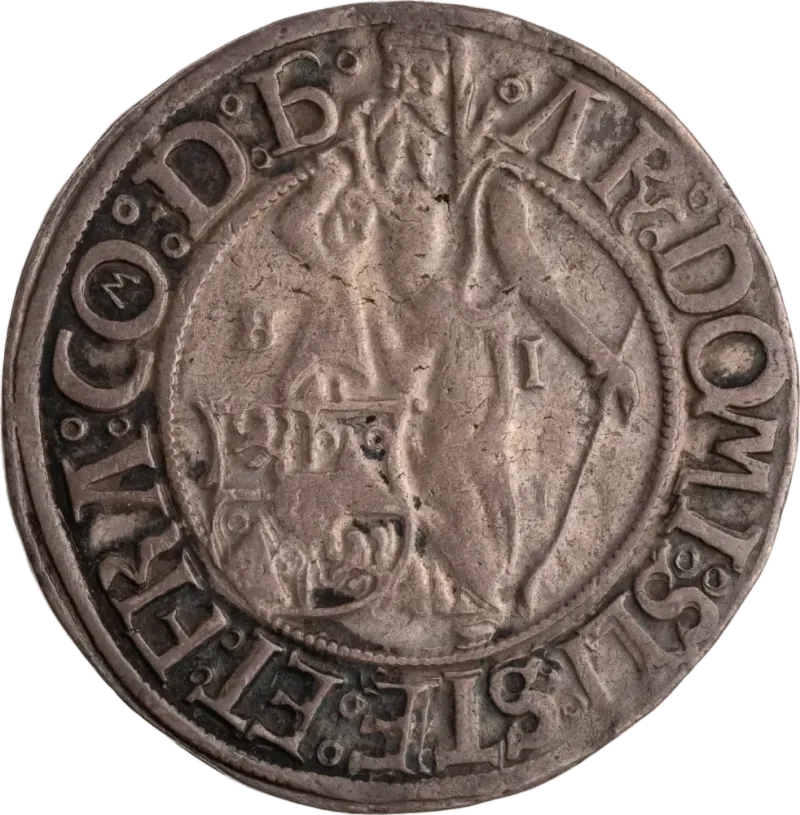
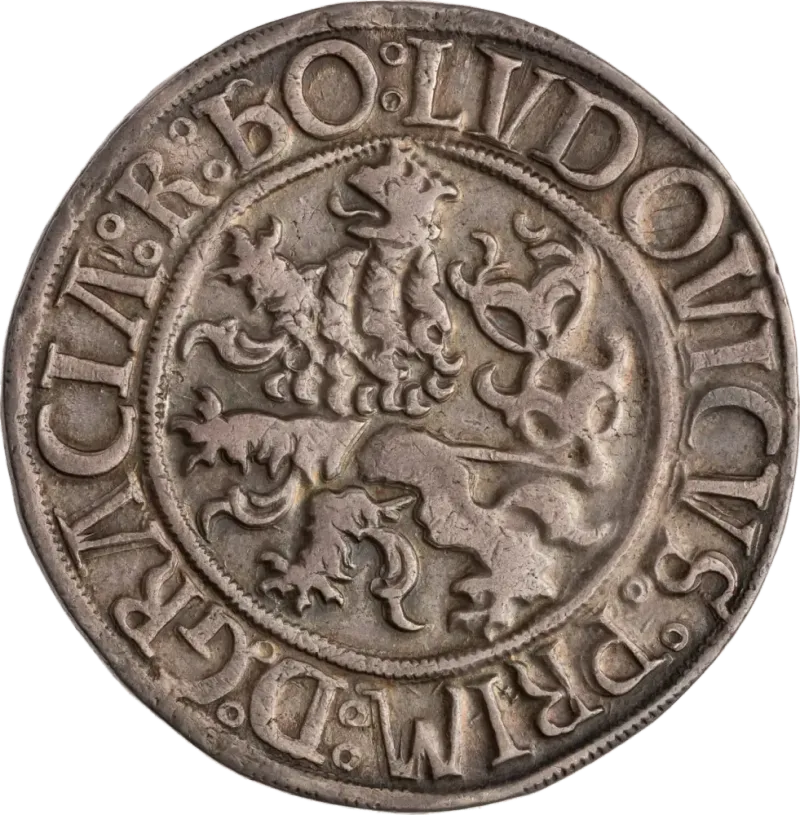
The first thalers came from Joachimsthal, a silver-mining town in Bohemia founded in 1516 (today Jáchymov in the Czech Republic). The local counts, the Schlick family, began striking big coins from their own silver around 1519, and the king confirmed their right to mint in 1520. Their coin weighed about 29 grams. One side shows St. Joachim beside the Schlick arms, and the other shows the two-tailed lion of Bohemia. People called it a Joachimsthaler, soon shortened to thaler.
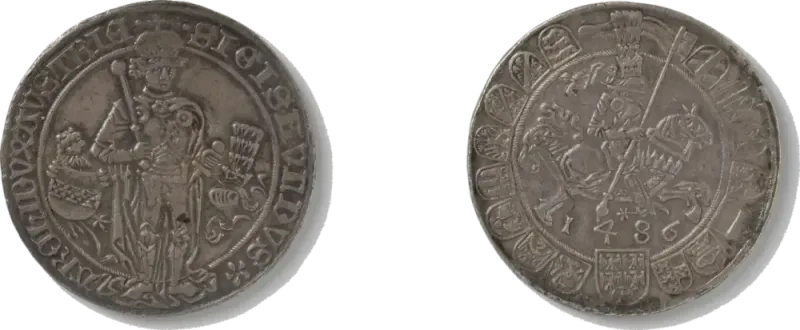
The idea was a little older. In 1486 Archduke Sigismund of Tyrol struck a silver guldiner at Hall that held about a gold gulden's worth of silver in one coin. Joachimsthal had the silver to make that idea common.
The main types. If you're trying to place a thaler, these are the big groups:
- Early thalers (1500s): Joachimsthalers and their many copies, close to 29 g and around 40 mm.
- Reichsthaler (from 1566): the Holy Roman Empire's common standard, about 26 grams of pure silver per coin. Most thalers of the 1600s and 1700s follow it.
- Conventionsthaler (from 1753): a lighter standard used by Austria, Bavaria and many southern states. The Maria Theresa thaler belongs here.
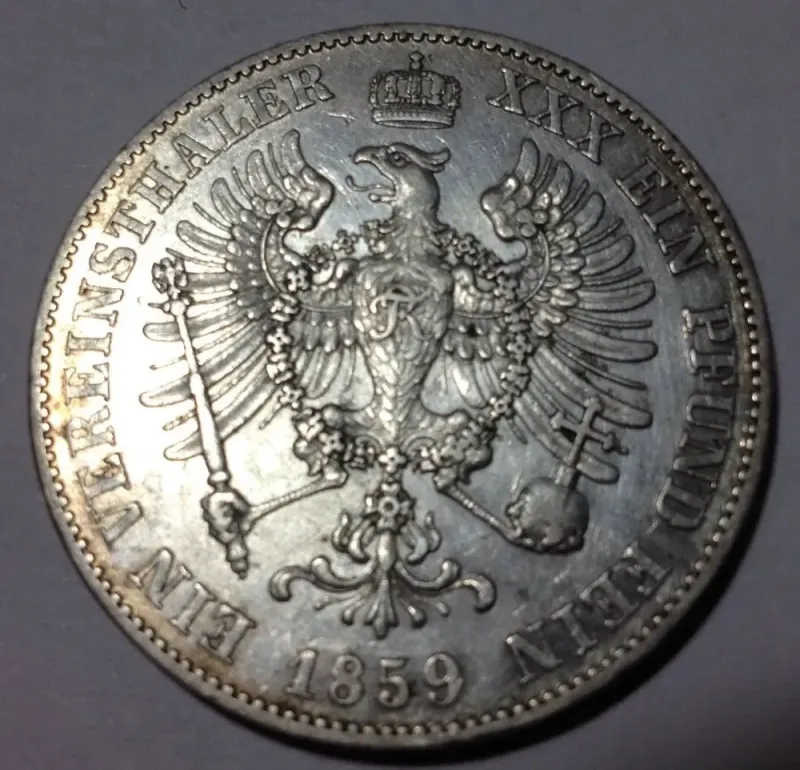
- Vereinsthaler (1857–1871): the "union thaler" of the German states, smaller at about 33 mm. It stayed legal tender until 1907, long after the mark replaced it.
How to read a thaler. Look for the issuer's name and titles in the legend, usually in Latin and heavily abbreviated, and a coat of arms on one side. Many thalers carry a date. A portrait points to a duke, king or emperor. A city view or a saint often means a free city or a church state. Specialist catalogues sort them by issuer.
The name spread with the coin. Dutch and Low German speakers said daler, which English turned into "dollar". The Spanish 8 reales, which was about the same size, became the "Spanish dollar", and the United States took the name in 1785.
One thaler never stopped. Austria still strikes the Maria Theresa thaler, always dated 1780.
From the encyclopedia
A thaler, or taler, is one of the large silver coins minted in the states and territories of the Holy Roman Empire and the Habsburg monarchy during the Early Modern period. A thaler size silver coin has a diameter of about 40 mm and a weight of about 25 to 30 grams. The word is shortened from Joachimsthaler, the original thaler coin minted in Joachimsthal, Bohemia, from 1520.
From Thaler on Wikipedia, text under CC BY-SA 4.0. Fetched November 3, 2026.
Questions people ask
How big is a thaler?
Most thalers are about 40 mm across and weigh around 28–29 grams, close to a US silver dollar. The 1857 Vereinsthaler is smaller, at 33 mm and 18.5 grams.
How do I find out who issued my thaler?
Read the legend around the edge for the ruler's or city's name, then match the coat of arms. Most thalers name their issuer and many carry a date, so a German coin catalogue will usually narrow it down quickly.
Is a taler the same as a thaler?
Yes. Taler is the modern German spelling, used since a 1901 spelling reform. English kept the older spelling with an "h".