Tap the coin to flip it
The Gold Dinar: The Coin of the Caliphs
Islamic caliphatesDinarReformed type from 77 AH (696–697); dinars struck into the 1200s and later
Specs (Umayyad reformed dinar)
- Issuer
- Umayyad Caliphate (from 697); later Abbasid, Fatimid and other dynasties
- Denomination
- Dinar (gold); silver dirham and copper fals alongside it
- Years minted
- Reformed type from 77 AH (696–697); dinars struck into the 1200s and later
- Metal
- Gold, usually 96% or purer
- Weight
- About 4.25 g (one *mithqal*)
- Diameter
- About 19–20 mm
- Main mint
- Damascus (Umayyad dinars rarely name the mint)
- Design
- Inscriptions only (Kufic Arabic): the declaration of faith, Quranic verses, and the date in words
In the hand
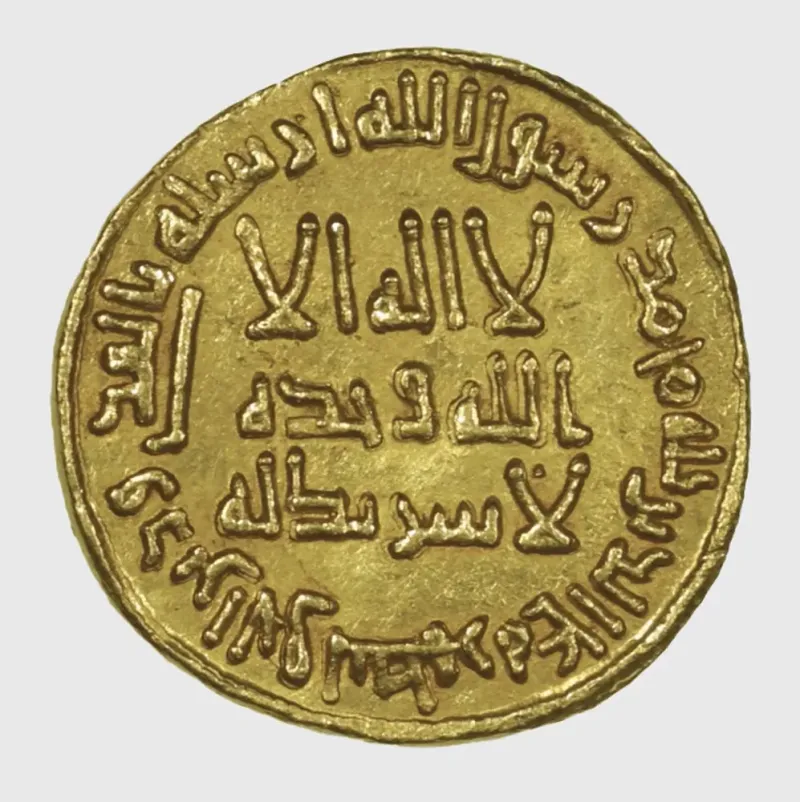
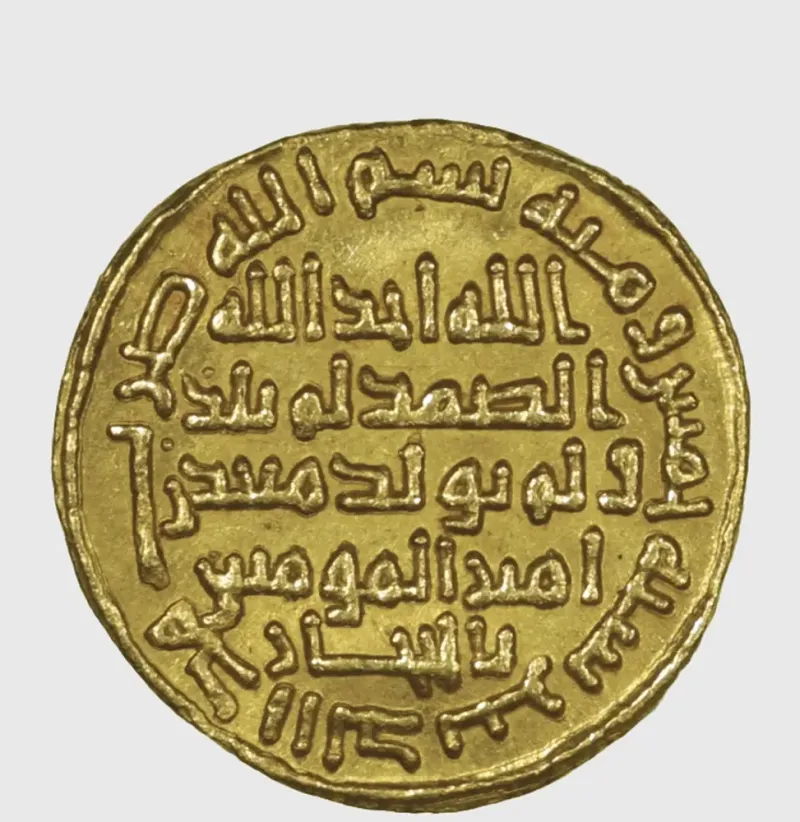
The story of the Gold dinar
The gold dinar was the gold coin of the Islamic world for about 600 years. Its classic form dates from 697, when the Umayyad caliph Abd al-Malik ibn Marwan replaced pictures with words.
The name is older than Islam. It comes from the Roman denarius, by way of Greek and Aramaic. The first Muslim rulers used Byzantine gold solidi and Persian silver drachms, and then struck copies of them.
In the 690s Abd al-Malik's mint at Damascus tried a new image: the caliph himself, standing with a sword. These "standing caliph" dinars lasted only a few years. In 77 AH (696–697) he went further and struck a dinar with no images at all.
The reformed dinar has only writing, in the angular Kufic script. In the centre of the front is the declaration of faith, "There is no god but God alone, He has no partner". Around it runs a verse from the Quran saying God sent Muhammad with guidance and the religion of truth. The back quotes Surah 112 ("God is One, God the Eternal...") and gives the year, written out in words. Umayyad dinars usually name no mint and no ruler.
The weight was fixed at one mithqal, about 4.25 grams, of very pure gold, often 96% or better. The coin is about 19–20 mm across, thin and broad. Its silver partner, the dirham, weighed about 2.9 grams.
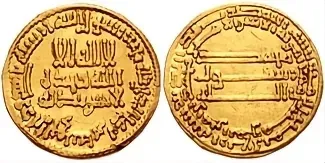
Later dynasties kept the dinar but changed its look. Abbasid dinars, from 750, add the names of governors and officials. The Fatimids in Egypt arranged their inscriptions in concentric rings. Dinars from Spain to Persia travelled along the trade routes, and Europe noticed. Around 774, King Offa of Mercia struck a gold coin copying an Abbasid dinar, Arabic and all, with OFFA REX added upside down.
The gold dinar faded during the 13th and 14th centuries as gold grew scarce and new coins took over, but the name lived on. Iraq, Jordan, Kuwait, Bahrain, Libya, Tunisia, Algeria and Serbia all call their currency the dinar today.
The fuller story of the dinar and dirham is in the history article linked below.
Questions people ask
What is a gold dinar?
The gold coin of the Islamic caliphates, first struck in its classic all-text form in 697 under the Umayyad caliph Abd al-Malik. It weighs about 4.25 g.
Why does the dinar have no pictures?
Abd al-Malik's reform of 696–697 replaced images with religious inscriptions, and most Islamic coinage followed that style for centuries.
Where does the word dinar come from?
From the Roman denarius, through Greek and Aramaic.
What was a dinar worth?
At first, ten silver dirhams, though the exchange rate moved with the price of gold and silver over the centuries.