Tap the coin to flip it
The English Penny: From Silver to Copper
England
Specs (by era)
- Issuer
- Anglo-Saxon/medieval silver penny: English kings (Offa of Mercia onwards) · Cartwheel penny: Great Britain (Soho Mint, Birmingham) · Bronze penny: Royal Mint (UK)
- Years
- Anglo-Saxon/medieval silver penny: c. 780 to 1660s (Maundy only after that) · Cartwheel penny: 1797 · Bronze penny: 1860–1967 (proofs 1970)
- Metal
- Anglo-Saxon/medieval silver penny: Silver (sterling, 92.5%, from 1158) · Cartwheel penny: Copper · Bronze penny: Bronze
- Weight
- Anglo-Saxon/medieval silver penny: About 1.3–1.5 g (Edward I: 1.44 g), falling to about 0.5 g by 1600 · Cartwheel penny: 1 oz (28.3 g) · Bronze penny: 9.45 g
- Diameter
- Anglo-Saxon/medieval silver penny: About 18–20 mm · Cartwheel penny: About 36 mm · Bronze penny: 30.81 mm
- Value
- Anglo-Saxon/medieval silver penny: 1/240 of a pound · Cartwheel penny: 1 penny · Bronze penny: 1 penny; 2.4 old pence = 1 new penny
In the hand
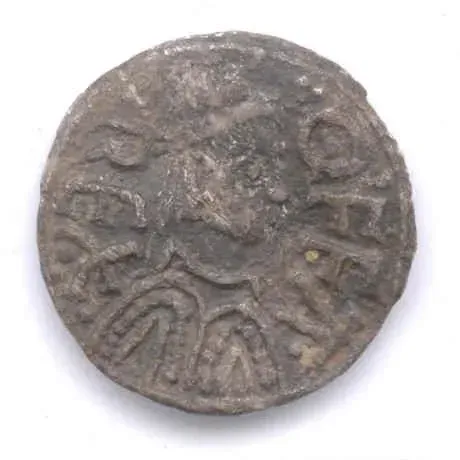
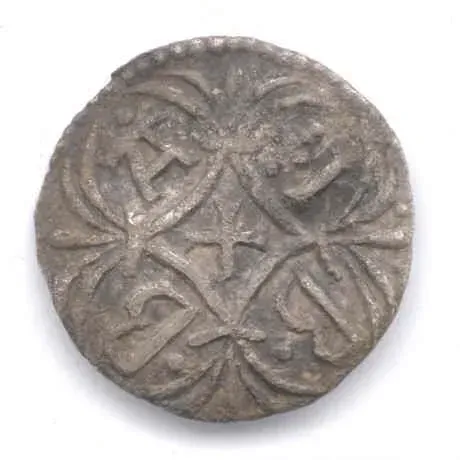
The story of the English penny
The English penny is more than 1,200 years old. For its first 800 years it was a small silver coin, and for the last 170 it was a big copper or bronze one. Until 1971, 240 pennies made a pound.
The silver penny arrived in the late 700s. King Offa of Mercia, who ruled from 757 to 796, struck broad, thin pennies, some with very fine portraits. They followed the new Frankish denier of Pepin and Charlemagne, and the same system came with them: 12 pennies to a shilling and 20 shillings to a pound. The shilling and the pound were only units for counting. The penny was the coin.
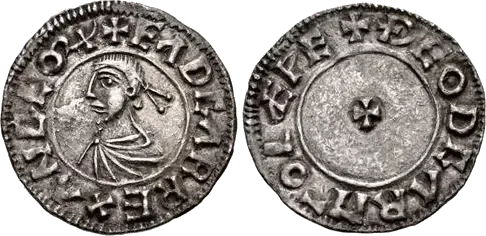
Around 973, King Edgar reorganised the coinage. Every penny now carried the king's name, the moneyer's name and the mint town, and the designs were changed every few years. That's why an Anglo-Saxon penny can often be traced to one town and one man.
The penny was meant to be good silver. In 1158 Henry II's Tealby coinage fixed it at the sterling standard of 92.5% silver, and in 1247 Henry III stretched the cross on the back to the edge of the coin, so anyone could see if the rim had been clipped. Edward I's recoinage in 1279 added round halfpennies and farthings and a four-penny groat.
Then the penny shrank. As silver grew more valuable, each new standard made it lighter, from about 1.44 grams under Edward I to about half a gram by the time of Elizabeth I. Hammered pennies ended under Charles II, and after the 1660s the silver penny survived only as Maundy money, still given out by the monarch every Easter.
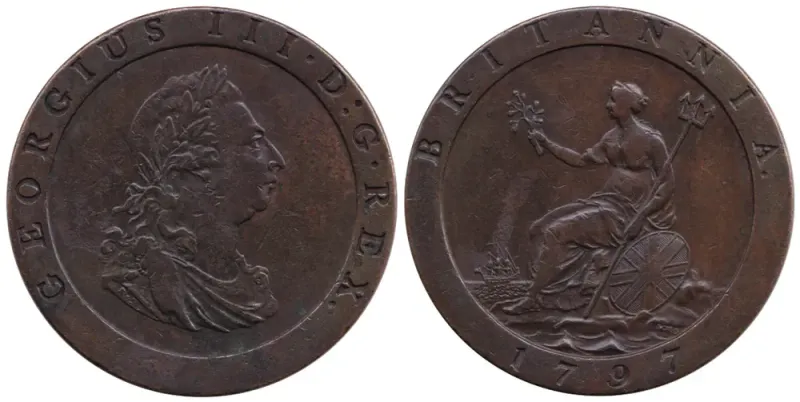
The copper penny started in 1797. Matthew Boulton's steam presses in Birmingham struck the "cartwheel" penny, which weighed a full ounce, so that its copper was worth its face value. Lighter copper pennies followed, and in 1860 the penny went to bronze. Victoria's young "bun" portrait and the seated Britannia on the back set the look for the next century.
Pennies were struck almost every year until 1967, with proofs dated 1970. On decimal day, 15 February 1971, the new penny was worth 2.4 old pence, and the old penny stopped being legal tender on 31 August 1971.
The story of the silver penny across Europe is in the history article linked below.
Questions people ask
How many pennies were in a pound?
240. Twelve pennies made a shilling and twenty shillings made a pound, from Anglo-Saxon times until 1971.
What was an English penny made of?
Silver until the 1600s, copper from 1797 and bronze from 1860 until decimalisation in 1971.
What is a cartwheel penny?
The first English copper penny, struck by Matthew Boulton in 1797. It weighed a full ounce and has a broad raised rim, which is where the nickname comes from.
When did the old penny stop being legal tender?
On 31 August 1971, six months after decimal day.