The Denarius: How Rome's Silver Coin Lost Its Shine
Part 11 of the ancient world series6 min read
The Roman denarius, from its launch in 211 BC to its collapse in the third century: how much silver it held under each emperor, why it was debased, and its legacy.
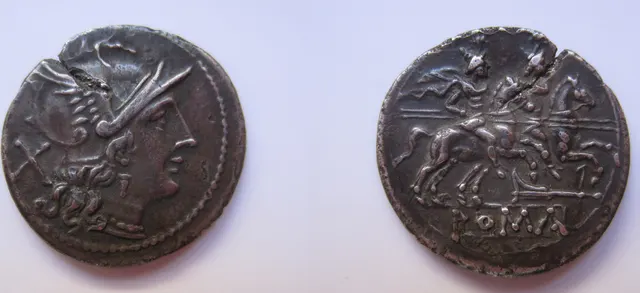
When Rome first struck the denarius around 211 BC, it was almost pure silver. About 450 years later, under the emperor Gallienus, Rome's main "silver" coin held only a few percent of the metal. It was a copper coin with a thin silver skin that wore off in your purse.
This is the story of how that happened, one emperor at a time, and why a coin that died out in the third century still shows up in the words for money across Europe and the Middle East.
A coin born in a war
Rome was losing badly to Hannibal in the Second Punic War, and its money was a mess of heavy bronze and a silver coin called the quadrigatus that kept getting worse. Around 211 BC the Republic started again with a new silver coin.
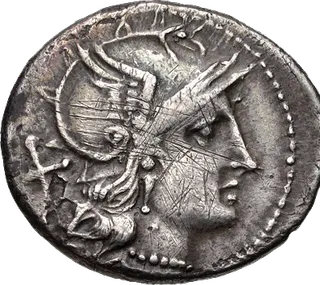
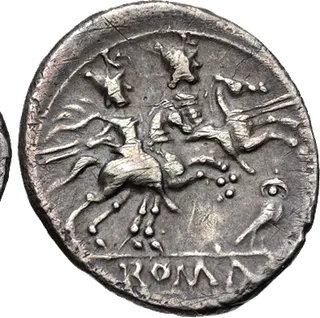
They called it the denarius, from a Latin word meaning "containing ten", because it was worth ten bronze asses. Behind the head of the goddess Roma on the front, the mint stamped an X for ten. On the back, the twin gods Castor and Pollux (the Dioscuri) charge on horseback.
The first denarii weighed about 4.5 grams, cut at 72 to the Roman pound. Within a few years the weight dropped to about 3.9 grams, 84 to the pound. The silver itself stayed close to pure, and that standard held for more than two centuries.
Around 141 BC the bronze as had shrunk so much that the denarius was revalued at 16 asses. Some coins swapped the X for XVI.
Moneyers, politicians and the Ides of March
For most of the Republic, junior officials called moneyers chose the designs. They used the coins to advertise their families: famous ancestors, myths about where the clan came from, old victories. A Republican denarius often reads like a small campaign poster.
Then the generals took over. In 44 BC Julius Caesar put his own portrait on denarii, the first living Roman to do so on coins struck in Rome. A few weeks later he was dead.
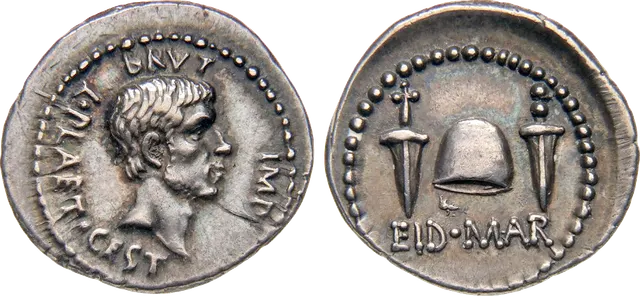
His killer Brutus answered with one of the most famous coins ever made. The reverse shows a cap of liberty between two daggers, over the words EID MAR, the Ides of March. Around a hundred silver examples are known, and in 2023 one sold at auction in Copenhagen for about $617,000.
Augustus and the denarius at its best
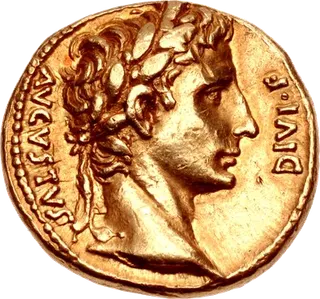
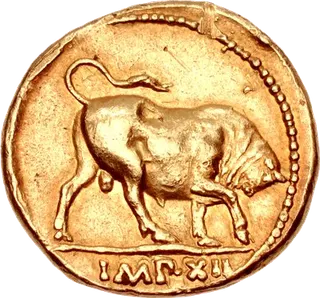
Augustus kept the denarius at about 3.9 grams and around 98% silver. It sat at the middle of his coin system: 25 denarii made one gold aureus, and one denarius was worth four brass sestertii. Our guide to every Roman denomination lays out the full ladder.
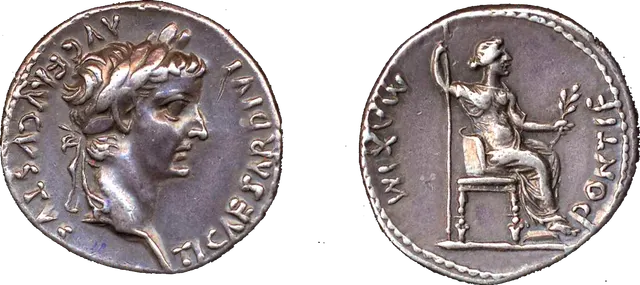
This is the coin of the New Testament. In Matthew 20, a vineyard owner pays his workers a denarius for a day's labour. In Matthew 22, Jesus asks for a coin used to pay the tax, and he is handed a denarius, most likely one of Tiberius. Collectors still call that type the "tribute penny".
A legionary under Augustus earned 225 denarii a year, and Rome kept between 25 and 28 legions. Paying them all in silver was a huge cost that never went away.
Nero takes the first cut (AD 64)
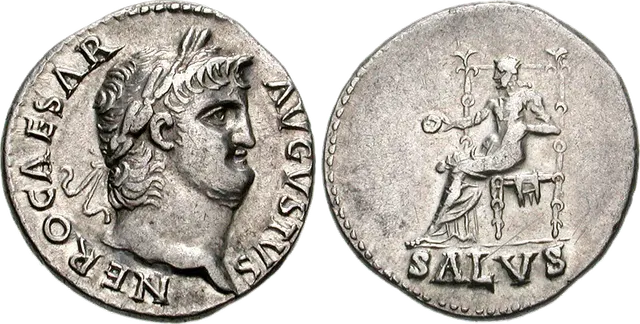
In AD 64, the year of the Great Fire of Rome, Nero lowered both the weight and the purity of the denarius. The weight fell to 96 to the pound, about 3.4 grams.
How much silver he took out depends on whose analysis you trust. Older surface tests put Nero's new coins at about 93% silver. More recent laboratory work by Kevin Butcher and Matthew Ponting suggests closer to 80%. Taken together, the change in weight and fineness cut the silver in each coin by roughly a quarter.
Later emperors went back and forth. Domitian restored Augustan purity in AD 82, then gave up on it a few years later. Around AD 100 Trajan lowered the denarius to about 80% silver again.
A slow slide through the second century
For most of the second century the denarius lost silver gradually rather than all at once. By the end of Commodus's reign in 192 it was roughly 70% silver, judging by the older analyses.
Rome's costs kept rising. There were wars on the Danube and in the East, plague under Marcus Aurelius, and a growing army. Every emperor faced the same choice: find more silver, cut spending, or put less silver into each coin. The third option was the easiest.
The Severans: halfway to bronze
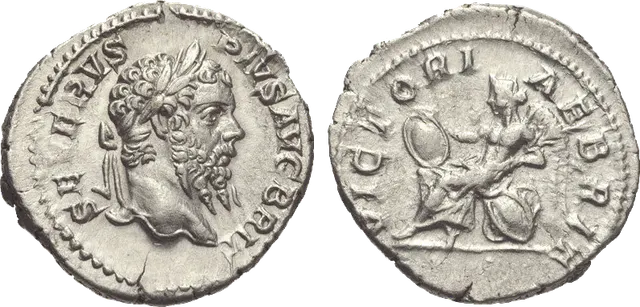
Septimius Severus came to power in 193 after a civil war, and he owed his throne to the army. He raised soldiers' pay and lowered the denarius to around 50 to 57% silver. On his deathbed, according to the historian Cassius Dio, he told his sons to enrich the soldiers and scorn everyone else.
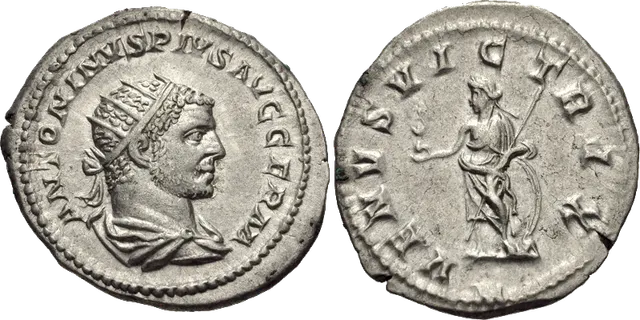
His son Caracalla raised army pay again. Around AD 215 he introduced a new coin with a radiate crown, which collectors call the antoninianus. It seems to have been valued at two denarii, but it weighed only about one and a half times as much. Anyone paid in the new coin was getting less silver than it looked.
The old denarius kept being struck alongside it for a while. By the later years of Gordian III, around 240, the antoninianus had replaced it, and denarii after that were rare, mostly special issues.
The third-century collapse
The middle of the third century was a disaster for Rome. Emperors were murdered every few years, the Persians captured the emperor Valerian in 260, and parts of the empire broke away. Each new ruler needed money to pay troops, fast.
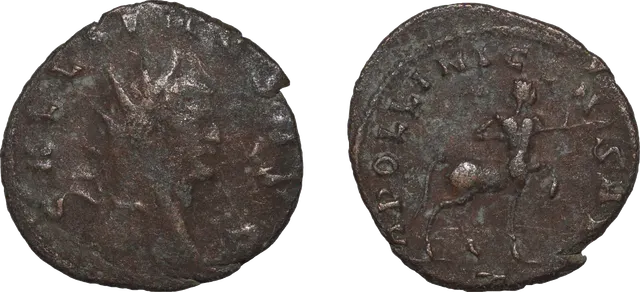
The antoninianus took the strain. It held about 40% silver in the 240s and around 15% by about 260. In the late reign of Gallienus (sole ruler 260 to 268) it dropped to about 2 or 3%. The mint gave the coins a quick silver wash so they looked bright when new, but the coating soon rubbed away and showed the copper underneath.
People noticed. They hoarded older, better coins and spent the bad ones, which is Gresham's law at work. Our article on coin clipping, debasement and Gresham's law explains the pattern. Prices rose sharply in the decades that followed.
From coin to accounting unit
Aurelian and then Diocletian tried to repair the system. Diocletian's reform of 294 brought in a good silver coin, the argenteus, and a large bronze coin with a small amount of silver. His Edict on Maximum Prices of 301 set caps on more than a thousand goods and wages, and every price in it was written in denarii.
By then the denarius was not really a coin anymore. It had become a unit for counting, the way people today talk about "cents" even when no one is spending them one at a time. The real story of Roman gold picks up with Constantine's solidus, told in Roman Gold: The Aureus and the Solidus.
The name that outlived the coin
The denarius itself vanished, but its name kept going.
- In the Islamic world, the gold dinar took its name from the denarius.
- In Charlemagne's Europe, the silver penny was the denier, and it spread across the continent. Our article on medieval coins of Europe follows that story.
- In Britain, the "d" in pounds, shillings and pence stood for denarius until 1971.
- In Italian, Spanish and Portuguese, the everyday words for money are denaro, dinero and dinheiro.
Collecting denarii today
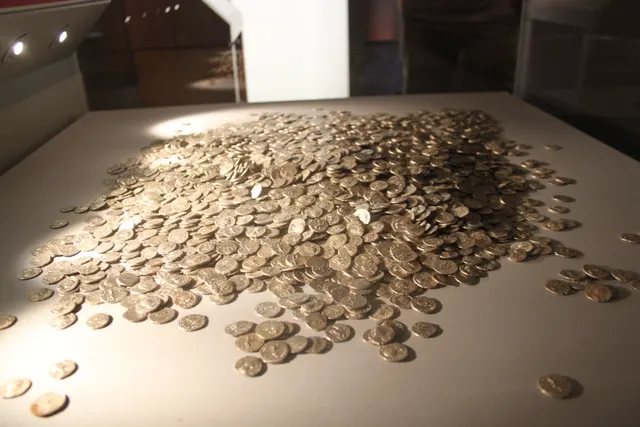
The denarius is one of the most popular ancient coins to collect, and it isn't hard to find. Rome struck them in huge numbers for centuries. Common denarii of second- and early third-century emperors often sell for under $100 in decent condition.
The debasement story is easy to see in a small group of coins. Put an Augustan or Trajanic denarius next to a Severan one and a Gallienus antoninianus, and the colour and feel change in front of you. That makes a satisfying starter set.
Prices climb fast for the Republic's rarer moneyers, for Julius Caesar portraits, and for anything famous, like the EID MAR. Fakes of those popular types are common, so buy from dealers who guarantee their coins.
You can flip a denarius on our coin page, or try the coin flipper with a Roman face on it.
Where to go next
Rome learned to make silver coins from the Greeks. Start with Ancient Greek Coins: Owls, Turtles and Tetradrachms, or compare with The Drachma: 2,500 Years of Greek Money. Then head back to the Ancient World era page.
Questions people ask
What was a Roman denarius?
The denarius was Rome's main silver coin for over 400 years. It was introduced around 211 BC during the war with Hannibal, was first worth ten bronze asses, and weighed about 3.9 grams for most of its life. Its name means "containing ten".
How much silver was in a denarius?
It started close to pure silver and stayed around 98% under Augustus. Nero cut it in AD 64, and the slide continued through the second century. By Septimius Severus it was about half silver. Its successor, the antoninianus, fell to 2 or 3% silver under Gallienus in the 260s.
Why did Rome debase the denarius?
Mostly to pay the army. Soldiers' pay rose several times, wars and plague drained the treasury, and Rome couldn't mine silver fast enough. Putting less silver into each coin let emperors strike more coins from the same metal, at the cost of rising prices.
What was a denarius worth in today's money?
There's no exact conversion. In the first century a denarius was a common day's wage, according to the New Testament, and a legionary under Augustus earned 225 a year. Today, common denarii often sell to collectors for under $100, and rare types for far more.
Is the "tribute penny" a denarius?
Yes. The coin handed to Jesus in Matthew 22 is called a denarius in the Greek text, and collectors usually identify it with the silver denarius of Tiberius showing a seated woman on the reverse.
Sources
- NGC Ancients, "The Decline of Roman Silver Coinage, Part I"
- CoinWeek, "Roman Coins From the War Against Hannibal"
- CoinWeek, "From Republic to Empire: The Story of the Roman Denarius, Part I"
- K. Butcher and M. Ponting, The Metallurgy of Roman Silver Coinage: From the Reform of Nero to the Reform of Trajan (Cambridge, 2014), and their paper "The reforms of Trajan and the end of the pre-Neronian denarius"
- Coin World, "Eid Mar silver denarius realizes $616,747 in Bruun Rasmussen auction"
- Cassius Dio, Roman History 77.15.2 (Severus's deathbed advice to his sons)
- Matthew 20:2 and 22:19 (a day's wage; the tribute coin)
- Wikipedia, "Denarius", "Antoninianus" and "Pay (Roman army)"