From Hammer to Machine: How Minting Changed
Part 4 of the Origins series7 min read
How coins went from hammer blows to machines: the screw press, milled coins, Boulton's steam mint and today's presses that strike 750 coins a minute.
Pick up a medieval silver penny and a Victorian copper penny and the difference is obvious before you read a word. The old one is thin, a little lopsided, and the lettering runs off the edge. The newer one is a perfect circle with a crisp rim and sharp detail.
The difference is in how they were made. For about two thousand years, coins were struck one at a time with a hammer. Then, starting in the 1550s, mints began switching to machines, and that path runs all the way to the presses that strike your pocket change today.
Hammered coins: where we start
A hammered coin was made with two engraved dies and a lot of muscle. A worker put a metal blank on the lower die, held the upper die on top and hit it with a hammer. One blow printed both sides. We cover that process step by step in How the First Coins Were Made.
Hammering worked, but it had limits. Blanks were rarely perfectly round. A slipped blank gave an off-centre strike. Each blow pushed only so much metal into the die, so fine detail was hard to get. And because the edges were uneven, it was easy for a dishonest person to trim off a sliver of silver without anyone noticing.
The screw press arrives
The fix came from southern Germany. In the 1550s an Augsburg goldsmith named Max (or Marx) Schwab is credited with developing a coining press driven by a big screw. Instead of a hammer blow, the upper die was forced down by turning a heavy screw with long weighted arms.
France noticed first. King Henri II sent the engineer Aubin Olivier to look at the new machines, and in 1551 Olivier became head of a new mint in Paris, the Moulin des Étuves. It used a water-powered rolling mill to flatten the metal, cutters to punch out blanks, and a screw press to strike them. Its silver testons of 1552 are thought to be among the earliest machine-made coins to circulate.
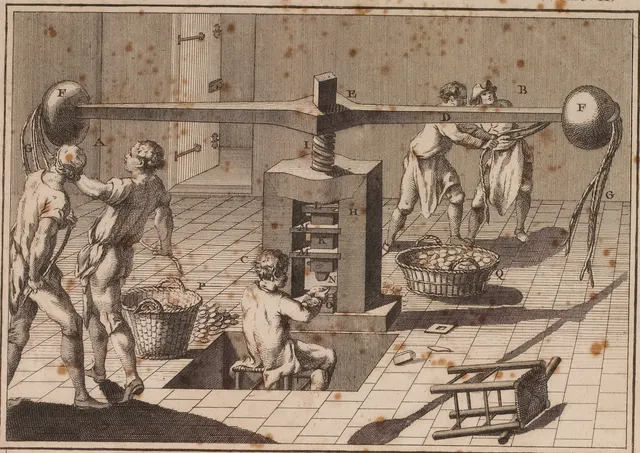
The French hammer-men didn't like the competition. By the late 1550s the Paris machines had been sidelined, and for decades they were used mostly for medals and tokens.
Why "milled"?
Collectors call these machine-made coins "milled". The word comes from the mill, the machinery that rolled the metal and drove the presses, often powered by water or horses. It wasn't about the edge at first.
The meaning has drifted since. Today many people use "milled edge" to mean the fine ridges on the rim of a coin like a US quarter. Numismatists usually call those ridges "reeding". Both senses go back to the same machines, because once coins came out round and even, mints could add a patterned or lettered edge that showed at once if anyone had clipped it.

Mestrell's horse mill in London
England tried machines next. In 1560 Queen Elizabeth I's government took on a French moneyer, Eloye Mestrell (also spelled Mestrelle), to set up a press at the Royal Mint in the Tower of London. By 1561 he was striking coins on a screw press, with a horse-driven mill to prepare the metal.
The coins were beautiful. Mestrell's sixpences, like the one at the top of this page, are rounder, neater and better struck than the hammered coins made in the same building. But his presses were slow, and the hammer-men at the Mint resented him. His machine coinage ended in the early 1570s, and by 1572 the Mint had dropped his press. He later turned to forgery and was hanged in 1578.
England went back to the hammer for almost a century. A second Frenchman, Nicholas Briot, struck fine machine-made coins for Charles I in the early 1630s, but again the machines didn't replace hand striking.
Rolling coins in Tyrol and Spain
Meanwhile, the Habsburg mint at Hall in Tyrol (now Austria) took a different route. Its roller press, designed by Hans Vogler of Zurich, passed a strip of silver between two engraved rollers, like a mangle, and printed a row of coin designs onto it. The coins were then cut out. Regular production started in 1567, and the machines ran on water power.
Spain liked it so much that Philip II bought a full set. In 1584 a convoy of machinery left Hall for Segovia, where a new mint, the Real Ingenio, began work in the mid-1580s on the river Eresma. Some of the silver that became pieces of eight went through it. Hall itself was already famous for silver; it's where the big coins that led to the thaler were first struck.
1662: England switches for good
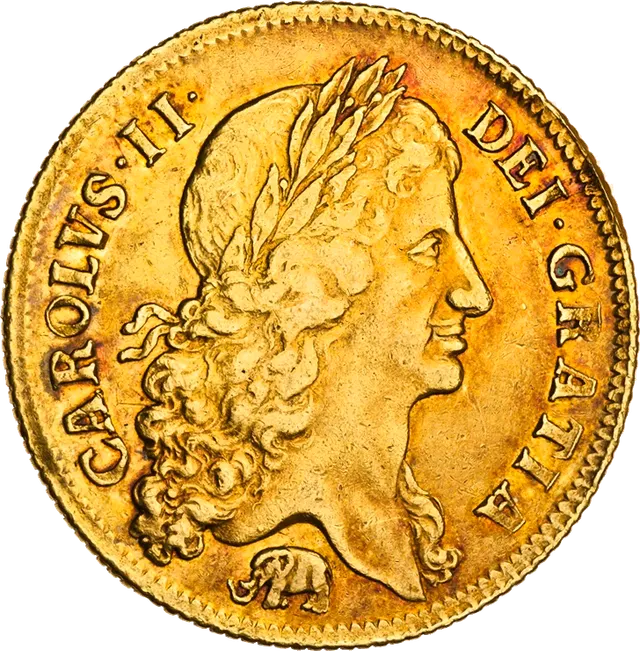
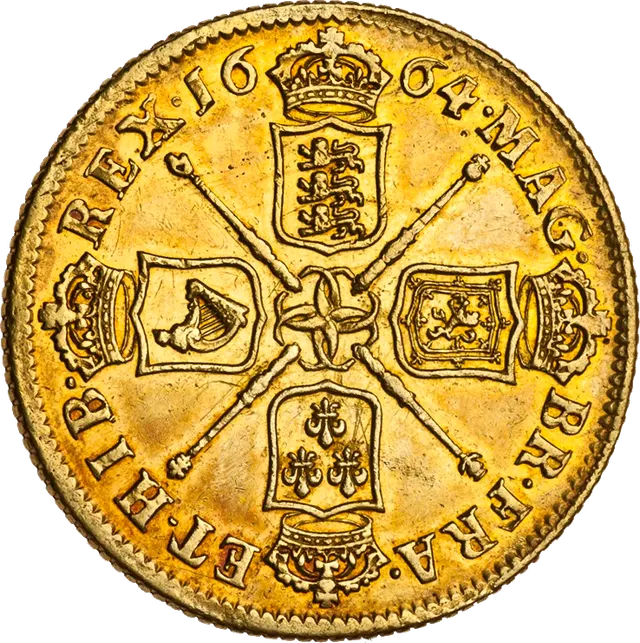
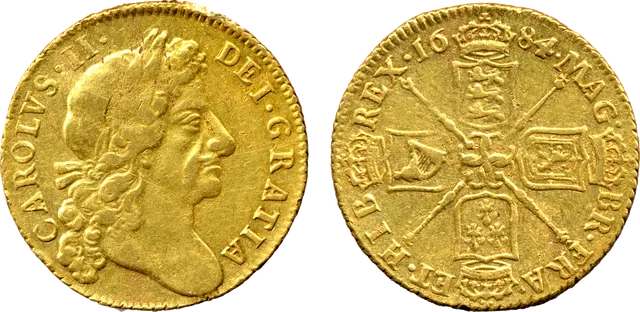
England's change finally stuck under Charles II. Late in 1661 the engraver Thomas Simon was sent to France to bring back an engineer, Pierre Blondeau, to run new machinery at the Tower. According to the Royal Mint Museum, production of gold coins by machine began in February 1662, and the silver followed over the next year or so.
It was still heavy work. The Royal Mint Museum records that the rolling mills needed a team of six horses, four working and two resting. Each screw press had a crew of seven men, four turning it and three resting, in 20-minute shifts. A young moneyer sat at eye level with the dies, flicking out each struck coin with his middle finger and feeding in a new blank with his thumb and index finger. Many moneyers lost finger joints.
The output was about 30 coins a minute. The new coins were thicker and more even, and Blondeau's machines added milled or lettered edges. Those edges made clipping obvious. Old hammered coins kept circulating beside the new ones for another 30 years or so, which led to the Great Recoinage of the 1690s. That story is in Coin Clipping, Debasement and Gresham's Law. The guinea arrived in 1663, a year after the switch, so it was a machine-made coin from the start.
Matthew Boulton and steam
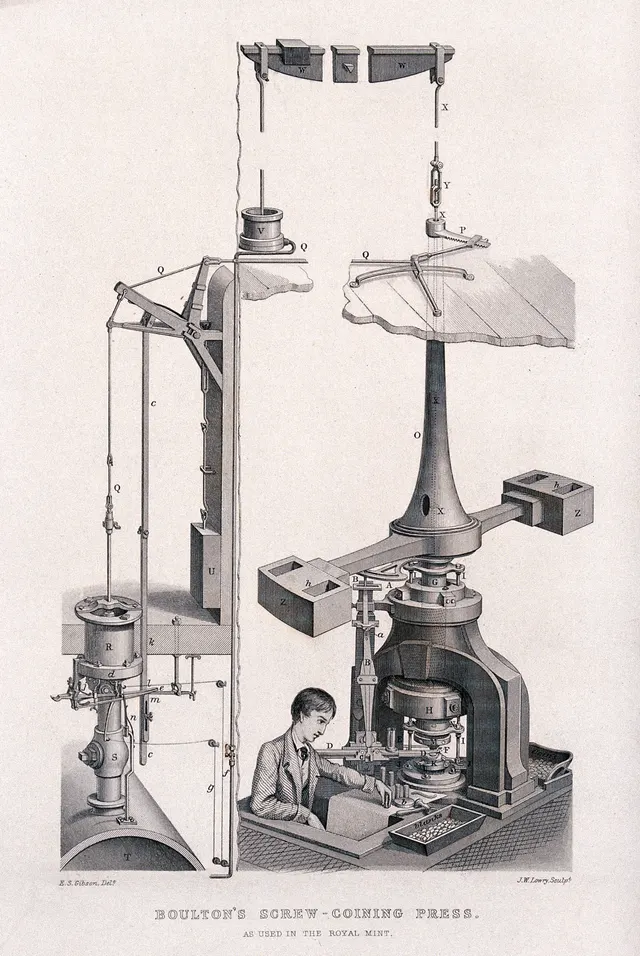
The next jump came from Birmingham. Matthew Boulton, who already built steam engines with James Watt, opened the Soho Mint in 1788. It was the first mint in the world driven by steam. Its eight presses could each strike roughly 70 to 85 coins a minute.
Steam also made every strike the same. Every blow had the same force, so his coins came out round, the same weight and sharply detailed, far more consistent than anything a hand-turned screw press could manage. That made forgery harder, and it made coins look like the products of a factory, which they now were.
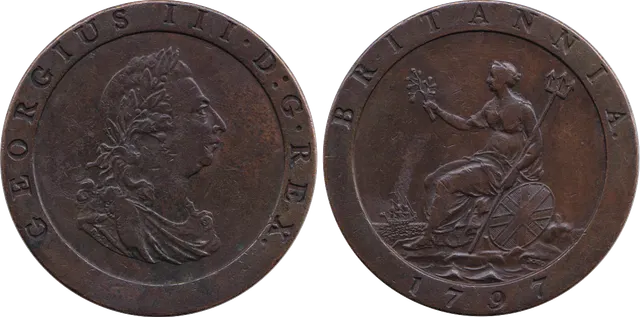
In 1797 Boulton won the contract to strike Britain's copper pennies and twopences. People called them cartwheels, after their huge size and broad raised rims. A royal proclamation of July 1797 set the penny at one ounce and the twopence at two ounces, so the copper plus the cost of making each coin matched its face value. Look below Britannia's shield and you'll find the name SOHO.
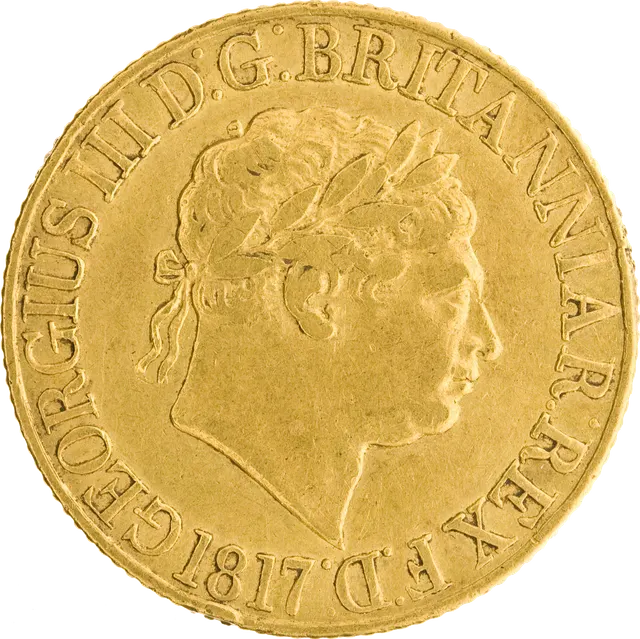
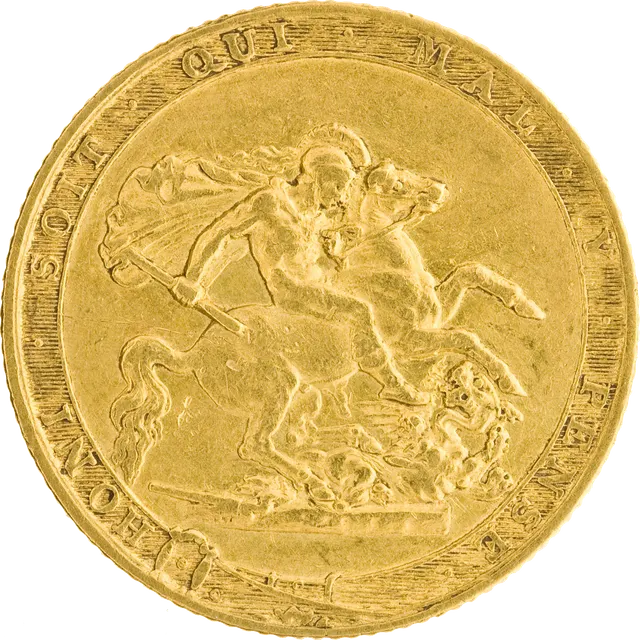
The Royal Mint was impressed enough to buy Boulton's equipment for its new building on Tower Hill. By February 1810 the first machinery was in. Eight presses ran off a 10-horsepower steam engine. A feeder placed each blank on the lower die and pushed the struck coin away. A collar, a steel ring, rose to hold the blank during the strike so every coin came out the same size. Each press made about 60 coins a minute. The gold sovereign of 1817 was struck on this machinery.
The lever press and the US Mint
Screw presses were still slow because the screw had to be wound back after every strike. In Germany, Diedrich Uhlhorn designed a press around a knuckle joint, or toggle: a bent lever that straightens with great force. He set up a factory at Grevenbroich in 1817, and his presses spread across Europe's mints.
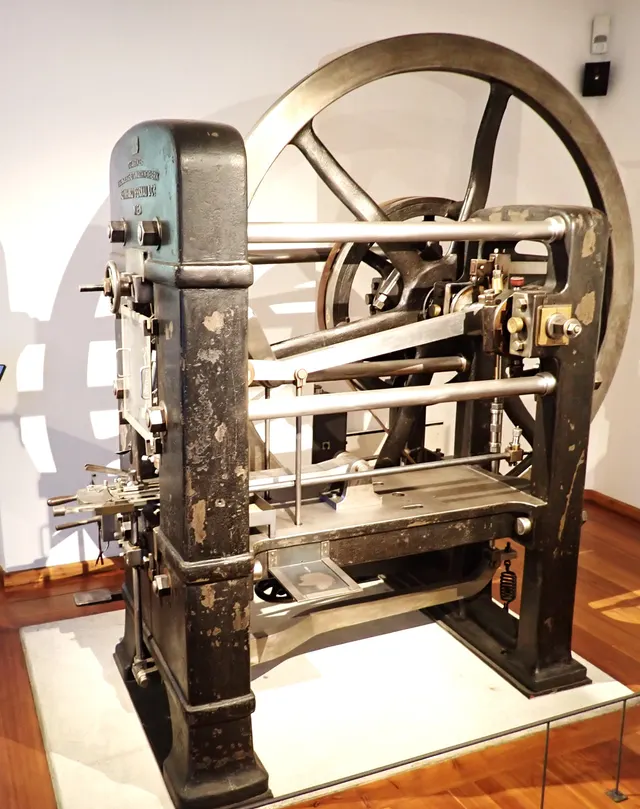
The United States made the jump in 1836. The Philadelphia Mint had used hand-turned screw presses since the 1790s. Its first steam press, based on a French toggle design by Thonnelier and improved by the Mint's Franklin Peale, struck its first coins on March 23, 1836. According to the Franklin Institute, which now holds that press, it could make about 100 coins a minute. It stayed in service until 1875.
How coins are made today
A modern mint is a factory line, and the steps are close to the ones Paris used in 1551. The US Mint describes them like this:
- Blanking: Coils of metal strip are fed into a press that punches out round blanks, about 14,000 a minute.
- Annealing: The blanks are heated to soften them, then quenched and washed.
- Upsetting: A machine squeezes each blank's edge to raise a rim. The blank is now a planchet.
- Striking: A press forces both dies onto the planchet at once, at 35 to 100 metric tons depending on the coin. Collars give the edge its shape, plain or reeded.
- Inspecting and bagging: Coins are checked, counted and shipped.
A circulating coin press at the US Mint strikes 750 coins a minute. With all 63 of its presses running, the Philadelphia Mint can make about 47,250 coins a minute. Britain's Royal Mint, which moved to Llantrisant in Wales in 1968, says its presses strike up to 850 coins a minute.
That's 25 to 30 times faster than Charles II's screw presses, and the reeded edge on a US quarter is still doing the same job Blondeau's milling did in 1662.
Hammered or milled: how to tell
If you're looking at an old coin, a few checks usually settle it.
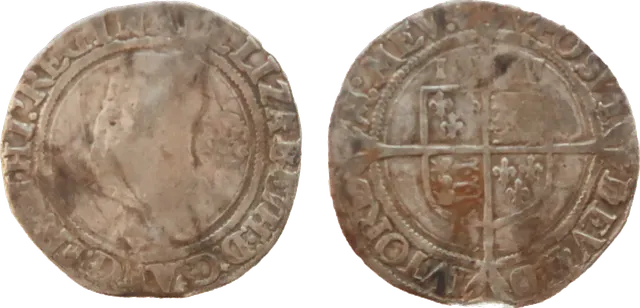
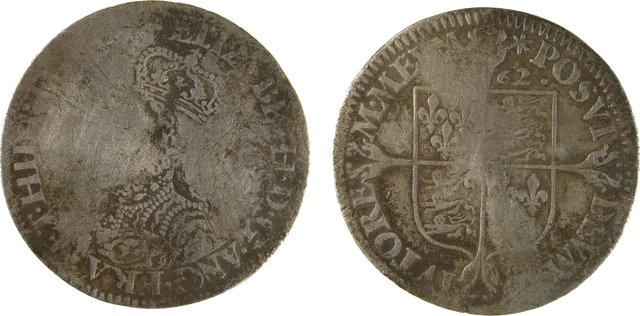
- Shape: Hammered coins are often a bit oval or uneven. Milled coins are round.
- Thickness: Hammered coins tend to be thin and wide. Milled coins are thicker and the same thickness all over.
- Rim and edge: Milled coins usually have a raised rim and a reeded, patterned or lettered edge. Hammered coins have a plain, often ragged edge.
- Strike: On a hammered coin, part of the lettering often runs off the blank. Machine-struck coins are centred and evenly detailed.
Where the story goes next
Machine minting made the modern coin possible: round, identical, hard to clip and cheap to make in the millions. For the earlier half of this story, read How the First Coins Were Made. For what happened to all those clipped hammered coins, see Coin Clipping, Debasement and Gresham's Law.
If you'd rather toss a coin than read about one, our coin flipper has a perfectly round one ready.
Questions people ask
What is the difference between hammered and milled coins?
Hammered coins were struck by hand, with a hammer driving one die onto a blank sitting on another. Milled coins were made by machine, first with screw presses and rolling mills powered by horses or water. Milled coins are rounder, thicker and more evenly struck, and usually have a decorated edge.
When did milled coins start?
Machine-made coins first circulated in Paris in the early 1550s. England tried them under Elizabeth I, from about 1561 to the early 1570s, and switched for good in 1662 under Charles II.
Why are they called milled coins?
The name comes from the mill, the machinery that rolled the metal and powered the presses. Later, "milled edge" also came to mean the ridges on a coin's rim, which numismatists call reeding.
How are coins made today?
Metal strip is punched into blanks, which are softened by heating, given a raised rim and then struck between two dies in a high-speed press. A US Mint press strikes 750 coins a minute, at 35 to 100 metric tons of force.
Who invented the steam coin press?
Matthew Boulton opened the first steam-powered mint, the Soho Mint in Birmingham, in 1788, using engines built with James Watt. The Royal Mint installed Boulton's presses at Tower Hill from 1810, and the US Mint struck its first steam-press coins in 1836.
Sources
- Royal Mint Museum, "Charles II" (British monarchs)
- Royal Mint Museum, "Screw press" (Thomas Simon collection)
- Royal Mint Museum, "The Evolution of Coinage"
- Royal Mint Museum, "The Royal Mint at Tower Hill" and "George III" journal entries
- Royal Mint Museum, "Penny" (Curator's corner)
- D. G. Borden and I. D. Brown, "The Milled Coinage of Elizabeth I", BNJ 53 (1983)
- H. Moser, "Hall–Segovia" (formerly segoviamint.org; mirrored at coingallery.de)
- The Franklin Institute, "Steam-Powered Coin Press"
- United States Mint, "Coin Production"
- Numismatic News, "The Evolution of Minting Technology, Part 2", and Wikipedia, "Aubin Olivier" and "Diedrich Uhlhorn" (used only to cross-check)
- Coin World, "Britain's cartwheel coins reflect Industrial Revolution's impact", and Wikipedia, "Soho Mint" (used only to cross-check)