Tap the coin to flip it
The Shilling: Britain's Twelve-Penny Coin
United Kingdomc. 1502 (as the testoon) to 1966 for circulation; proofs dated 1970
Name for a coin or unit of currency
Specs (shilling of 1816–1970, for reference)
- Issuer
- Royal Mint (England, then Great Britain and the UK)
- Denomination
- 12 pence; 20 shillings = £1; 5 new pence after 1971
- Years minted
- c. 1502 (as the testoon) to 1966 for circulation; proofs dated 1970
- Metal
- Sterling silver, 92.5% (to 1919); 50% silver (1920–1946); cupronickel (1947–1970)
- Weight
- 5.655 g (silver); 5.66 g (cupronickel)
- Diameter
- About 23.5 mm
- Edge
- Milled
- Production
- Hammered to 1662, then machine-struck
In the hand
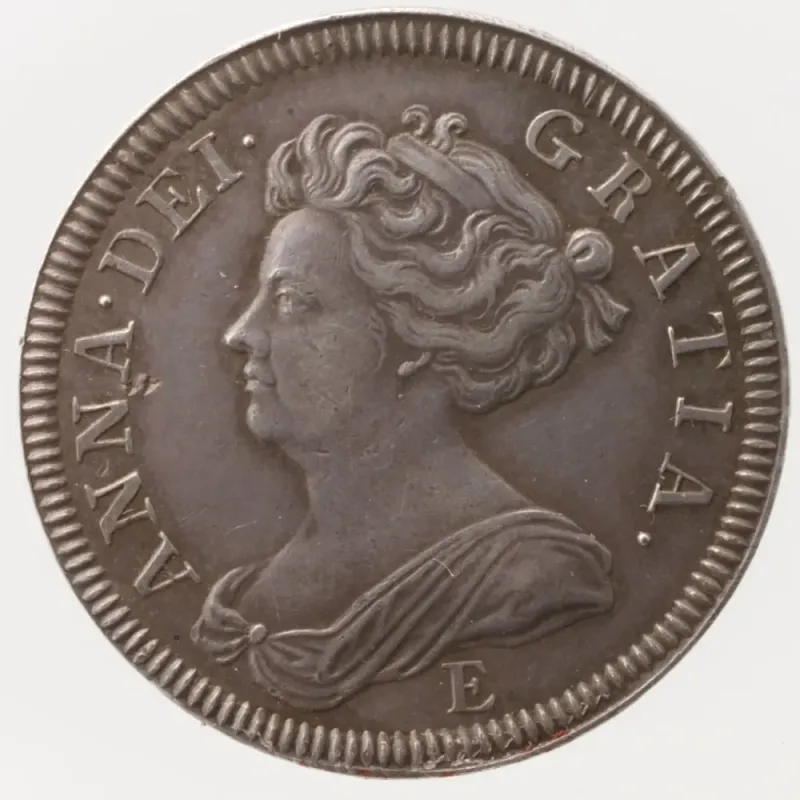
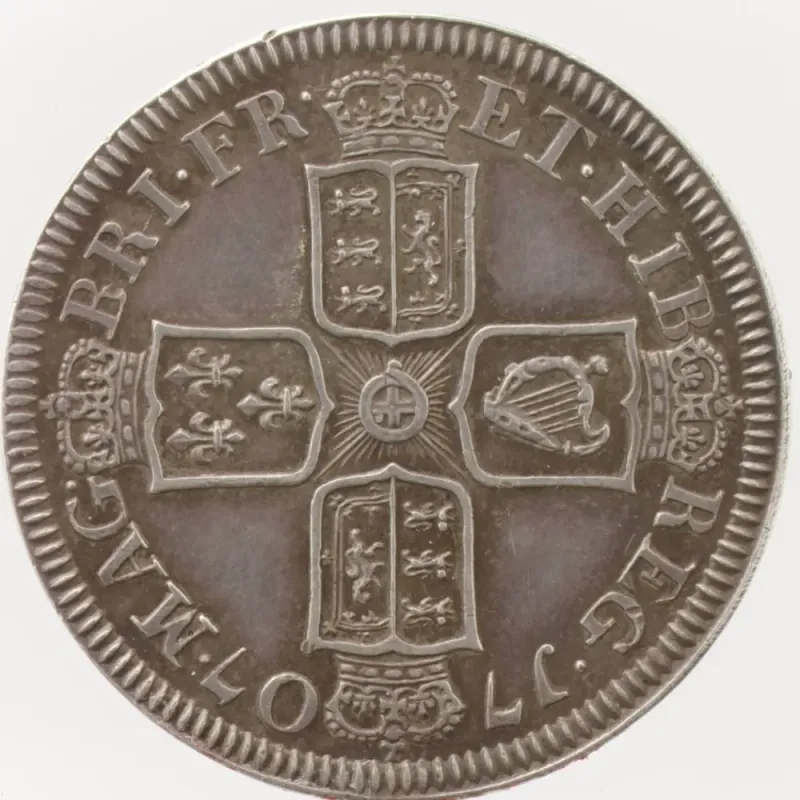
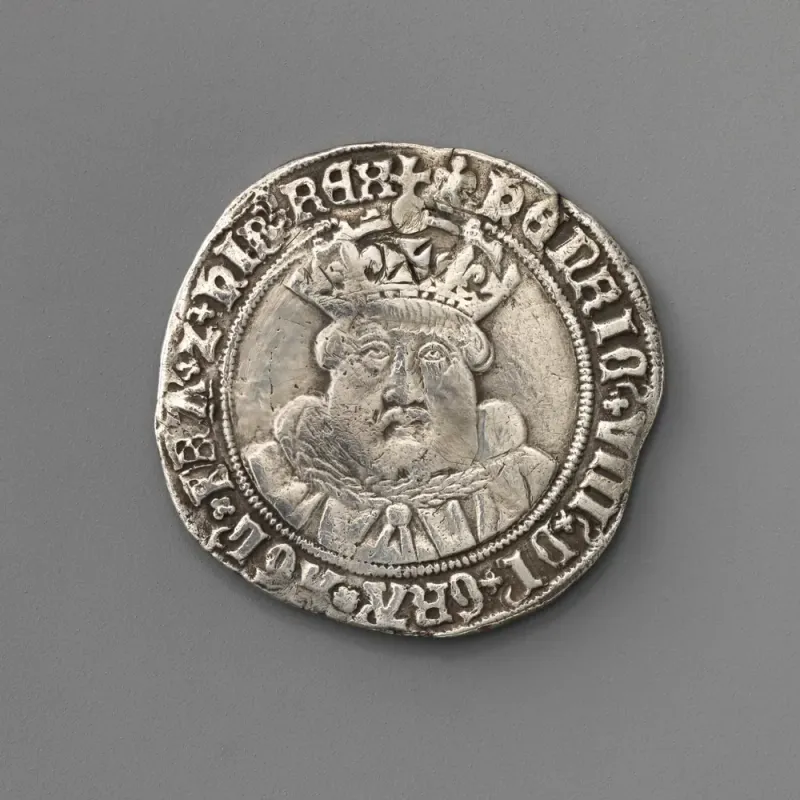
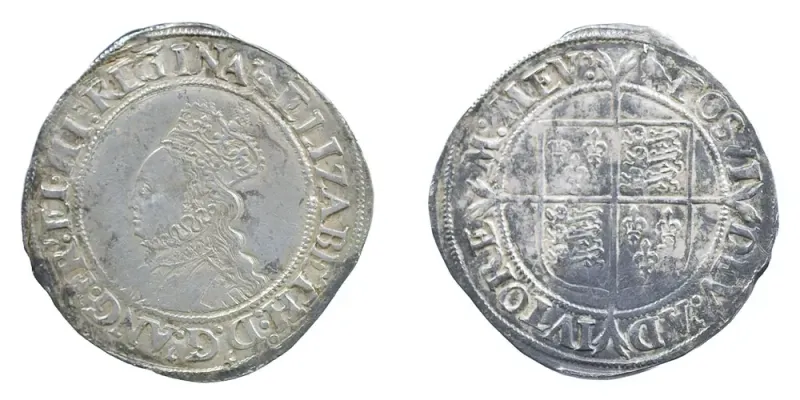
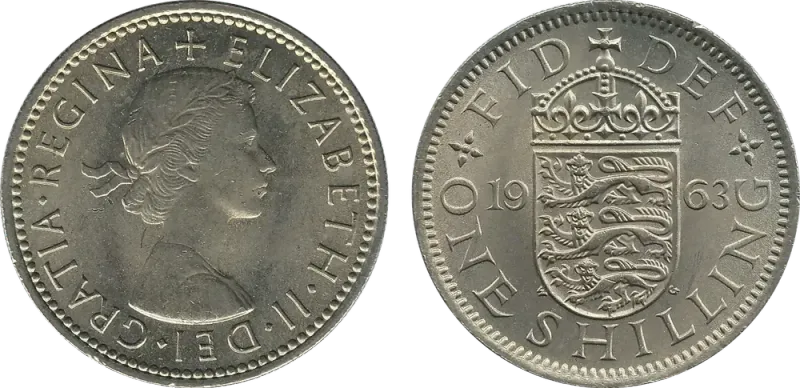
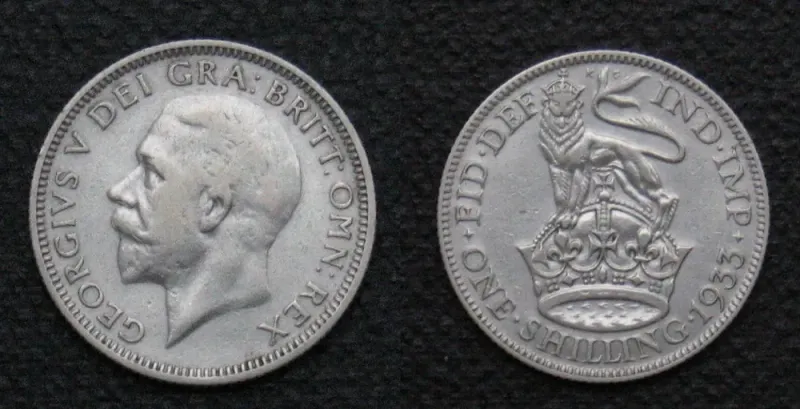
The story of the Shilling
The shilling was a British coin worth twelve pence. Twenty of them made a pound. For more than 450 years it sat in the middle of the British money system, and the slang name "bob" outlived the coin itself.
The word is much older than the coin. Anglo-Saxon law codes use scilling as a unit for fines and payments, but nobody struck a shilling coin for centuries. It was a way of counting pennies.
The first real one came under Henry VII, around 1502 to 1504. It was called a testoon at first, and it was one of the first English coins with a lifelike portrait of the king instead of a stylised face. The name "shilling" took over during the reign of Edward VI.
The coin had a rough middle period. Henry VIII's Great Debasement cut the silver in his testoons to about a third, and people noticed. Edward VI went back to fine silver in 1551, and Elizabeth I called in the debased coins in 1560 and 1561. Her hammered shillings, with a ruff collar and the date often missing, are among the most common Tudor coins found today.
Machines took over from hammers in 1662 under Charles II. The big reset came in 1816, after the Napoleonic Wars. The Great Recoinage fixed the shilling at 5.655 g of sterling silver and about 23.5 mm across, and that size held until the end.
Silver went down in two steps. In 1920 the silver content dropped from 92.5% to 50%. From 1947 shillings were cupronickel, with no silver at all. Between 1937 and 1966 there were two versions each year, one with an English reverse and one with a Scottish reverse, and both were legal tender everywhere in the UK.
The shilling ended with decimalisation on 15 February 1971. It became five new pence, and old shillings kept circulating as 5p coins until 1990, when a smaller 5p replaced them.
You'll see shillings written as "1s" or "1/-". The "s" comes from the Latin solidus, the late Roman gold coin. The name also travelled. Kenya, Uganda, Tanzania and Somalia still use a shilling today.
To see how the shilling fit with the guinea, the sovereign and the old pound, read the history articles linked below.
From the encyclopedia
The shilling is a historical coin and the name of a unit of modern currencies formerly used in the United Kingdom, Australia, New Zealand, other British Commonwealth countries and Ireland. It was generally equivalent to 12 pence, one-twentieth of a pound, and was largely phased out during the 1960s and 1970s.
From Shilling on Wikipedia, text under CC BY-SA 4.0. Fetched November 3, 2026.
Questions people ask
How many pence were in a shilling?
Twelve. Twenty shillings made a pound, so a pound held 240 pence before 1971.
Why was a shilling called a bob?
Nobody knows for sure. The slang was first recorded in London in 1789, and its origin has never been settled.
What is an old shilling worth today?
At decimalisation it was worth 5p. Shillings dated before 1947 contain silver, so most are worth at least their metal value.