Tap the coin to flip it
The Gold Sovereign
United Kingdom£1
British gold coin
- Issuer
- United Kingdom, Royal Mint (London, and branch mints 1855–1932)
- Denomination
- £1 (20 shillings); half sovereign 10 shillings
- Years
- 1817 to today (pause from 1932 to 1957, apart from small issues)
- Metal
- Gold, 22 carat (.9167)
- Weight
- 7.98805 g (7.3224 g, or 0.2354 troy oz, of pure gold)
- Diameter
- 22.05 mm
- Thickness
- 1.52 mm
- Edge
- Milled
- Designer
- Benedetto Pistrucci (St George reverse)
- Mint marks
- None (London), S, M, P, C, I, SA
In the hand
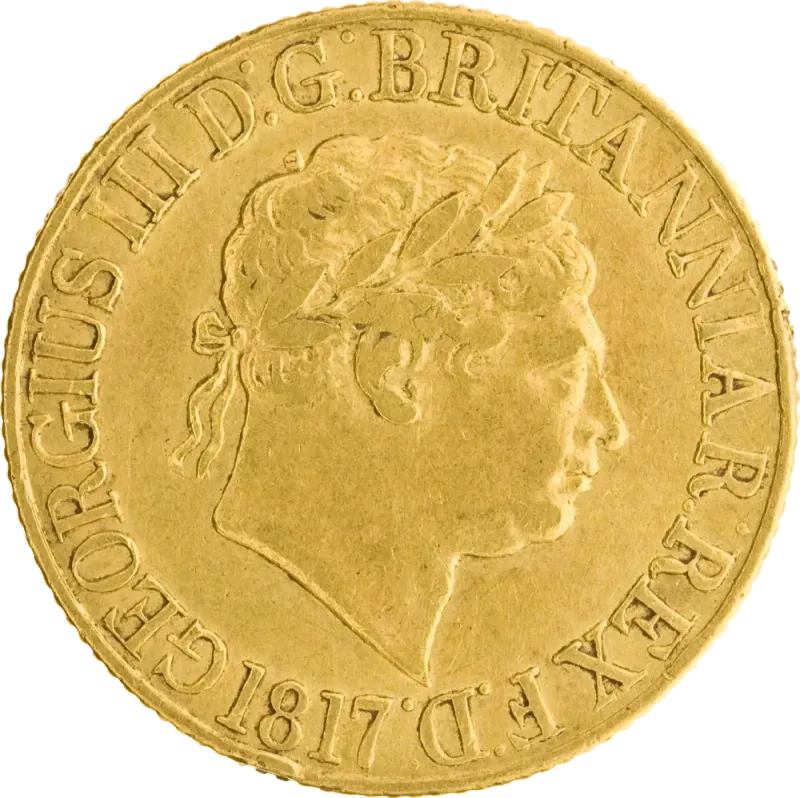
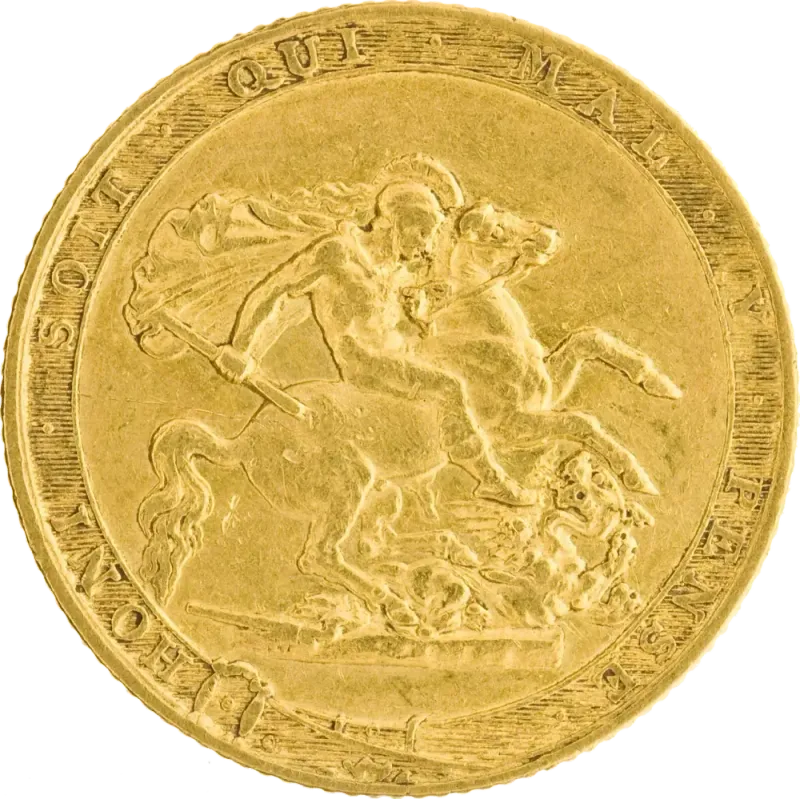
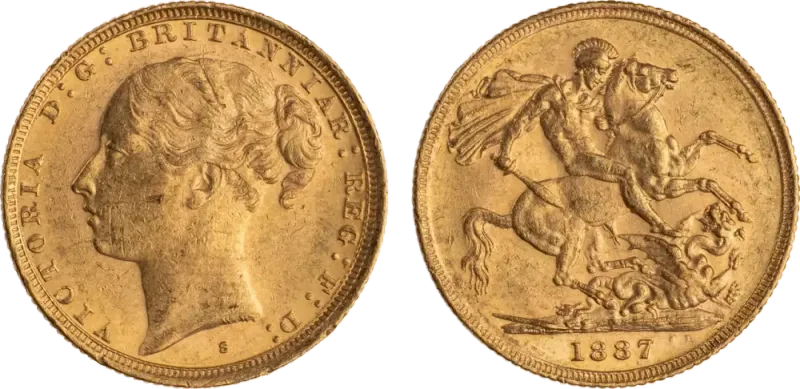
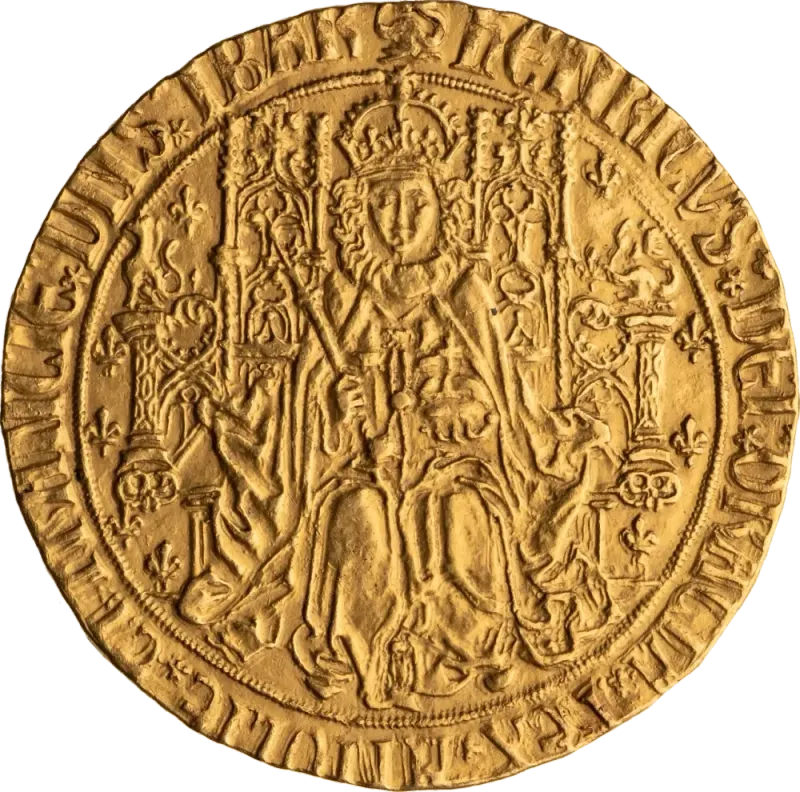
The story of the Sovereign
The sovereign is Britain's gold £1 coin. The modern version was first struck in 1817 and is still made by the Royal Mint today. For about a century it was the most widely trusted gold coin in the world, and now it's one of the best-known bullion coins.
The name is older than the coin. Henry VII struck a large gold "sovereign" in 1489, England's first pound coin, showing the king enthroned. The modern sovereign borrowed the name when it replaced the guinea.
That change came with the Coinage Act of 1816, which made gold Britain's single standard of value. The new sovereign was worth exactly 20 shillings, a round pound, where the guinea had been worth 21. It weighs 7.98805 grams of 22-carat gold. Those figures have stayed the same since 1817.
The designs. Benedetto Pistrucci engraved the reverse of St George on horseback slaying the dragon. It's still used today. For part of the 1800s the Mint used a crowned shield instead, and some years saw both. So a Victorian sovereign can show either St George or a shield. The front always shows the reigning monarch.
Branch mints and mint marks. As gold rushes opened in the colonies, the Royal Mint set up branch mints to turn local gold into sovereigns. Each added a small letter:
- S Sydney (from 1855), M Melbourne (1872), P Perth (1899)
- C Ottawa (1908), I Bombay (1918), SA Pretoria (1923)
A sovereign with no letter was struck in London. On most 20th-century coins the letter sits on the ground line just above the date, on the St George side. On many Victorian coins it's on the other side, just below the queen's neck, or under the shield. The branch mints struck nearly 500 million sovereigns.
London stopped striking sovereigns for circulation in 1917, during the First World War, and the branch mints stopped by 1932. The Royal Mint started again in 1957, this time as a bullion coin for buyers who wanted gold. Sovereigns are still legal tender with a face value of £1, but they're bought and sold for their gold.
The half sovereign, at ten shillings, runs alongside it in the same designs. The Mint also strikes double and five-pound pieces.
For the full story of the guinea and the sovereign, read the history articles below.
From the encyclopedia
The sovereign is a British sterling gold coin with a nominal value of one pound (£1), and contains 0.2354 troy ounces of pure gold. Struck since 1817, it was originally a circulating coin that was accepted in Britain and elsewhere in the world; it is now a bullion coin and is sometimes mounted in jewellery. In addition, circulation strikes and proof examples are often collected for their numismatic value. In most recent years, it has borne the design of Saint George and the Dragon on the reverse; the initials of the designer, Benedetto Pistrucci, are visible to the right of the date.
From Sovereign (British coin) on Wikipedia, text under CC BY-SA 4.0. Fetched November 3, 2026.
Questions people ask
How much gold is in a sovereign?
A full sovereign holds 7.3224 grams of pure gold, which is 0.2354 troy ounces. It weighs 7.98805 grams in all, because it's 22-carat gold.
Is a gold sovereign still legal tender?
Yes. It's legal tender in the UK with a face value of £1, but the gold in it is worth far more, so it's bought and sold as bullion.
How do I find the mint mark on a sovereign?
Look on the ground line above the date on the St George side. On some Victorian coins it's on the portrait side, below the queen's neck. No letter means the coin was struck in London.