Tap the coin to flip it
The Mon: Japan's Copper Coin With a Square Hole
JapanMonOfficially 1636 to the 1860s
Specs (Kan'ei Tsūhō one-mon coin)
- Issuer
- Tokugawa shogunate, Japan (many provincial mints)
- Denomination
- 1 mon (also 4-mon brass coins from 1768)
- Years minted
- Officially 1636 to the 1860s
- Metal
- Copper alloy; iron from 1739, and mostly iron from the 1760s
- Weight
- About 3–3.75 g (copper one-mon)
- Diameter
- About 23–25 mm
- Design
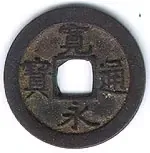
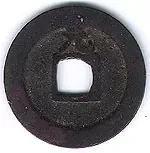
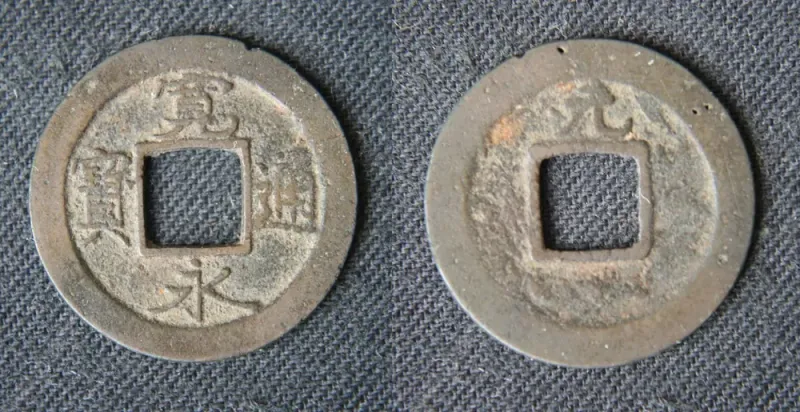
- Round with a square hole; four characters 寛永通寳 on the front, back usually plain
- Value
- Official rate 4,000 mon = 1 gold ryō
In the hand
The story of the Mon
The mon was the basic coin of old Japan, a round copper coin with a square hole, like the Chinese cash it was based on. The word mon (文) was both the unit and the name of the one-mon coin, and it stayed in use until Japan switched to the yen in the 1870s.
Japan's first official coins were cast in 708, starting with the Wadō Kaichin (also read Wadō Kaihō). The court issued twelve types over the next 250 years, but each new coin lost value and people stopped trusting them. After 958 the government gave up casting coins for more than 600 years.
Japan didn't stop using coins, though. It imported them. Millions of Chinese copper coins, mostly from the Song dynasty and later the Ming, came in through trade, and they became Japan's everyday money. The favourite was the Ming Eiraku Tsūhō (Yongle Tongbao), first cast in 1408. The warlord Oda Nobunaga even put it on his battle flags.
The Tokugawa shogunate brought order. In 1636 it began casting the Kan'ei Tsūhō (寛永通寳), and it was cast for more than two centuries in mints all over the country. It is by far the most common mon coin, and the one most people find today. The four characters around the hole read Kan-ei-tsū-hō, "currency of the Kan'ei era", and you read them top, bottom, right, left.
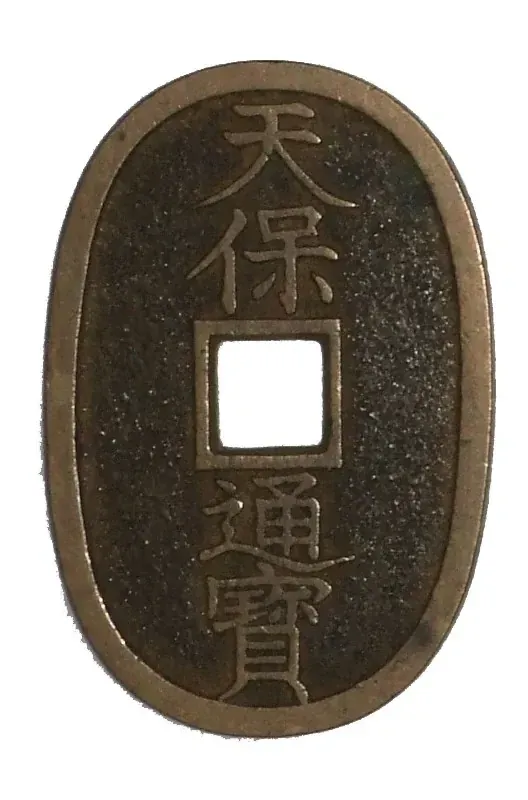
The shogunate also issued bigger coins. From 1768 there was a brass 4-mon Kan'ei Tsūhō with a wave pattern on the back, and from 1835 an oval Tenpō Tsūhō worth 100 mon. Copper got scarce, so many later one-mon coins were cast in iron.
Copper mon sat at the bottom of a three-metal system. Gold koban and silver were for big payments, and mon were for everyday shopping. The official rate, set in 1609, was 4,000 mon to one gold ryō, though the market rate moved a lot. Coins were strung on cords through the hole, and by custom a string of 96 coins counted as 100.
The Meiji government introduced the yen in 1871. Copper and brass mon stayed legal tender, valued in fractions of a sen, until the end of 1953, when Japan withdrew all coins worth less than one yen.
The story of Japan's coins, from the Wadō Kaichin to the gold koban, is in the history article linked below.
Questions people ask
What is a Japanese mon coin?
The mon was Japan's copper cash coin, round with a square hole. The most common one is the Kan'ei Tsūhō, cast from 1636 to the 1860s.
How do you read the characters on a mon coin?
Top, bottom, right, then left. On a Kan'ei Tsūhō they read 寛永通寳: Kan, Ei, Tsū, Hō.
How many mon were in a ryō?
The official rate was 4,000 mon to one gold ryō, but the market rate changed a lot over time.
Are old Japanese coins with a hole valuable?
Most Kan'ei Tsūhō are very common, because they were cast in huge numbers for over 200 years. Some rare mint varieties are worth much more.