Coins of Medieval Japan: Mon, Koban and Oban
Part 20 of the Medieval money series8 min read
Japan ran on imported Chinese coins for 400 years, then the shogun struck gold koban and giant oban. How mon, koban and oban worked, and why gold fled in 1859.
For about 600 years, Japan used coins every day but made almost none of its own. Farmers paid taxes, merchants settled debts and travellers bought food with bronze coins shipped in from China, by the boatload.
Then, around 1600, a new government took charge and struck its own money in three metals: copper coins called mon for small change, oval gold coins called koban, and giant gold plates called oban that were too valuable to spend. This is the story of how that happened.
Japan's first coins
Japan's first coins came in the late 600s. Archaeologists digging at the Asukaike site near Nara in 1998 found fuhonsen coins together with the moulds and crucibles used to cast them.
In 708 the imperial court issued the Wado Kaichin, a round copper coin with a square hole, copied from the Kaiyuan Tongbao of Tang China. The court used it to help pay for building its new capital at Heijo (Nara), and it rewarded people who saved large numbers of coins with a court rank.
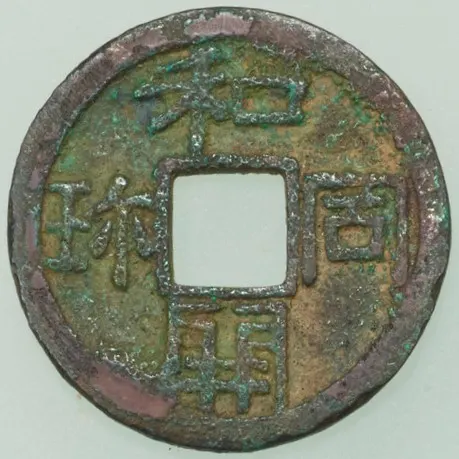
Eleven more coin types followed over the next 250 years. Each was smaller and more leaden than the last, and new issues were often declared worth ten of the old ones. People stopped trusting them. After the Kengen Taiho of 958, the government simply stopped making coins.
For the next two centuries, Japan's money was rice, silk and hemp cloth.
Money by the shipload
In the middle of the 1100s, Chinese bronze coins began flowing into Japan. China's Northern Song dynasty had cast more coins than any dynasty before or after it, and once that dynasty fell, huge numbers of them left the country.
The Japanese called them toraisen, "coins that crossed over." Each one counted as one mon. By the 1200s the Kamakura shogunate and the imperial court, who had first disapproved, gave in and accepted them. People began paying their annual taxes in coins rather than rice.
You can see the scale of the trade in a shipwreck. In 1323 a merchant ship sailing from Ningbo in China to Hakata in Japan sank off Sinan, on Korea's southwest coast. When divers excavated it after its discovery in 1975, its hold held about 28 tons of Chinese coins, around 8 million of them.
Strings of a thousand
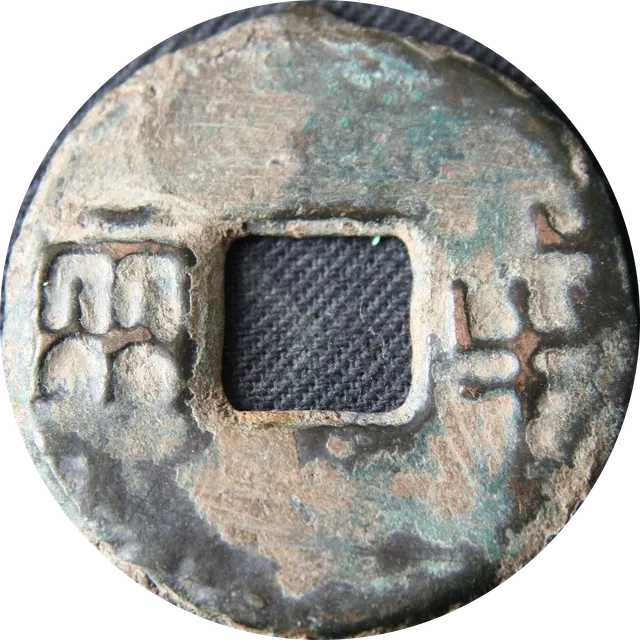
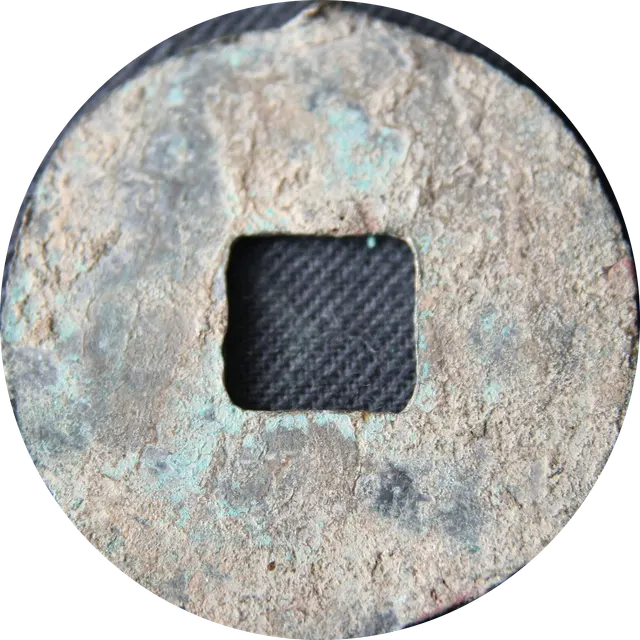
A single mon was small change, so coins moved in bulk. The square hole in the middle let people thread them onto cords, and 1,000 mon made one kanmon, a "string" of cash.
Carrying strings of copper across the country was heavy and risky. From the early 1300s to the early 1500s, merchants used paper bills called saifu to move money between distant cities instead. Most were written for 10 kanmon, which is 10,000 coins.
Bad coins and the erizeni problem
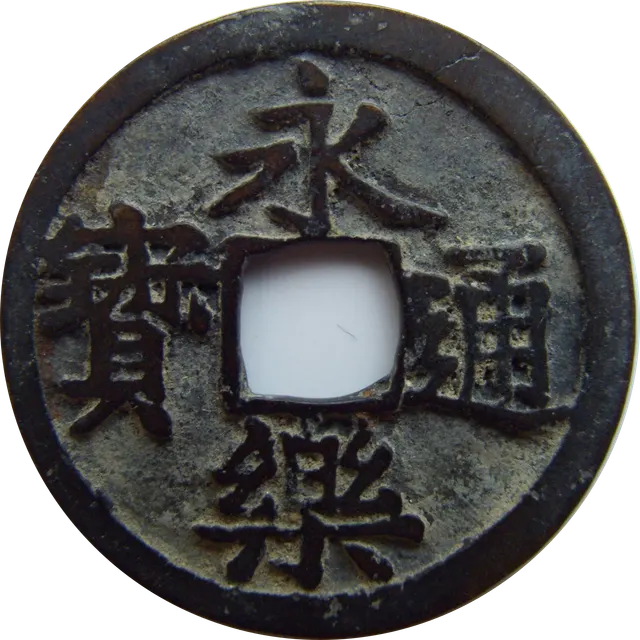
China's next dynasty, the Ming, cast far fewer coins and kept tight control of foreign trade. The Muromachi shogunate still imported Ming coins, especially the Yongle Tongbao, which the Japanese read as Eiraku Tsuho. But not enough arrived.
So people made their own. Private workshops in Sakai, Hakata and other ports cast copies of Chinese coins, called shichusen. Some were decent. Many were crude, thin or worn. Poor-quality private coins were also arriving from southeast China.
Shopkeepers started sorting the coins they were handed, accepting good ones at full value and refusing or discounting bad ones. This was called erizeni, "picking coins." The old rule that one coin equals one mon fell apart, and the value of a handful of change depended on who was looking at it. The shogunate and local lords issued order after order banning the practice, with little effect.
One coin did well out of it. The Eiraku Tsuho became so familiar that the warlord Oda Nobunaga put its design on his banners. A popular story says that before the Battle of Okehazama in 1560 he tossed a handful of Eiraku coins at a shrine and read victory in how they landed. If it happened, it's one of history's more consequential coin tosses.
Warlords turn to gold
In the 1500s China switched to silver for its own money and stopped exporting coins. The supply of toraisen dried up. In western Japan in the 1570s, people went back to paying for land in rice.
Meanwhile Japan's warlords were opening mines. At Iwami, a new refining method called cupellation turned the mine into one of the world's great silver producers, and its silver was shipped abroad. In the mountains of Kai, the Takeda clan struck gold coins called Koshu-kin. They used units of ryo, bu and shu, counted in fours, and those units lasted until 1871.
Oda Nobunaga banned coin-picking and fixed exchange rates between gold, silver and copper. His successor, Toyotomi Hideyoshi, took control of mines across Japan and in 1588 ordered the Goto family of goldsmiths to make the Tensho oban.
The oban: a coin too big to spend
An oban is a flat oval of gold about 15 cm long, close to the length of a dollar bill, and it weighs about 165 grams.
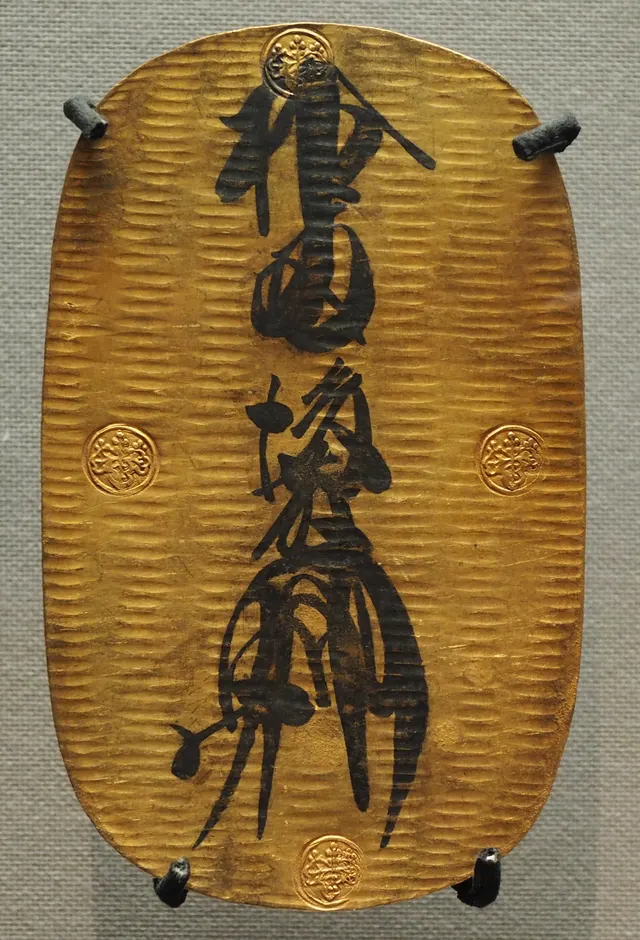
The oban was not shopping money. Samurai families gave oban as rewards and as formal gifts, and they were used in ceremonies. That use is part of what turned gold into official money in Japan.
The face of an oban carries stamped paulownia crests and a hand-written inscription in black ink: ju ryo (10 ryo) and the signature of the head of the Goto family. The "10 ryo" was a weight mark, not a price. An oban had no fixed value in koban, and what it was worth floated with the market.
Ink wears off. When an owner's oban faded, they could take it back to the oban mint and pay a fee to have the writing redone.
Tokugawa Ieyasu's government kept the oban. The Keicho oban, first made in 1601, was struck until 1695, and about 16,500 were made.
The koban: Ieyasu's gold
After Tokugawa Ieyasu won control of Japan, he put the mines under his own control and set up official mints. In 1601 he issued the Keicho koban, the "small oban."
A Keicho koban weighs about 17.8 grams and is about 86% gold, the rest mostly silver. It has a face value of 1 ryo, stamped right on it, along with paulownia crests and the Goto mark. Its surface is covered in fine hammered lines.
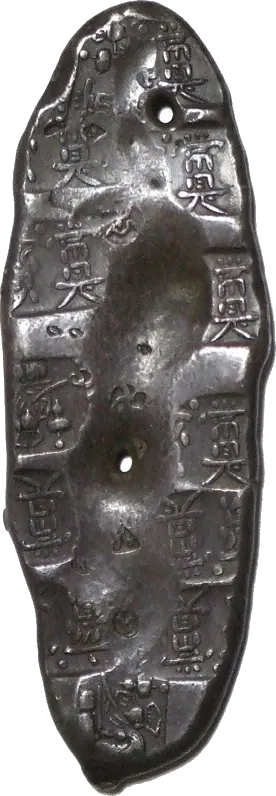
Gold coins like the koban were counted by face value. Silver worked differently: lumps called chogin and small beans called mameitagin were weighed out in monme, a unit of about 3.75 grams. Ieyasu's silver mint, the ginza, moved to Edo in 1612, and the Tokyo shopping district built on the site still carries the name Ginza.
The mon becomes Japanese
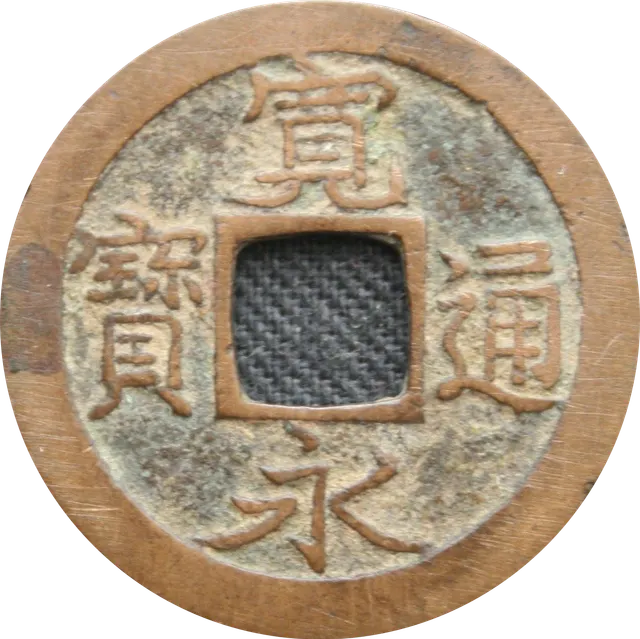
For copper, the shogunate kept using the old Chinese coins for a while. Then in 1636 it began casting its own, the Kan'ei Tsuho, with mints in Edo and at Sakamoto in Omi. It was the first copper coin the Japanese government had issued since 958, nearly 700 years earlier.
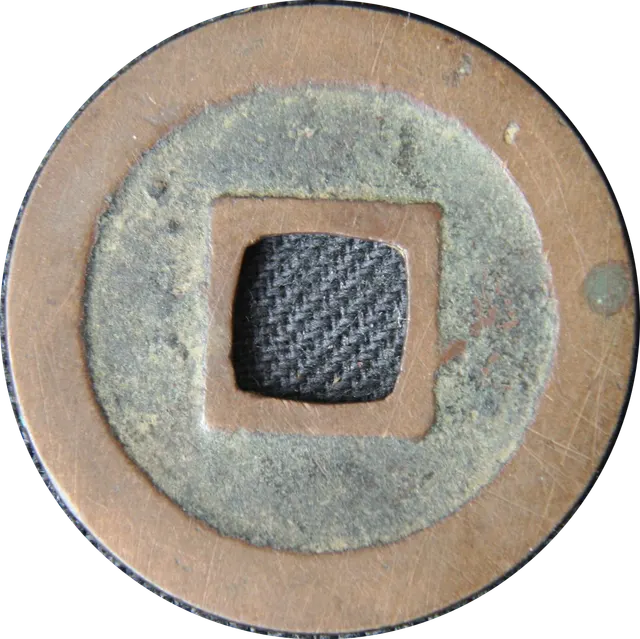
The Kan'ei Tsuho looked like a Chinese cash coin: round, square hole, four characters. The shogunate licensed private mints around the country to cast it, so sizes and lettering vary. It kept the name Kan'ei long after the Kan'ei era ended in 1644. When copper got scarce, iron Kan'ei Tsuho appeared from 1739. A brass 4-mon version with a wave pattern on the back followed in 1768.
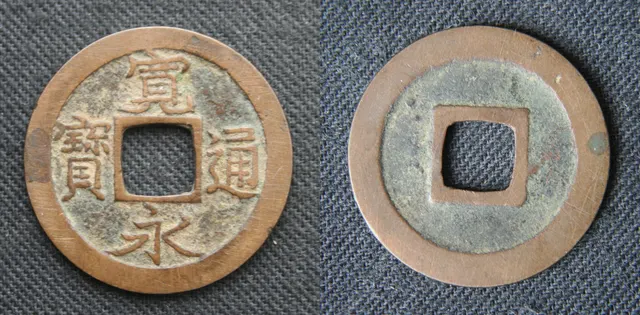
These were the coins ordinary people used to buy food, pay ferries and drop in offering boxes. In Kan'onji, on the island of Shikoku, there's a Kan'ei Tsuho drawn in sand, 122 metres across, called the Zenigata Sunae. About 400 local volunteers rake it back into shape twice a year, in spring and autumn.
Three metals, one exchange rate
With gold, silver and copper all official, the shogunate set a rate between them. In 1609 it was:
1 ryo of gold = 50 monme of silver = 4,000 mon of copper
Gold split into quarters: 1 ryo = 4 bu = 16 shu. In 1700 the silver rate changed to 60 monme. In practice the market rates moved every day, and money changers called ryogaeya made a living from the gaps.
The system had room for local money too. Domains issued their own paper notes, called hansatsu, and by the end of the Edo period nearly 80% of them had done so.
Clipping the koban
Like many governments, the shogunate learned that it could make money by making money worse. In 1695 the Genroku recoinage cut the koban's gold content to about 57%, and the government kept the difference. Prices rose.
In 1714, on the advice of the scholar Arai Hakuseki, the koban went back to Keicho fineness. That shrank the money supply so sharply that prices fell. In 1736 the Genbun recoinage lowered the gold again, and this time the result was stable for about 80 years.
In 1835 the shogunate went further and issued the Tenpo Tsuho, an oval bronze coin worth 100 mon that contained about as much metal as five and a half 1-mon coins. Prices went up again. We've covered why this kind of thing happens in Coin Clipping, Debasement and Gresham's Law.
The great gold drain
When Japan opened its ports in 1859, it ran into a problem it had built for itself. Inside Japan, one gram of gold was worth about five grams of silver. In the rest of the world, it was worth about fifteen.
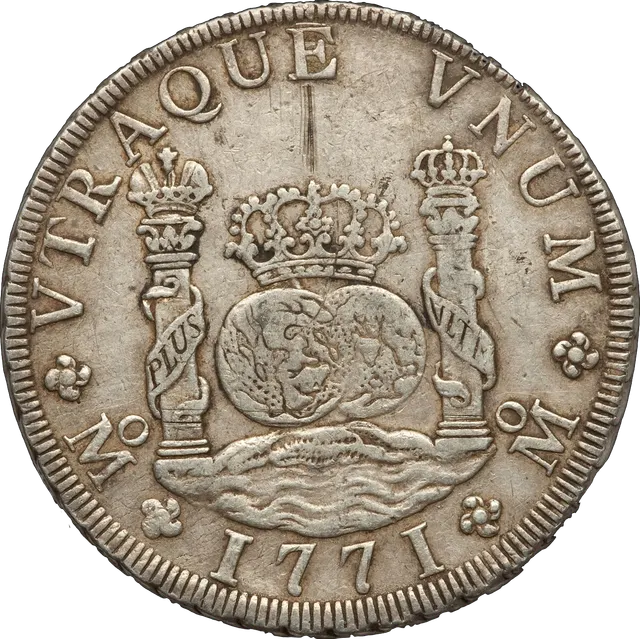
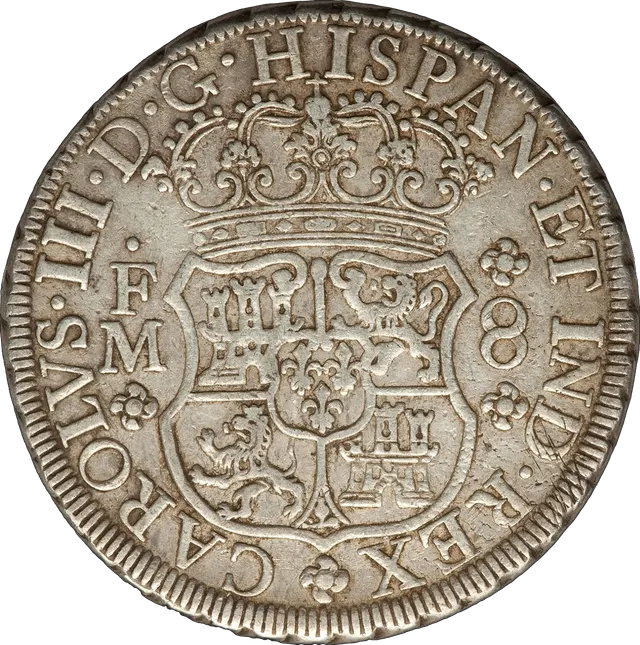
Foreign traders noticed fast. A merchant could swap 4 Mexican silver dollars for 12 silver ichibu coins, trade those for 3 gold koban, and sell the koban abroad for about 12 Mexican dollars. That's three times the money for one trip around the loop. (The Mexican dollar was the descendant of the Spanish piece of eight, the trade coin of the whole Pacific.)
Gold flooded out of Japan. In 1860 the Man'en recoinage cut the gold in the koban to about a third of its previous level, which matched world prices and stopped the drain. The tiny Man'en koban was the last of the line. The flood of new coins that followed set off sharp inflation.
From ryo to yen
The new Meiji government replaced the whole system. Under the New Currency Act of 1871, Japan switched to the decimal yen, sen and rin, and one yen took the place of one ryo. The 100-mon Tenpo Tsuho lost its legal-tender status at the end of 1891. The ordinary 1-mon and 4-mon Kan'ei coins, valued at 1 and 2 rin, stayed legal tender until 1953, when Japan abolished every coin worth less than one yen.
The koban never quite left. It's the gold oval held up by the beckoning maneki-neko cat in shop windows, a wish for good business.
Flip the coins in this story
Compare a Japanese mon with the Chinese cash coin it was copied from, or flip a Spanish dollar, the silver coin at the centre of the 1859 gold drain. Or head back to the coin flipper and toss a modern coin.
Keep reading: Ancient Chinese Coins: Spades, Knives and Cash · Sycee and Chinese Silver · Pieces of Eight: The Spanish Dollar, First Global Currency · All Medieval articles
Questions people ask
What is a mon coin?
The mon was Japan's basic copper coin: round, with a square hole, usually cast in bronze or later iron. From the 1100s to 1636 Japan used imported Chinese coins counted as one mon each. From 1636 the Tokugawa government cast its own, the Kan'ei Tsuho. Mon were strung on cords, and 1,000 made one kanmon.
What is a koban coin?
A koban is an oval gold coin worth 1 ryo, first issued by Tokugawa Ieyasu in 1601. The first Keicho koban weighed about 17.8 grams and was about 86% gold. Later issues were often debased, and the last, the Man'en koban of 1860, was much smaller.
What is the difference between a koban and an oban?
Koban means "small oval" and oban means "large oval." A koban was worth 1 ryo and was used as money. An oban weighed about 165 grams, carried a hand-written ink inscription reading "10 ryo" (a weight mark, not a price), and was mainly given as a reward or ceremonial gift. Its value in koban floated with the market.
Why do old Japanese coins have a hole in the middle?
Japan's copper coins copied Chinese cash coins, which had a square hole so they could be threaded on cords and counted in strings of a thousand. Modern Japan's 5-yen and 50-yen coins have round holes, but those date from the 20th century.
Sources
- Bank of Japan Currency Museum, "Historical events and currencies in use."
- Nara National Research Institute for Cultural Properties, Asukaike workshop site (fuhonsen finds).
- Numista, "1 Ryō – Keichō Koban" (N# 398714).
- Japanese Wiki Corpus, "Keicho Oban" and "Tensho Oban."
- Kotobank, "Eiraku Tsuho" (永楽通宝).
- Kan'onji City Tourism Association, "Zenigata Sunae" sand-raking.
- Hamajima Shoten, history Q&A on the Kan'ei Tsuho and its legal-tender status.