Tap the coin to flip it
The US Dime: America's Ten-Cent Coin
United States10¢1796 to today (Roosevelt design since 1946; one-year Liberty over Tyranny design in 2026)
Denomination and subunit of United States currency
Specs (Roosevelt dime)
- Issuer
- United States Mint
- Denomination
- 10 cents
- Years minted
- 1796 to today (Roosevelt design since 1946; one-year Liberty over Tyranny design in 2026)
- Metal
- Clad since 1965: 91.67% copper, 8.33% nickel overall. 1946–1964: 90% silver, 10% copper
- Weight
- 2.268 g (2.5 g for silver dimes)
- Diameter
- 17.91 mm
- Thickness
- 1.35 mm
- Edge
- Reeded, 118 reeds
- Designer
- John R. Sinnock
- Mints
- Philadelphia (P from 1980), Denver (D), San Francisco (S), West Point (W, collector issues)
In the hand
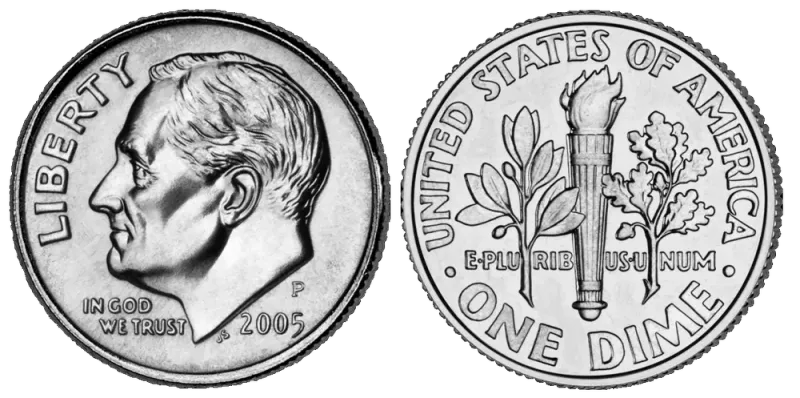
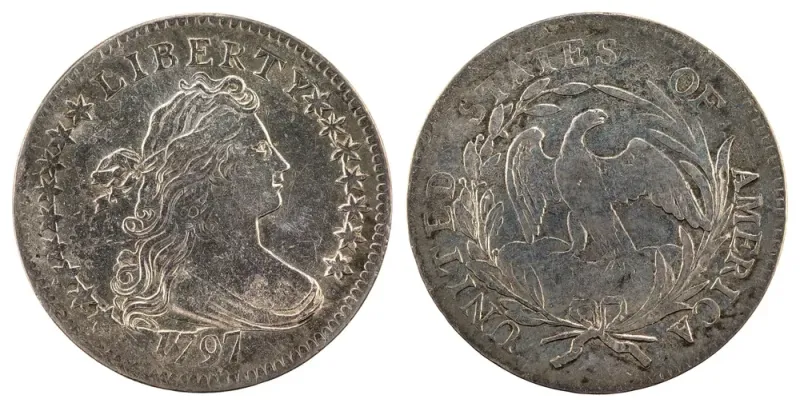
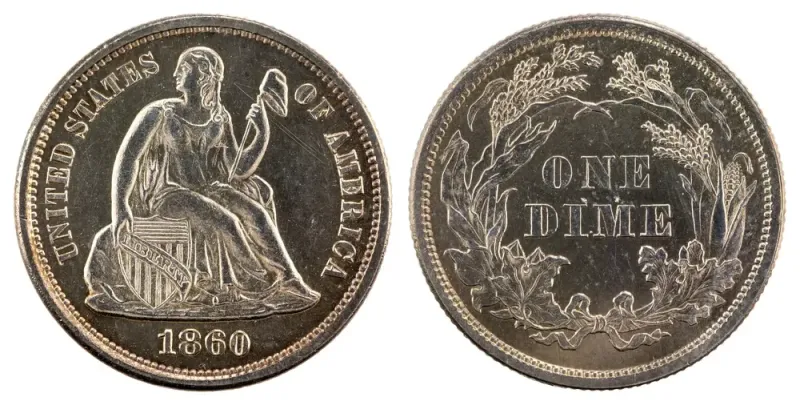
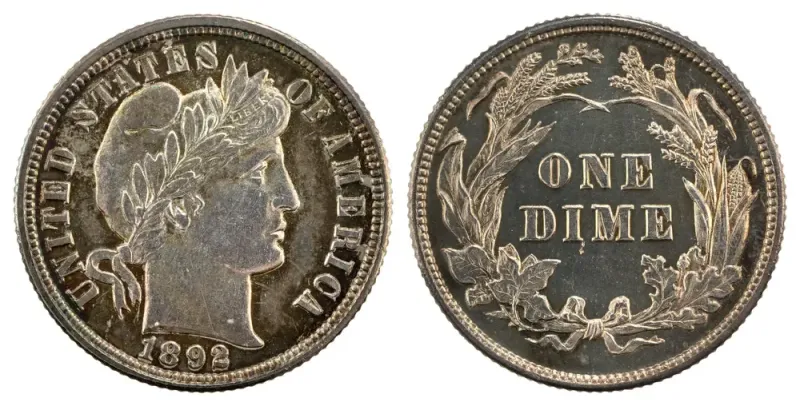
The story of the Dime
The dime is the US ten-cent coin. It's the smallest and thinnest American coin in use, and it's worth more than the bigger penny and nickel. That's a leftover from the days when it was silver, and its value came from the metal inside it.
The Coinage Act of 1792 named the coin the "disme," from an old French word for a tenth. The first dimes were struck in 1796, with a Draped Bust Liberty. Over the next 150 years the dime changed designs along with the other silver coins:
- Draped Bust (1796–1807)
- Capped Bust (1809–1837)
- Seated Liberty (1837–1891)
- Barber or Liberty Head (1892–1916)
- Winged Liberty Head, the "Mercury" dime (1916–1945)
- Roosevelt (1946 onward)
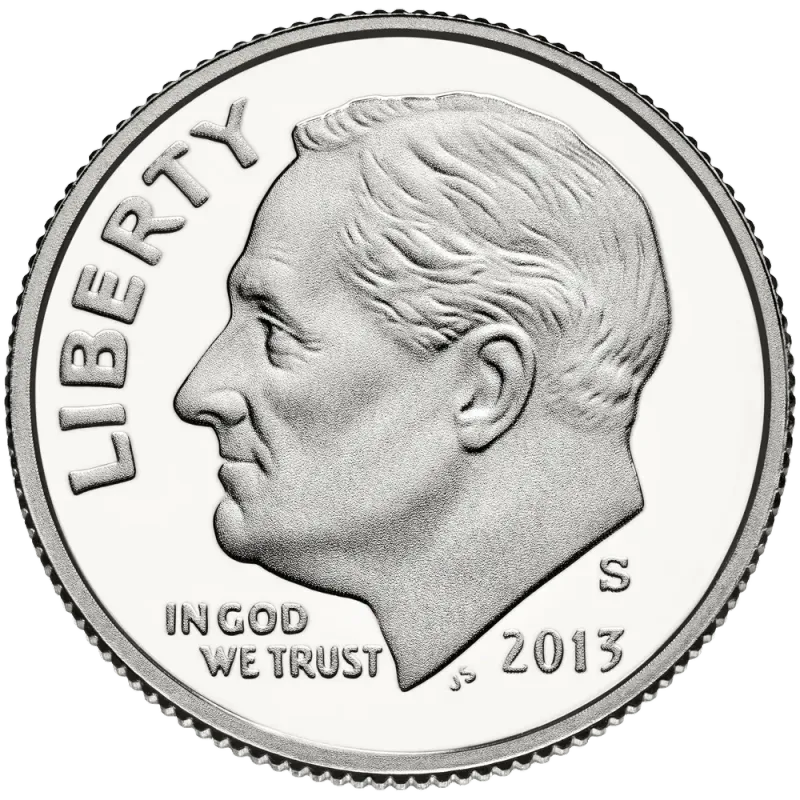
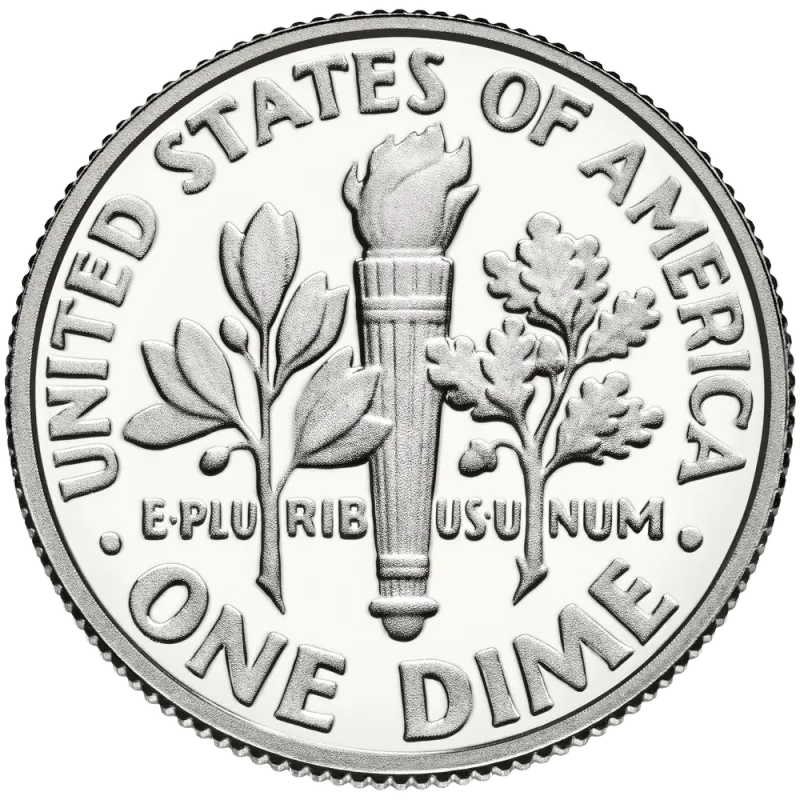
Franklin D. Roosevelt died in April 1945. He had founded the National Foundation for Infantile Paralysis, which became the March of Dimes, so the dime was the obvious coin to honour him. John R. Sinnock, the Mint's chief engraver, designed it. The new dime went into circulation on 30 January 1946, which would have been Roosevelt's 64th birthday. The reverse shows a torch between an olive branch and an oak branch.
Sinnock's initials, JS, sit under the portrait. A rumour went round that they stood for Joseph Stalin. They don't.
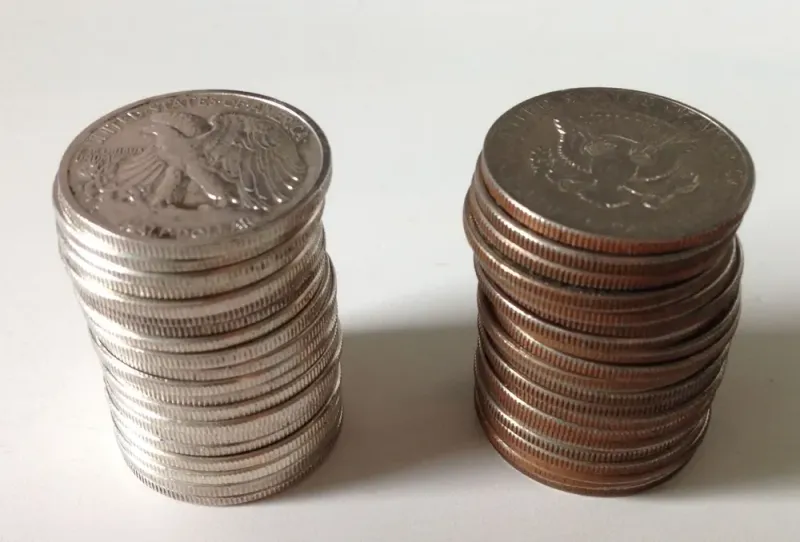
Rising silver prices ended the silver dime. The Coinage Act of 1965 switched it to a "clad" coin: a copper core between two layers of copper-nickel. Look at the edge. A dime dated 1964 or earlier has a solid silver edge, and anything later shows a copper stripe. Older dimes are 90% silver and hold about 0.072 troy oz of it.
On Roosevelt dimes from 1968 on, the mint mark is on the front above the date. From 1946 to 1964 it sits on the back, left of the torch. A famous error is the 1982 dime from Philadelphia with no P. For 2026 only, the dime has a new one-year design, "Liberty over Tyranny," for the 250th anniversary. It's the first change to the dime's design in 80 years.
The dime is also the coin with the most reeds on its edge, 118 of them. Reeding started on gold and silver coins to stop people shaving metal off the edges. It stayed after silver went.
To see how the dime, nickel and quarter developed together, read the history linked below.
From the encyclopedia
The dime, in United States currency, is equal to 1⁄10 of a dollar, or ten cents ($0.10). The dime coin is labeled formally as "one dime", as a dime is legally an independent subunit of the dollar. This was stated in the Coinage Act of 1792, which established the U.S. dollar and its units. However, it does not function as a unit in practice now, and is written in cents as "$0.10" or "10¢".
From Dime (United States coin) on Wikipedia, text under CC BY-SA 4.0. Fetched November 3, 2026.
Questions people ask
Which dimes are silver?
Dimes dated 1964 and earlier are 90% silver. Check the edge: a copper stripe means it's a clad dime from 1965 or later.
Why is Roosevelt on the dime?
He founded the organisation that became the March of Dimes, which raised money to fight polio. The dime honoured him after he died in 1945.
Where is the mint mark on a dime?
On the front above the date, from 1968. On 1946–1964 Roosevelt dimes, it's on the back to the left of the torch.