Tap the coin to flip it
The US Quarter: America's 25-Cent Coin
United States25¢1796 to today (Washington portrait since 1932; five Semiquincentennial designs in 2026)
Denomination of United States currency
Specs (Washington quarter, current)
- Issuer
- United States Mint
- Denomination
- 25 cents
- Years minted
- 1796 to today (Washington portrait since 1932; five Semiquincentennial designs in 2026)
- Metal
- Clad since 1965: 91.67% copper, 8.33% nickel overall. 1932–1964: 90% silver, 10% copper
- Weight
- 5.670 g (6.25 g for silver quarters)
- Diameter
- 24.26 mm
- Thickness
- 1.75 mm
- Edge
- Reeded, 119 reeds
- Designers
- John Flanagan (1932 portrait); Laura Gardin Fraser (portrait used since 2022)
- Mints
- Philadelphia (P from 1980), Denver (D), San Francisco (S), West Point (W)
In the hand
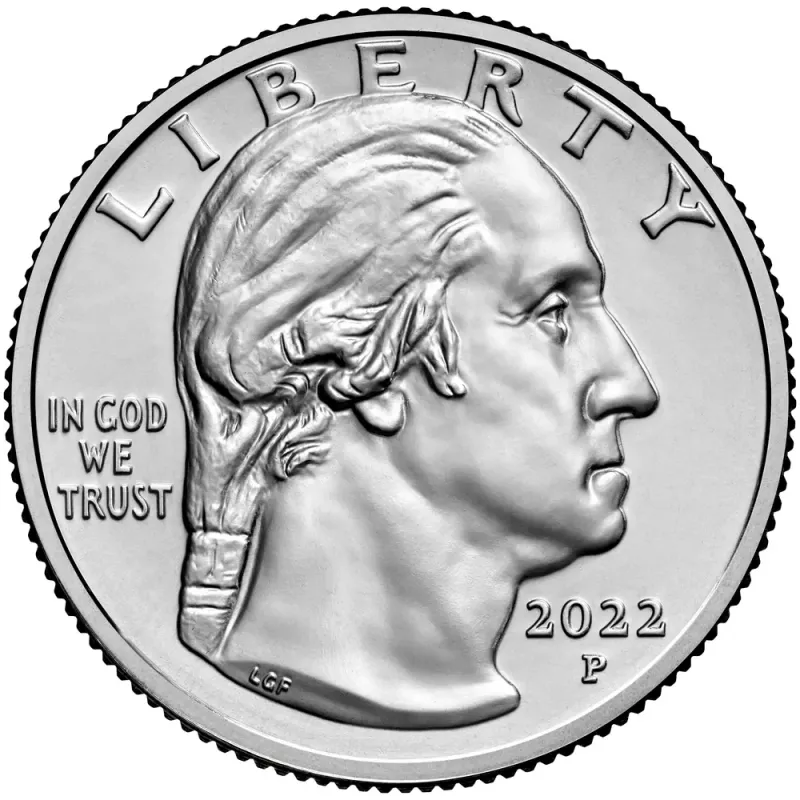
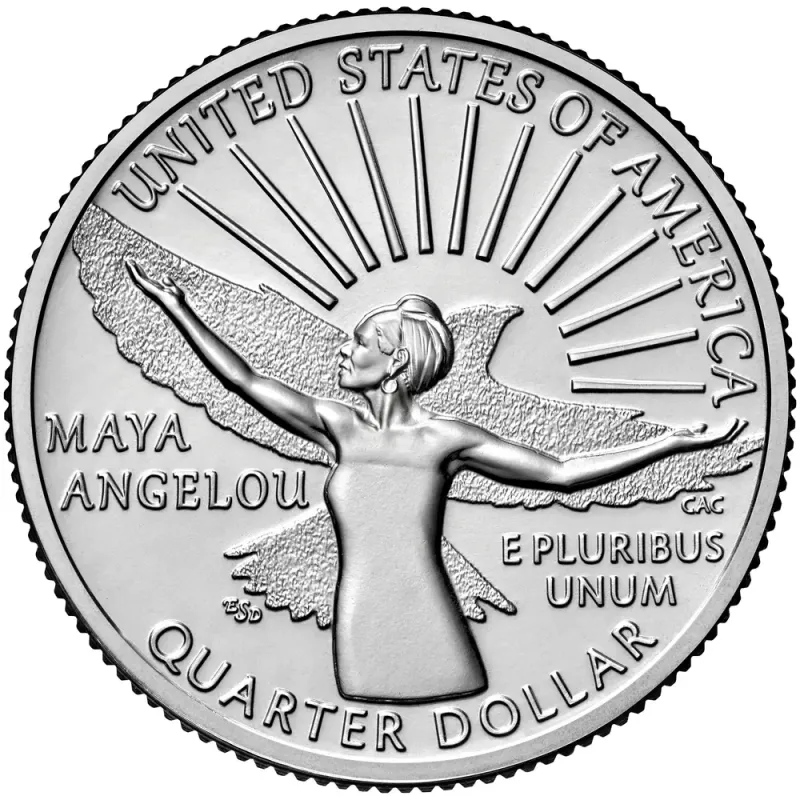
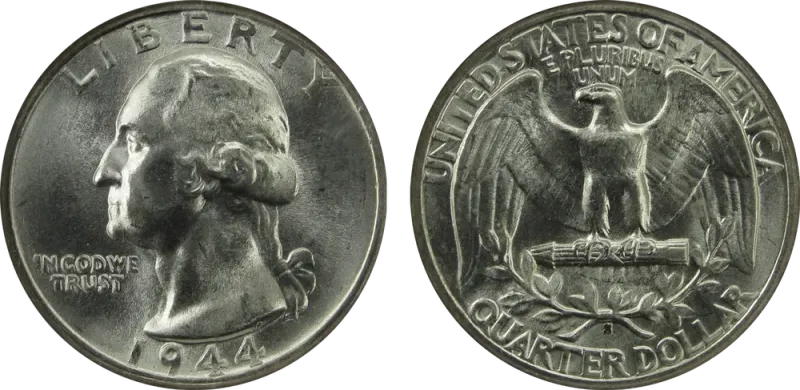
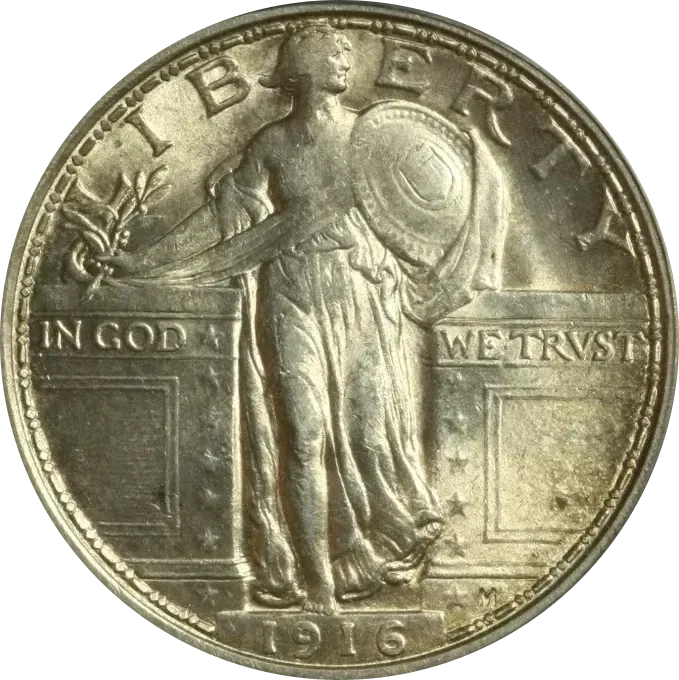
The story of the Quarter
The quarter is the US 25-cent coin. It's the coin most Americans use every day, for parking meters, laundry and vending machines.
The Coinage Act of 1792 authorised it, but the first quarters weren't struck until 1796. Only 6,146 were made that year. After that the quarter followed the same designs as the other silver coins: Draped Bust, Capped Bust, Seated Liberty and Barber. In 1916 Hermon MacNeil's Standing Liberty quarter showed Liberty stepping through a gateway with a shield raised.
The Washington quarter arrived in 1932, for the 200th anniversary of George Washington's birth. John Flanagan based the portrait on a bust by the French sculptor Jean-Antoine Houdon. It was meant to be a one-year coin, but it stayed. The 1932-D and 1932-S had low mintages and are the key dates.
Quarters were 90% silver until 1964. After the Coinage Act of 1965 they became clad coins, with a copper core between layers of copper-nickel. Look at the edge for a copper stripe. A silver quarter holds about 0.18 troy oz of silver.
Then the reverse started changing:
- 1975–1976: a colonial drummer for the Bicentennial. All are dated 1776–1976.
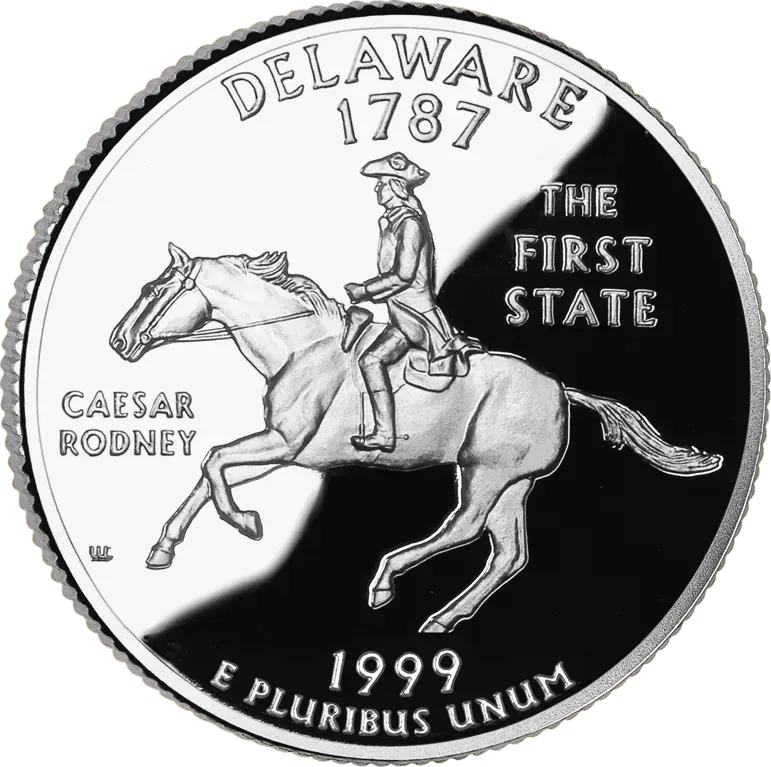
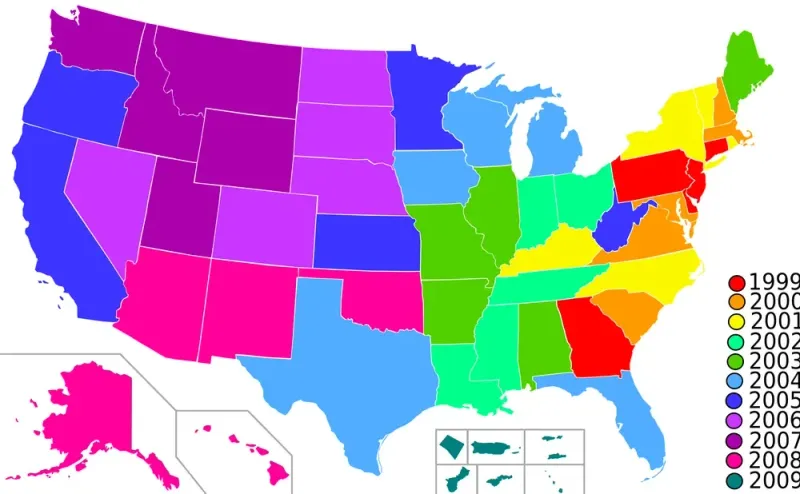
- 1999–2008: the 50 State Quarters, five new designs a year, in order of statehood.
- 2009: Washington, DC and five US territories.
- 2010–2021: America the Beautiful, with national parks and sites.
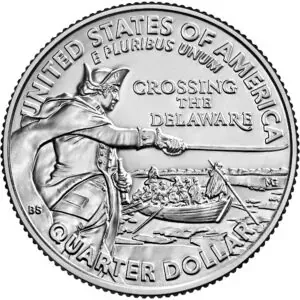
- 2021: Washington crossing the Delaware.
- 2022–2025: American Women Quarters, honouring women such as Maya Angelou and Sally Ride. These also use a new portrait of Washington, based on a design Laura Gardin Fraser made in 1931.
The state quarters were a hit. The Mint estimated that about 147 million people collected them. Many first collections started with a state map board.
For 2026, the 250th anniversary of independence, there are five one-year designs: the Mayflower Compact, the Revolutionary War, the Declaration of Independence, the Constitution and the Gettysburg Address.
From 1932 to 1964 the mint mark was on the back, under the eagle. From 1968 to 2021 it's on the front, behind the ribbon in Washington's hair. On 2022–2025 quarters it sits next to the date, below his chin.
How the quarter fits with the nickel and dime is the subject of the history article linked below.
From the encyclopedia
The quarter dollar, commonly called the quarter, is a United States coin valued at 25 cents, equal to 1⁄4 of a dollar ($0.25). Adorning its obverse in modern designs is the profile of George Washington, while its reverse design has undergone frequent changes since 1998. Since its initial production in 1796, the quarter dollar has held a significant place in American numismatics, with consistent production since 1831.
From Quarter (United States coin) on Wikipedia, text under CC BY-SA 4.0. Fetched November 3, 2026.
Questions people ask
Which quarters are silver?
Quarters dated 1964 and earlier are 90% silver. Clad quarters from 1965 onward show a copper stripe on the edge.
How many state quarters are there?
Fifty state designs from 1999 to 2008, plus six for Washington, DC and the territories in 2009.
How much does a quarter weigh?
A clad quarter weighs 5.670 g. A 90% silver quarter weighs 6.25 g.