Tap the coin to flip it
The US Nickel: America's Five-Cent Coin
United States5¢1866 to today (Jefferson design since 1938; 2026 coins dated 1776–2026)
Denomination of United States currency
Specs (Jefferson nickel)
- Issuer
- United States Mint
- Denomination
- 5 cents
- Years minted
- 1866 to today (Jefferson design since 1938; 2026 coins dated 1776–2026)
- Metal
- 75% copper, 25% nickel (1942–1945: 56% copper, 35% silver, 9% manganese)
- Weight
- 5.000 g
- Diameter
- 21.21 mm
- Thickness
- 1.95 mm
- Edge
- Plain
- Designers
- Felix Schlag (1938); Jamie Franki (current portrait, 2006)
- Mints
- Philadelphia (P from 1980), Denver (D), San Francisco (S)
In the hand
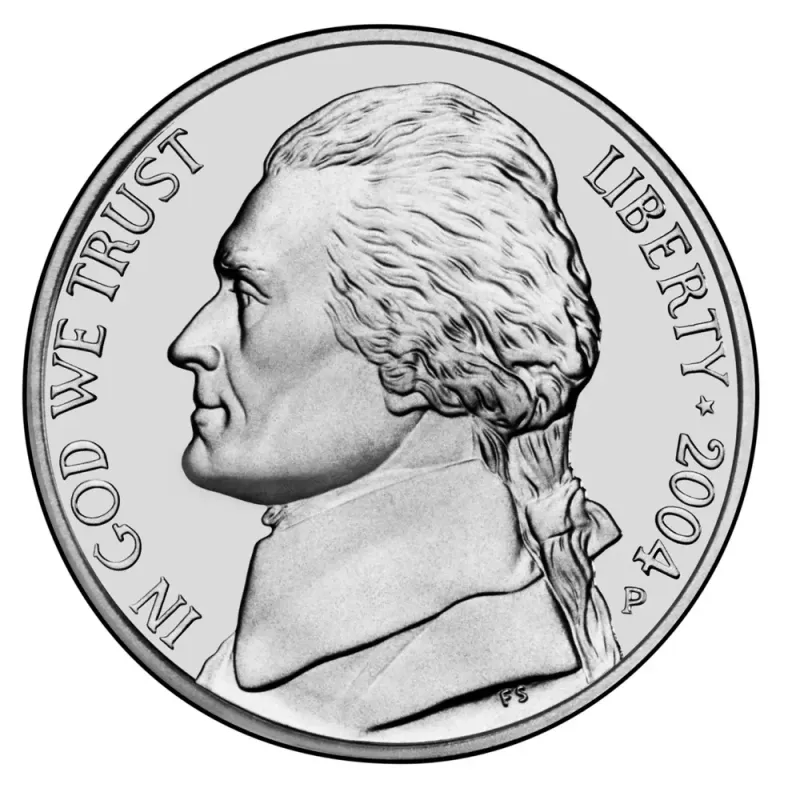
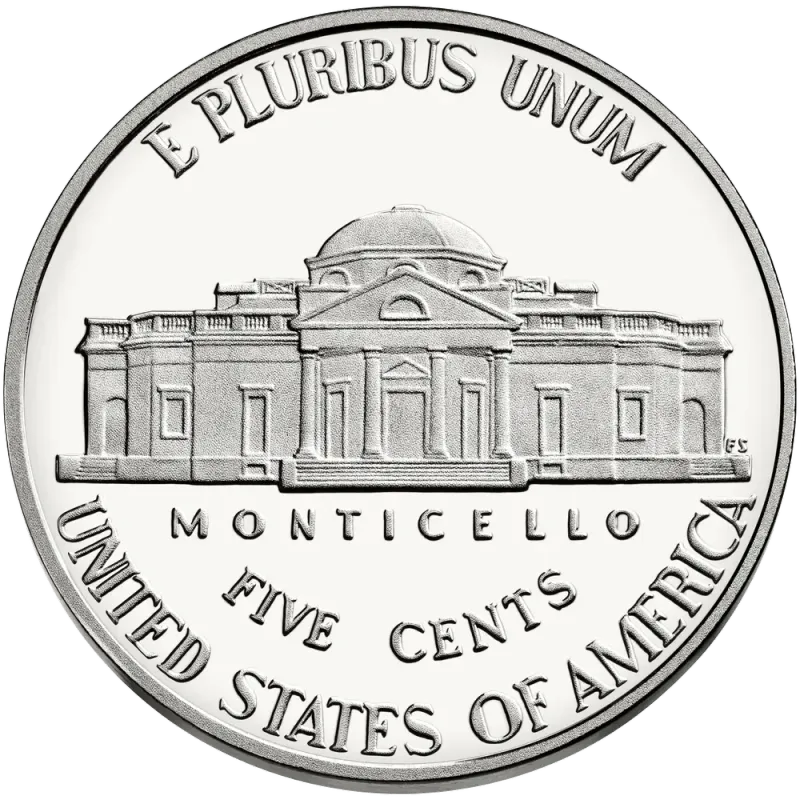
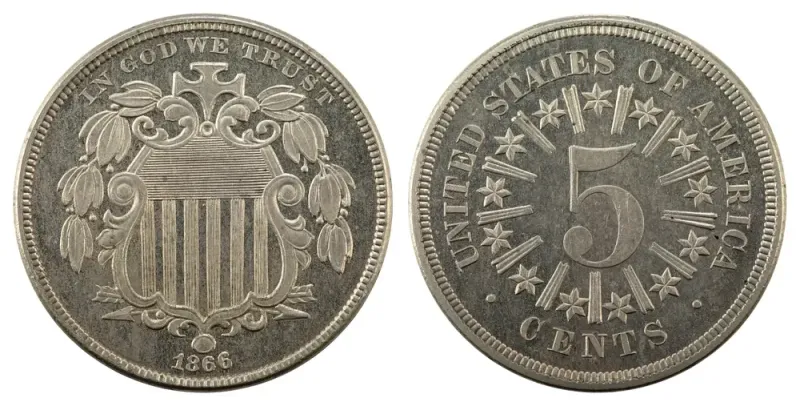
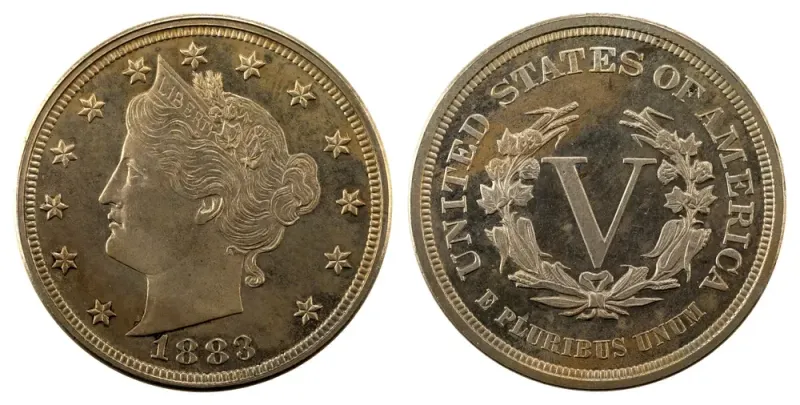
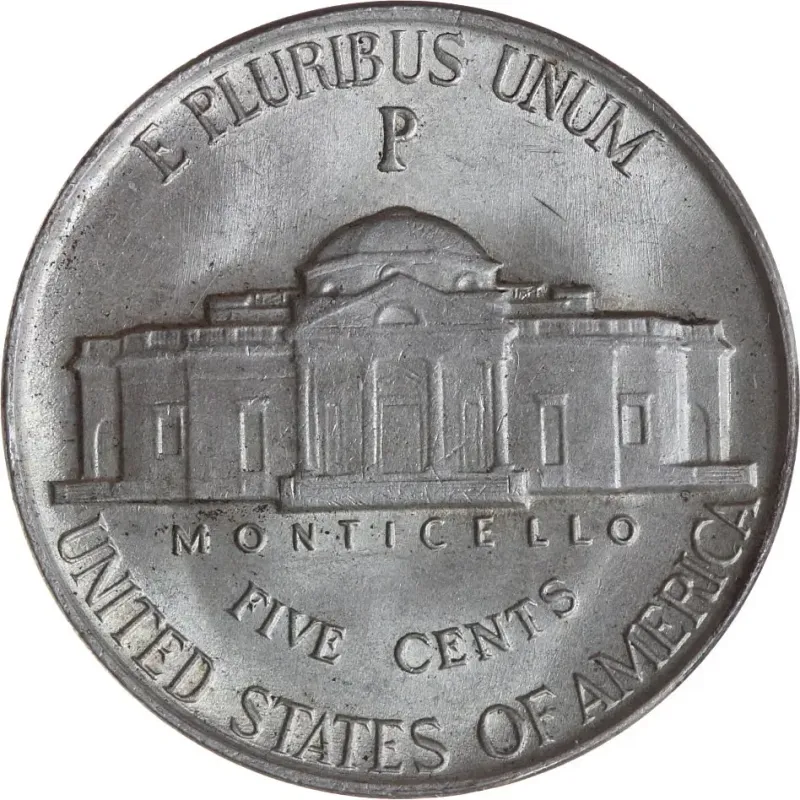
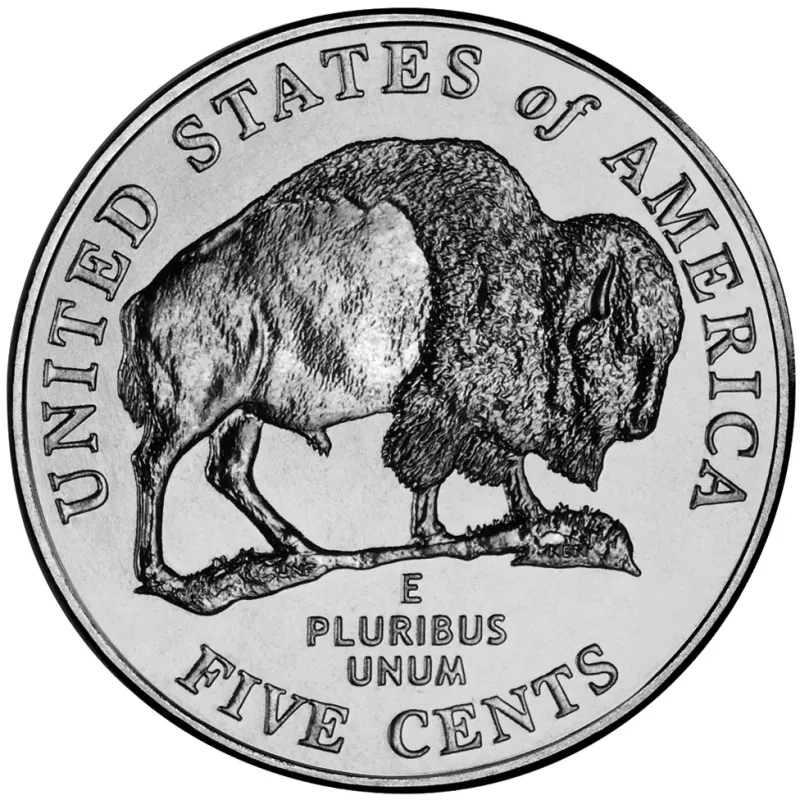
The story of the Nickel
The nickel is the US five-cent coin. It's named after its metal, although it's actually three-quarters copper. Only 25% is nickel.
Five-cent coins came before the name. From 1792 the Mint made the half dime, a tiny silver coin. During the Civil War people hoarded silver, and the government turned to nickel alloy instead. Congress approved a copper-nickel five-cent coin in 1866, and people called it a nickel from the start.
There have been four main designs:
- Shield nickel (1866–1883), with a heraldic shield.
- Liberty Head or "V" nickel (1883–1912), showing a large Roman numeral V. The first 1883 coins had no word CENTS, and crooks gold-plated them to pass as $5 gold pieces. The Mint added CENTS later that year.
- Buffalo nickel (1913–1938), James Earle Fraser's Native American and bison.
- Jefferson nickel (1938 onward).
Felix Schlag won a public competition to design the Jefferson nickel. It shows Thomas Jefferson on the front and his home, Monticello, on the back. Schlag's initials, FS, were added under the portrait in 1966.
During the Second World War nickel was needed for armour plate. From late 1942 to 1945 the nickel was made of 56% copper, 35% silver and 9% manganese. These "war nickels" have a large mint mark above Monticello, and they were the first US coins to carry a P for Philadelphia.
In 2004 and 2005 the Westward Journey series marked the Lewis and Clark expedition with four new reverses, including a peace medal, a keelboat and a bison. A new forward-facing portrait of Jefferson arrived in 2006, and Monticello came back to the reverse.
The size and metal haven't changed since 1866, apart from the war years. That's why vending machines still accept old nickels. It's also why the coin is expensive to make. In fiscal 2024 each nickel cost the Mint about 14 cents.
The mint mark is on the front, under the date, on coins from 1968 onward. Earlier Jefferson nickels have it on the back, to the right of Monticello. Key dates include the 1939-D, the 1950-D and the 1943/2-P overdate. For 2026 the nickel carries the double date 1776–2026 for the country's 250th anniversary.
The wider story of how American change took shape is in the article linked below.
From the encyclopedia
A nickel is a five-cent coin minted by the United States Mint worth 1⁄20 of a dollar ($0.05). Currently composed of cupronickel, the piece has been issued since 1866. Its diameter is 0.835 inches (21.21 mm) and its thickness is 0.077 inches (1.95 mm). It is the second-lowest face-value physical unit of U.S. currency, after the penny.
From Nickel (United States coin) on Wikipedia, text under CC BY-SA 4.0. Fetched November 3, 2026.
Questions people ask
Is a nickel made of nickel?
Only partly. It's 75% copper and 25% nickel.
Which nickels contain silver?
Nickels dated 1942 to 1945 with a large mint mark above Monticello. They hold 35% silver.
Where is the mint mark on a nickel?
On the front under the date, from 1968 on. On earlier Jefferson nickels it's on the back to the right of Monticello, and on war nickels it's above the dome.