Tap the coin to flip it
The Half Dollar Coin, from Flowing Hair to Kennedy
United States50¢1794 to today (Kennedy design since 1964; one-year Enduring Liberty design in 2026)
Denomination of United States currency
Specs (Kennedy half dollar, current)
- Issuer
- United States Mint
- Denomination
- 50 cents
- Years minted
- 1794 to today (Kennedy design since 1964; one-year Enduring Liberty design in 2026)
- Metal
- Clad since 1971: 91.67% copper, 8.33% nickel overall. 1965–1970: 40% silver overall. 1964 and earlier: 90% silver
- Weight
- 11.34 g (12.5 g for 90% silver halves)
- Diameter
- 30.61 mm
- Thickness
- 2.15 mm
- Edge
- Reeded, 150 reeds
- Designers
- Gilroy Roberts (portrait); Frank Gasparro (reverse)
- Mints
- Philadelphia (P from 1980), Denver (D), San Francisco (S)
In the hand
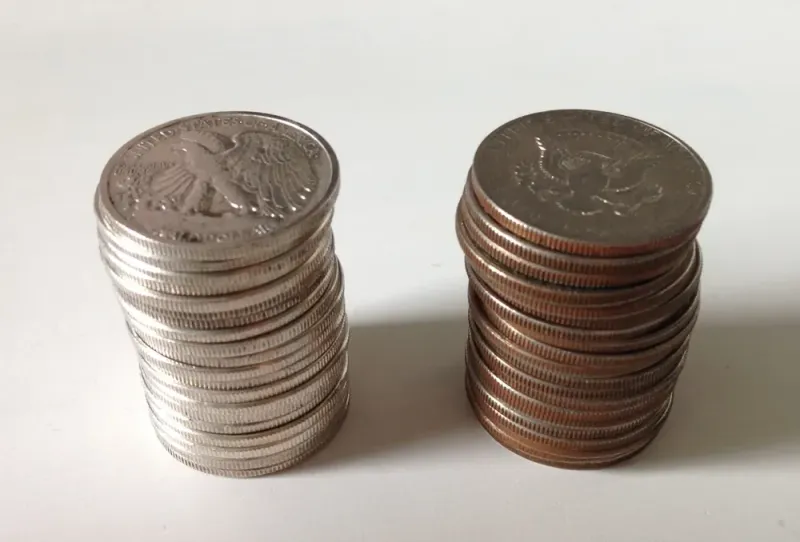
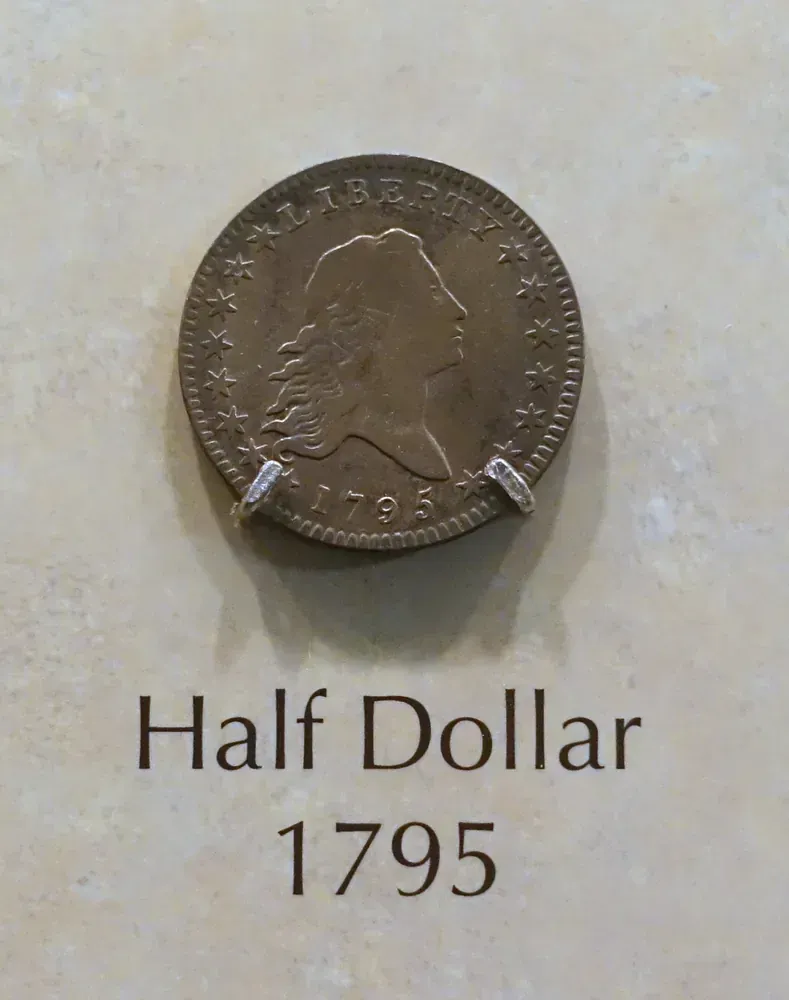
The story of the Half dollar
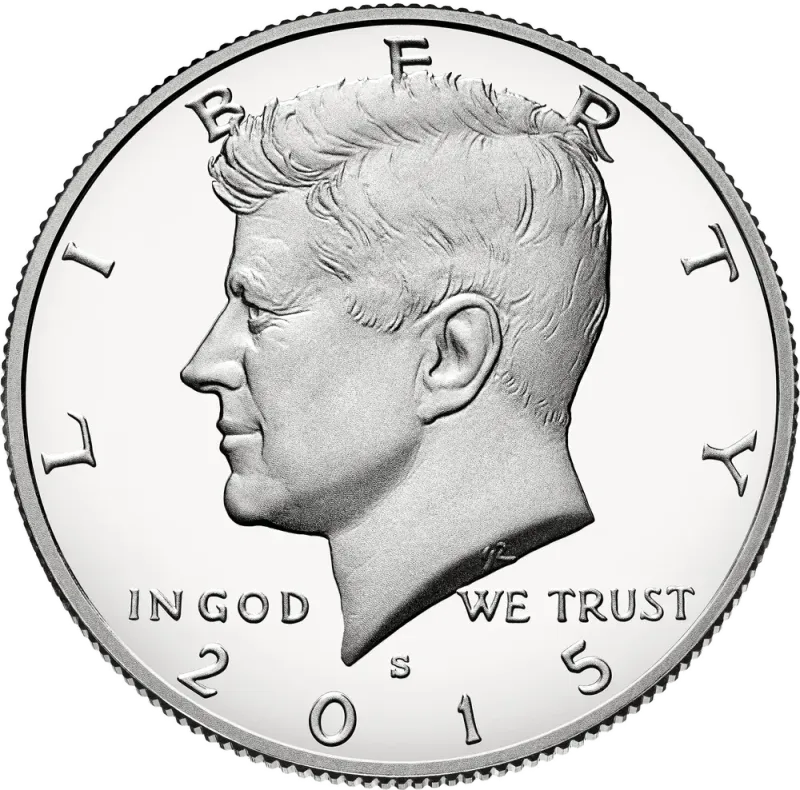
The half dollar is the US 50-cent coin. At 30.6 mm across it's the largest US coin still made in regular denominations, and it has carried John F. Kennedy's portrait since 1964.
It's one of the oldest US coins. The Mint struck its first half dollars in 1794, the same year as its first silver dollars, with a Flowing Hair Liberty. Early on, halves were the workhorse of American silver. Banks held them in reserve, and far more were struck than dollars.
Many designs followed:
- Flowing Hair (1794–1795)
- Draped Bust (1796–1807)
- Capped Bust (1807–1839)
- Seated Liberty (1839–1891)
- Barber (1892–1915)
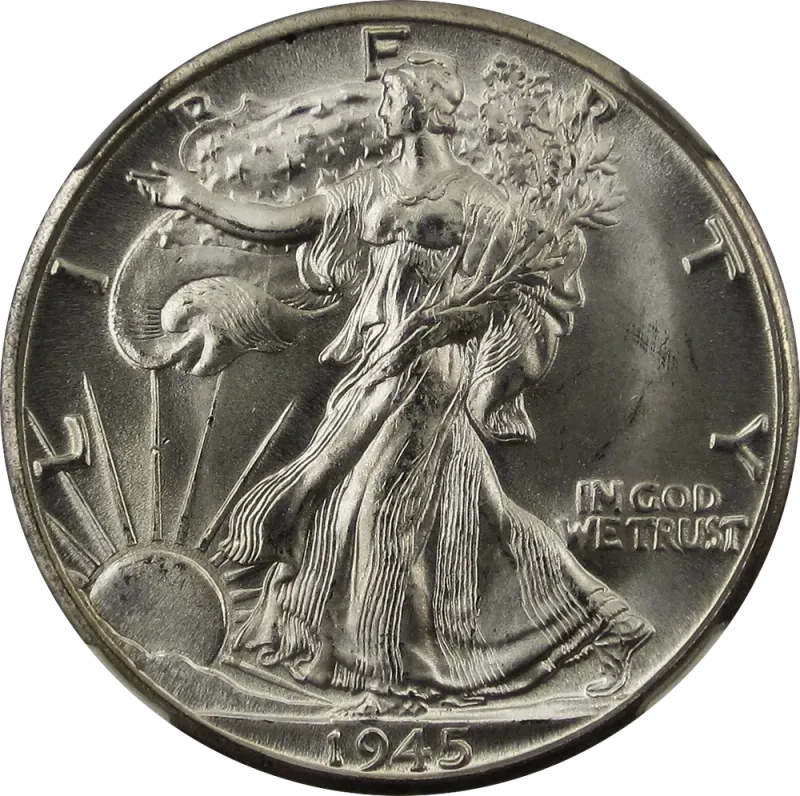
- Walking Liberty (1916–1947), by Adolph A. Weinman, often called the most beautiful US coin. The design came back in 1986 on the American Silver Eagle.
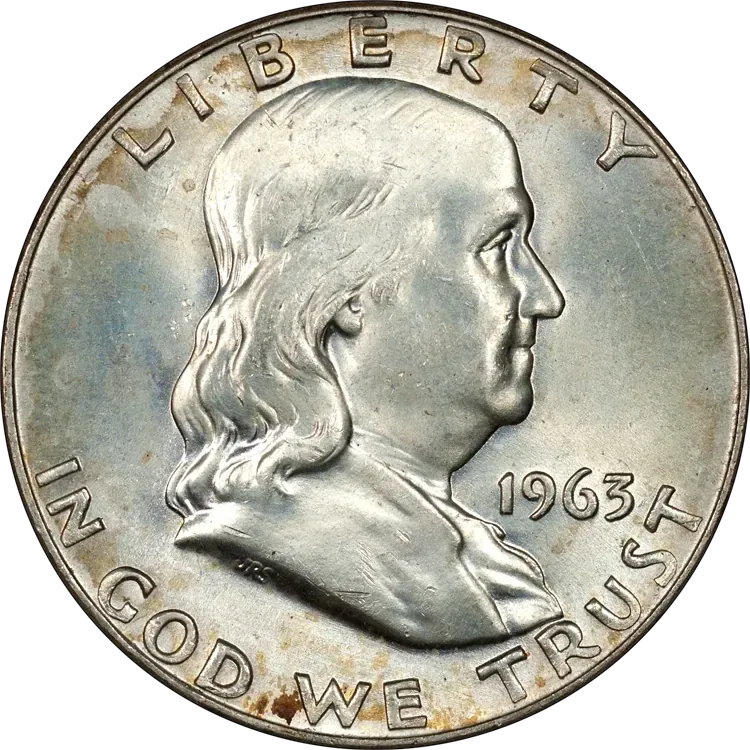
- Franklin (1948–1963), with Benjamin Franklin and the Liberty Bell.
- Kennedy (1964 onward)
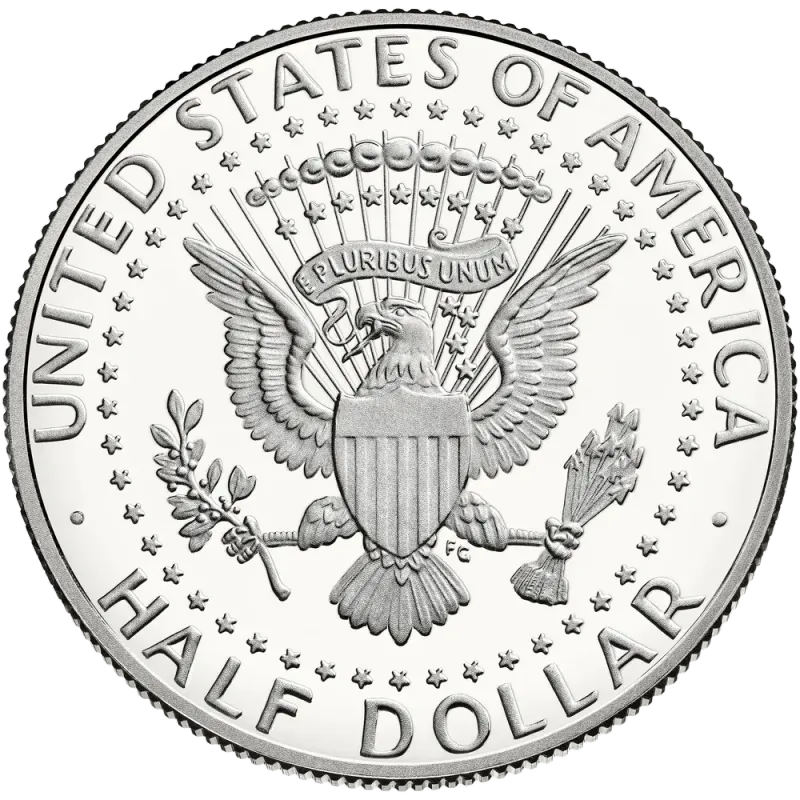
President Kennedy was killed on 22 November 1963. Within weeks Congress approved a new half dollar in his honour, and the Mint rushed it out in early 1964. Gilroy Roberts designed the portrait, and Frank Gasparro did the reverse, based on the presidential seal.
The 1964 Kennedy half was 90% silver, and almost nobody spent it. People kept them as keepsakes, and silver prices were rising too. From 1965 to 1970 the Mint cut the silver to 40%. Since 1971 halves have been copper-nickel clad, like dimes and quarters. In 1975 and 1976 the reverse showed Independence Hall for the Bicentennial, with the double date 1776–1976. For 2026 the half has a one-year "Enduring Liberty" design showing the Statue of Liberty, for the 250th anniversary.
Halves slowly dropped out of daily use. Cash registers stopped having a slot for them, and since 2002 the Federal Reserve hasn't ordered any for circulation. The Mint still strikes them each year and sells rolls and bags to collectors.
The mint mark on Kennedy halves from 1968 on sits on the front, under the portrait and above the date. On 1964 coins it's on the back, left of the eagle's tail, below the talon holding the olive branch.
From the encyclopedia
The half dollar, sometimes referred to as the 50-cent coin, is a United States coin worth 50 cents, or ½ of a dollar ($0.50). In both size and weight, it is the largest circulating coin currently minted in the United States, being 1.205 inches in diameter and 0.085 in (2.16 mm) in thickness, and is twice the weight of the quarter. The coin's design has undergone a number of changes throughout its history. Since 1964, the half dollar depicts the profile of President John F. Kennedy on the obverse and the seal of the president of the United States on the reverse.
From Half dollar (United States coin) on Wikipedia, text under CC BY-SA 4.0. Fetched November 3, 2026.
Questions people ask
Are Kennedy half dollars silver?
The 1964 ones are 90% silver. Those dated 1965 to 1970 are 40% silver. From 1971 they're copper-nickel, except special collector issues.
Are half dollars still made?
Yes. The Mint strikes them every year, but since 2002 they've been sold to collectors instead of shipped to banks.
How much does a half dollar weigh?
A modern clad half weighs 11.34 g. A 1964 silver half weighs 12.5 g.