Commemorative Coins: Money as Monument
Part 36 of the Modern coins series6 min read
From Rome's victory coins to the 1892 Columbian half dollar and the state quarters: how commemorative coins work, who profits, and which ones are worth more.
Most coins are made to be spent. A commemorative coin is made to be kept. It marks a person, a victory or an anniversary, and the government that issues it usually hopes you'll put it in a drawer instead of a parking meter.
The idea is far older than the word. Roman emperors used coins to announce their wins to people who would never see a triumph in person. Two thousand years later, the United States Mint sold souvenir half dollars at a world's fair and, a century after that, got half the country collecting quarters.
What counts as a commemorative coin?
A commemorative coin is legal tender with a special design that honours a particular event, person or place. It has a face value, but it is usually issued for a short time.
There are two broad kinds. Collector commemoratives are sold by the mint above face value, often in silver or gold, and rarely circulate. Circulating commemoratives, like the 1976 Bicentennial quarter or the state quarters, go out in ordinary change.
Rome: news you could hold
Rome had no printing press, but it had millions of coins passing through millions of hands. Rulers changed the designs often, and the pictures carried a message.
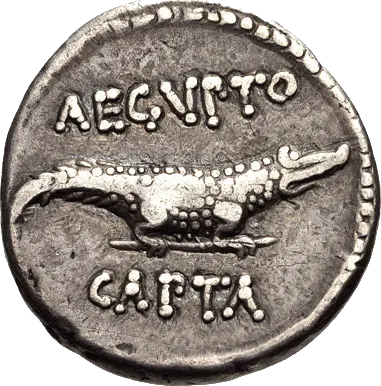
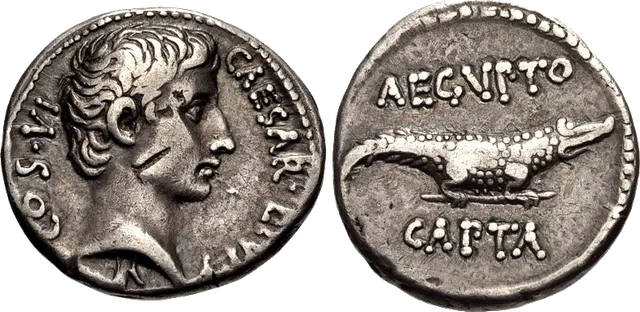
After Octavian (soon to be called Augustus) defeated Antony and Cleopatra and took Egypt, he struck silver denarii around 28 BC showing a crocodile, the animal of the Nile, with the words AEGVPTO CAPTA: "Egypt captured".
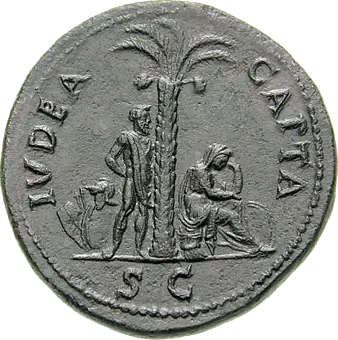
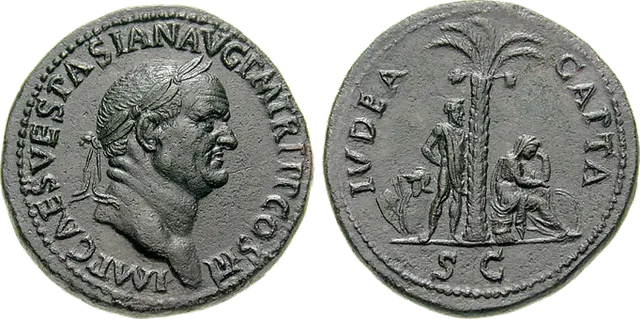
A century later the new emperor Vespasian did the same thing on a bigger scale. His son Titus took Jerusalem in AD 70, and from AD 71 the mint struck "Judaea Capta" coins in gold, silver and bronze. The best known shows a Jewish woman mourning under a palm tree, with a Roman soldier or a bound captive beside her. It was a victory monument small enough to pay for bread with, and it told everyone in the empire that the new Flavian dynasty had won.
Romans also commemorated less comfortable events. Brutus's famous EID MAR denarius marks the Ides of March with two daggers. You can read more about Roman silver in The Denarius: How Rome's Silver Coin Lost Its Shine and the big bronze coin these messages often rode on at the sestertius page.
From coins to medals and back
In the Renaissance, much of this job moved to medals. Pisanello's cast medal of the Byzantine emperor John VIII Palaiologos, made around 1438, is usually called the first Renaissance portrait medal. Medals had no face value and weren't money, so artists could make them bigger and more detailed than any coin.
For a few hundred years, if a king wanted to celebrate a wedding or a battle, he struck a medal. Coins mostly went back to the routine work of carrying a portrait, a coat of arms and a value.
The first US commemorative: a world's fair souvenir
The United States had no commemorative coins at all for its first hundred years. That changed with the World's Columbian Exposition in Chicago, held to mark 400 years since Columbus reached the Americas.
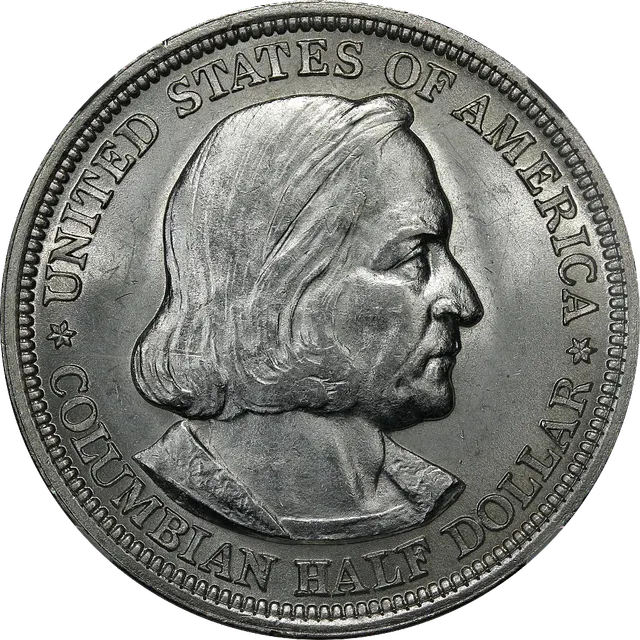
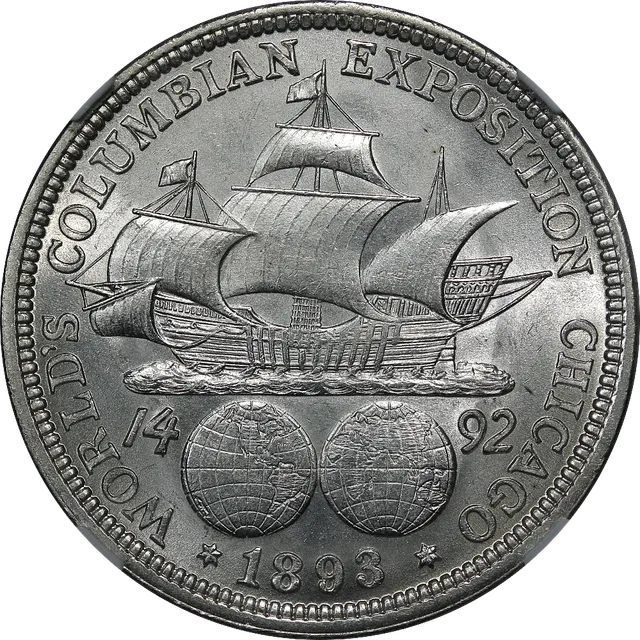
Congress authorised a special half dollar in 1892 to help pay for the fair. It shows Columbus on the front and his flagship, the Santa Maria, above two globes on the back. The organisers sold the coins for $1 each, double their face value. Dated 1892 and 1893, the Columbian half dollar is the first US commemorative coin.
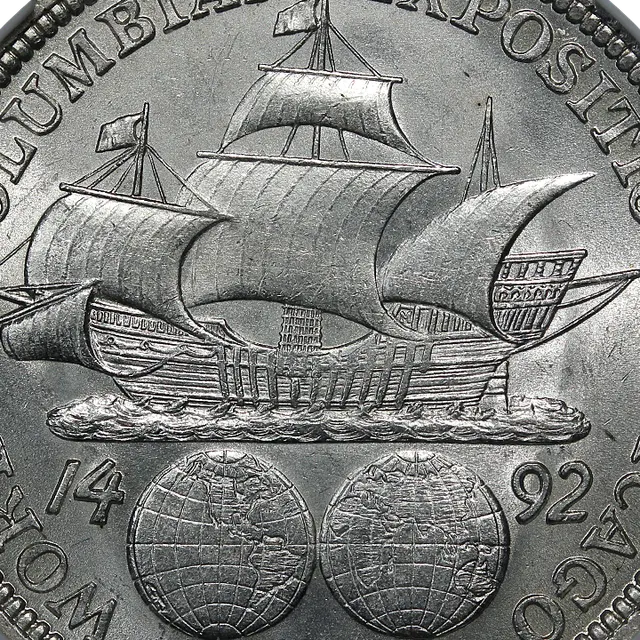
Sales were weaker than the fair hoped, and large numbers of the halves were later spent at face value. That's why worn Columbian halves are still fairly common today.
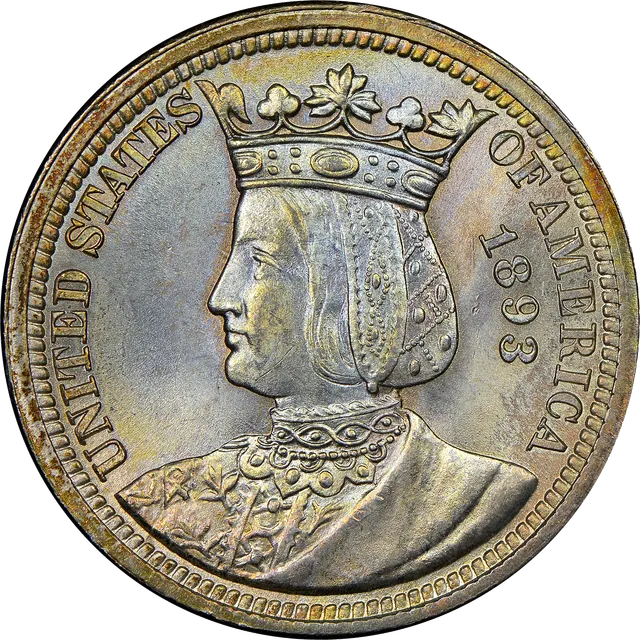
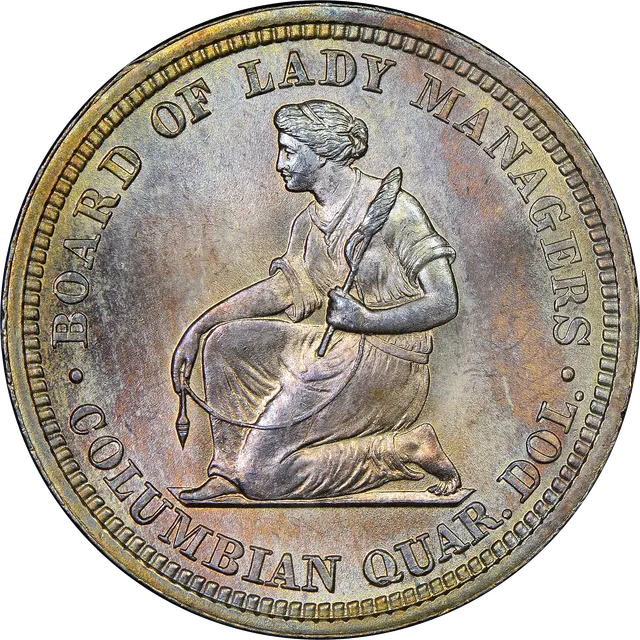
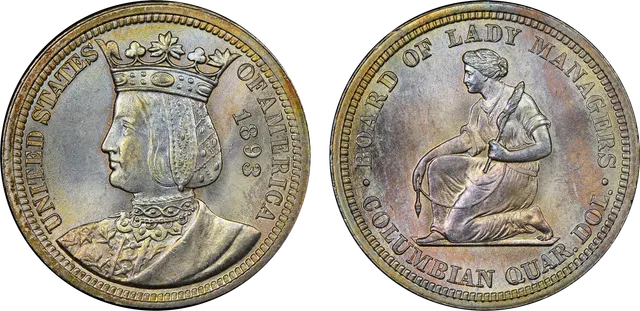
The fair's Board of Lady Managers, led by Chicago society leader Bertha Palmer, asked for a coin of its own. The result was the 1893 Isabella quarter, showing Queen Isabella of Spain, who had paid for Columbus's voyage. It was the first US commemorative quarter and the first US coin to show a real woman rather than an allegorical Liberty. The Mint struck 40,000, but many went unsold.
Then came the 1900 Lafayette dollar, sold to raise money for a statue of the Marquis de Lafayette in Paris. Its double portrait of Lafayette and George Washington made it the first US coin to show an American citizen. All 36,026 regular strikes were made on a single day, 14 December 1899.
The classic era and its excesses
Between 1892 and 1954 the US issued dozens of commemoratives, nearly all of them silver half dollars. Many celebrated state anniversaries, expositions or local founders, and each was sold by a sponsoring group at a premium.
By the 1930s the system had problems. Small local events got their own coins, and some programs were struck year after year at several mints, so collectors had to buy multiple versions to complete a set. Many collectors felt they were being milked.
The classic era ended with the Carver/Washington half dollar of 1951 to 1954. In February 1954 President Eisenhower vetoed three more commemorative bills, warning that approving them would bring "a flood of other authorizations". No new US commemorative was struck for 28 years.
A quarter that was meant to be temporary
One of the most familiar US coins started out as a commemorative idea. For the 200th anniversary of George Washington's birth in 1932, a bicentennial committee wanted a one-year Washington half dollar. Congress instead replaced the Standing Liberty quarter with John Flanagan's Washington design, and the Washington quarter is still in your pocket today. The story of the quarter itself is in Nickels, Dimes and Quarters and on the US quarter page.
The Bicentennial coins of 1976
For the nation's 200th birthday, the Mint put new reverses on three circulating coins and dated them all "1776-1976". The designs came from a public competition. Jack L. Ahr's colonial drummer went on the quarter, Seth G. Huntington's Independence Hall on the half dollar, and Dennis R. Williams's Liberty Bell over the Moon on the dollar.
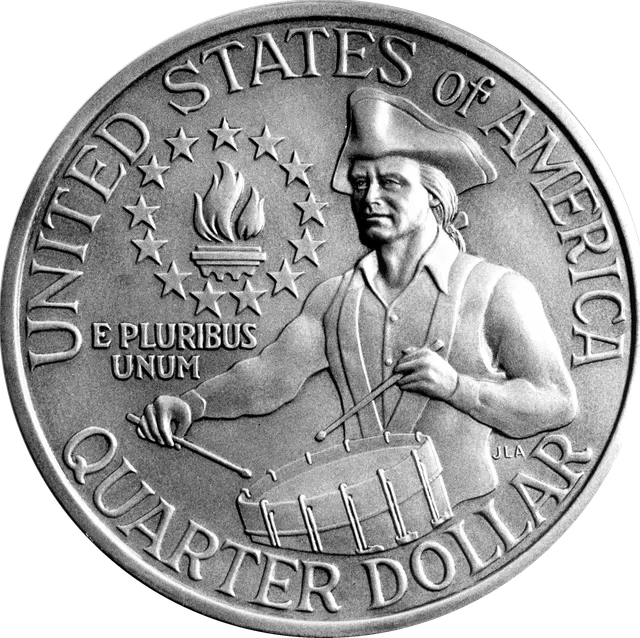
The Mint struck about 1.67 billion Bicentennial quarters at Philadelphia and Denver alone, so a worn one is worth 25 cents. The ones worth more are the San Francisco 40% silver versions sold to collectors, high-grade coins, and genuine mint errors.
The modern collector program
The US came back to commemoratives in 1982 with a silver half dollar for the 250th anniversary of George Washington's birth. It was the first new commemorative since 1954, and it restarted the program that still runs today.
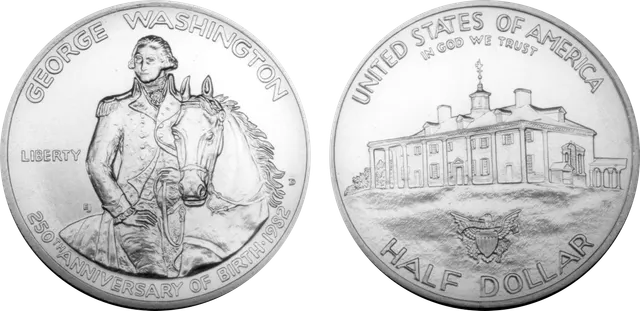
Modern US commemoratives carry a surcharge: an amount added to the price that goes to a group linked to the subject, such as a museum, memorial fund or Olympic team. To stop a 1930s-style flood, the Commemorative Coin Reform Act of 1996 limited the Mint to two commemorative programs a year from 1998. Surcharges have raised hundreds of millions of dollars for the recipient groups.
The state quarters: a monument in every pocket
The biggest commemorative program ever didn't cost anything extra. From 1999 to 2008 the 50 State Quarters program released five new quarter designs a year, in the order the states joined the Union. Delaware, the first state, came first. Hawaii came last.
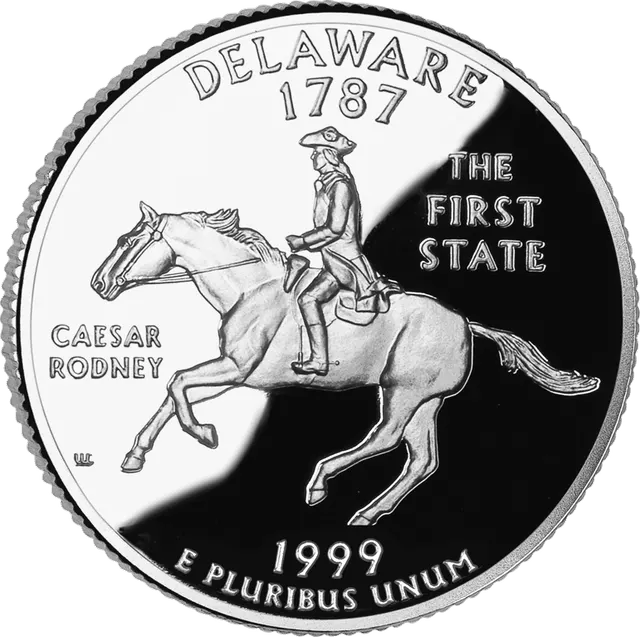
People went for it. A 2005 Mint survey estimated that 147 million Americans were collecting state quarters, roughly half the country. Because so many coins went into albums and maps instead of back into circulation, the Mint had to strike more, and the government earned about $3 billion in seigniorage, the gap between a coin's face value and what it costs to make.
The idea kept going. Quarters for Washington DC and the five US territories followed in 2009, then 56 America the Beautiful quarters for national parks and sites from 2010 to 2021, then the American Women quarters from 2022 to 2025. In 2026 all the circulating coins carry designs for the nation's 250th anniversary, including five new quarters.
Commemoratives around the world
Plenty of countries do the same. In the eurozone, Greece issued the first €2 commemorative coin in 2004 for the Athens Olympics. Every eurozone country now issues them, and they are legal tender in all the countries that use the euro. Read more in The Euro: Building a Currency From 12 Countries' Coins.
Britain's 1965 crown for Winston Churchill was the first British coin to show someone outside the royal family.
Are commemorative coins worth anything?
It depends on which kind you have.
- Circulating commemoratives like state quarters and most Bicentennial quarters are worth face value in normal condition. Errors, proofs and silver versions are the exceptions.
- Classic US commemoratives (1892 to 1954) are 90% silver, so even common ones are worth at least their silver. Scarce issues and coins in top condition sell for much more.
- Modern collector commemoratives in silver or gold trade mostly on their metal, unless the mintage was very low.
More for collectors: Best Coin Collecting Books and Coin Albums, Folders and Storage Boxes.
More from the atlas: Bullion Coins and the Krugerrand Revolution and Roman Coins: A Guide to Every Denomination.
Want to see a drummer boy land? Flip a quarter or try the coin flipper.
Questions people ask
What is a commemorative coin?
A commemorative coin is legal tender with a special design honouring a person, place or event. Some are sold to collectors above face value, often in silver or gold. Others, like the US state quarters, go into everyday circulation.
What was the first US commemorative coin?
The Columbian half dollar, authorised in 1892 for the World's Columbian Exposition in Chicago. It was sold for $1, twice its face value, to help fund the fair. It is dated 1892 and 1893.
Are commemorative coins worth anything?
Circulating ones, such as state quarters and most Bicentennial quarters, are usually worth face value. Classic US commemoratives from 1892 to 1954 are 90% silver, so they're worth at least their silver, and scarce ones sell for much more.
How much is a 1776-1976 Bicentennial quarter worth?
A normal circulated Bicentennial quarter is worth 25 cents. San Francisco 40% silver versions, high-grade examples and genuine mint errors are worth more.
Why did the US stop making commemorative coins in 1954?
Too many programs in the 1930s had turned collectors against them. In 1954 President Eisenhower vetoed three new bills, and no new US commemorative was struck until the 1982 George Washington half dollar.
Sources
- US Mint, "Columbian Exposition Half Dollar"
- US Mint, "Commemorative Coins from 1892-1954"
- CoinWeek, "1892 Columbian Expo Commemorative Half Dollar: A Collector's Guide"
- PCGS, "1893 Isabella Quarter a Commemorative Coin of Firsts"
- CoinWeek, "1900 Lafayette Dollar: History & Value"
- American Numismatic Association, "1900 Lafayette Memorial Dollar"
- CoinWeek, "Classic Commemorative Coins, 1892–1954"
- CoinWeek, "Commemorative Coin Stories: 1982 George Washington Half Dollar"
- Congressional Research Service, "Commemorative Coins: Background, Legislative Process, and Issues for Congress" (R44623)
- US Mint press release, "50 State Quarters Program Concludes as the Most Successful Coin Initiative in U.S. History"
- US Mint, "50 State Quarters"
- CoinWeek, "The Drummer Boy Quarter: What Is It?"
- CoinWeek, "CAPTA: The Coinage of Roman Imperial Conquest"
- Coin World, "Crocodiles on Roman coins"
- CoinWeek, "Judaea Capta: Subjugation and Defeat on Ancient Roman Coins"
- The Jewish Museum (New York), "Judaea Capta Coin of Vespasian"
- Wikipedia, "Washington quarter", "2 euro coin" and "American Women quarters" (cross-check only)