Ottoman and Mughal Coins
Part 26 of the Trade empires series7 min read
Ottoman coins ran on the silver akçe and gold sultani. Mughal India ran on Sher Shah Suri's rupee and the gold mohur. How they worked, and how to read one.
Around 1600, two Muslim empires ruled a huge stretch of the world between them. The Ottomans held the land from Hungary to Iraq and from the Crimea down to Egypt. The Mughals ruled most of northern India.
Both empires were rich, and both ran on silver. Their coins look nothing like the European money of the time. There are no kings' heads on them, and no coats of arms. There's writing: the ruler's name, a mint, a date, sometimes a line of poetry.
Those coins left two words that are still in use. Turkey still divides its lira into kuruş. And India, Pakistan, Nepal and Sri Lanka, among others, still count their money in rupees.
The akçe: a small white coin
The Ottoman story starts with a very small coin. Orhan, the second Ottoman ruler, took the town of Bursa in 1326 and made it his capital. The earliest dated Ottoman silver coins were struck there in the Islamic year 727, which is 1326–27.
It was called the akçe, from the Turkish ak, "white", for the bright look of good silver. It weighed about 1.15 grams and was roughly 90% silver. There was no picture on it, only Arabic lettering: religious phrases, Orhan's name as son of Osman, and the mint.
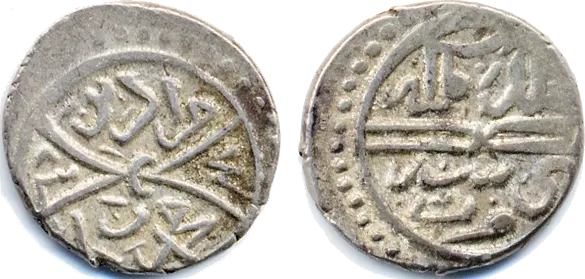
For more than 300 years the akçe was the coin the Ottoman state counted in. Salaries, taxes and prices were all reckoned in akçe. It also got lighter over time. Under Mehmed II its silver content fell by about 30%, mostly through cuts in weight, though the alloy stayed fairly pure.
The sultani: Ottoman gold on the ducat standard
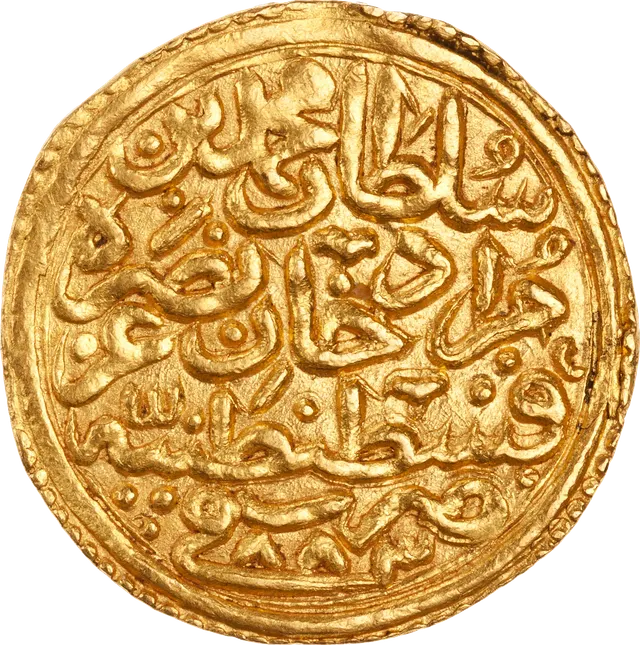
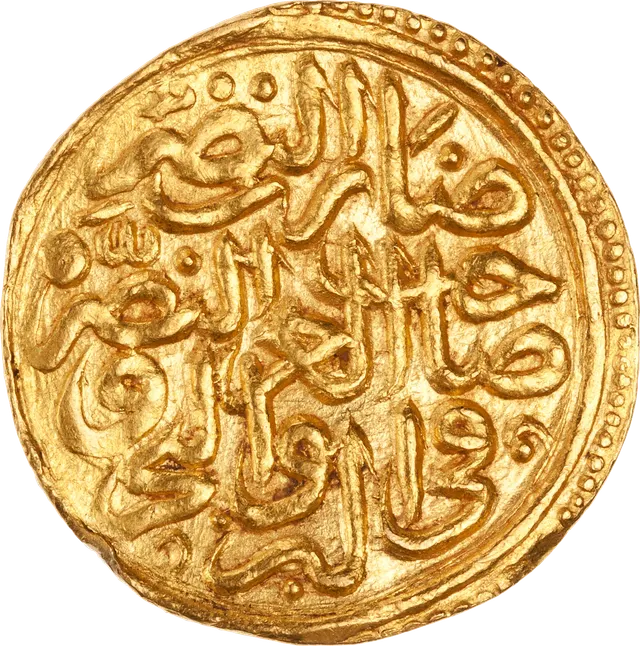
Mehmed II took Constantinople in 1453. In 1477–78 he struck the first Ottoman gold coin there, the sultani.
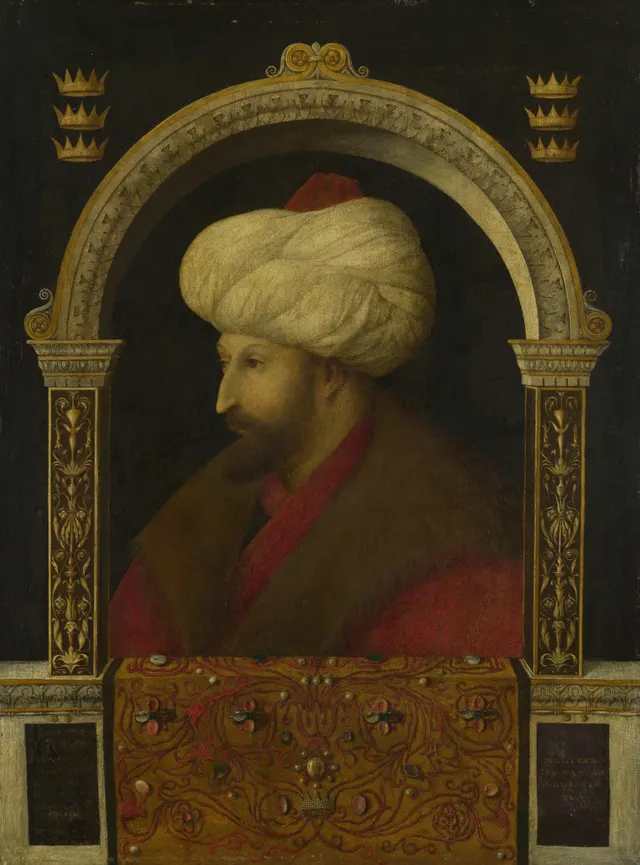
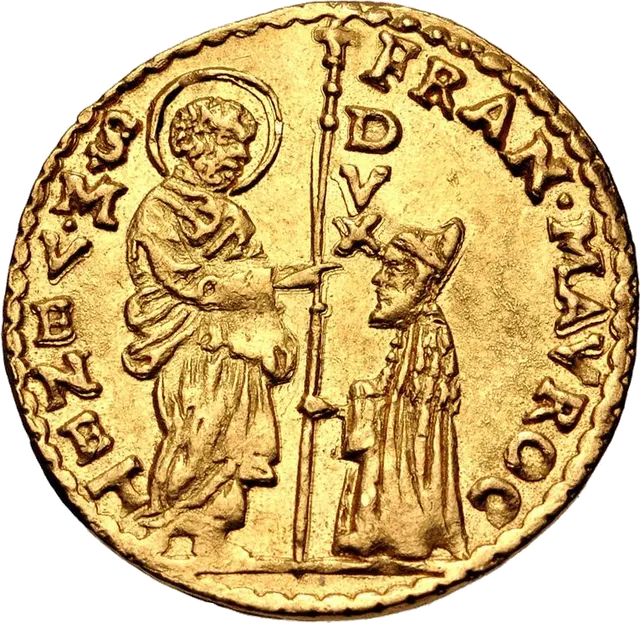
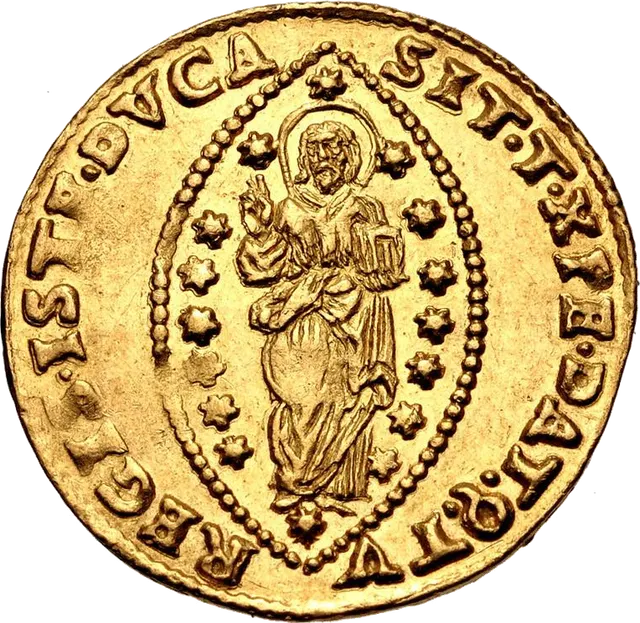
He didn't invent a new standard for it. The sultani matched the Venetian ducat, about 3.5 grams of nearly pure gold, which was the coin Mediterranean merchants already trusted. (The ducat's own story is in The Florin and the Ducat.)
At first a sultani was worth about 45 akçe. A century later it fetched 65 or 70, which tells you how far the silver coin had slipped.
1585: the debasement that started a riot
In 1585–86 the government cut the akçe's silver content by about 44%. It was the largest single cut up to that time, and it doubled the number of akçe needed to buy a gold ducat.
Historians still argue about the causes. The two usually named are the costly war with Safavid Persia (1578–90) and the rising prices that came with American silver flowing into the Mediterranean.
Soldiers paid in the new coins saw their wages shrink. In April 1589 the Janissaries, the sultan's elite infantry, rose in Istanbul. Murad III gave in to them, and the two officials they blamed, the governor of Rumelia and the chief treasurer, were executed. It was one of the first times the Janissaries pushed a sultan around, and it wasn't the last.
The kuruş and the tughra
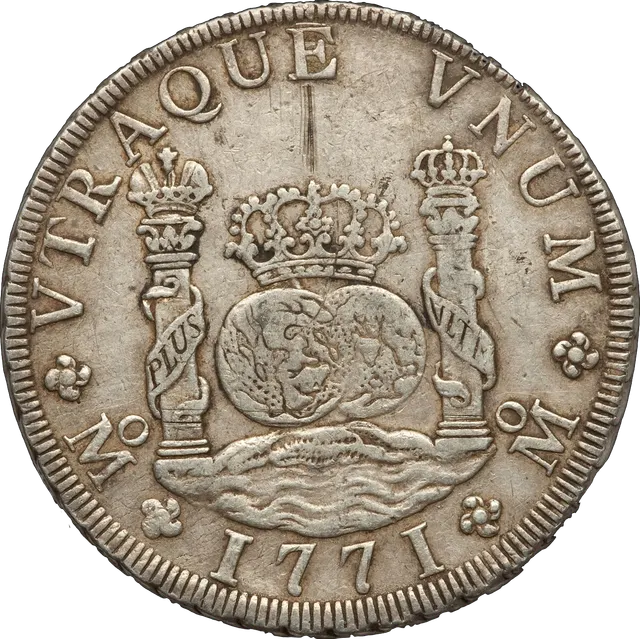
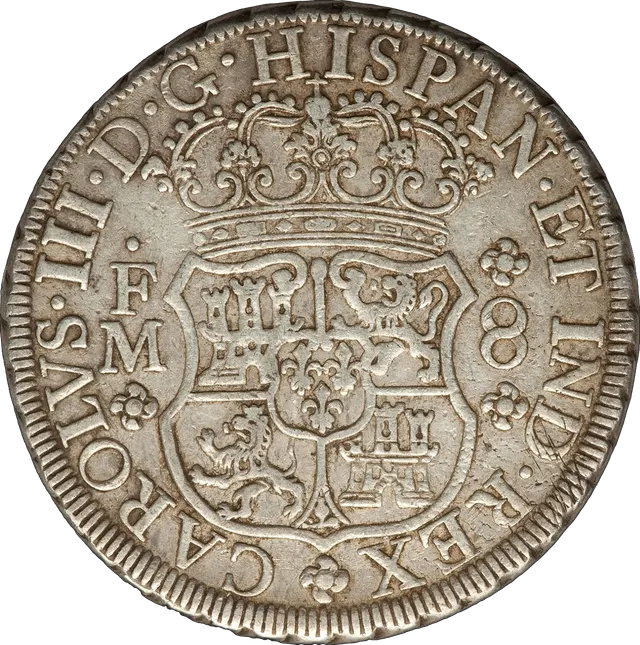
By the 1600s Ottoman markets were full of big European silver coins: Spanish pieces of eight and Dutch "lion dollars", which Ottomans called esedi or aslanlı kuruş, from the lion on them. (See Pieces of Eight and The Thaler for where those coins came from.)
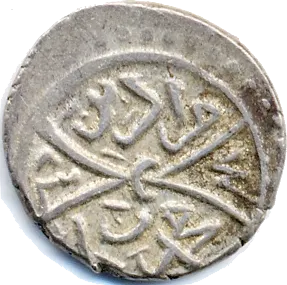
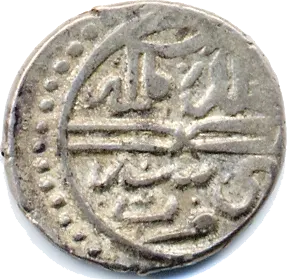
The word kuruş comes from groschen (and the Italian grosso), European names for a large silver coin. In the reign of Suleiman II, around 1688–90, the Ottomans began striking their own large silver kuruş in Istanbul, about the size of a thaler. Over time the kuruş became the main unit. It was split into 40 para, and each para was worth 3 akçe.
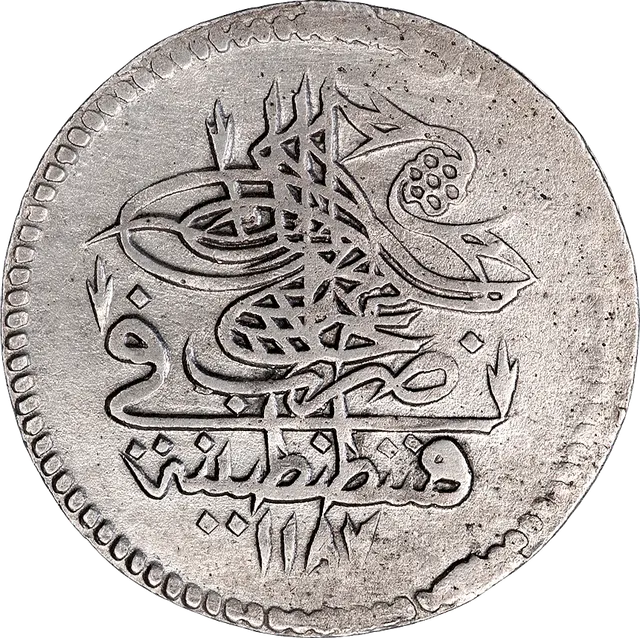
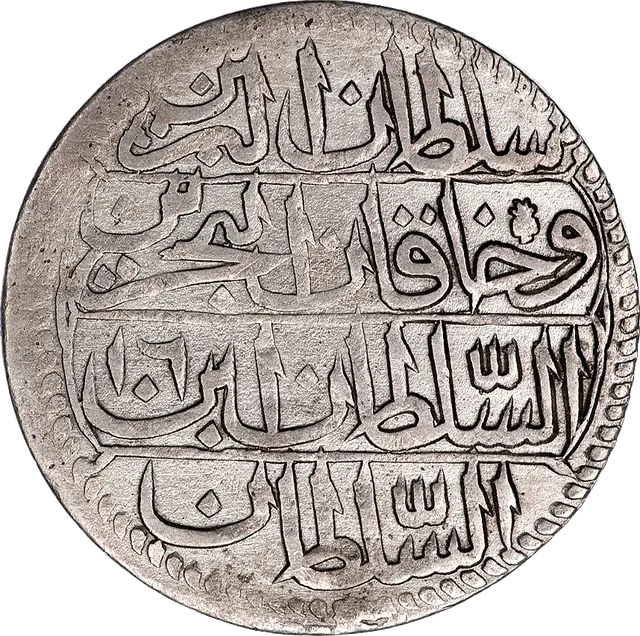
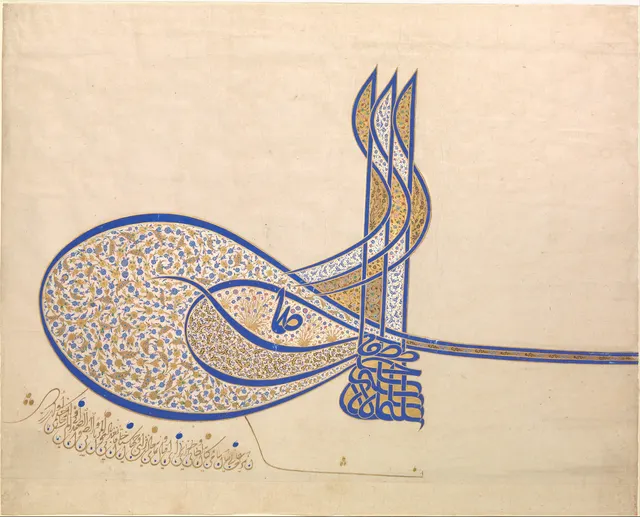
Later kuruş carry the most recognisable mark in Ottoman design: the tughra. This is the sultan's calligraphic signature, his name, his father's name and his titles twisted into one shape, with tall upright strokes and two long loops to the left. It was used on decrees for centuries and turns up on a few early coins. From the reign of Ahmed III, who came to the throne in 1703, it became the standard centrepiece of Ottoman coins.
In 1844 the Ottomans reformed the whole system. A new gold lira was set at 100 kuruş. That's the arrangement Turkey still uses: 100 kuruş to the lira.
Sher Shah Suri and the first rupee
In India, the rupee was the work of a man who briefly beat the Mughals.
Babur founded the Mughal Empire in 1526. His son Humayun lost it in 1540 to Sher Shah Suri, an Afghan commander from Bihar. Sher Shah ruled northern India for only five years, until he died in 1545. In that time he built roads and reorganised the revenue. He also fixed the coinage.
His silver coin, the rupiya, weighed about 178 grains, close to 11.5 grams, of nearly pure silver. Alongside it he struck a copper coin, the dam. Many of his rupees carry his name in Persian and also in Devanagari, the script used to write Hindi, as Sri Sher Sahi.
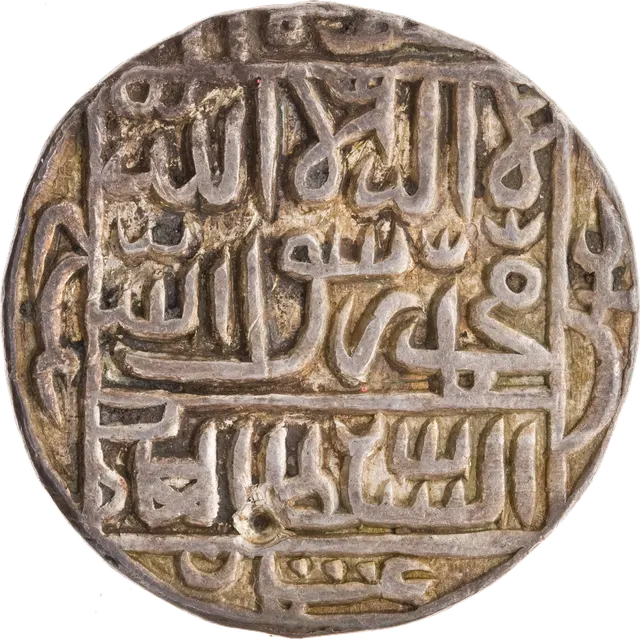
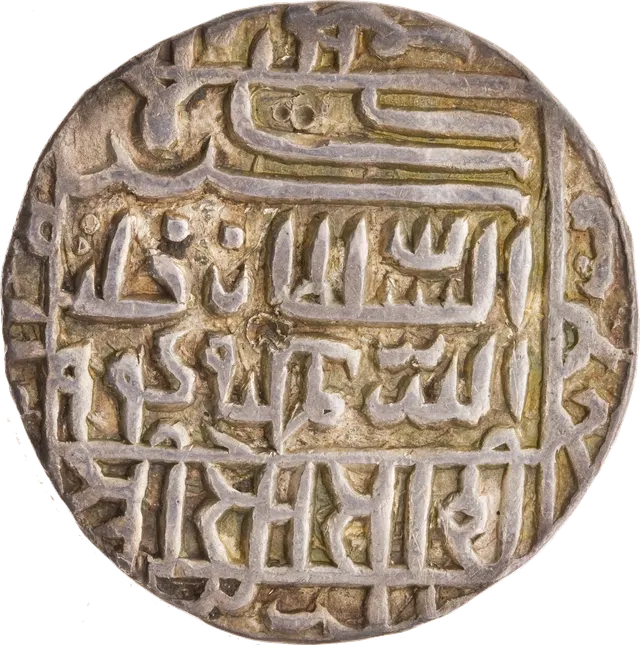
The name came from the Sanskrit rupya, which meant wrought silver, or a stamped coin.
Akbar's mohur and square rupees
Humayun won his throne back in 1555 and died the next year. His son Akbar kept Sher Shah's rupee almost exactly as it was. Sher Shah had also struck some gold coins, but it was Akbar who made the gold mohur, of about 11 grams, a standard part of the coinage alongside the rupee and the copper dam.
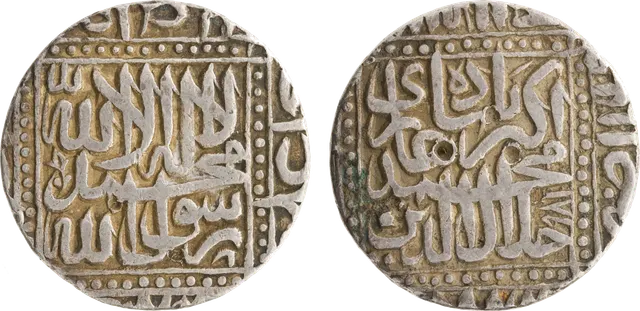
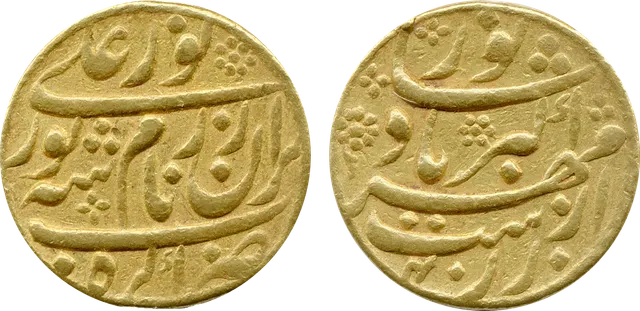
Akbar liked to experiment with his coins. Some are square. From 1584 many carry the phrase Allahu Akbar, jalla jalaluhu, which can be read two ways: "God is great, glorious is His glory", or as a play on Akbar's own name. These "Ilahi" coins were dated in a new solar calendar Akbar introduced, counted from the year he took the throne, instead of the Islamic one.
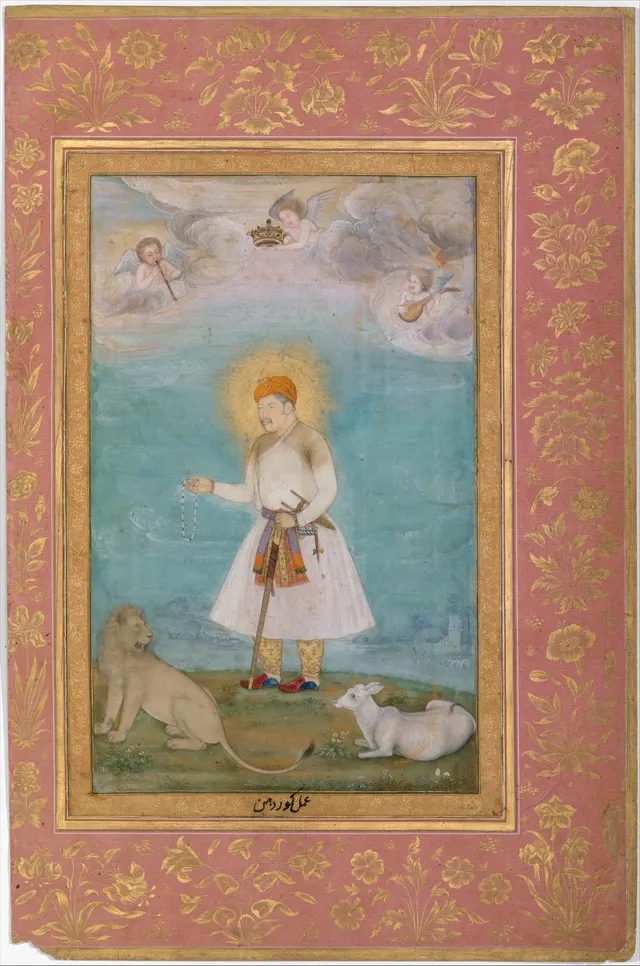
Jahangir's zodiac coins
Akbar's son Jahangir took the experiments much further.
From 1618 to 1625 he struck gold mohurs and silver rupees with the signs of the zodiac on them. The month of striking decided the sign, so a coin from the month of the Ram shows a ram, and one from the Crab shows a crab. Jahangir wrote in his memoirs: "This was my own innovation. It had never been done before."
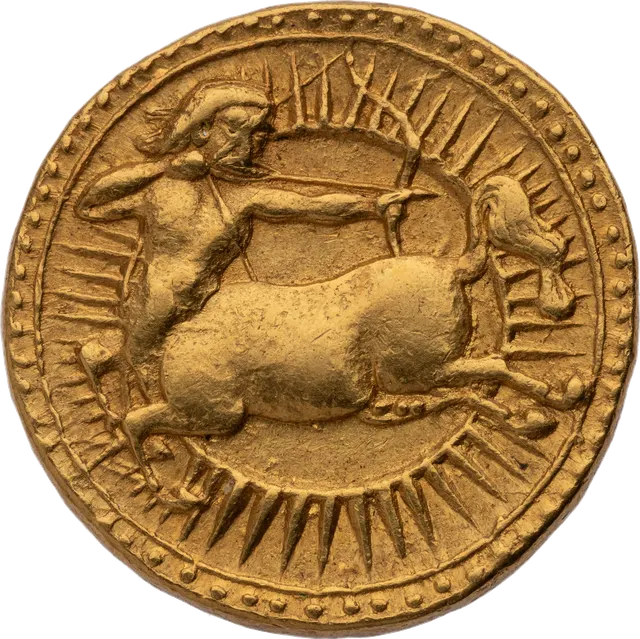
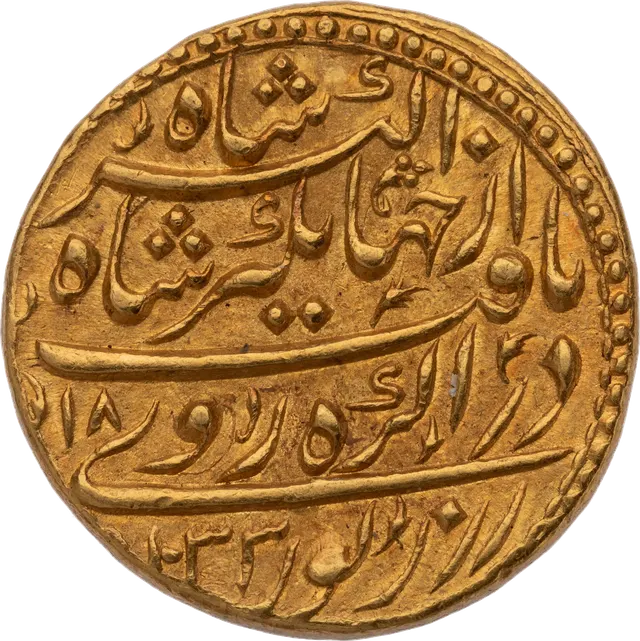
He also issued portrait mohurs. On one, he sits cross-legged holding a wine cup. Images of people were frowned on in Islamic coinage. His son Shah Jahan stopped both the portrait and the zodiac coins.
Jahangir also let his wife, Nur Jahan, put her name on coins. She was the only Mughal empress whose name appears on the money.
Silver from across the sea
India had no big silver mines. It got its silver by selling. European traders wanted Indian cotton, indigo and pepper, and Indian sellers mostly wanted to be paid in silver.
So the Portuguese, Dutch and English traders shipped in silver, much of it mined in Spanish America. The Mughals let anyone bring bullion to a mint and have it struck into rupees for a fee. From 1621 the English sent their silver to the mint at Surat, and Spanish dollars went into the melting pot and came out as rupees.
The rupee after the Mughals
Mughal power faded in the 1700s, but the rupee didn't. The British East India Company struck rupees in the name of the Mughal emperor, often Shah Alam II, for decades.
Only in 1835 did the Company issue a uniform rupee with the British king's head on it, William IV. It weighed 180 grains, close to Sher Shah's 178. The rupee is still the currency of India, Pakistan, Nepal, Sri Lanka, Mauritius and the Seychelles.
How to read one
Ottoman and Mughal coins look hard to read at first. A few habits help.
- Look for the tughra. If a coin has a big knot of calligraphy with tall upright strokes, it's Ottoman, and the tughra names the sultan.
- Check for a mint name. Ottoman coins name places like Kostantiniye or Islambol (both Istanbul), Misr (Egypt, meaning the Cairo mint) or Edirne. Mughal coins name dozens of cities, from Agra and Lahore to Surat and Patna.
- Read the date carefully. Most dates are in the Islamic hijri calendar (AH). For coins from 1500 to 1800, add about 590 years to get a rough AD date. Ottoman coins from the reign of Mustafa III (1757) onward show the year the sultan came to the throne plus a small regnal-year number. Add the two and subtract one to get the year of striking. Mughal coins usually give a hijri year and a regnal year, which helps date them.
Flip the coins in this story
None of the coins here has its own flip page yet. You can flip their closest relatives: the ducat that set the sultani's weight, the Spanish dollar whose silver ended up in rupees, and the thaler the kuruş was modelled on. Or head back to the coin flipper and toss a coin of your own.
Keep reading in the Trade Empires series: The Thaler: The Coin That Named the Dollar · Pieces of Eight: The Spanish Dollar · The Maria Theresa Thaler · The Guinea and the Sovereign · All Trade Empires articles
Earlier in the Atlas: The Islamic Dinar and Dirham · Byzantine Coins · Punch-Marked Coins of Ancient India
Questions people ask
What coins did the Ottoman Empire use?
The silver akçe, first struck in the 1320s, was the basic coin for more than 300 years. The gold sultani followed in 1477–78. From around 1688–90 the large silver kuruş took over, divided into 40 para, and in 1844 a gold lira of 100 kuruş was added.
Who introduced the rupee?
Sher Shah Suri, who ruled northern India from 1540 to 1545 after driving out the Mughal emperor Humayun. His silver rupiya weighed about 178 grains (about 11.5 grams). The Mughals kept it when they came back.
What is a mohur?
The mohur was the Mughal gold coin, weighing about 11 grams. Akbar made it a standard coin alongside the silver rupee and the copper dam. The British in India also struck gold mohurs.
What is the symbol on Ottoman coins?
It's the tughra, the sultan's calligraphic signature. It spells out his name and his father's name with titles, and each sultan had his own.
How do I read the date on an Ottoman coin?
Most Ottoman coins use the Islamic hijri year. From 1757 onward they show the year the sultan took the throne, plus a small number for the year of his reign. Add the two and subtract one to get the year of striking, then convert to AD by adding roughly 590 years.
Sources
- CoinWeek, "Coins of the Medieval Ottoman Sultans of Turkey" (akçe weight and name, sultani on the ducat standard, akçe/sultani exchange rates)
- Şevket Pamuk, A Monetary History of the Ottoman Empire (Cambridge University Press, 2000), and Pamuk, "The Price Revolution in the Ottoman Empire Reconsidered"
- American Numismatic Society, Pocket Change, "Kuruş" (the kuruş from 1688, esedi/aslanlı guruş)
- TDV İslâm Ansiklopedisi, "Kuruş"
- Cemal Kafadar, "The Ottoman Monetary Crisis of 1585 Revisited", Journal of the Economic and Social History of the Orient
- Coşkun Tunçer, Ottoman monetary history chapter, South-Eastern European Monetary History Network (Bulgarian National Bank), on the 1844 reform
- Bihar Museum, "Sher Shah Suri's Rupiya"
- Sarmaya, Sher Shah Suri silver rupee; Akbar silver rupee; Jahangir zodiac rupee; Nur Jahan rupee of Agra (object records)
- CoinWeek, "Coinage of the Mughals" (Akbar's mohur, Surat mint, open minting)
- CoinsWeekly, "…This Was My Own Innovation. It Had Never Been Done Before." (Jahangir's zodiac coins)
- Ashmolean Museum, "Coin of Emperor Jahangir"
- CoinWeek, "The Influence of the East India Company: Rare 1835 Gold Mohurs"
Coins in this story
- Sultani
- Akçe
- Kuruş
- Rupee
- Mohur
- Ducat
- Spanish dollar
- Thaler