Best Coin Holders, Capsules and Flips
Updated
As an Amazon Associate we earn from qualifying purchases.
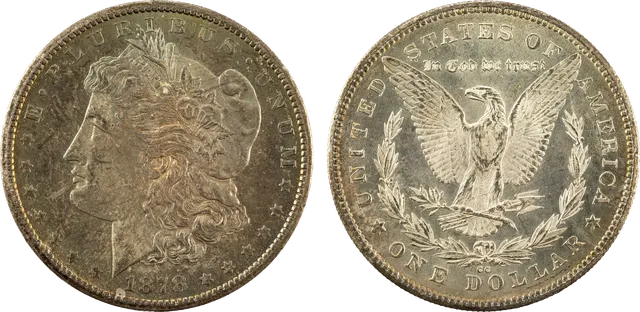
A coin can survive two thousand years in the ground and then be ruined in ten years by the wrong plastic sleeve. Most of the damage collectors see comes from storage, not from wear.
This guide covers the four main types of holder: capsules, flips, cardboard 2x2s and tubes. For each one you'll find what it's good at, where it falls short, and one or two products we'd suggest looking at. All of them are sold as PVC-free.
First, the one rule: avoid PVC
PVC (polyvinyl chloride) is used to make plastic soft and bendy, which is why cheap soft flips feel nice in the hand. The trouble is what happens later. NGC, one of the big grading services, explains that the chemical leaches out of the holder and settles on the coin as a hazy film. Over time the haze turns into a thick green residue, and in the end it can pit the metal for good.
The American Numismatic Association gives the same advice in its storage guide: avoid flips made with PVC, because they can ruin a coin's surfaces over time.
You can often spot a PVC holder by feel. The ANA notes that PVC flips are softer and more pliable, and often have a faint blue tint. Safe holders are made from materials such as Mylar (polyester film), polyethylene, polypropylene or hard acrylic-type plastics, and they usually feel stiffer.
If you already have coins sitting in old soft flips, move them. That goes double for anything silver or copper.
Which holder for which coin?
A short version, before the details:
- A coin you'll keep for years, or one worth more than face value: a hard capsule.
- A lot of coins you want to label and file: Mylar flips or cardboard 2x2s in a storage box.
- Rolls of the same coin, bullion or circulated change: tubes.
- Coins graded by PCGS or NGC: leave them in the slab. It's already an archival holder.
Capsules: the best protection for single coins
A capsule is a round, clear, hard plastic case made in two halves that snap together around the coin. The ANA calls hard plastic capsules the most protective type of holder, with the tightest seals. They also let you see both sides of the coin without ever touching it.
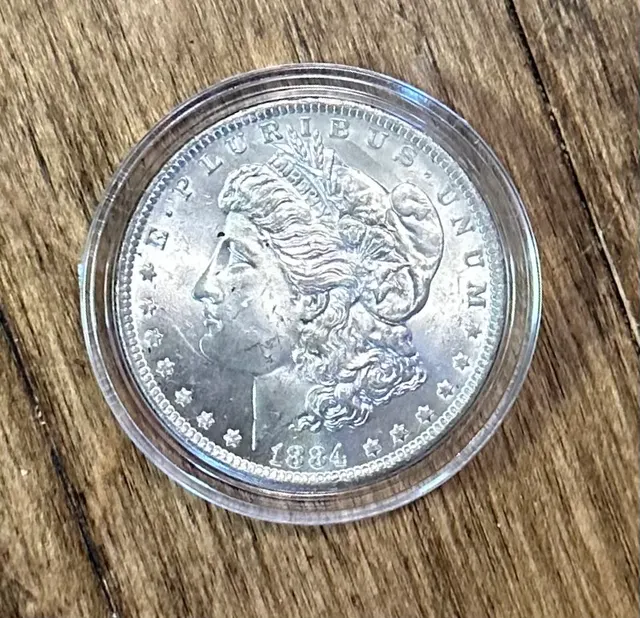
The catch is sizing. "Direct fit" capsules are made for one exact diameter, so a coin that's slightly too small will rattle, and one that's too large won't close. Measure the coin, or look up its diameter, before you order. A US quarter is 24.26 mm across. Morgan and Peace dollars are 38.1 mm.
Capsules also cost more per coin than flips, and they take more space in a box.
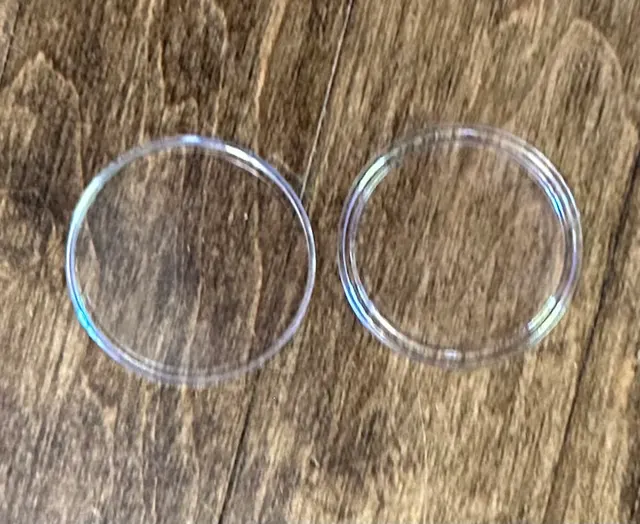
Flips: cheap, flexible and easy to label
A flip is a clear plastic holder, usually 2x2 inches, with two pockets. The coin goes in one pocket and a paper label goes in the other, and the holder folds over. Flips are cheap and quick to use, and they fit standard 2x2 storage boxes and album pages.
The trade-off is that they aren't airtight. NGC describes flips as a short-term storage option, and both NGC and the ANA say to steer clear of PVC versions. For long-term storage in flips, stick to stiff Mylar (polyester) ones.
Cardboard 2x2s: the classic budget holder
A cardboard 2x2 is a folded card with a coin-sized window covered by a thin Mylar film. You fold it around the coin and staple it shut. Dealers have used them for decades, and they're the cheapest way to hold, label and file a lot of coins.
They need a little care. The ANA's tips are to check that the holders are free of cardboard dust and to flatten the staples with pliers so they don't scratch the coins next to them in the box. Stapling also takes practice, and a slipped staple can hit the coin. Use a flat-clinch stapler if you can.
Tubes: for rolls and bullion
Tubes hold a stack of identical coins, like a bank roll you can see through. They're the tidy answer for circulated rolls, silver bullion and bulk coins you don't handle often. A quarter tube is sized for a standard roll of 40 coins.
They aren't the right holder for your best coins, though. Coins in a tube touch each other, and they can rub if the tube is jostled. Fill tubes snugly and store them flat in a box.
Round tubes with screw-on lids seal better. Square tubes snap shut, stack neatly and don't roll off the table.
Where to keep the holders
Even the best capsule can't protect against a damp basement. The ANA recommends a stable, cool and dry place, with desiccant packs if humidity is a problem. Store boxes away from heat sources, and hold coins by the edges whenever they're out of their holders.
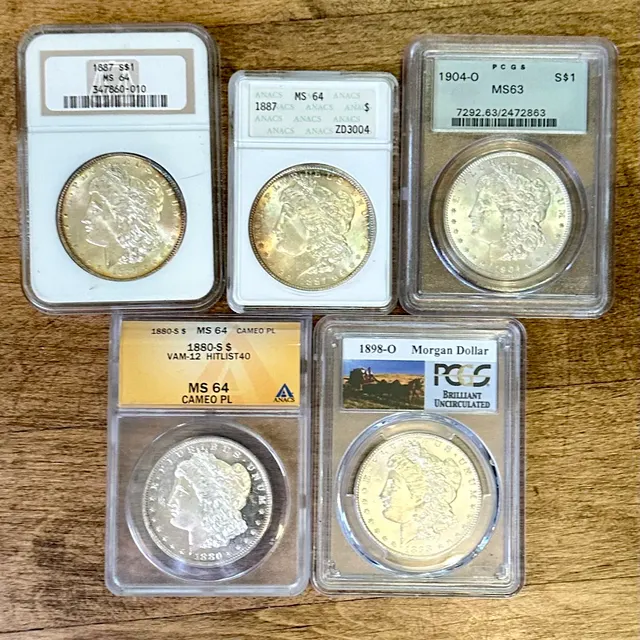
When a coin is valuable enough, grading and slabbing by PCGS or NGC is the final step. A slab is sealed, labelled and archival, and it's the holder to leave alone.
Keep reading
- Just getting started? Our coin collecting starter kit covers gloves, loupes and the rest of the basics.
- For albums, folders and boxes that hold your flips and 2x2s, see Coin Albums, Folders and Storage Boxes.
- To show coins off, rather than store them, see Coin Display Cases and Frames.
- The big silver dollars in our photos have their own story: America's Classic Silver Dollars: Morgan, Peace and Trade.
- Ever wondered why old coins have ridged edges? Coin Clipping, Debasement and Gresham's Law.
- Or just flip a coin.
Questions collectors ask
Are coin flips safe for long-term storage?
Only if they're PVC-free. Soft PVC flips can leave a green residue that damages coins. NGC calls flips a short-term storage option, so for anything valuable a hard capsule is the safer long-term choice. Stiff Mylar flips are fine for most collections.
How can I tell if a coin holder contains PVC?
PVC holders are usually soft and floppy, and the ANA notes they often have a faint blue tint. PVC-free holders made of Mylar, polyethylene or polypropylene feel stiffer. If you're not sure, assume a soft, cheap flip contains PVC and move the coin.
What size coin capsule do I need?
Match the capsule to the coin's diameter in millimetres. A US quarter is 24.26 mm, a Kennedy half dollar is 30.61 mm and a Morgan or Peace dollar is 38.1 mm. Direct-fit capsules are labelled by size, so check the coin first.
Should I keep valuable coins in coin tubes?
Tubes are best for rolls, bullion and circulated coins. The coins touch and can rub against each other, so put your best coins in individual capsules instead.
Capsule or cardboard 2x2: which is better?
Capsules protect better and seal tighter. Cardboard 2x2s are cheaper, easier to label and file, and fine for most coins as long as the staples are flattened and the cards are free of dust.
Sources
Coins in this guide
- HTMorgan dollarUnited States
- HTPeace dollarUnited States
- HTQuarterUnited States
- HTHalf dollarUnited States
- HTDimeUnited States
- HTMercury dimeUnited States