Coin Albums, Folders and Storage Boxes
Updated
As an Amazon Associate we earn from qualifying purchases.
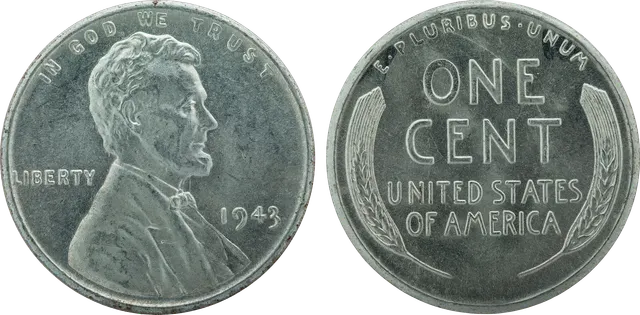
Most collections start the same way: a jar of change, a few odd coins from a grandparent, and a growing feeling that they deserve better than a coffee mug.
The next step is usually a folder or an album, and later a box. Each one does a different job. Folders are for filling holes from pocket change. Albums are for sets you want to keep and look at. Binders and boxes are for everything that doesn't fit a printed set, along with coins that are already in holders.
This guide walks through each option, who it suits and where it falls short, with one or two products worth a look for each.
The short version
- Building a date set from circulation (cents, nickels, state quarters): a coin folder.
- A set you'll keep for years, or coins in better condition: an album with clear slides.
- A mixed collection in 2x2 flips or cardboard holders: binder pages or a 2x2 storage box.
- Graded coins in PCGS or NGC slabs: a slab box.
Coin folders: the classic way to start
A coin folder is a blue card book with rows of labeled holes, one for each date and mint mark in a series. You press each coin into its hole, and the gaps show you what's still missing.
The idea is older than most collectors realize. The first coin board was made in 1934 by Joseph Kent Post, an engineer in Neenah, Wisconsin, and Whitman Publishing printed and sold it. By about 1940, boards were giving way to smaller folders that closed like a book. Whitman still sells them, in much the same blue.
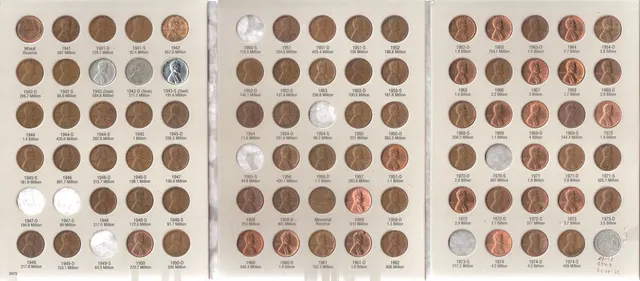
Folders are cheap and fun, and they're good for coins worth about face value. The trade-offs are real, though. The ANA describes folders as thin cardboard and paper, and the coins sit in open holes with nothing covering their faces. Pushing a coin in, or popping it out, can scratch it. Older or non-archival card can also contain sulfur, which tones a coin over time, usually starting on the reverse and the rim.
So use folders for circulated coins and keep your best pieces somewhere else.
If you're collecting the new 2026 coins for America's 250th anniversary (a new dime, five quarter designs and a half dollar), Whitman has released folders and albums for those too.
Coin albums: better protection for sets you'll keep
An album looks like a folder grown up. The pages are thick card with clear plastic slides across each row, so both sides of every coin stay covered and visible. The ANA calls albums the better-protected option. Dansco and Whitman's Classic line are two names you'll see a lot.
The slides are the weak point. A CoinWeek guide warns that sliding them in and out can rub the high points of a coin, even when the plastic itself is safe. Slide gently and don't keep pulling coins out to look at them.
Toning is the other catch. The ANA notes that coins tend to discolor inside album sleeves, and that some albums are known for it. Some collectors like the colors this produces. If you want coins to stay bright, use capsules (see our coin holders and capsules guide) and keep them out of card pages.
Binders and pocket pages: for coins already in holders
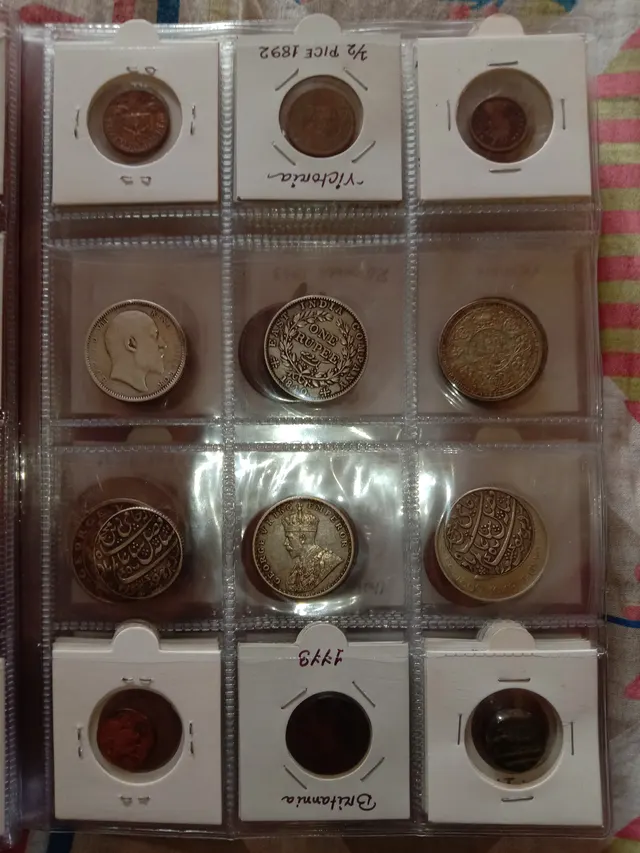
Once your coins are in 2x2 flips or cardboard holders, a three-ring binder with 20-pocket pages is the easiest way to see a lot of them at once. Each page holds twenty 2x2s, and you can rearrange the collection whenever you like.
Choose pages made of polypropylene that are sold as PVC-free. Soft vinyl pages are cheaper but carry the same risk as soft PVC flips. Put coins in holders before they go into a page. Loose coins slide around in the pockets and rub against the plastic. The 12-pocket page in our photo shows the difference: the top and bottom rows are in cardboard 2x2s, while the loose coins in the middle are more exposed.
Storage boxes: for flips, 2x2s and slabs
A storage box is the cheapest way to file a lot of coins that are already in holders. Single-row 2x2 boxes are long, narrow card boxes that fit flips and cardboard holders standing on edge, like index cards. Write the date and denomination on the holder and you can flip through a box in seconds.
These boxes are made of card, so they're only for coins that are already in holders. Don't drop loose coins in them.
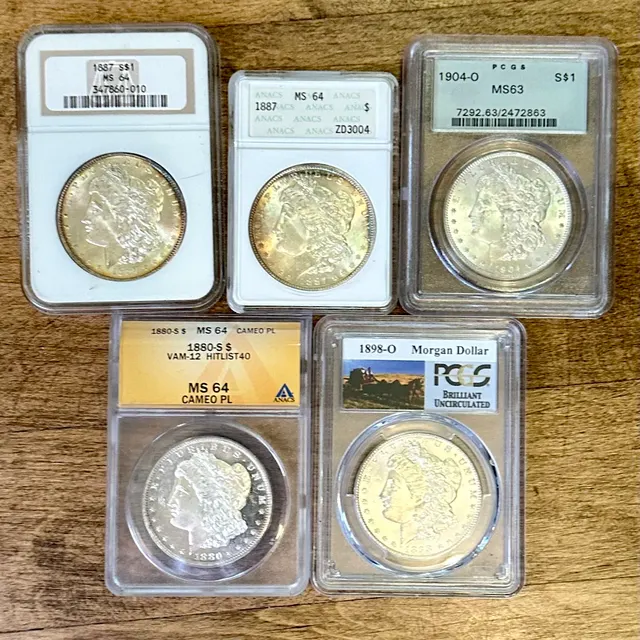
Graded coins need their own box. A slab doesn't fit a 2x2 box, and a stack of loose slabs scratches easily. Slotted slab boxes stand each one on edge in its own track.
Where you keep it matters more than what you keep it in
A good album won't help in the wrong room. The ANA puts it plainly: the storage environment matters more than the holder, and humidity matters more than temperature. Keep coins somewhere dry and steady, and avoid basements, garages and attics. If the air is damp, a few silica gel packs in the box or the album's slipcase will help.
Handle coins by the edges, wash your hands first, and put each coin back in its holder as soon as you've looked at it.
Keep reading
- New to the hobby? Start with the coin collecting starter kit.
- For the holders that go inside these boxes and binders, see Best Coin Holders, Capsules and Flips.
- To display coins instead of storing them, see Coin Display Cases and Frames.
- Filling a Lincoln cent folder? Read The History of the Penny first.
- The Peace dollar has a story of its own: America's Classic Silver Dollars: Morgan, Peace and Trade.
- Or just flip a coin.
Questions collectors ask
What is the difference between a coin folder and a coin album?
A folder is a card book with open holes, so the coins' faces are exposed. An album has thicker pages with clear plastic slides over each row, so both sides of every coin are covered and still visible. Folders are cheaper and suit circulated coins. Albums protect better and suit sets you plan to keep.
Are coin albums safe for long-term storage?
Mostly, if you store them somewhere cool and dry. Two things to watch for. Pulling the slides in and out can rub a coin's high points, and coins kept in card pages for years can tone. If you want coins to stay bright, keep them in capsules instead.
Do coin folders damage coins?
They can, slowly. Folders are thin cardboard, and card that contains sulfur can tone coins over time, starting on the reverse and the rim. Pressing coins into the holes can also scratch them. Folders are fine for coins worth about face value.
How should I store a large coin collection?
Put each coin in a PVC-free holder, such as a 2x2 or a capsule, then file the holders in 2x2 storage boxes or binder pages. Keep graded slabs in a slotted slab box. Store everything somewhere dry with steady temperatures, not in a basement, garage or attic.
Can I put loose coins in a coin storage box?
It's better not to. Most 2x2 storage boxes are made of card, and loose coins rub against each other and the box. Put each coin in a holder first.
Sources
- American Numismatic Association (CJ Buchanan), "Storing Your Collection," The Reading Room, 8 Jan 2024
- American Numismatic Association, "Storing Your Coin Collection"
- CoinWeek (Peter Mosiondz Jr.), "Holders, Folders and Albums: A Collector's Reference Guide," 2015
- NGC (David W. Lange), "USA Coin Album: Feeling 'Board'?," 2016
- Whitman, "A Penny Saved: R.S. Yeoman and His Remarkable Red Book"
- PCGS, "The Penny Board and How It Grew"
- CoinWeek, "Whitman Unveils U.S. 250th Anniversary Coin Albums," 26 Mar 2026
- Numismatic News, "New Circulating Coins Celebrate the 250th"
- Smithsonian National Numismatic Collection, 1943 Lincoln cent (zinc-coated steel), via Wikimedia Commons
Coins in this guide
- HTPennyUnited States
- HTQuarterUnited States
- HTPeace dollarUnited States
- HTMorgan dollarUnited States
- HTHalf dollarUnited States