Coin Display Cases and Frames
Updated
As an Amazon Associate we earn from qualifying purchases.
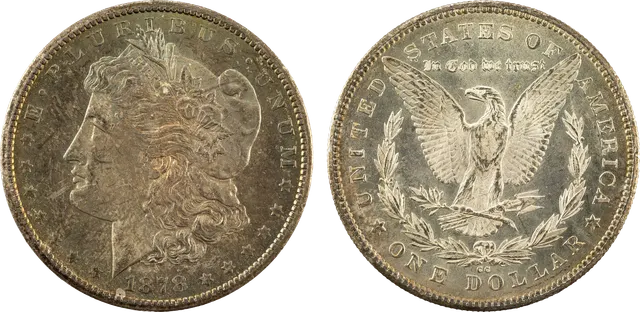
Most coins spend their lives in the dark, in albums, tubes and boxes. That's the safe place for them. But a few deserve to be seen: a proof set from the year you were born, a graded Morgan dollar, a coin from a grandparent's drawer.
Showing a coin off is easy. The hard part is doing it without slowly damaging it. Here's how to match a display to the holder your coin is already in, what museums have learned about display cases the hard way, and seven cases, boxes and frames worth a look.
Start with the holder, not the case
A display case is the outer layer. The thing that actually protects the coin is the holder it sits in, so pick the case to fit the holder:
- Graded coins in slabs (PCGS, NGC, ANACS) go in glass-top slab boxes or wall frames with rows for slabs.
- Coins in 2x2 flips or snap-lock holders go in cases with 2x2 slots.
- Coins in round capsules go in capsule boxes, or stand on a small easel.
- Raw coins (no holder at all) should go into a capsule first. Then pick from the list above.
That last point matters most. A raw coin sitting on velvet or cotton behind glass looks lovely, but nothing stops fabric fibres, fingerprints and the air inside the case from reaching its surface. A hard, PVC-free capsule costs very little. Our guide to coin holders and capsules explains which ones are safe.
What museums learned about display cases
Museum curators found out decades ago that display cases can harm the objects inside them. In 1973 the British Museum started using a simple test, devised by conservator Andrew Oddy, to screen wood, fabrics, paints and glues before they go into a case. Museums still use the Oddy test today.
Wood is the classic culprit. Oak in particular gives off acetic acid vapour, and inside a closed case that vapour builds up. The Canadian Conservation Institute warns that lead is "readily attacked" by these acid vapours, and it lists unsealed wood among the materials to keep away from metal objects. Copper and silver hold up better, but NGC warns that storage materials like paper and cloth can combine with humidity over time and start damage on a coin's surface.
A few practical lessons follow for a home collection:
- Keep coins in holders inside wooden boxes. The wooden boxes in this guide hold coins in slabs, capsules or 2x2s, not loose on the wood. The holder is a barrier.
- Don't lay raw coins on bare wood. Take most care with oak, and with lead or lead-alloy pieces such as some tokens and medals.
- Keep it dry. The Canadian Conservation Institute calls 30% relative humidity or lower ideal for metals and says most metals are fine at 40–55%. A small silica gel pack in a drawer or cabinet helps in a damp house.
- Keep it out of the sun and away from heat. A case on a sunny windowsill or above a radiator heats up and cools down every day, and that's hard on coins and holders. An inside wall is better.
- Skip PVC. Soft, floppy vinyl flips and some cheap display pages contain PVC, which leaches out and leaves green residue on coins. NGC calls it "a prime condition" for corrosion.
Glass-top boxes and frames for graded coins
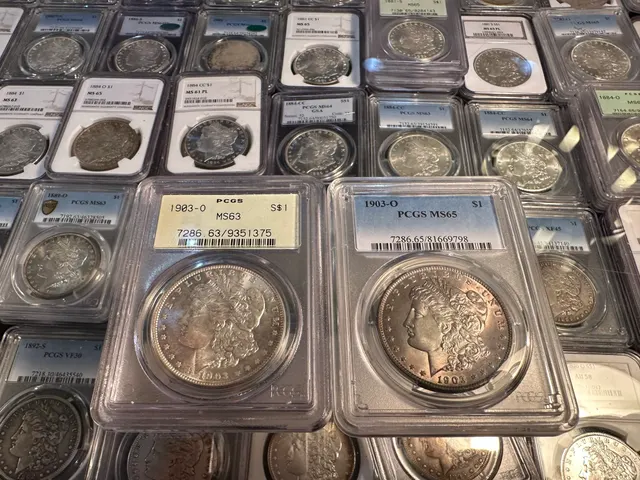
Slabs are the easiest coins to display, because the coin is already sealed in hard plastic. You're choosing a frame for something that's already protected. Most slab boxes fit the standard PCGS and NGC holder size. If you have oversized slabs (big silver dollars, five-ounce coins), check the inside dimensions first.
If you'd like your slabs on the wall, a frame with rows of grooved shelves works like a shadow box built for slabs.
Cases for coins in 2x2s and snap-lock holders
If your coins live in square 2x2 holders, a case with 2x2 slots means you don't have to take anything out of its holder.
Boxes and stands for capsules
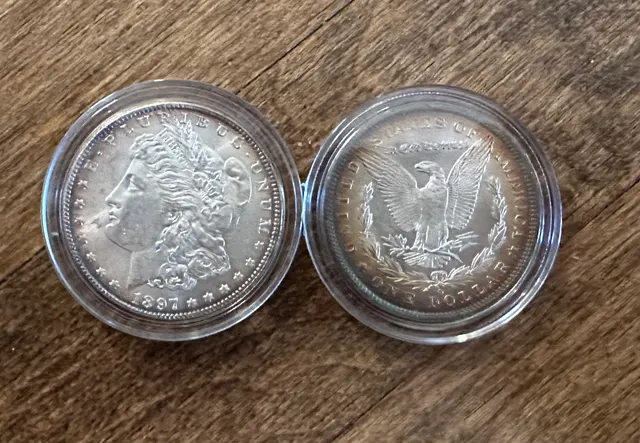
Round capsules suit coins you'd like to pick up and turn over. Silver Eagles, Morgan and Peace dollars, and bullion rounds are often sold in direct-fit capsules, and wooden capsule boxes are made to match.
For a single coin on a desk, a small easel does the job for very little.
Challenge coin display cases
Military challenge coins are a different case. They're usually thick, modern, plated medals made to be handled, and most owners display them raw. That's fine for challenge coins, but these racks aren't the place for a valuable old coin without a holder.
What about Riker mounts and shadow boxes?
Riker mounts are shallow cardboard boxes with a glass lid and a cotton pad, made for insects, arrowheads and medals. They're cheap and look good on a wall. But the cotton presses directly on the coin, and the case is made of chipboard. We'd use one only for a coin that's already in a capsule. The same goes for picture-frame-style shadow boxes with fabric backs.
Where to put the display
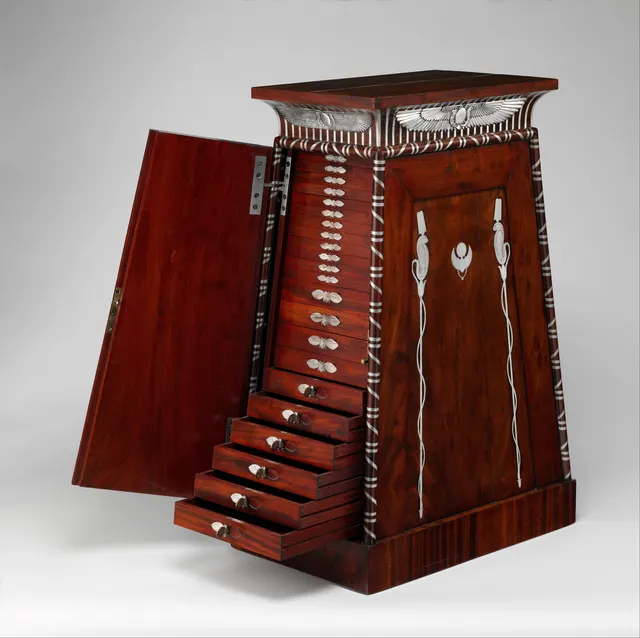
Collectors have been building furniture for their coins for a long time. The cabinet above was made in Paris around 1809–19, in mahogany with silver mounts, and it hides rows of small drawers behind its door. You don't need anything that grand. The idea behind it still works, though: keep coins in a closed piece of furniture, in a dry room, and bring them out to show people.
A few last tips:
- Pick an inside wall or shelf, out of direct sun and away from heaters, kitchens and bathrooms.
- Open the case now and then and look the coins over. Spots or haze you didn't see before are a sign to move them somewhere drier.
- Keep the receipts, certificates and slab numbers somewhere other than the display. If a case is stolen, you'll want them.
- Photograph the display for insurance.
Keep reading
- For the holders that go inside your case, see Best Coin Holders, Capsules and Flips.
- New to the hobby? Start with the coin collecting starter kit.
- For storage rather than display, see Coin Albums, Folders and Storage Boxes.
- To look over your coins before you put them on show, see Best Magnifiers and Loupes for Coins.
- The silver dollar has a history of its own. Read The Thaler: The Coin That Named the Dollar and Pieces of Eight: The Spanish Dollar.
- Or just flip a coin.
Questions collectors ask
What is the best way to display a coin collection?
Match the display to the holder. Graded coins go in slab boxes or slab wall frames, coins in 2x2s go in cases with 2x2 slots, and capsules go in capsule boxes or on small easels. Put raw coins into PVC-free capsules first, and keep the display dry and out of direct sun.
Are wooden coin display cases safe?
For coins in holders, yes. Wood, especially oak, gives off acid vapours that can corrode metal in a closed case, so museums test case materials and keep metal away from unsealed wood. A slab, capsule or 2x2 between the coin and the wood is the barrier that makes a wooden box safe for home use.
How do you display graded (slabbed) coins?
Use a glass-top box made for slabs, or a wall frame with grooved rows. Most fit the standard PCGS and NGC holder size. Check the inside dimensions if you have oversized slabs.
Can I hang a coin display on the wall?
Yes, but choose an inside wall away from sunlight, heaters and damp rooms. Hang only coins that are in slabs or capsules, and use a frame with a lockable front if the coins are valuable.
What should I avoid in a coin display?
Soft PVC flips, raw coins resting on cotton, felt or velvet, unsealed oak, sunny windowsills and damp rooms like bathrooms and basements.
Sources
- Canadian Conservation Institute, "Caring for metal objects" (Preventive conservation guidelines for collections)
- National Park Service, Conserve O Gram 4/1a "Museum Storage Cabinets"
- British Museum, "Metal protector: Celebrating 50 years of the Oddy test" (2023)
- "Pollution and Heritage Metals: Effectiveness of Oddy Testing and Mitigation", Materials (2023), PMC
- NGC, "NCS Conservation: Environmental Damage" (2016)
- CoinWeek, "How to Store Your Coins" (Peter Mosiondz Jr., 2019, updated 2023)
Coins in this guide
- HTMorgan dollarUnited States
- HTPeace dollarUnited States
- HTDollar coinUnited States
- HTHalf dollarUnited States
- HTKrugerrandSouth Africa
- HTThalerHoly Roman Empire