Persian Darics and Sigloi: Gold of the Achaemenids
Part 9 of the ancient world series6 min read
Persian darics and sigloi: the gold and silver archer coins of the Achaemenid Empire. How Darius made them, what they were worth, and who got paid in them.
In 546 BC, Cyrus the Great of Persia took Sardis, the capital of Lydia, and with it the world's first gold and silver coinage. The Persians were in no hurry to change it. For about a generation they kept striking the Lydian lion-and-bull coins. Then Darius I put his own picture on the money: a king with a bow.
That coin was the daric, the gold coin of the Persian Empire for almost two centuries. Its silver partner was the siglos. Together they are the best-known ancient Persian coins.
Croesus's coins, Persian hands
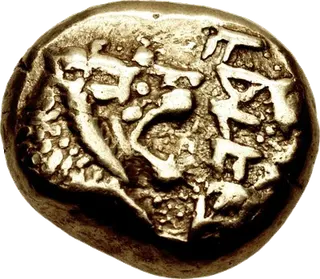
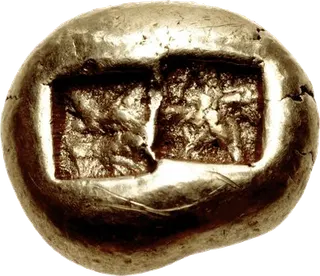
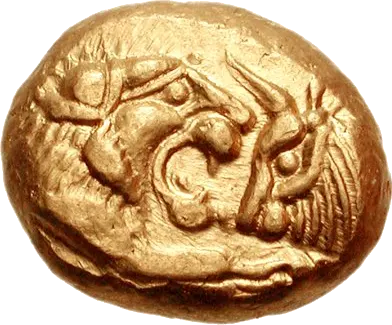
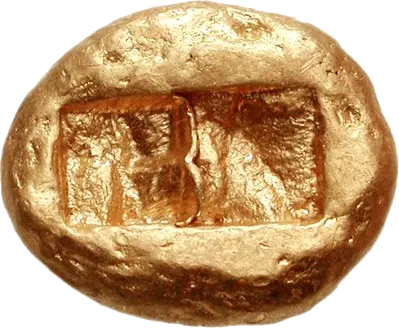
The Lydian kings had already done the hard part. Under Croesus, Sardis struck coins of pure gold and pure silver, not the pale electrum of the first Lydian lions. Both metals carried the same design: the foreparts of a lion and a bull facing each other. Collectors call these coins croeseids.
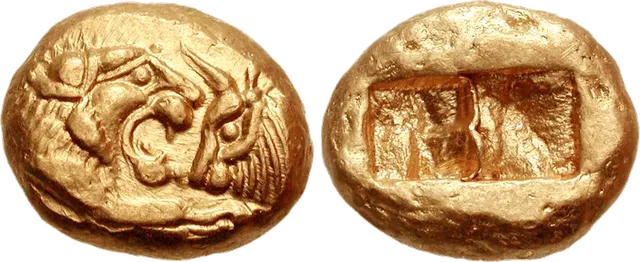
When Cyrus captured Sardis, the mint carried on. Excavators at Sardis found croeseids sealed under the rubble of the city walls that Cyrus's army pulled down in the 540s BC. That find, published by Nicholas Cahill and John Kroll in 2005, shows the coins were circulating before the conquest. Die studies and hoards show that the Persians went on striking the same type after the conquest.
The full story of the first coins is in The First Coins Ever Made: Lydia's Electrum Lion, and you can flip one on our Lydian stater page.
Darius and the archer
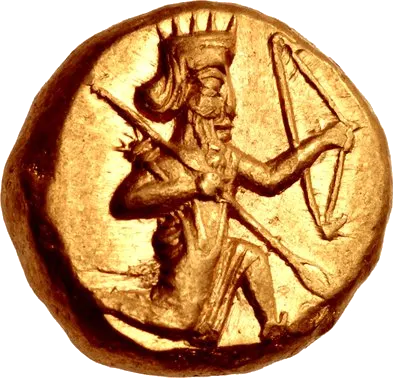
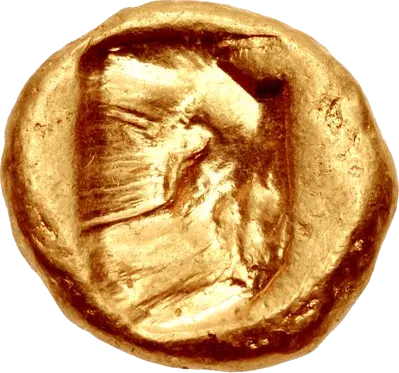
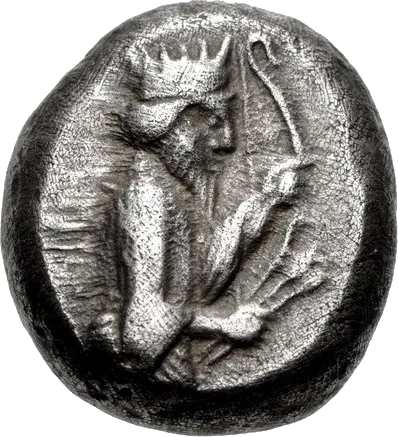
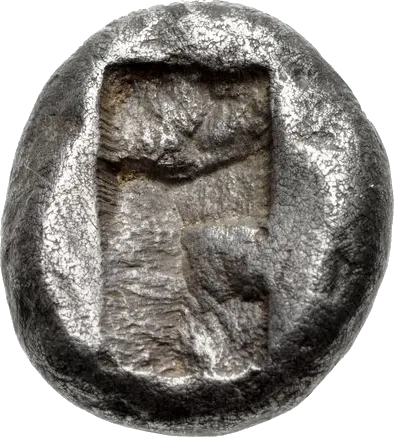
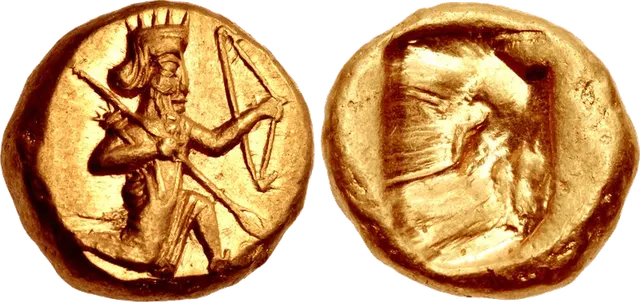
Darius I seized the throne in 522 BC and spent the next years reorganising the empire: new provinces, fixed taxes, and new money. Around 510 BC the lion and bull gave way to a new design. It showed a crowned figure with a beard, a quiver on his back and a bow in his hand. The back of the coin had no picture at all, just a rough oblong punch mark.
We know roughly when the switch happened from two finds at Persepolis. Under the foundations of the Apadana, the great audience hall, Darius's builders buried eight gold croeseids and a few Greek silver coins, probably between 519 and 510 BC. No darics. But a clay tablet from the Persepolis archive, dated to Darius's 22nd year (500–499 BC), carries the impression of two kneeling archers of the coin type. So the archer was in circulation by 500 BC.
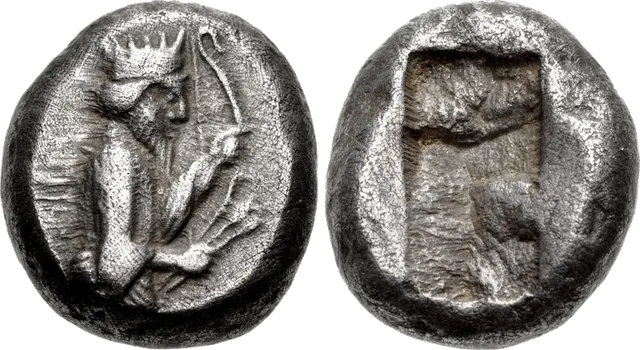
Was the archer the king himself? Most numismatists think so. He wears a crenellated crown, and the Greeks certainly took him for the king. A royal hero or a god has also been suggested, but the coin carries no name to settle it.
Four archers in 200 years
The design barely changed after that. Numismatists sort it into four main types, a scheme set out by E. S. G. Robinson and refined by Ian Carradice:
- Type I: the king from the waist up, holding a bow and two arrows. Only known on silver sigloi.
- Type II: the king kneeling and drawing his bow.
- Type III: the king running with a bow in one hand and a spear in the other. By far the most common type.
- Type IV: the same running pose, but with a dagger instead of the spear.
Types I and II came first, under Darius. Type III followed in the early 400s BC and Type IV around the middle of that century. Both stayed in production into the 300s BC. The coins carry no names and no dates, so a daric of Xerxes looks much like a daric of Artaxerxes.
Gold daric, silver siglos
The daric weighed about 8.4 grams. That was a little heavier than the Lydian gold stater and matched an old Mesopotamian shekel. The gold was very pure, about 96 percent. Herodotus says Darius "refined gold and made it as pure as possible" for his coins.
The siglos (plural sigloi) was the silver coin, about 5.4 to 5.6 grams. Twenty sigloi made one daric. That fits Herodotus, who reckoned gold at thirteen times the value of silver: 20 sigloi hold roughly 13 times as much metal by weight as one daric.
A siglos was also worth 7½ Athenian obols, according to Xenophon, which puts a daric at 25 Athenian drachmas.
Making money the king's business
Coins were a royal privilege, and Darius meant it. Herodotus tells the story of Aryandes, his governor in Egypt. Aryandes saw how proud Darius was of his pure gold, so he struck silver coins just as pure. Darius had him put to death, officially for rebellion.
Where the coins went
The two coins lived different lives. Sigloi have turned up almost entirely in Asia Minor, the region of modern Turkey that Persia ruled from Sardis. They were the everyday silver of that region, not of the whole empire. In the Persian heartland, the Persepolis tablets record payments in food and in weighed, uncoined silver, not in coins.
Darics went further. They have been found in Greece, Macedonia and Italy, and the Greeks called them simply "archers". An inventory from Athens in 429/8 BC lists darics among the treasures of the goddess Athena. A daric was too valuable to buy bread with, so for most people it was a way to store wealth or make large payments.
The Old Testament mentions darics too. Ezra 8:27 lists twenty gold bowls "of a thousand darics" brought back from Babylon, and darics appear in 1 Chronicles, Nehemiah and elsewhere in Ezra.
Paying soldiers and buying Greeks
The daric was also a soldier's wage. In 401 BC the Persian prince Cyrus the Younger hired Greek mercenaries to help him seize the throne. Xenophon, who marched with them, says the pay was a daric a month. When the men grumbled, Cyrus raised it to a daric and a half.
Persian kings also used darics to win battles without fighting them. In 394 BC the Spartan king Agesilaus was campaigning in Asia Minor when he was called home to deal with a war in Greece. Persian gold had been sent to politicians in Athens and Thebes to stir up that war. Plutarch says Agesilaus joked that the Persian king was driving him out of Asia with ten thousand "archers".
Herodotus has an even bigger number. As Xerxes led his army towards Greece, a rich Lydian named Pythios offered to pay for the war. He said he had 2,000 talents of silver and four million gold darics, less 7,000.
The end of the archer
Alexander the Great invaded the Persian Empire in 334 BC and destroyed it within four years. He took the royal treasuries at Susa and Persepolis, and much of their gold and silver ended up in his own coins. His gold stater, with Athena on one side and Nike on the other, and the gold stater of his father Philip II replaced the daric as the gold coin everyone wanted. For more on that, see the coins of Alexander the Great.
The archer did not vanish at once. After Alexander took Babylon in 331 BC, a mint there struck heavy gold "double darics", many with the old running king.
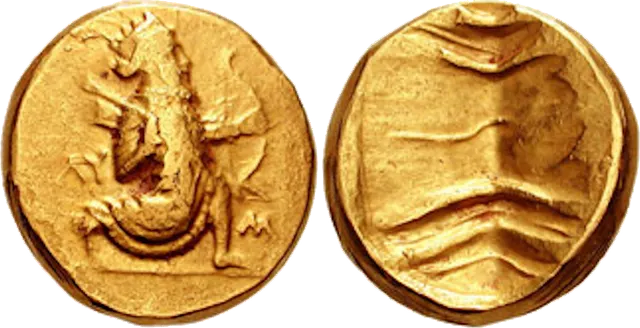
Then the archer was gone. By then Greeks were using "daric" for almost any gold coin, even Philip's staters.
Collecting darics and sigloi
Sigloi are the easier place to start. They were struck in large numbers, many survive, and worn examples are not expensive. Lots of them carry small punch marks, left by bankers and traders checking that the silver was solid.
Darics are another matter. Fewer survive, and good ones sell for thousands of dollars at auction. CoinWeek's survey of recent sales puts a typical Type II daric at around $6,000. Gold this valuable attracts forgeries, so buy from a dealer who guarantees authenticity.
More books for collectors: Best Coin Collecting Books.
Flip the archer
Our daric coin page has the specs and photos, and you can flip one there. Or flip the coin that came before it, the Lydian stater, or any coin on the coin flipper.
Questions people ask
What is a Persian daric?
The daric was the gold coin of the Achaemenid Persian Empire. Darius I introduced it around 510 BC. It weighed about 8.4 grams and showed a crowned archer, usually taken to be the king, with a plain punch mark on the back.
What is a siglos?
The siglos (plural sigloi) was the daric's silver partner, weighing about 5.4 to 5.6 grams, with the same archer design. Twenty sigloi equalled one daric. Sigloi circulated mainly in Asia Minor, modern Turkey.
Was the daric named after Darius?
The ancient Greeks thought so. Many modern scholars suspect the name comes from an Old Persian word meaning "golden" and only later got linked to Darius. The question isn't settled.
How much was a daric worth?
A daric was 20 sigloi, or about 25 Athenian drachmas. In 401 BC it was a month's pay for a Greek mercenary in Persian service, according to Xenophon.
Why are Persian coins called "archers"?
Because of the design. Every daric and siglos shows the king with a bow, so the Greeks nicknamed the coins toxotai, "archers". The Spartan king Agesilaus joked that he had been driven out of Asia by ten thousand of them.
Sources
- Michael Alram, "Daric", Encyclopaedia Iranica VII/1 (1994; updated 2017) (introduction under Darius I, ~8.4 g, Robinson/Carradice types I–IV and their dates, Apadana deposit of 8 light croeseids, the Persepolis tablet of Darius year 22 with type II archers, 20 sigloi = 1 daric, siglos = 7.5 Attic obols, Sardis as the main mint, siglos vs daric find spots, the Athena temple inventory of 429/8 BC, "archers" nickname, etymology debate, displacement by Philip's and Alexander's staters, Babylonian double darics)
- CoinWeek, "The Daric: Persian Gold" (CoinWeek Ancient Coin Series) (8.4 g, 20 sigloi, Sardis, type dates, type III most common, biblical references, a month's pay, auction ranges incl. a typical Type II around $6,000)
- Alpha Bank Numismatic Collection, "Daric, gold stater of the Achaemenid Empire" (95.83% gold, 8.34 g specimen, "archers", displaced by Philip II's stater)
- Nicholas D. Cahill and John H. Kroll, "New Archaic Coin Finds at Sardis", American Journal of Archaeology 109.4 (2005), pp. 589–617 (croeseids sealed by the Persian destruction of the 540s BC; Persian continuation of the lion-and-bull type until Darius)
- Herodotus, Histories, tr. G. C. Macaulay (Project Gutenberg): 3.95 (gold at 13 times silver), 4.166 (Darius's pure gold, Aryandes executed), 7.28 (Pythios: 2,000 talents of silver and 4,000,000 darics less 7,000)
- Xenophon, Anabasis 1.3.21 (a daric a month, raised to a daric and a half) and 1.5.6 (siglos = 7½ Attic obols)
- Plutarch, Life of Agesilaus 15 (LacusCurtius, tr. Perrin) ("ten thousand archers")
- Ezra 8:27; 1 Chronicles 29:7; Nehemiah 7:70–72 (darics, adarkonim/darkemonim; older English versions translate "drams")
- Persepolis Fortification Archive, as summarised by Wouter Henkelman and others: payments in kind and in uncoined silver in the heartland
- Numista and CNG catalogue records for the Babylonian double daric under Mazaeus, satrap of Babylon c. 331–328 BC