Coin Gifts and Memorabilia for Collectors
Updated
As an Amazon Associate we earn from qualifying purchases.
Gifts for coin collectors are tricky to buy. Most collectors already own the obvious books and supplies, and you can't easily tell which coins they still need.
So try a different kind of gift: a piece of coin history. That can be a good replica of a famous ancient coin, a real Roman or Greek coin with its paperwork, or a pendant made from a coin. This guide covers all three. It explains how to tell a replica from the real thing, what to check before you buy an ancient coin, and which gifts suit which person.
Replica or real? Decide first
The first question is whether you want a replica or a genuine coin. Both make good gifts, but for different people.
- A replica suits someone who loves the history and wants to see the coin as it looked when new: Caesar's portrait, the Ides of March dagger, the Athenian owl. Many good replicas are cast from moulds of real coins, they're cheap enough to handle without worry, and you can buy famous coins whose originals cost a fortune.
- A genuine ancient coin suits someone who wants to hold the actual object: metal that was struck by hand and spent in the market nearly 2,000 years ago. Common Roman bronzes are surprisingly affordable. The catch is that you have to trust the seller.
Don't mix the two up when you give them. A replica given as "a Roman coin" can disappoint a collector who knows the difference.
What the law says about replicas
In the United States, the Hobby Protection Act of 1973 covers copies of coins. Any "imitation numismatic item" made in or imported into the US for sale has to be "plainly and permanently marked 'COPY'". The Federal Trade Commission enforces the rule.
The FTC's rules spell out how. "COPY" has to be in capital letters on the obverse or reverse, never on the edge. On most replicas the letters must be at least 2 mm tall and the word at least 6 mm wide, or scaled to the coin's size.
The Act's definition of an original coin isn't limited to US coins, so replicas of Roman and Greek coins count too. In practice, enforcement against overseas makers is patchy, and many listings don't mention the marking at all.
Here's what that means for you:
- Look for "COPY" when the replica arrives. A clearly marked replica can never be passed off as real, by anyone, later on.
- Keep replicas on their card or in their packaging. That backs up the marking and keeps them apart from any real coins in a collection.
- Never buy an unmarked "replica" as a gift for a serious collector. Collectors treat unmarked copies as fakes, and grading services reject them as not genuine.
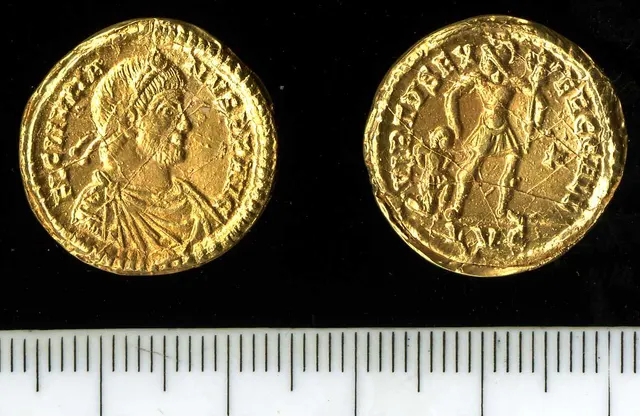
Copies of ancient coins aren't new, either. In the 1800s museums made electrotypes, exact copper copies grown in a mould taken from the real coin, so they could study and share rare pieces. The copy below was made from wax impressions of a Roman gold coin found in Cornwall.
Replicas of famous ancient coins
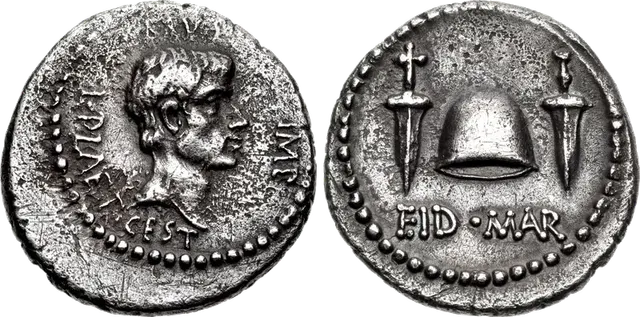
The best replicas are of coins with a story. The obvious one is Brutus's EID MAR denarius, struck after Julius Caesar's murder on the Ides of March, 44 BC, with two daggers and a cap of liberty on the reverse. Genuine examples are rare and very expensive. A replica lets someone hold the design for very little.
For the story behind these coins, read The Denarius: How Rome's Silver Coin Lost Its Shine and Roman Coins: A Guide to Every Denomination.
Our Ancient Greek Coins article tells the story of the owl and the turtle, and The Coins of Alexander the Great explains why Alexander's coins were struck for centuries after his death.
Genuine ancient coins as gifts
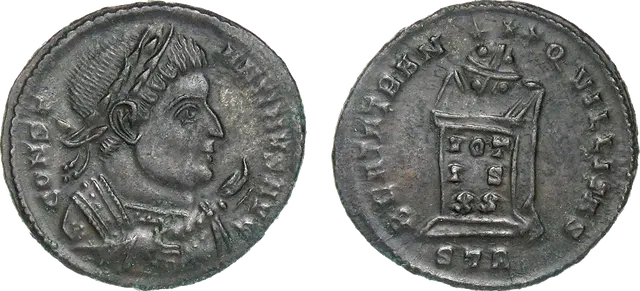
Real ancient coins are easier to come by than most people think. Rome struck small bronze coins in enormous numbers, especially in the fourth century under Constantine and his family, and they still turn up by the thousand. That's why a genuine Roman coin can cost less than a nice dinner. Silver coins of the third century and some Greek silver are also within reach.
What you're paying for is trust. Before you buy:
- Buy from a seller who guarantees authenticity for life, and check that the guarantee is in writing on the listing or the certificate.
- Read the certificate carefully. A "certificate of authenticity" from the seller is only as good as the seller. Coins certified by NGC, a major grading service, have been checked by a third party.
- Expect wear. Most gift coins are well-worn. A clear portrait and readable lettering on a coin this old is a good result.
- Be wary of "uncleaned" lots. They're fun, but some come with no information about where they were found, and cleaning them takes patience and the right tools.
There's one more thing to know. The US restricts imports of some ancient coins from certain countries, including Cyprus, Italy, Greece and China, under the Cultural Property Implementation Act. That's the importer's job to handle, not yours, but it's one more reason to buy from an established US seller.
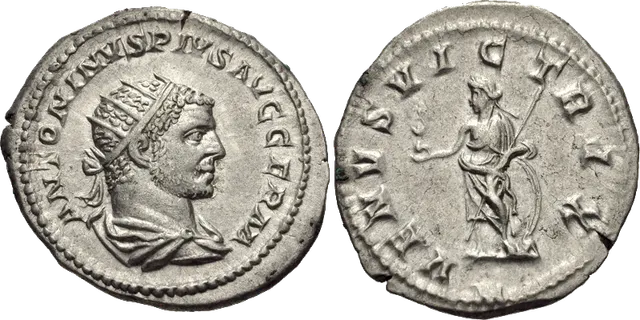
The antoninianus has its own chapter in The Denarius. It's the coin that shows Rome's silver collapsing.
Coin jewelry
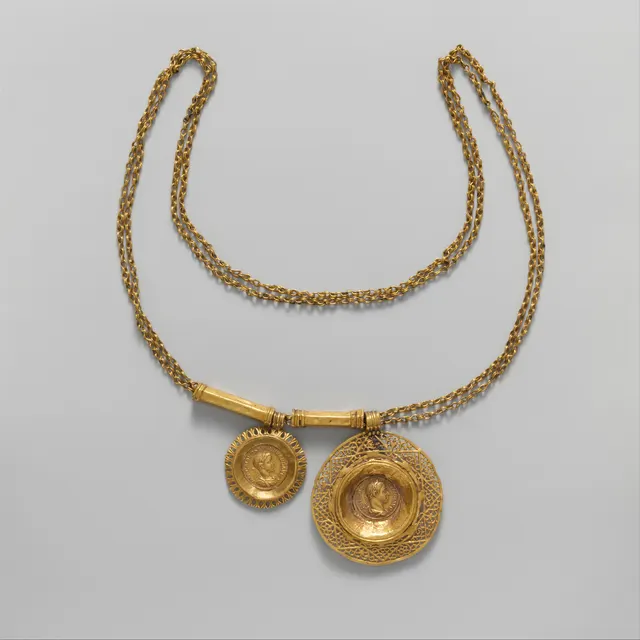
Wearing coins is nothing new. Wealthy Romans set gold coins in pendants and necklaces. The third-century necklace above, now in the Metropolitan Museum of Art, hangs two gold coins in ornate frames. Today there are two kinds of coin jewelry: pendants with a genuine ancient coin set in a bezel, and pendants with a replica coin.
A genuine coin worn every day will wear down further. It may also be hard to take back out of its setting without damage. If the person is a collector, they may prefer the coin loose, in a capsule. If they simply love Rome, a pendant is a lovely way to carry a piece of it.
The real story of the piece of eight is in Pieces of Eight: The Spanish Dollar, First Global Currency and The Doubloon: Spanish Gold and Pirate Legend.
For someone just starting out
If the person isn't a collector yet, a small set of old US coins is an easy way in.
Then point them to our coin collecting starter kit and the best coin collecting books.
Looking after a coin gift
A few simple rules keep a gift in good shape:
- Keep genuine coins in hard, PVC-free holders. Soft vinyl flips can contain PVC, which leaches out and leaves green residue on coins. Our guide to coin holders and capsules lists safe ones.
- Hold coins by the edges. Fingerprints on old silver and bronze can leave marks.
- Don't clean a genuine coin you've been given. Polishing strips the patina and lowers its value. Uncleaned lots are the exception, because cleaning them is the point.
- Keep the certificate with the coin, or note the certificate number on the holder.
- Show it off safely. Our coin display cases and frames guide explains which cases are safe for coins.
Keep reading
- Roman Gold: The Aureus and the Solidus
- The Rarest and Most Valuable Coins in the World, where the EID MAR coins appear
- The Ancient world era page
- Coin Scales and Calipers: Spotting Fakes
- Or just flip a coin.
Questions collectors ask
What is a good gift for a coin collector?
Something they're unlikely to have bought themselves. A genuine ancient coin from a seller who guarantees it, a good replica of a famous ancient coin, coin jewelry, a display case or a reference book all work. If you know what they collect, ask a fellow collector or their local coin club what's missing.
Are replica coins legal in the US?
Yes, if they're marked. Under the Hobby Protection Act, replicas made in or imported into the US for sale must be plainly and permanently marked "COPY" on the obverse or reverse. Unmarked copies are treated as counterfeits by collectors and grading services.
Can you buy real Roman coins?
Yes. Small Roman bronze coins, especially those of Constantine and his family from the fourth century, were struck in huge numbers and are widely sold. Buy from a seller who guarantees authenticity in writing, and expect some wear.
How do I know if an ancient coin is genuine?
Buy from an established seller with a lifetime guarantee, or choose a coin certified by a third-party grading service such as NGC. Be wary of very cheap "rare" coins, perfect-looking surfaces and sellers with no return policy.
Is coin jewelry bad for the coin?
It can be. A genuine coin worn every day will keep wearing down, and setting it may scratch the edge. Choose a bezel that holds the coin without drilling or glue, or give a replica pendant instead.
Sources
- FTC, 16 CFR § 304.6, "Marking requirements for imitation numismatic items" (via Cornell LII)
- FTC, "Hobby Protection Act" rule page
- ACEF, "Hobby Protection Act"
- American Numismatic Association, "Ancient Coin Import Restrictions"
- NGC Ancients, "Collecting Roman Coins on a Budget" (2019, via CoinWeek)
- CoinWeek, "The House of Constantine" (CoinWeek Ancient Coin Series)
- NGC, "NCS Conservation: Environmental Damage" (2016)
- flipcoinnow, The Denarius and Roman Gold drafts (published), for the antoninianus (introduced c. AD 215, silver collapsing over the next fifty years) and the EID MAR denarius (42 BC)
Coins in this guide
- HTDenariusAncient Rome
- HTAureusAncient Rome
- HTAthenian tetradrachmAthens
- HTDrachmaAncient Greece
- HTSolidusByzantine Empire
- HTSpanish dollarSpain